

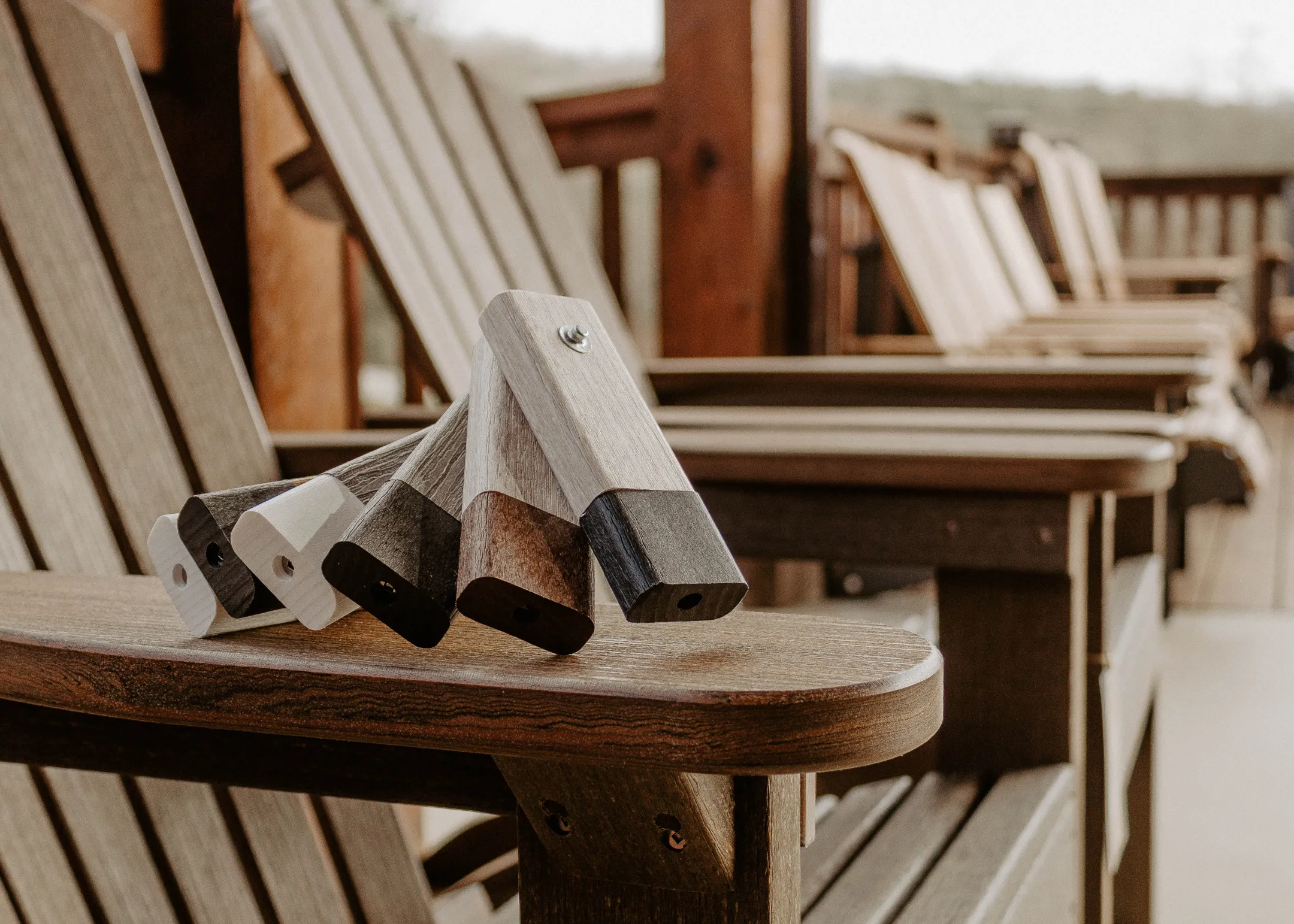
As outdoor living continues to evolve into a fully fledged extension of architecture and interior design, the materials shaping luxury outdoor furniture in 2026 reveal a clear shift toward permanence, authenticity, and environmental intelligence. For architects, designers, and discerning private clients, the question is no longer whether outdoor furniture can endure the elements, but how beautifully and responsibly it can do so.
The most compelling collections today are defined by materials that balance sensory richness with advanced performance. From time-honored hardwoods to cutting-edge composites and sculptural metals, the best materials for outdoor furniture in 2026 reflect a new convergence of craftsmanship, technology, and climate awareness. This editorial exploration examines the materials setting the standard for luxury outdoor environments—materials chosen not only for durability, but for the cultural and architectural narratives they support.
Natural Woods: Enduring Elegance Reimagined
Wood remains central to luxury outdoor furniture, prized for its warmth, tactility, and ability to age gracefully. In 2026, however, not all woods are considered equal. The emphasis has shifted toward responsibly sourced species that offer both aesthetic refinement and exceptional outdoor performance.
Iroko Wood: The New Benchmark for Outdoor Sophistication
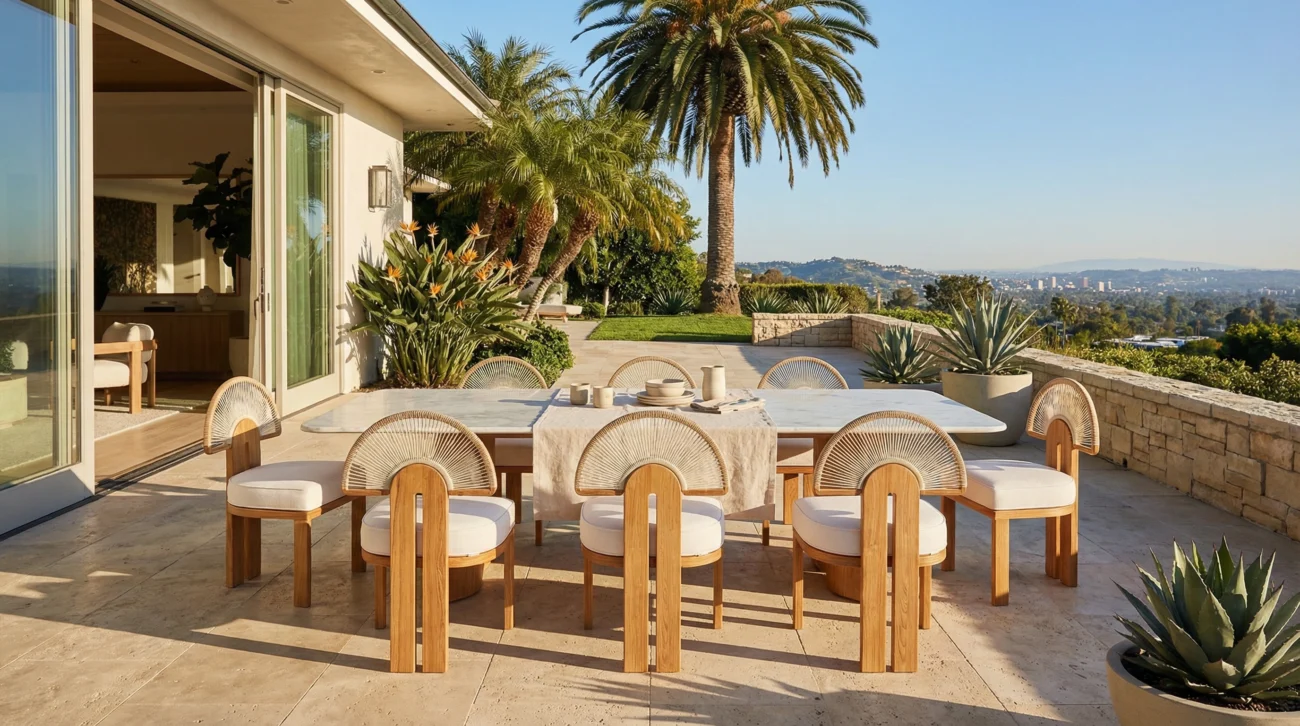
Among premium hardwoods, iroko wood outdoor furniture has emerged as a defining material for contemporary outdoor spaces. Native to West Africa, iroko is often referred to as “African teak” due to its impressive resistance to moisture, insects, and temperature fluctuations.
Its golden-brown tone matures into a refined silver patina over time, aligning with the understated luxury favored by architects and landscape designers. Structurally stable and naturally rich in oils, iroko performs exceptionally well in coastal, Mediterranean, and high-sun environments, making it a preferred choice for long-lasting weather-resistant outdoor furniture.
- High resistance to humidity and UV exposure
- Elegant aging process without compromising strength
- Ideal for large-scale architectural outdoor projects
Teak and Thermally Modified Woods
Certified teak continues to hold its place within the luxury segment, valued for its heritage and proven longevity. Alongside it, thermally modified woods—treated through controlled heat rather than chemicals—are gaining prominence. These woods offer enhanced dimensional stability and moisture resistance while maintaining a natural appearance.
For professionals seeking the best materials for outdoor furniture that align with sustainability goals, thermally modified ash or pine present an increasingly attractive alternative.
Metals: Precision, Strength, and Architectural Clarity
Metal structures define the architectural backbone of many luxury outdoor furniture collections. In 2026, innovation in metal finishes and treatments has elevated both aesthetics and performance.
Powder-Coated Aluminum: Lightweight Excellence
Aluminum remains a cornerstone of weather-resistant outdoor furniture, particularly in powder-coated finishes that offer exceptional protection against corrosion and fading. Advances in surface treatments now allow for richer textures and deeper matte tones, enabling aluminum to rival the visual depth of traditional materials.
- Extremely lightweight yet structurally robust
- Non-corrosive and ideal for marine environments
- Low maintenance with high design versatility
Stainless Steel and Sculptural Bronze
Marine-grade stainless steel continues to appeal to projects demanding maximum durability and precision. Meanwhile, bronze and brass alloys are increasingly specified for statement pieces, where controlled oxidation becomes part of the design narrative rather than a flaw.
These metals resonate with architects who approach outdoor furniture as permanent fixtures within the built environment.
Stone and Ceramic Surfaces: Monumental Luxury
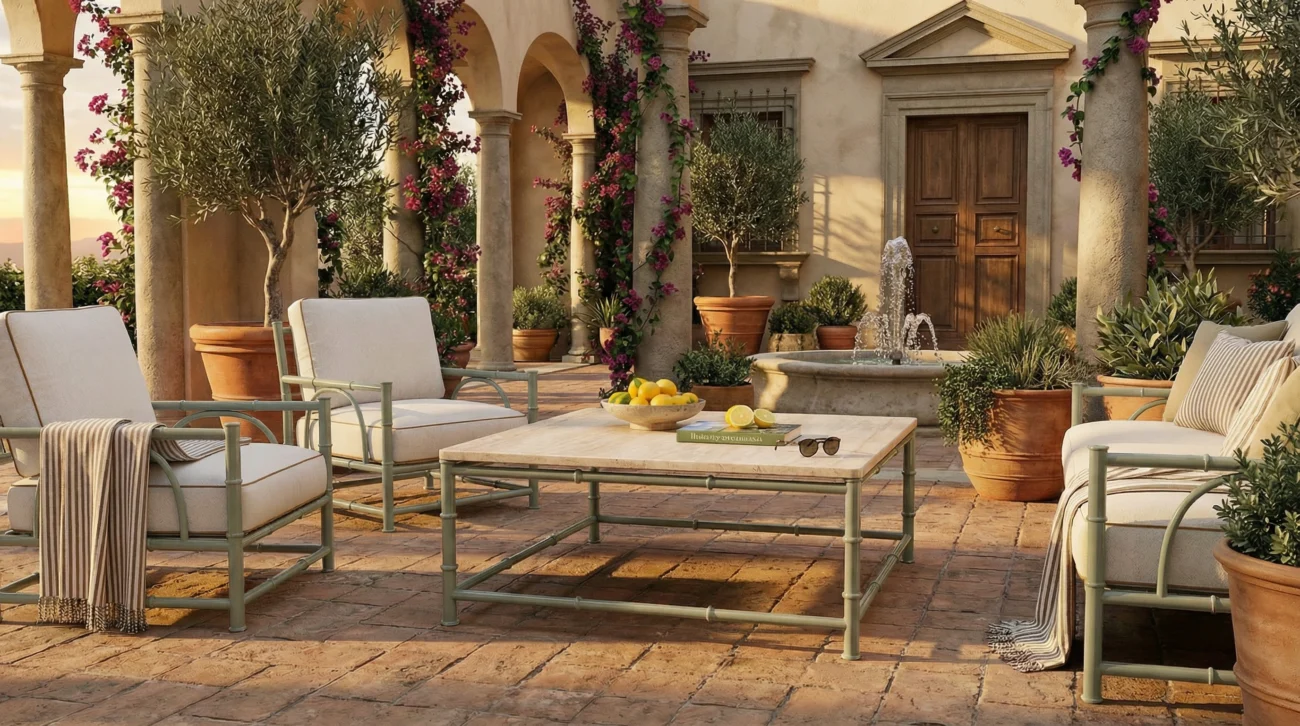
Stone has moved decisively from accessory to centerpiece in luxury outdoor furniture design. In 2026, the use of stone signals a desire for permanence and architectural coherence.
Porcelain Stoneware and Sintered Stone
Large-format porcelain slabs and sintered stone surfaces offer the visual richness of natural stone with superior technical performance. Non-porous, UV-stable, and resistant to thermal shock, these materials are now widely regarded among the best materials for outdoor furniture in high-end residential and hospitality projects.
Natural Stone: Travertine, Basalt, and Limestone
For projects rooted in Mediterranean or desert landscapes, natural stone remains unmatched in its ability to anchor furniture within its surroundings. When expertly sealed and engineered, stone elements contribute to weather-resistant outdoor furniture that feels both timeless and grounded.
Advanced Outdoor Fabrics: Comfort Without Compromise
Luxury outdoor furniture is incomplete without textiles that deliver comfort, longevity, and refined aesthetics. In 2026, outdoor fabrics rival their indoor counterparts in both performance and sophistication.
Solution-Dyed Acrylics and High-Performance Weaves
Solution-dyed acrylic fabrics offer unparalleled resistance to fading, mold, and moisture. Their colorfast properties ensure that cushions and upholstery maintain their visual integrity even under intense sun exposure.
- UV-resistant and breathable
- Easy to clean and quick-drying
- Essential for truly weather-resistant outdoor furniture
Textural Innovations and Natural-Look Fibers
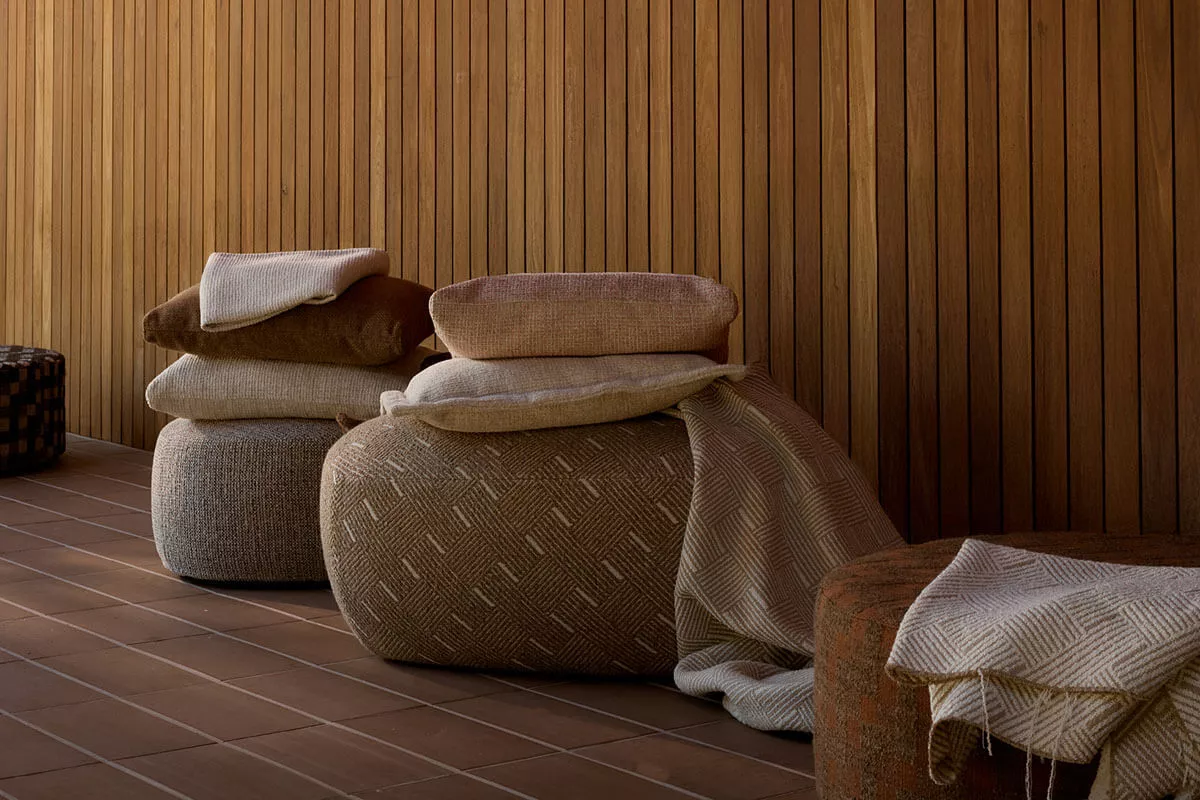
Designers increasingly favor fabrics that emulate linen, bouclé, or wool while retaining outdoor-grade durability. These tactile innovations blur the line between interior and exterior, reinforcing the notion of outdoor spaces as curated living environments.
Woven Materials: Craft Meets Technology
Woven elements introduce softness and artisanal character into outdoor furniture collections. In 2026, synthetic fibers have evolved to offer both visual depth and remarkable resilience.
High-Density Polyethylene (HDPE) Fibers
HDPE fibers are engineered to resist UV radiation, saltwater, and temperature extremes. When handwoven over aluminum or stainless-steel frames, they contribute to weather-resistant outdoor furniture that balances comfort with structural integrity.
Natural-Inspired Weaves
Visually, these fibers often replicate rattan or rope, allowing designers to reference traditional craftsmanship while meeting contemporary performance standards. This fusion is particularly appealing in resort and residential projects seeking warmth without maintenance burdens.
Sustainable Composites and Future Materials
Sustainability is no longer an optional consideration in luxury design. In 2026, composite materials derived from recycled content are gaining legitimacy within high-end outdoor furniture.
Recycled Wood Composites
Advanced composites blend recycled wood fibers with polymers to create materials that resist warping, cracking, and moisture. While once associated with utilitarian applications, these composites are now refined enough to be considered among the best materials for outdoor furniture in environmentally conscious projects.
Bio-Resins and Experimental Surfaces
Looking ahead, bio-resins and mineral-based composites promise further innovation. These materials reflect a growing desire to align luxury with responsible production, without sacrificing performance or aesthetic ambition.
How Professionals Select the Best Materials for Outdoor Furniture
For architects and designers, material selection in 2026 is guided by a nuanced evaluation of context, climate, and long-term use. The most successful projects integrate materials that perform technically while contributing to a coherent design language.
- Assess environmental exposure and microclimate
- Balance natural beauty with engineered resilience
- Prioritize materials proven in weather-resistant outdoor furniture
- Consider aging, patina, and maintenance over time
Material Intelligence as the New Luxury
The materials defining luxury outdoor furniture for 2026 reveal a deeper cultural shift. Luxury is no longer expressed through excess, but through informed choices—materials that endure, evolve, and resonate with their surroundings.
From the quiet strength of iroko wood outdoor furniture to the precision of architectural metals and the innovation of performance textiles, today’s best materials for outdoor furniture embody a thoughtful synthesis of design, technology, and sustainability. For professionals shaping the outdoor spaces of tomorrow, material intelligence has become the ultimate expression of refined living.