

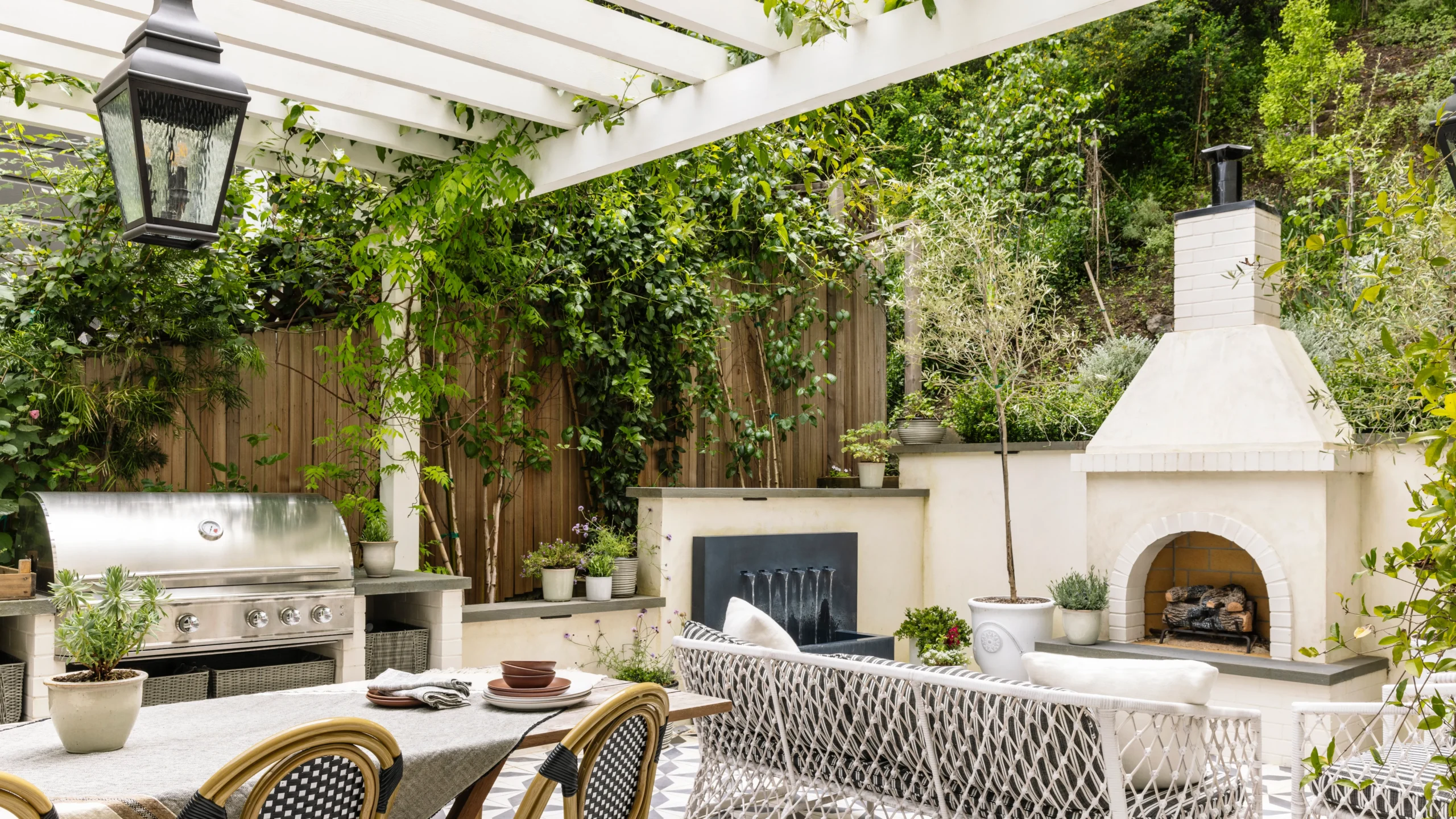
In Marbella, outdoor living is not a seasonal indulgence—it is a cultural constant. Framed by the Sierra Blanca mountains and the Mediterranean Sea, this Andalusian enclave has cultivated a distinctive lifestyle where architecture, climate, and sociability converge. At the heart of this way of life lies a spatial evolution that has quietly redefined contemporary domestic design: the rise of open kitchens, extended evenings under the sky, and the social island as a new architectural nucleus.
Today, Marbella outdoor spaces are no longer conceived as peripheral terraces or decorative patios. They are fully articulated environments where cooking, dining, lounging, and conversation flow seamlessly. For architects, designers, and luxury real estate professionals, Marbella offers a compelling case study in how climate-responsive design and cultural rituals shape the future of high-end outdoor living.
Marbella Outdoor Spaces as Cultural Architecture
The success of Marbella’s residential architecture lies in its ability to translate lifestyle into space. The region’s temperate climate—over 300 days of sunshine annually—has long encouraged an outward-facing domestic culture. Yet contemporary design has refined this tradition, elevating Marbella outdoor spaces into sophisticated social landscapes rather than simple extensions of the interior.
Terraces are now conceived as outdoor salons. Pergolas frame views like architectural prosceniums. Flooring materials mirror interior palettes, dissolving the visual boundary between inside and out. This cohesion reflects a broader Mediterranean design philosophy where architecture is not a container but a facilitator of human connection.
The Social Imperative of Outdoor Living
Unlike northern European or urban American models of outdoor design, Marbella prioritizes sociability over solitude. Spaces are designed to host—generously, informally, and often spontaneously. Long lunches evolve into sunset aperitivos, which in turn become candlelit dinners. Architecture responds by privileging fluid circulation, generous seating, and multifunctional zones.
In this context, luxury outdoor furniture is not ornamental. It is architectural. Modular sofas define conversational geometries, dining tables anchor social rituals, and low lounge seating encourages prolonged, relaxed engagement.
The Open Kitchen: Redefining the Mediterranean Hearth
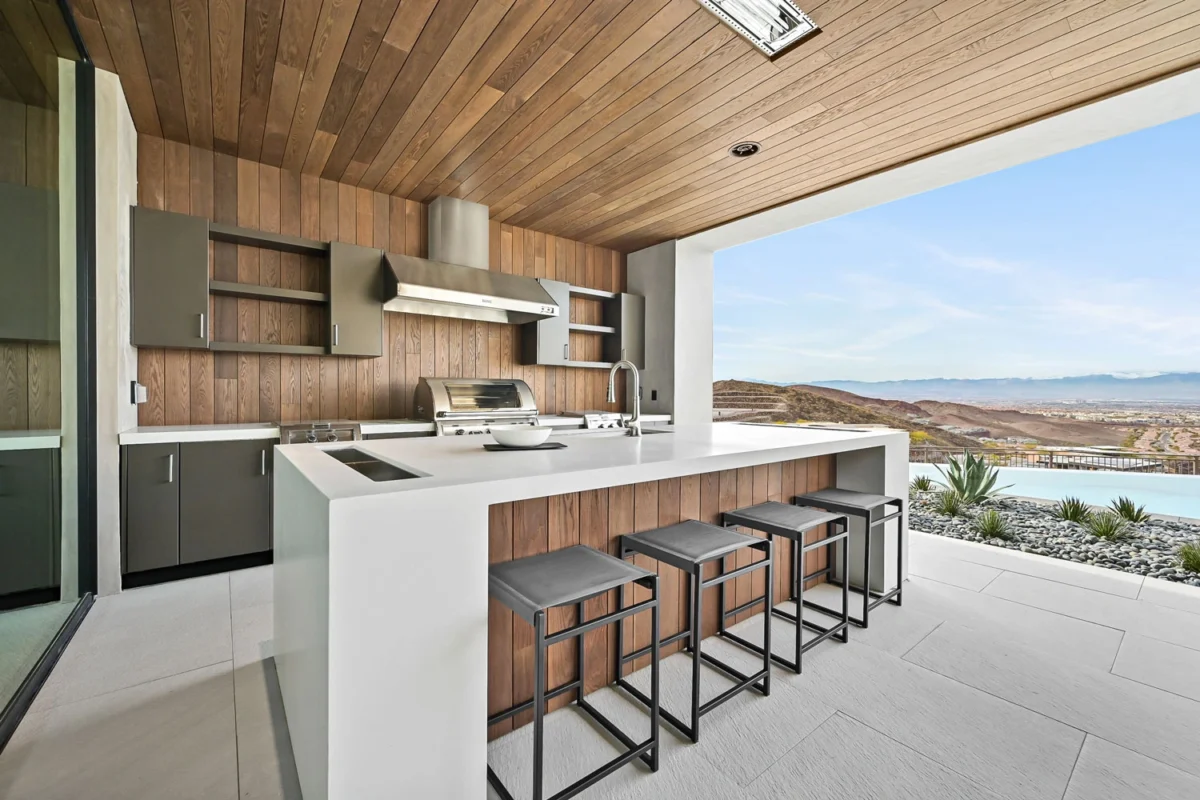
Perhaps the most transformative element in contemporary Marbella homes is the open outdoor kitchen. No longer hidden or secondary, it has become the emotional and functional heart of the home—particularly in villas designed for entertaining.
These kitchens are not replicas of their indoor counterparts placed outside. They are purpose-built environments that respond to climate, light, and social interaction. Materials are selected for durability and tactility: natural stone countertops, weather-resistant cabinetry, ceramic tiles, and brushed metals that age gracefully under the sun.
From Utility to Experience
The modern outdoor kitchen in Marbella is experiential by design. It allows hosts to remain engaged with guests while cooking, reinforcing the Mediterranean ethos of shared preparation and communal dining. This spatial openness fosters a sense of inclusivity, where the act of cooking becomes performative rather than isolated.
For designers and developers, this shift has implications beyond aesthetics. Outdoor kitchens significantly enhance property value, particularly in the luxury segment, where buyers increasingly prioritize lifestyle-driven amenities. According to Architectural Digest, outdoor kitchens are among the most sought-after features in high-end residential design globally—a trend Marbella has long anticipated.
The Social Island: A New Center of Gravity
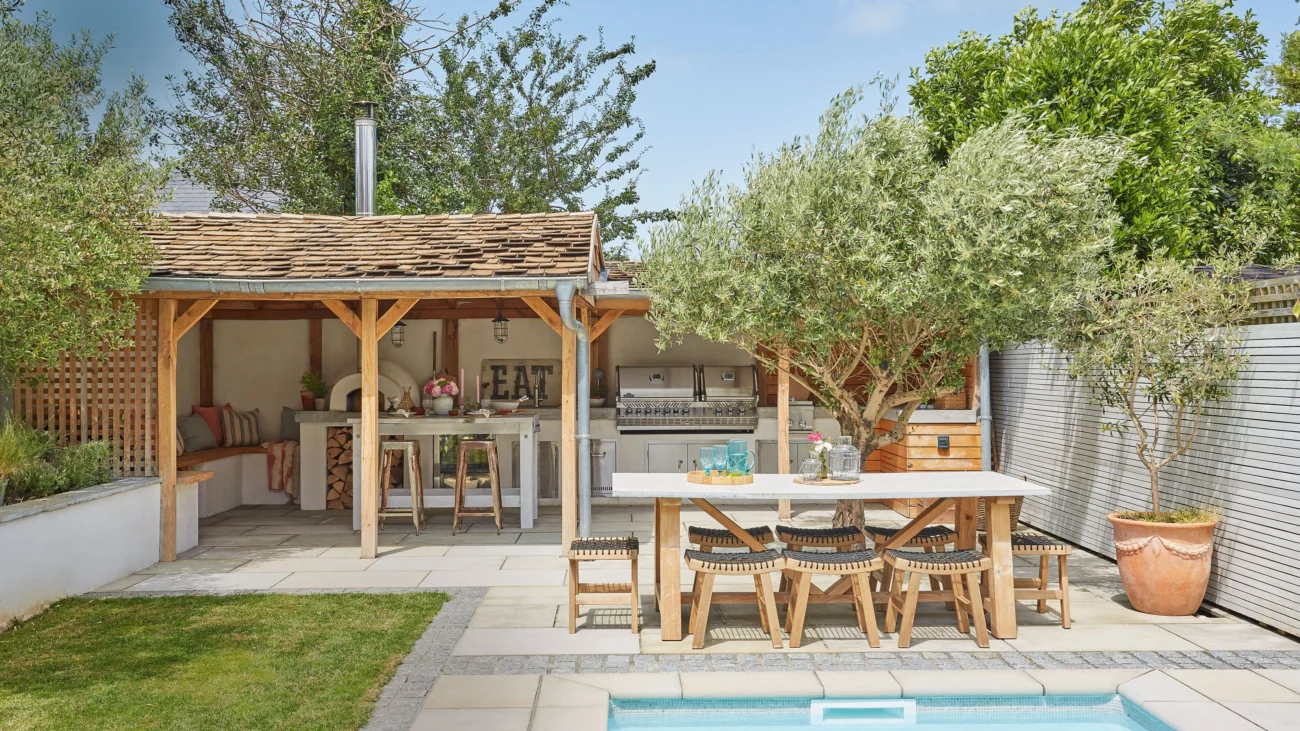
Central to the outdoor kitchen’s success is the social island. More than a countertop, it is a spatial device that organizes interaction. Positioned between cooking zones and lounge areas, the island becomes a place to gather, converse, and linger.
In Marbella homes, the social island often replaces the formal dining table as the primary social anchor. Its height encourages casual seating; its scale invites abundance. Wine glasses, shared plates, and informal conversations coexist effortlessly, reflecting a lifestyle that values presence over protocol.
Design Principles Behind the Social Island
- Proportion: Oversized islands support multiple functions—preparation, serving, and socializing.
- Materiality: Stone, porcelain, and composite surfaces offer durability while maintaining tactile elegance.
- Integration: Islands are aligned with sightlines to the pool, garden, or sea, reinforcing visual continuity.
- Flexibility: Integrated storage, cooling drawers, or plancha grills enhance usability without visual clutter.
When paired with thoughtfully curated luxury outdoor furniture, the social island becomes a mediator between architecture and lifestyle—anchoring space while remaining inherently adaptable.
Long Evenings and the Architecture of Time
Marbella living is defined not only by space, but by time. The rhythm of the day extends well into the evening, and architecture responds accordingly. Lighting, acoustics, and thermal comfort are meticulously calibrated to support long, unhurried gatherings.
Soft, layered lighting replaces harsh illumination. Integrated LED strips, lanterns, and indirect lighting enhance intimacy without overpowering the night. Fire features—linear fireplaces or sculptural fire bowls—add warmth and ritual, extending the usability of Marbella outdoor spaces throughout the year.
Furniture That Encourages Duration
Endurance is a design requirement in Marbella. Seating must invite guests to stay, not signal an endpoint. Deep cushions, ergonomic proportions, and modular arrangements allow spaces to adapt as evenings evolve.
Here, luxury outdoor furniture functions as a temporal tool. It slows the pace of interaction, encouraging conversation and connection. The best designs balance visual lightness with structural integrity, ensuring comfort without compromising architectural clarity.
Implications for Luxury Real Estate and Design Professionals
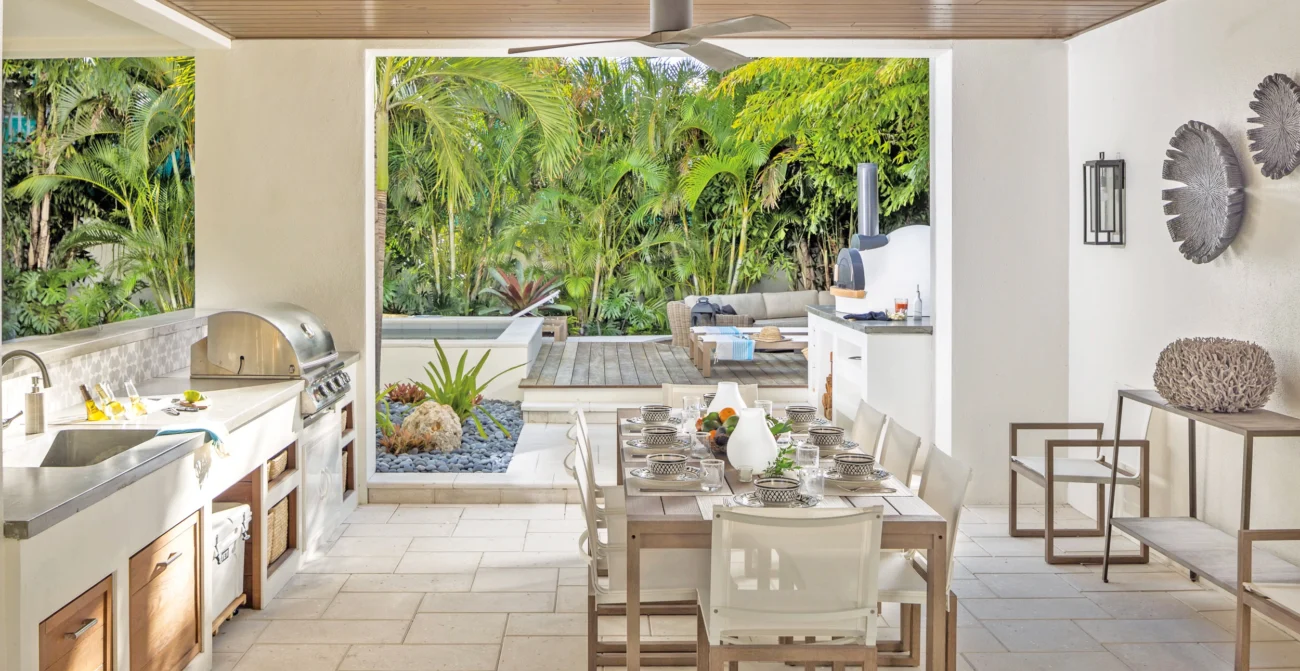
For architects, interior designers, and real estate developers, Marbella offers a blueprint for future-facing residential design. Buyers are no longer impressed by square footage alone; they seek environments that support meaningful social experiences.
Outdoor kitchens, social islands, and integrated lounge-dining zones are now essential components of luxury villas—not optional upgrades. Properties that successfully articulate these elements command stronger emotional resonance and, consequently, higher market value.
Key Takeaways for Design Strategy
- Design outdoor spaces as primary living areas, not secondary amenities.
- Prioritize social flow over rigid zoning.
- Invest in high-quality, durable materials that age gracefully.
- Use furniture as an architectural tool to define space and behavior.
Marbella as a Model for Contemporary Outdoor Living
Marbella’s approach to outdoor living transcends trend. It is a sophisticated synthesis of climate, culture, and design intelligence. Open kitchens dissolve barriers between host and guest. Social islands redefine how we gather. Long evenings reshape our relationship with time.
In an era where luxury is increasingly defined by experience rather than excess, Marbella outdoor spaces offer a compelling vision of refined, human-centered design. For those shaping the future of residential architecture and lifestyle-driven real estate, Marbella is not merely a destination—it is a design philosophy, lived daily under the Mediterranean sky.