

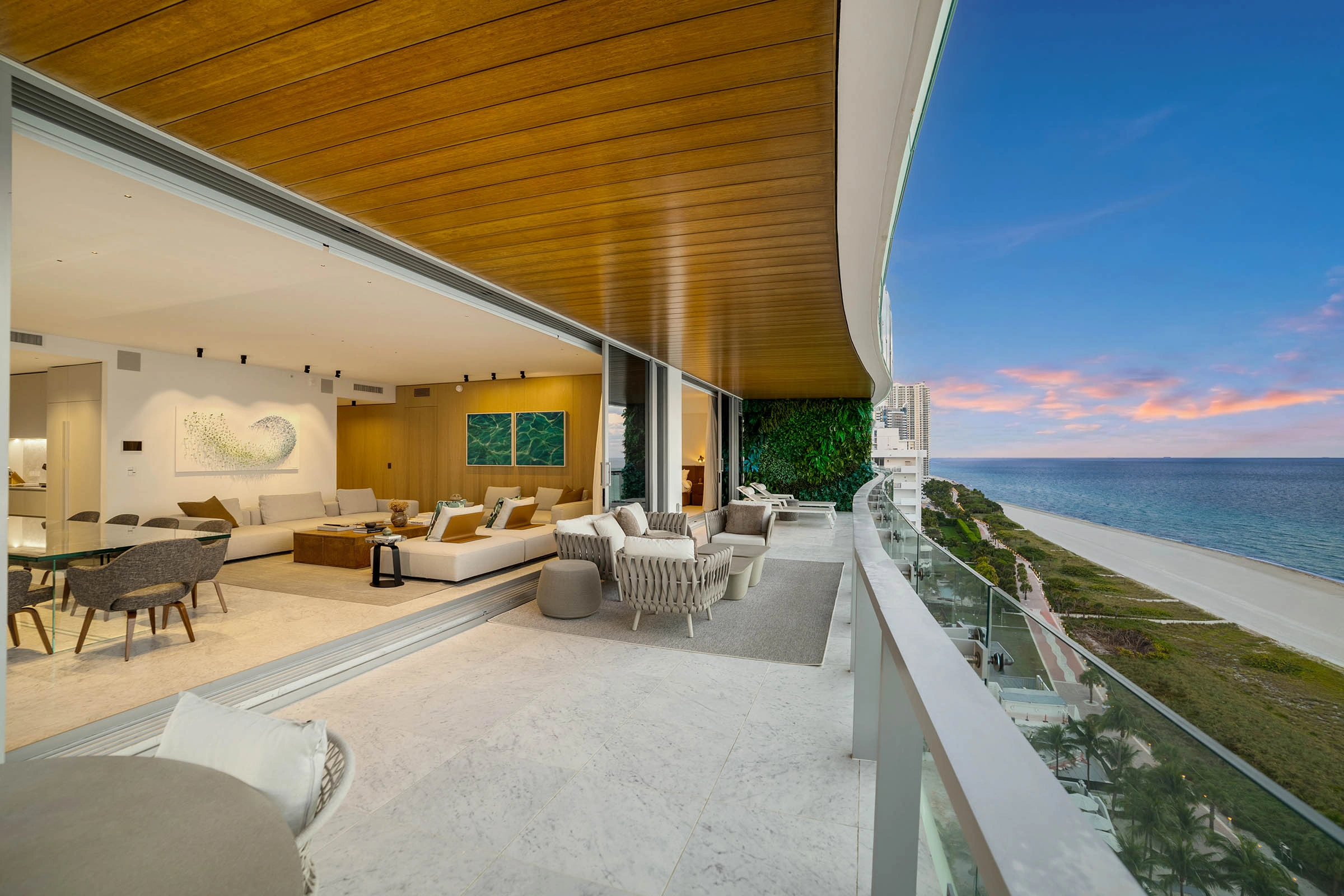
Where the Atlantic Meets Architecture
Miami’s oceanfront residences occupy a rare intersection of climate, culture, and contemporary design ambition. Here, the Atlantic Ocean is not a distant backdrop but an active force—shaping materials, influencing spatial planning, and redefining how outdoor living is conceived. In this context, luxury outdoor furniture is no longer an accessory; it is architectural infrastructure for life lived between salt air and sunlight.
Designing outdoor furniture for coastal homes in Miami demands a nuanced understanding of environmental stressors, aesthetic expectations, and the evolving lifestyle of global homeowners. This article explores how salt, sun, and structure converge to inform outdoor furniture design for Miami’s most discerning oceanfront residences—offering insights for architects, designers, and high-net-worth individuals seeking longevity without compromising elegance.
Miami’s Oceanfront Reality: Climate as Design Partner
Unlike temperate coastal destinations, Miami presents a uniquely intense environmental profile. High humidity, relentless UV exposure, saline air, tropical storms, and fluctuating temperatures form a daily stress test for any exterior element.
For Miami outdoor furniture, this reality transforms climate from a constraint into a design collaborator. Furniture must not simply withstand the elements—it must age gracefully within them.
Salt Air: The Invisible Corrosive
Salt-laden breezes accelerate oxidation and material fatigue. Metals pit, finishes degrade, and joints weaken if not engineered with precision.
- Marine-grade aluminum and stainless steel alloys are essential for corrosion resistance.
- Advanced powder coatings create sealed surfaces that resist salt infiltration.
- Minimalist structural profiles reduce crevices where salt can accumulate.
In oceanfront contexts, material science is as critical as form.
Sunlight: Beauty Under Constant Exposure
Miami’s sun is both intoxicating and unforgiving. Continuous UV exposure challenges textiles, finishes, and composite materials, making fade resistance a defining criterion of true luxury outdoor furniture.
High-performance solutions include:
- Solution-dyed acrylic fabrics that maintain chromatic integrity.
- Ceramic and sintered stone tabletops that resist thermal shock.
- Natural teak selected for dense grain and high oil content.
The goal is not to resist the sun entirely, but to design furniture that evolves aesthetically under its influence.
Structure and Permanence: Furniture as Outdoor Architecture
In Miami’s most sophisticated residences, outdoor spaces are conceived as extensions of interior architecture. Terraces, pool decks, and loggias demand furnishings with structural clarity and spatial discipline.
From Object to System
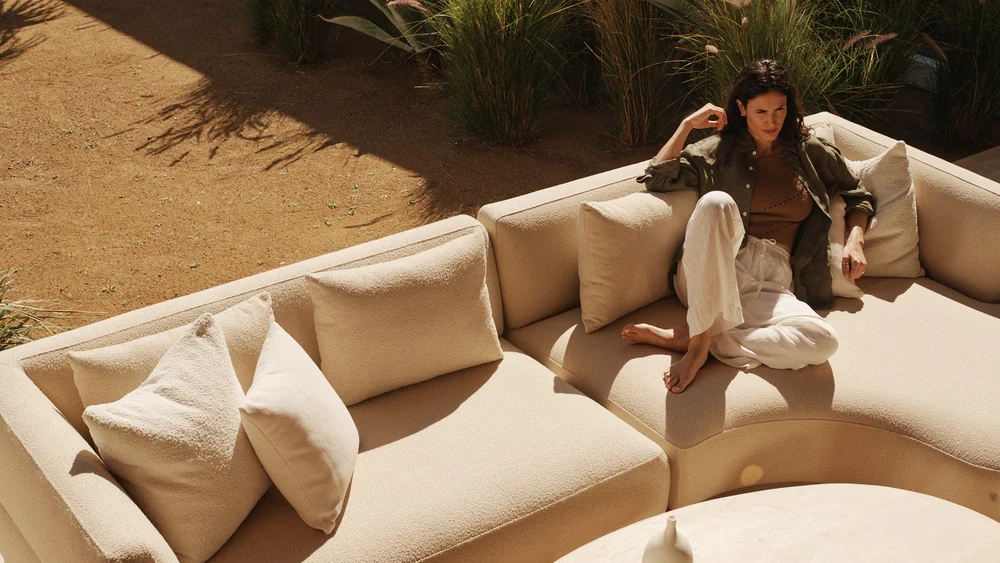
Rather than isolated pieces, contemporary outdoor furniture for coastal homes is increasingly designed as modular systems—allowing flexibility while maintaining visual coherence.
- Low-profile lounge systems that echo horizontal architectural lines.
- Integrated platforms that blur boundaries between furniture and flooring.
- Modular dining configurations adaptable to intimate or large-scale entertaining.
This architectural approach reinforces a sense of permanence, even in environments shaped by constant change.
Weight, Balance, and Wind
Oceanfront exposure introduces another invisible design force: wind. Furniture must achieve equilibrium between visual lightness and physical stability.
Design strategies include:
- Weighted bases concealed within refined silhouettes.
- Low center-of-gravity proportions.
- Anchoring systems integrated seamlessly into deck design.
Here, engineering discretion supports aesthetic clarity.
Material Intelligence: The New Luxury Code
Luxury in Miami is defined less by opulence and more by intelligence—materials chosen not only for beauty, but for relevance and resilience.
Teak Reconsidered
Long associated with nautical tradition, teak remains a cornerstone of Miami outdoor furniture, yet its application has evolved.
Contemporary design favors:
- Clean, rectilinear profiles over ornamental detailing.
- Responsibly sourced teak with verified sustainability certifications.
- Natural aging processes that allow silver patinas to emerge organically.
Teak’s quiet authority lies in its ability to harmonize with both modernist glass towers and tropical landscapes.
Advanced Composites and Stone Surfaces
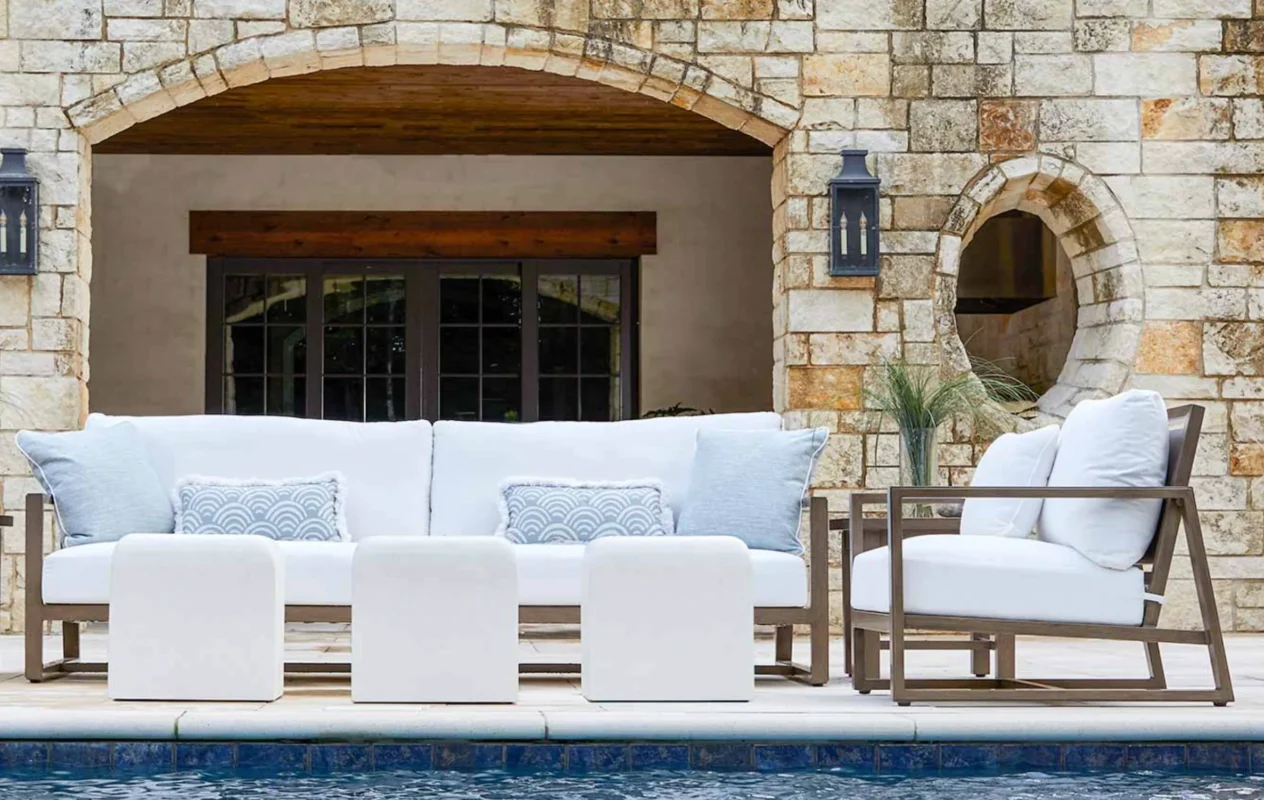
Sintered stone, engineered ceramics, and high-density composites offer unprecedented durability in coastal conditions.
Advantages include:
- Non-porous surfaces resistant to salt and staining.
- Thermal stability under direct sunlight.
- Visual depth that rivals natural stone without its vulnerabilities.
These materials align with Miami’s appetite for innovation grounded in performance.
Designing for the Miami Lifestyle
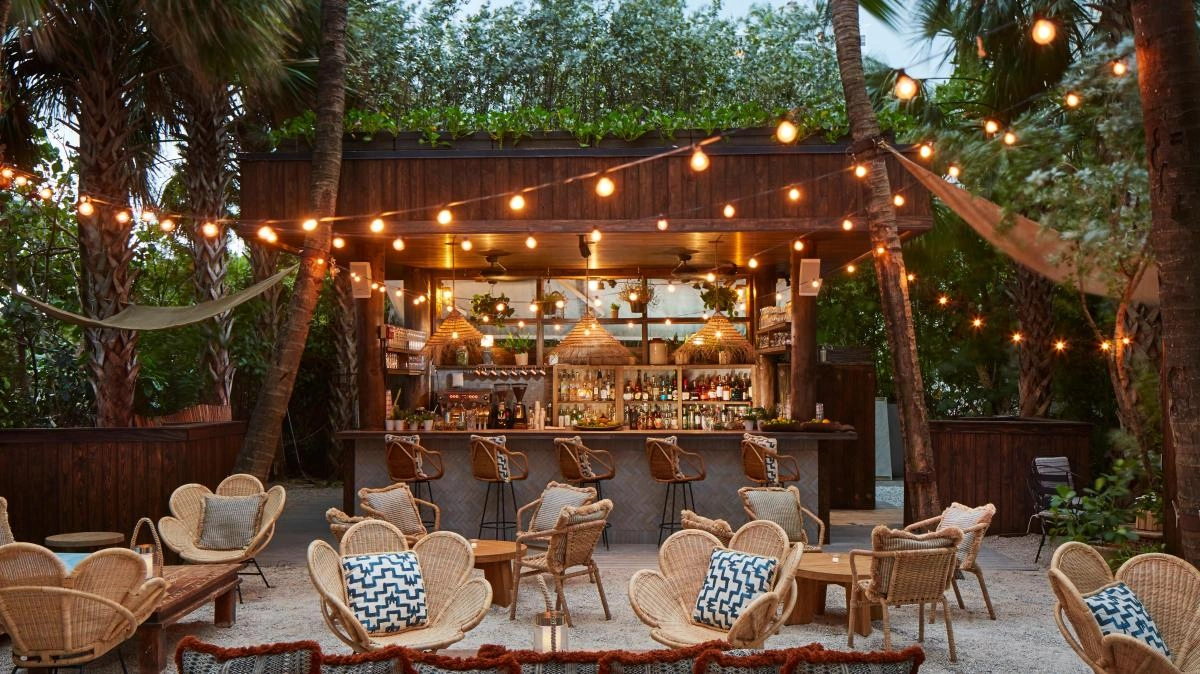
Oceanfront living in Miami is inherently social, fluid, and international. Outdoor spaces host morning rituals, midday solitude, and evening gatherings—all within a single day.
Day-to-Night Adaptability
Furniture must transition effortlessly across temporal moods.
- Neutral palettes that respond dynamically to changing light.
- Layered comfort through cushions, textures, and adaptable seating depths.
- Integrated lighting and shading strategies coordinated with furniture placement.
This adaptability reinforces outdoor spaces as lived-in environments rather than seasonal showcases.
Privacy and Exposure
Luxury oceanfront residences balance openness with discretion. Strategic furniture placement can frame views while defining intimate zones.
Low-profile lounge arrangements, sculptural screens, and asymmetrical layouts help create spatial rhythm without obstructing the horizon.
Sustainability in Coastal Luxury
Environmental awareness is increasingly integral to high-end coastal design. Sustainability in outdoor furniture for coastal homes extends beyond material sourcing to encompass longevity, reparability, and lifecycle impact.
According to the Architectural Digest perspective on sustainable outdoor design, durability is one of the most effective sustainability strategies—reducing replacement cycles and material waste.
- Modular components allow selective replacement rather than full disposal.
- Timeless design reduces trend-driven obsolescence.
- Materials selected for decades of use redefine value beyond initial investment.
Global Influence, Local Expression
Miami’s design language is inherently global—shaped by Latin American warmth, European modernism, and North American innovation. Outdoor furniture in oceanfront residences reflects this hybrid identity.
Clean architectural lines coexist with tactile comfort. Mediterranean sensibilities meet tropical pragmatism. The result is a distinctive expression of luxury outdoor furniture that feels both cosmopolitan and deeply rooted in place.
Designing for Endurance and Elegance
Designing Miami outdoor furniture for oceanfront residences is an exercise in balance—between exposure and protection, innovation and restraint, permanence and adaptability. Salt, sun, and structure are not obstacles, but essential parameters shaping meaningful design.
For architects, designers, and discerning homeowners, the future of outdoor living in Miami lies in furniture that performs as quietly as it inspires—anchored in material intelligence, architectural clarity, and cultural awareness.
In this environment, true luxury is not defined by excess, but by endurance—furniture that belongs to the landscape, the architecture, and the rhythm of oceanfront life itself.