

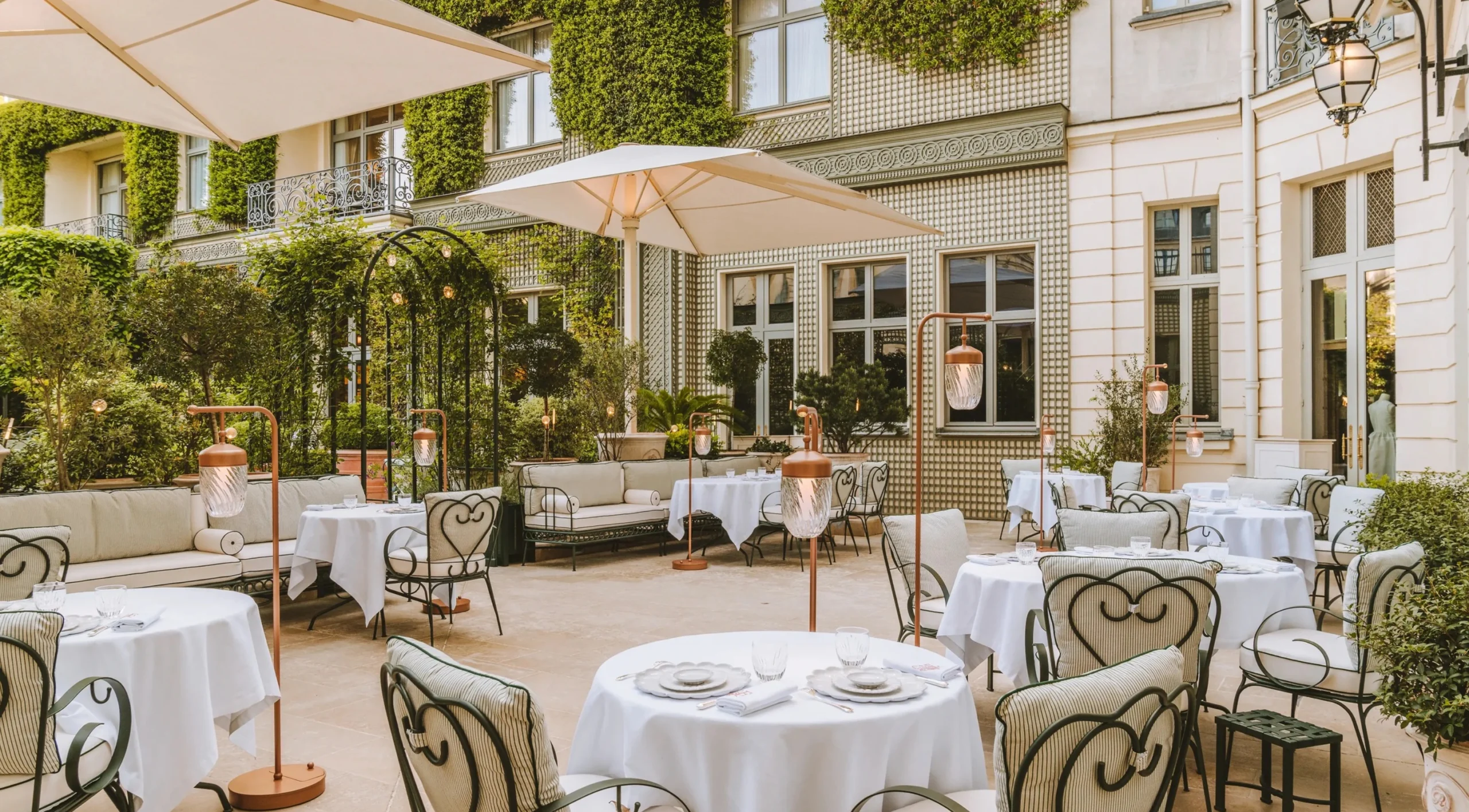
In an era of visual saturation and architectural excess, Parisian exterior design offers a counterpoint defined by discipline, proportion, and cultural intelligence. The city’s streetscapes—whether Haussmannian boulevards, discreet courtyard hôtels particuliers, or contemporary residential interventions—embody a philosophy of restrained architecture that values continuity over spectacle. This is the Parisian art of exterior restraint: a language of calm façades, measured materials, and subtle dialogue with history.
For architects, designers, and discerning homeowners worldwide, Paris remains a reference not because it shouts innovation, but because it whispers permanence. The city demonstrates how minimalist exterior design can be expressive without being demonstrative, luxurious without being loud. This article explores the principles, precedents, and cultural underpinnings that make Parisian exterior design a timeless model for contemporary practice.
Restraint as Cultural Intelligence
Restraint in Parisian architecture is not a stylistic limitation; it is a cultural ethic. Urban coherence has long been protected by planning frameworks that privilege harmony over individual assertion. Height regulations, material palettes, and façade rhythms are not obstacles to creativity—they are its framework.
This collective discipline has produced a city where architectural identity is shared rather than competed over. In this context, restrained architecture becomes an act of respect: for neighbors, for history, and for the public realm. The result is an exterior language that feels effortlessly elegant, even when deeply controlled.
The Grammar of Parisian Exterior Design
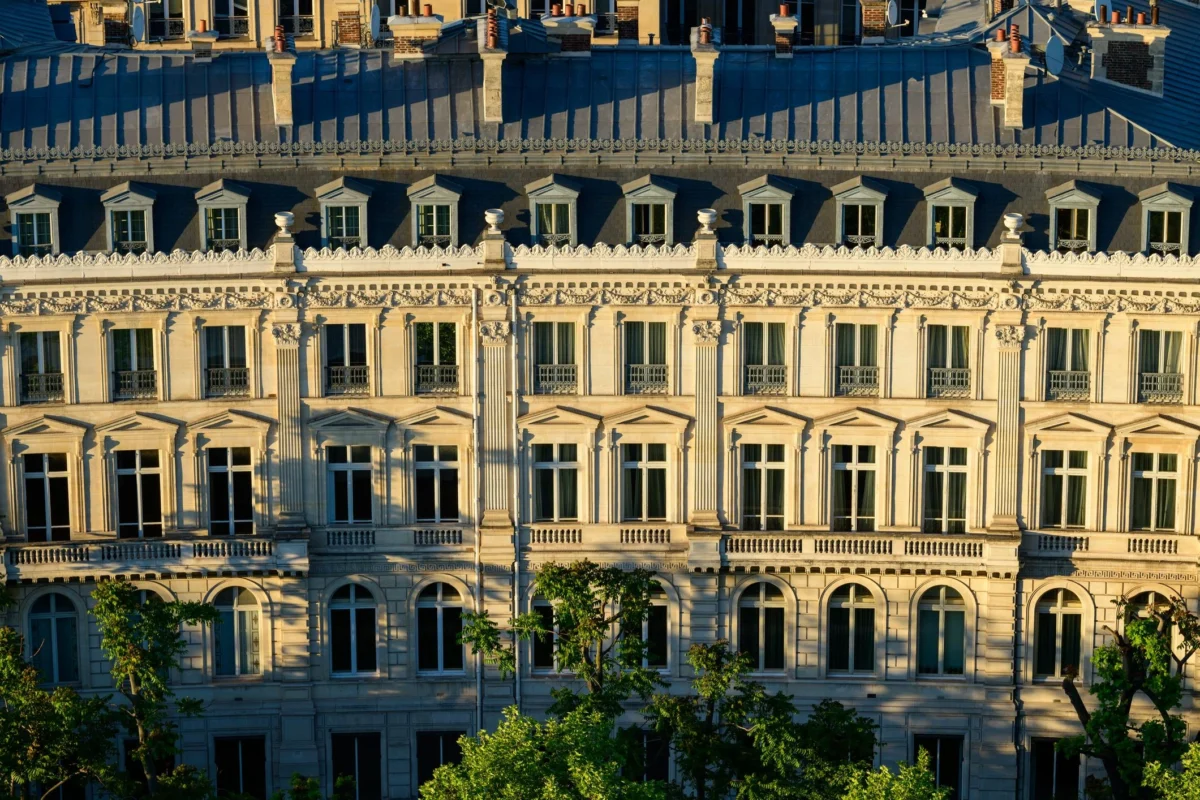
Like a refined language, Parisian exterior design operates through a clear grammar. Its rules are widely understood, yet endlessly adaptable.
- Proportion over ornament: façades rely on classical ratios and alignments rather than decorative excess.
- Material continuity: limestone, zinc, timber, and muted metal tones establish visual cohesion.
- Depth and shadow: balconies, reveals, and shutters introduce relief without visual noise.
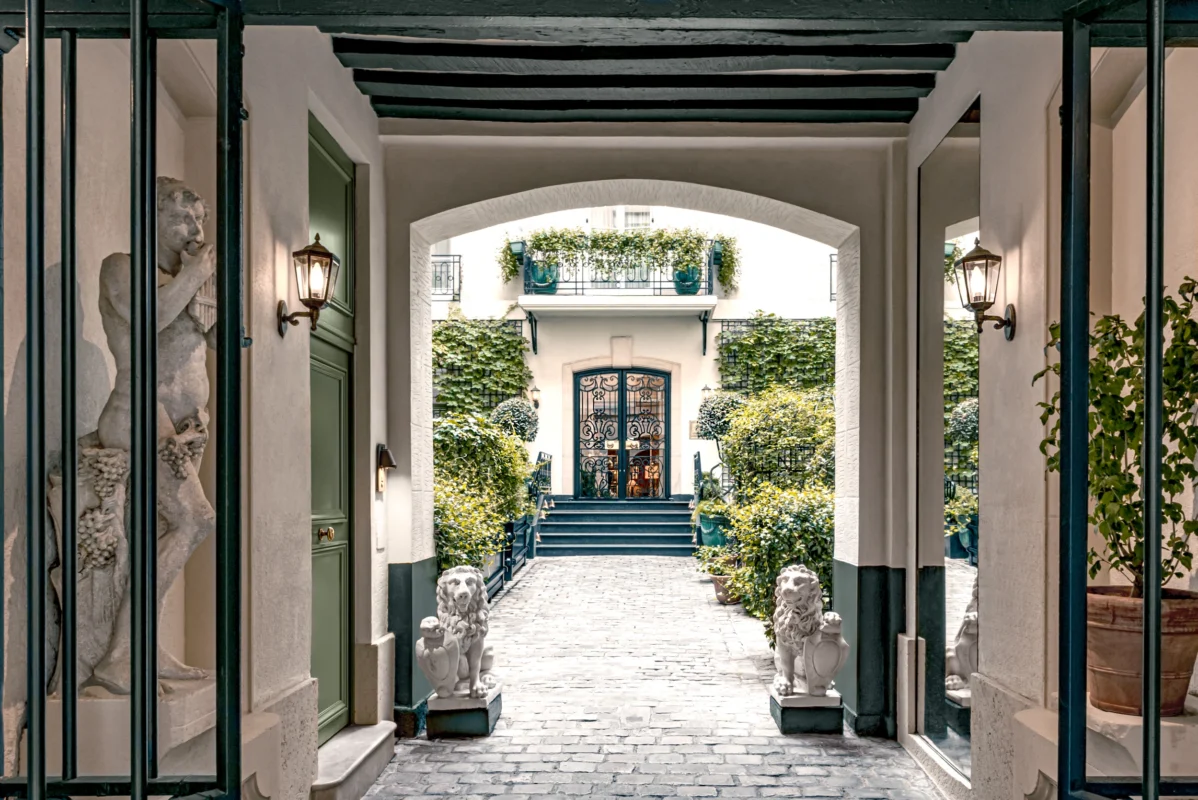
- Quiet transitions: thresholds between public and private spaces are marked subtly, often through texture rather than form.
This grammar allows both historic and contemporary buildings to coexist. Modern interventions succeed in Paris not by imitation, but by alignment—adhering to shared principles while expressing modern construction and living standards.
Minimalism, Parisian Style
While minimalism is often associated with stark reduction, minimalist exterior design in Paris is warmer and more nuanced. It does not seek absence, but balance. Surfaces are rarely blank; instead, they are carefully articulated with fine details that reward close observation.
Consider the contemporary Parisian townhouse: a restrained stone façade punctuated by slender metalwork, generous glazing set deep within the wall, and landscaping that feels cultivated rather than curated. The minimalism lies in what is withheld—color, excess form, unnecessary gesture—allowing material quality and proportion to take precedence.
What Paris Teaches Global Design
For international professionals, Parisian exterior design offers transferable lessons that extend far beyond France:
- Context is a design asset: responding to surroundings elevates a project’s long-term value.
- Luxury can be discreet: refinement is often more compelling than display.
- Consistency builds identity: cohesive environments age better than eclectic ones.
These principles resonate strongly in high-end residential and hospitality projects worldwide, where clients increasingly seek environments that feel grounded, calm, and enduring.
The Role of Landscape and Outdoor Living
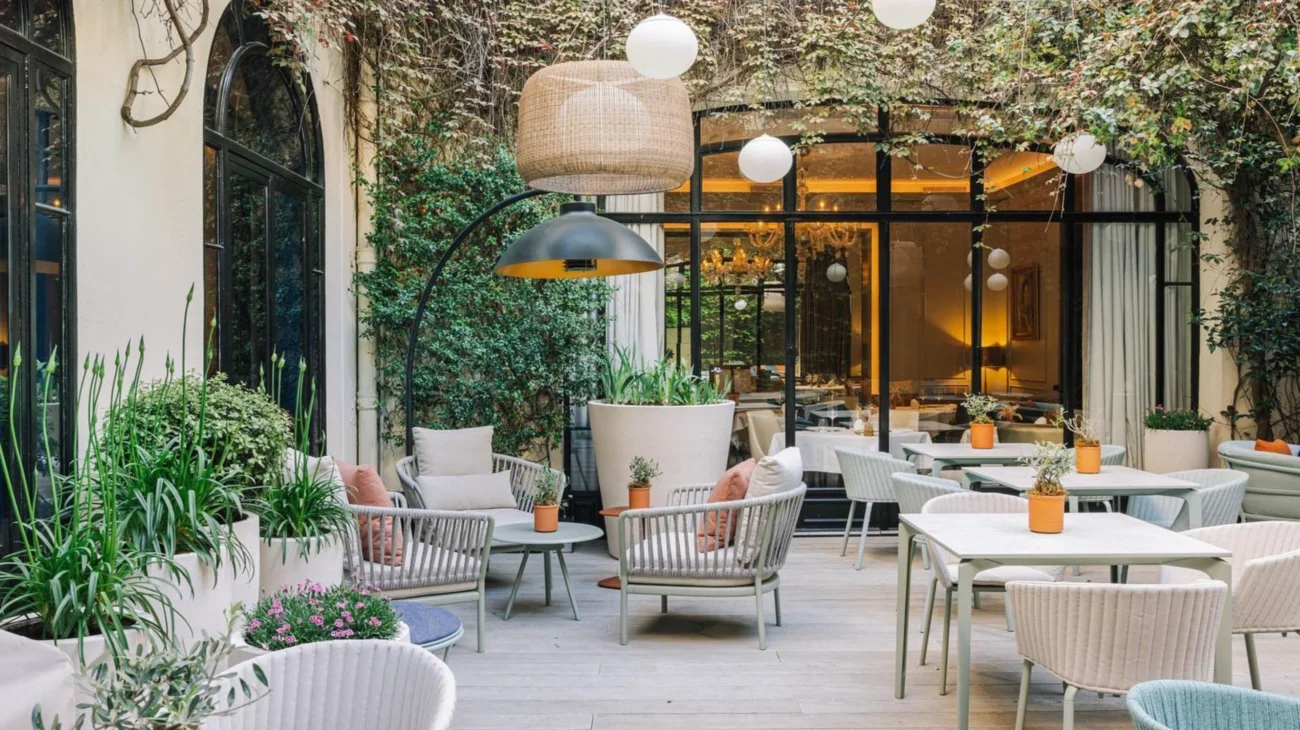
Exterior restraint in Paris extends seamlessly into outdoor spaces. Courtyards, terraces, and rooftops are conceived as extensions of architecture rather than decorative afterthoughts. Planting is structured yet naturalistic; furniture selections are deliberate, favoring longevity and visual quiet.
This approach reframes outdoor living as a form of architectural continuity. In Parisian exterior design, the outdoors is not a stage set—it is a lived-in environment shaped by the same principles as the façade. The result is a sense of effortless elegance that feels both urban and intimate.
Restraint in Contemporary Parisian Architecture
Recent architectural projects in Paris demonstrate that restraint is not incompatible with innovation. Contemporary buildings often employ advanced technologies—high-performance glazing, sustainable materials, and modular construction—while maintaining visual discretion.
These projects illustrate how restrained architecture can be forward-looking without disrupting urban harmony. Innovation is embedded, not advertised. This mindset aligns closely with global shifts toward sustainability and responsible luxury, where performance matters as much as appearance.
Authority and Preservation
Paris’s approach is reinforced by a strong culture of preservation and architectural review. Institutions such as the city’s planning authorities ensure that new constructions contribute to the collective identity. According to UNESCO, Paris’s historic urban landscape is recognized for its “exceptional coherence and harmony,” a designation that underscores the value of restraint as a civic virtue (UNESCO World Heritage Centre).
Aspiration Through Understatement
For high-net-worth individuals, the appeal of Parisian exterior design lies in its understated confidence. It signals cultural literacy and discernment rather than conspicuous consumption. Homes and buildings designed with restraint project stability, taste, and a long-term vision—qualities increasingly prized in a volatile world.
This aspirational quality is subtle but powerful. It suggests that true luxury does not need explanation; it is understood through proportion, material, and silence.
The Enduring Relevance of Restraint
The Parisian art of exterior restraint is not a nostalgic attachment to the past. It is a living, evolving philosophy that continues to inform contemporary design across the globe. By embracing Parisian exterior design, architects and designers rediscover the value of limits as creative catalysts.
In a global landscape often driven by immediacy and visual impact, Paris reminds us that architecture gains authority through patience, coherence, and cultural continuity. Minimalist exterior design, when guided by restraint, becomes not an aesthetic trend but a lasting expression of civilized living.
For those shaping the future of the built environment, the lesson is clear: elegance endures when it is measured, contextual, and quietly confident.