

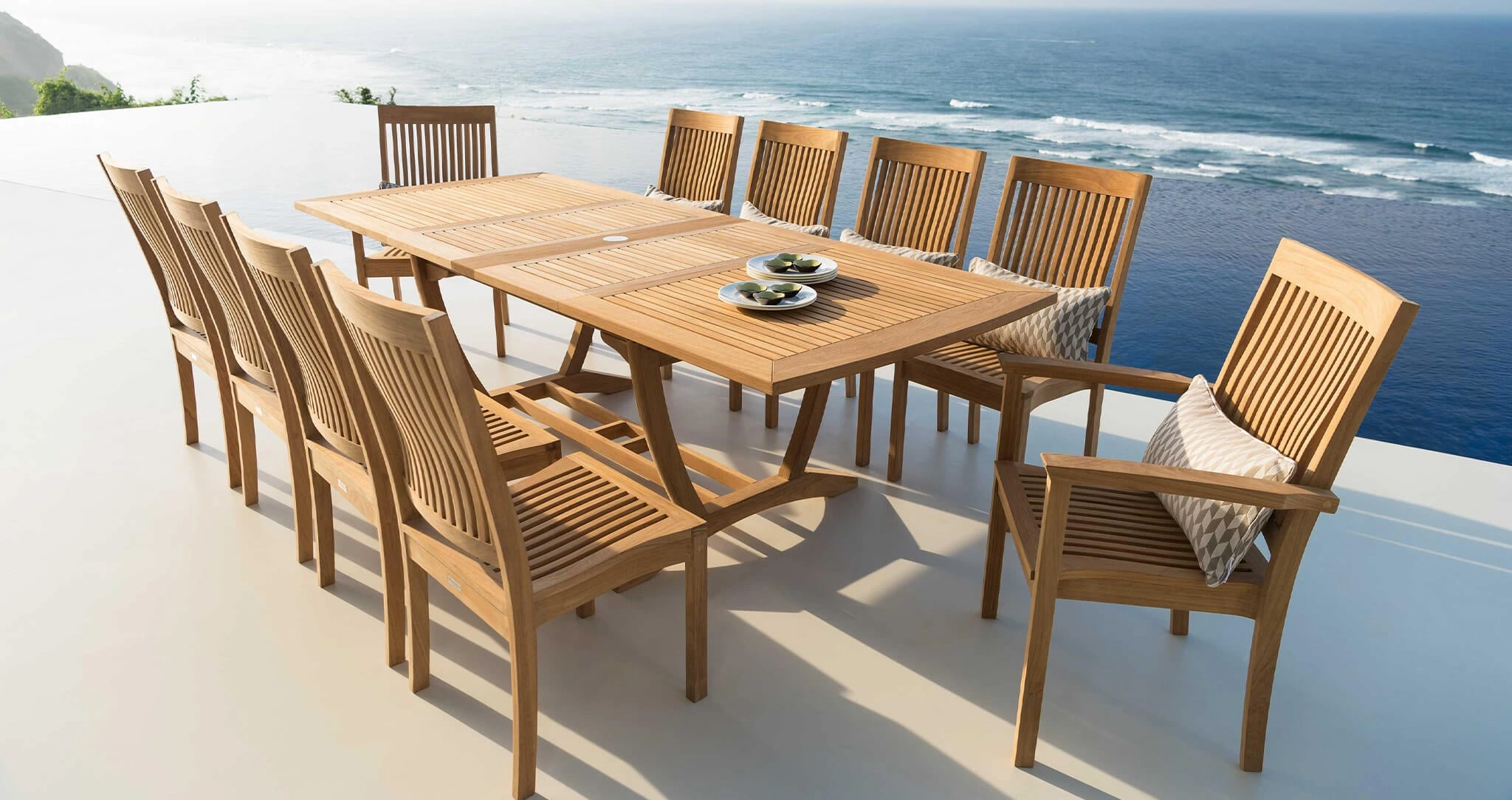
Among all materials used in luxury outdoor furniture, few command the enduring respect of architects and designers like teak. From the decks of classic yachts to contemporary coastal villas and urban terraces, teak outdoor furniture has maintained a reputation for structural integrity, refined patina, and quiet prestige. While materials and technologies evolve, teak remains a constant—chosen not out of nostalgia, but because it performs exceptionally well under demanding environmental conditions.
This article examines how teak outdoor seating ages, how it performs across climates, and why design professionals continue to specify teak furniture in high-end residential, hospitality, and yachting projects. For decision-makers seeking both aesthetic longevity and material intelligence, teak represents far more than tradition—it embodies resilience, tactility, and architectural harmony.
The Botanical and Material Intelligence of Teak
Teak (Tectona grandis) is a tropical hardwood native to South and Southeast Asia. Its global prominence stems from a unique cellular structure rich in natural oils and rubber compounds. These oils act as built-in protectants, giving teak outdoor furniture exceptional resistance to moisture, pests, fungi, and decay.
According to the Food and Agriculture Organization of the United Nations (FAO), responsibly managed teak plantations have become an important model for sustainable hardwood forestry, supporting both environmental and economic resilience in producing regions.
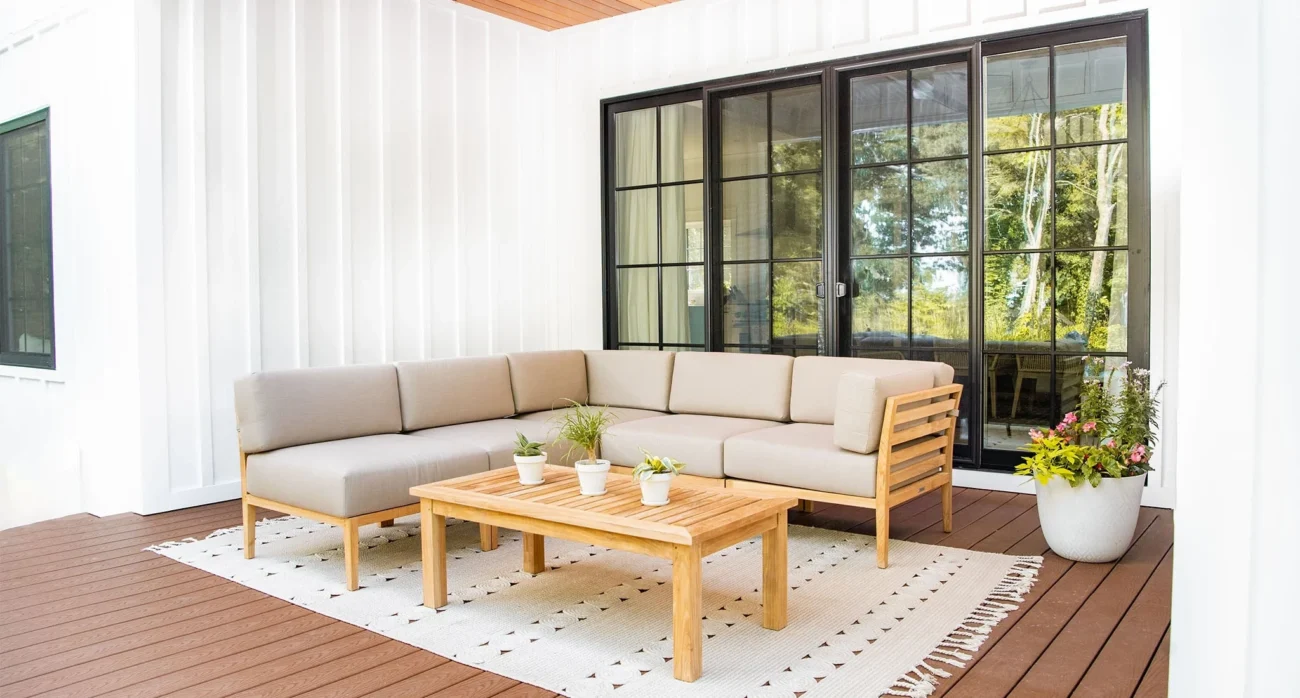
Key Performance Characteristics
- Natural oil content: Provides inherent weather resistance without chemical treatment.
- High dimensional stability: Minimizes warping, cracking, and swelling.
- Density and strength: Ensures structural reliability for seating applications.
- Resistance to insects and rot: Extends lifespan in humid and coastal environments.
For designers specifying luxury outdoor furniture in challenging climates—Mediterranean heat, tropical humidity, alpine freeze-thaw cycles—teak offers reassurance that extends beyond aesthetics.
How Teak Outdoor Seating Ages
One of teak’s most celebrated qualities is the way it evolves. Freshly milled teak displays a warm honey-brown tone with subtle grain variation. When exposed to sun and air, the surface gradually oxidizes, transitioning into a soft silver-grey patina. This transformation is entirely cosmetic and does not compromise structural integrity.
The Patina Process Explained
The silvering of teak outdoor furniture occurs as ultraviolet light breaks down surface pigments. The natural oils remain within the wood fibers, preserving durability even as the color changes. For many architects and landscape designers, this aging process is not a drawback but a design feature—allowing outdoor spaces to integrate harmoniously with stone, concrete, and vegetation over time.
Two Distinct Aesthetic Paths
- Natural Silver Patina: Minimal maintenance, organic appearance, ideal for contemporary and coastal projects.
- Maintained Golden Finish: Periodic cleaning and oiling preserve the original tone for projects requiring visual continuity.
In either case, teak furniture retains its structural strength for decades. Unlike many alternative hardwoods or composite materials, surface aging does not indicate material fatigue.
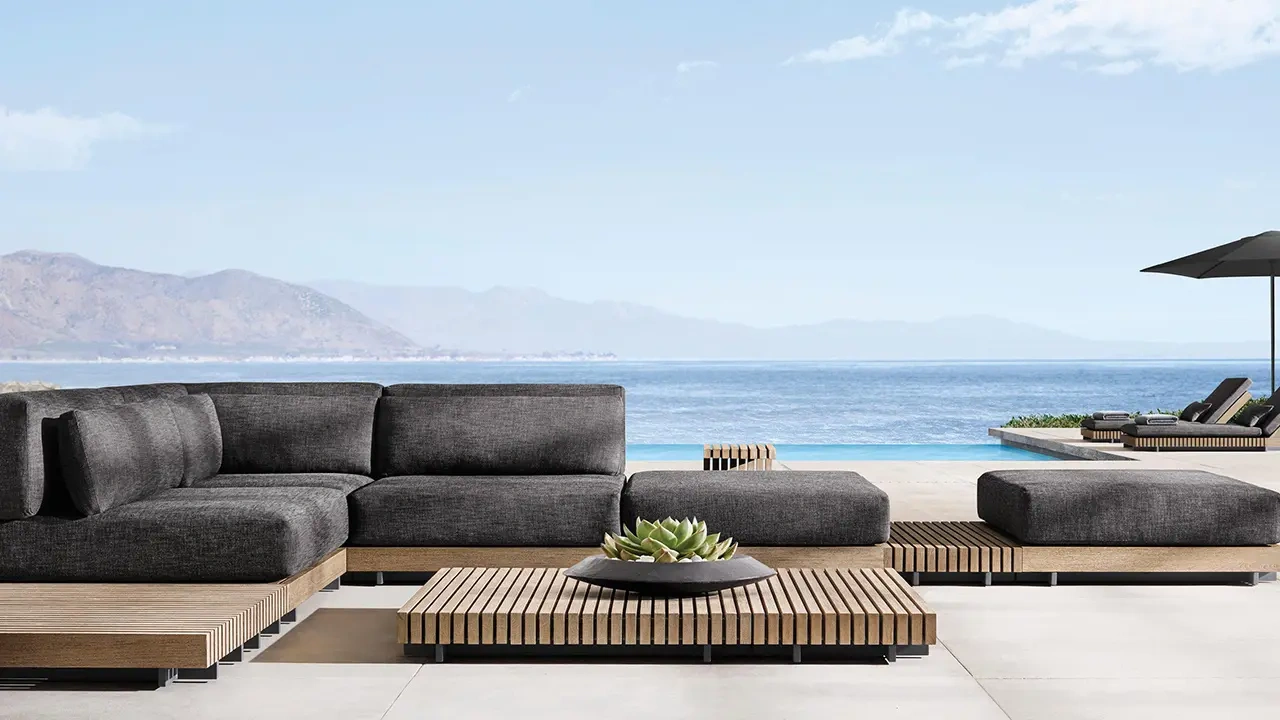
Performance in Diverse Climates
Design professionals select teak outdoor furniture not only for its visual warmth, but for its consistent performance across geographical extremes.
Mediterranean and Arid Regions
In sun-drenched climates, teak’s natural oils reduce the risk of drying and cracking. Its density resists deformation under prolonged heat exposure, making it a reliable material for terraces and poolside environments.
Coastal Environments
Salt air is notoriously corrosive. While metal furniture may require protective coatings, teak outdoor seating withstands saline conditions with minimal degradation. This explains its long-standing use in marine applications and yacht decking.
Cold and Variable Climates
In colder regions, freeze-thaw cycles can stress porous materials. Teak’s tight grain structure limits water absorption, reducing the risk of internal expansion and cracking. Proper drainage design further enhances longevity.
Why Designers Still Choose Teak
Despite the emergence of advanced synthetics, powder-coated metals, and engineered composites, teak furniture continues to anchor high-end outdoor collections. The reasons extend beyond durability.
1. Architectural Compatibility
Teak’s neutral warmth complements diverse architectural languages—from minimalist concrete villas to classical estates. Its organic texture softens rigid geometries and introduces human scale into expansive outdoor spaces.
2. Tactility and Comfort
Unlike metal surfaces that overheat or chill dramatically, teak maintains a moderate surface temperature. For seating applications, this enhances user comfort even before cushions are introduced.
3. Longevity as a Sustainability Strategy
True sustainability is measured in lifespan. Luxury outdoor furniture made from responsibly sourced teak can last for decades, reducing replacement cycles and embodied carbon over time. When properly maintained, teak becomes an intergenerational asset rather than a disposable product.
4. Investment Value
High-quality teak outdoor furniture often appreciates in perceived value as it matures. In luxury real estate staging and hospitality projects, this material communicates permanence and thoughtful curation.
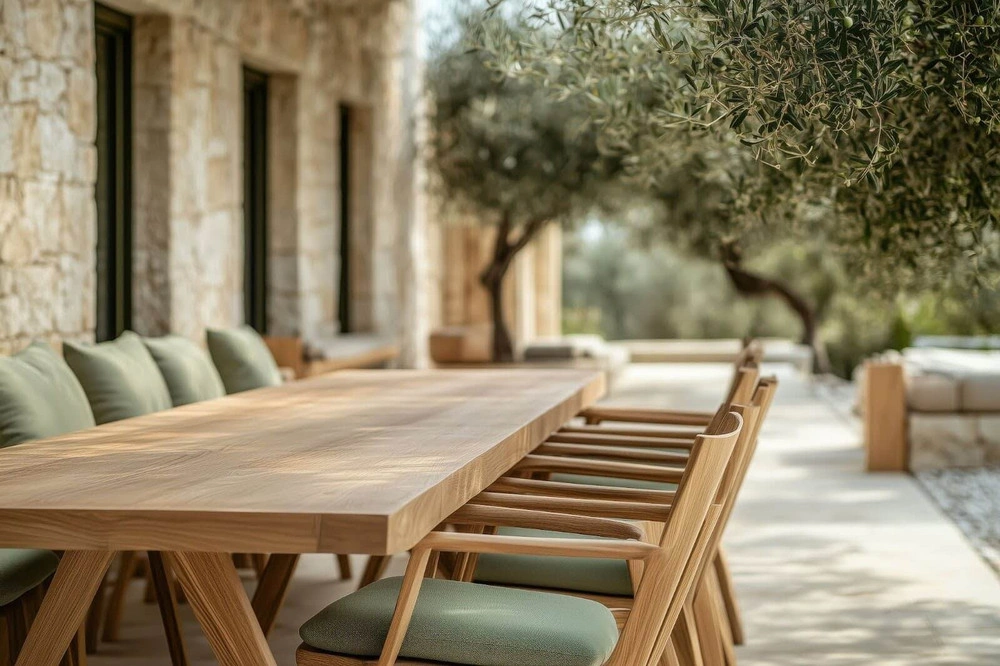
Teak in Contemporary Luxury Outdoor Furniture Design
Today’s leading designers reinterpret teak through refined joinery, modular systems, and hybrid material compositions. Powder-coated aluminum frames may be paired with teak armrests; woven performance textiles may contrast against solid teak bases. The material adapts seamlessly to modern innovation.
Design Trends Shaping Teak Outdoor Seating
- Low-profile lounge silhouettes that emphasize horizontality.
- Sculptural frames showcasing precision joinery.
- Mixed-material compositions integrating stone, rope, and performance fabrics.
- Modular configurations for adaptable outdoor living spaces.
In each iteration, teak furniture provides a grounding presence—a material counterpoint to technological refinement.
Maintenance: Balancing Ease and Intention
One of the most frequently asked questions by property owners and developers concerns maintenance. The answer depends on aesthetic preference rather than structural necessity.
Essential Care Guidelines
- Clean periodically with mild soap and water to remove debris.
- Allow natural patina to develop for a low-maintenance approach.
- Apply teak protector (not oil) if preserving original color is desired.
- Avoid pressure washing, which may erode surface fibers.
Importantly, teak outdoor seating does not require sealing to remain structurally sound. Its resilience is inherent, not applied.
Teak and the Psychology of Outdoor Living
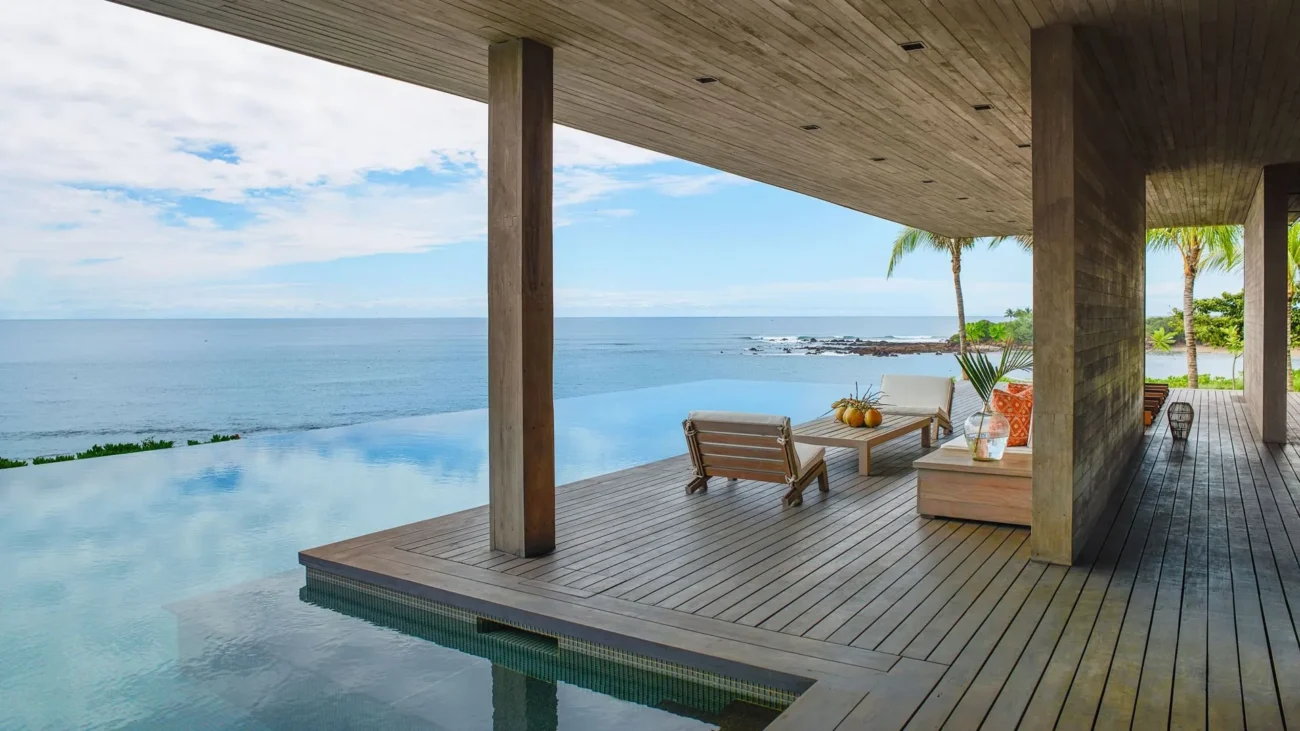
Beyond technical performance, teak resonates on a sensory and cultural level. The material carries associations of maritime heritage, colonial verandas, and Mediterranean terraces overlooking the sea. In contemporary design, these references are distilled into refined, globally fluent expressions.
For high-net-worth individuals investing in luxury outdoor furniture, teak signals discernment. It suggests permanence in a transient world and craftsmanship in an era of mass production. For architects and designers, it offers a dependable palette—one that evolves gracefully rather than deteriorates.
Comparing Teak to Alternative Materials
Teak vs. Aluminum
Aluminum is lightweight and corrosion-resistant, yet lacks the organic warmth of teak outdoor furniture. While both materials perform well, teak introduces textural depth and visual softness.
Teak vs. Synthetic Rattan
Synthetic fibers offer weather resistance but may degrade under prolonged UV exposure. By contrast, teak furniture maintains structural integrity even as its surface tone evolves.
Teak vs. Other Hardwoods
Many hardwoods require chemical treatment to achieve outdoor durability. Teak’s performance is intrinsic, reducing reliance on added finishes and preservatives.
The Enduring Relevance of Teak Outdoor Furniture
Material trends fluctuate, yet teak endures because it satisfies three fundamental criteria:
- Performance: Exceptional durability in diverse climates.
- Aesthetics: A graceful aging process that enhances character.
- Value: Long-term reliability aligned with sustainable principles.
For design professionals shaping outdoor environments—from private villas to boutique hotels—teak outdoor furniture remains a strategic choice. It bridges heritage and innovation, offering both tactile pleasure and technical assurance.
A Material That Evolves with Architecture
In an age increasingly defined by rapid consumption, teak stands as a material of patience. Its transformation from golden warmth to silver elegance mirrors the maturation of architecture itself—rooted in structure, enriched by time.
Teak outdoor seating continues to define benchmarks in luxury outdoor furniture because it performs without spectacle. It ages without decline. And it aligns with the values of designers and discerning clients who understand that true luxury is measured not only by appearance, but by endurance.
For those curating outdoor spaces that aspire to longevity and cultural resonance, teak furniture remains not simply a choice—but a considered commitment to timeless design.