

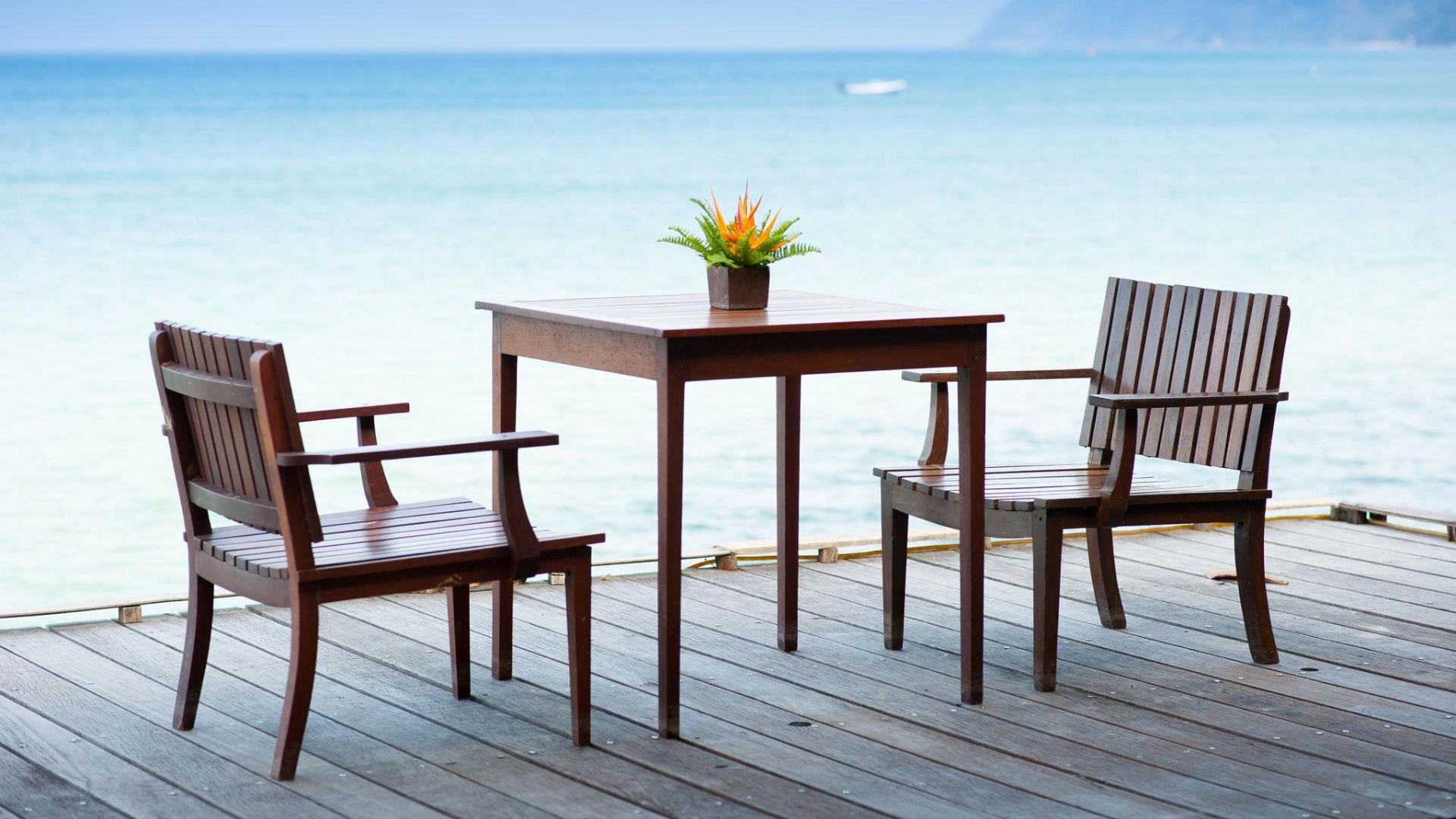
Designing a second home along the coast is an exercise in paradox. These residences are at once deeply personal and sporadically inhabited; architecturally expressive yet required to withstand salt, sun, humidity, and time. For architects, interior designers, and discerning homeowners, furnishing coastal second homes demands a thoughtful balance between durability and refinement, ease and elegance, permanence and flexibility.
Unlike primary residences, beach properties often sit empty for months before welcoming a surge of life—family gatherings, holiday celebrations, long summer evenings. The design challenge is therefore distinct: spaces must feel immediately inviting, effortlessly functional, and resilient to environmental stress. In this context, curated beach house furniture ideas are not aesthetic afterthoughts but strategic decisions shaping both experience and long-term asset value.
This article explores how to approach high-end vacation home design with clarity and foresight, while crafting luxury coastal interiors that embody timeless sophistication and intelligent living.
Understanding Intermittent Living in Coastal Homes
Intermittent living defines the rhythm of many coastal second homes. Occupancy fluctuates between extended vacancy and periods of intense use. Furniture and spatial planning must therefore address three core realities:
- Environmental exposure: Salt air, UV radiation, sand, and humidity accelerate wear.
- Maintenance cycles: Limited oversight between visits requires low-maintenance solutions.
- Immediate usability: Spaces must feel ready and welcoming from the moment of arrival.
In practice, successful high-end vacation home design begins with durability as a design principle—not a compromise. Materials, finishes, and construction techniques must be specified with marine climates in mind.
Material Intelligence: Designing for Salt, Sun, and Silence
Resilient Frames and Structural Integrity
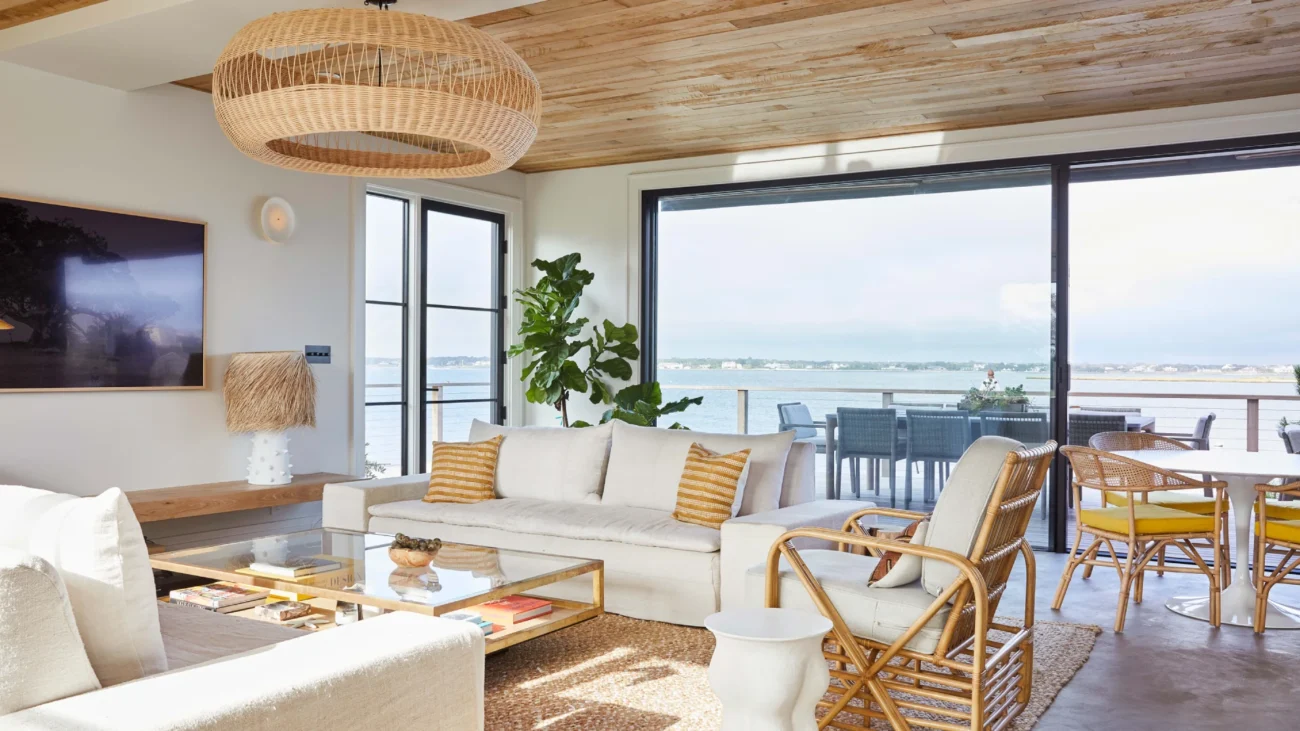
In coastal environments, furniture must be conceived almost architecturally. Powder-coated aluminum, marine-grade stainless steel, and responsibly sourced teak offer structural stability against corrosion and warping. These materials are essential in outdoor terraces, shaded verandas, and transitional loggias.
For covered spaces, premium hardwoods treated with natural oils provide warmth without sacrificing endurance. The best beach house furniture ideas embrace materials that patinate gracefully rather than deteriorate, allowing time to enhance rather than erode the design narrative.
Performance Textiles Without Aesthetic Compromise
Contemporary performance fabrics have revolutionized luxury coastal interiors. Solution-dyed acrylics, high-performance linens, and outdoor-rated bouclé textiles now combine tactile richness with resistance to fading and mildew.
Layering textures—stonewashed linen cushions over structured outdoor sofas, woven rope accents paired with sculptural ceramic tables—creates visual depth while maintaining resilience. In high-end vacation home design, beauty and functionality must operate seamlessly.
Spatial Strategies for Homes That Rest and Reawaken
Flexible Layouts for Varied Occupancy
A coastal second home may host two people in autumn and twelve in August. Modular seating, extendable dining tables, and lightweight occasional chairs allow spaces to expand and contract effortlessly.
Among the most effective beach house furniture ideas are:
- Sectional outdoor sofas with reconfigurable modules.
- Stackable or foldable dining chairs in refined materials.
- Nesting side tables for adaptable entertaining.
- Built-in banquettes with concealed storage.
Such adaptability ensures that luxury coastal interiors feel neither underfurnished during quiet seasons nor overcrowded during peak occupancy.
Indoor–Outdoor Continuity
In coastal architecture, thresholds matter. Sliding glass walls, shaded pergolas, and sea-facing terraces dissolve boundaries between interior and exterior living. Furniture selection should reinforce this continuity.
Repeating materials—such as teak frames inside and out, or consistent upholstery palettes—creates visual coherence. This integrated approach elevates high-end vacation home design beyond decorative styling into spatial storytelling.
Color, Light, and Atmosphere
Beyond Nautical Clichés
True luxury coastal interiors resist overt thematic references. Instead of predictable navy-and-white schemes, sophisticated palettes draw from natural surroundings:
- Mineral whites and limestone beiges
- Muted sage and olive tones
- Soft sand, driftwood, and clay hues
- Deep oceanic greens and stormy blues used sparingly
These palettes anchor beach house furniture ideas in authenticity rather than pastiche, aligning the home with its environment.
Harnessing Natural Light
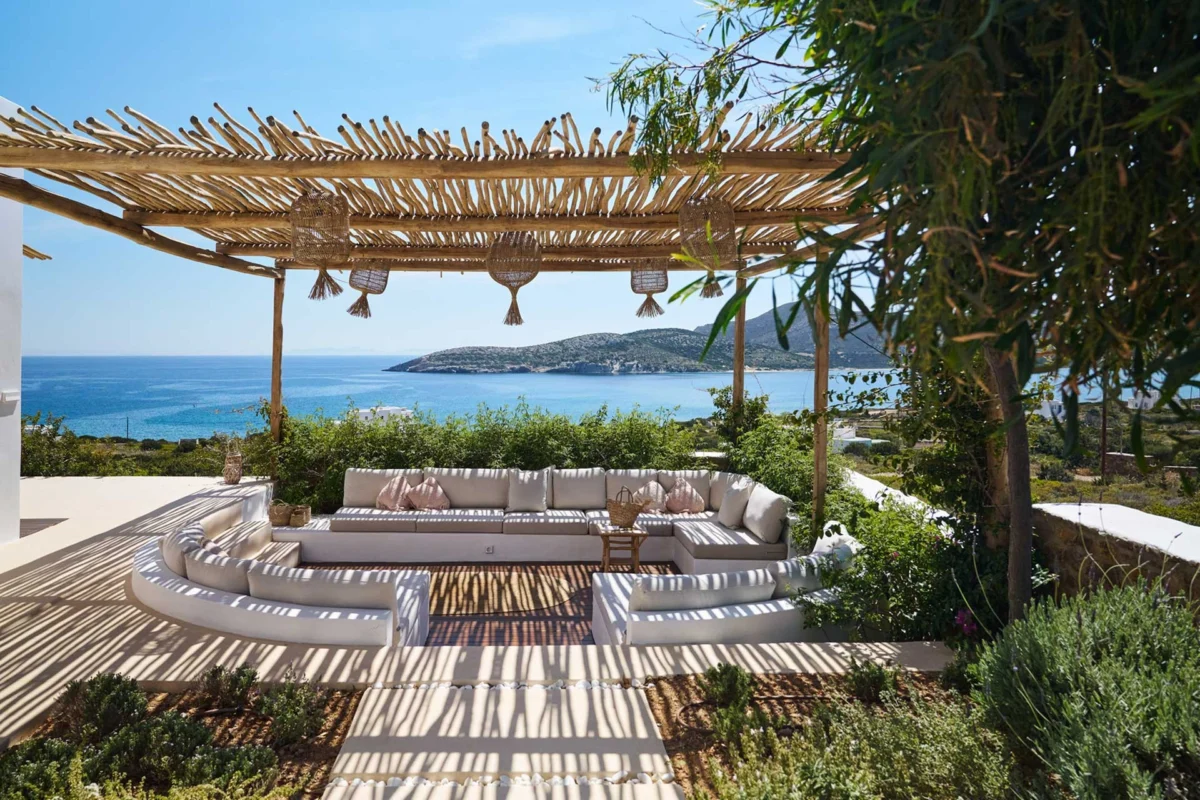
Coastal properties are defined by luminosity. Sheer draperies, textured glass, and reflective natural materials amplify daylight while diffusing glare. Carefully positioned mirrors and pale stone surfaces further enhance brightness.
In high-end vacation home design, light becomes an architectural material—one that shapes mood and perception throughout the day.
Low-Maintenance Luxury: Designing for Absence
Smart Storage and Protective Measures
Because these homes remain vacant for extended periods, thoughtful storage is essential. Protective covers tailored to furniture dimensions, integrated cabinetry for cushions, and climate-controlled storage rooms preserve investment pieces.
Consider implementing:
- Ventilated storage benches on terraces.
- Custom cabinetry for seasonal textiles.
- Humidity-regulating systems with remote monitoring.
- Lockable display cabinets for art and collectibles.
Such strategies ensure that luxury coastal interiors retain their integrity between visits.
Timeless Over Trend-Driven
Second homes are long-term assets. Furniture selections should prioritize enduring design languages over ephemeral trends. Sculptural silhouettes, neutral foundations, and artisanal craftsmanship maintain relevance across decades.
The most successful beach house furniture ideas combine restraint with distinctive detail—handwoven rope backs, honed stone tabletops, or subtly curved teak frames. In high-end vacation home design, understatement communicates confidence.
Outdoor Rooms as Extensions of Living
The Terrace as Primary Living Space
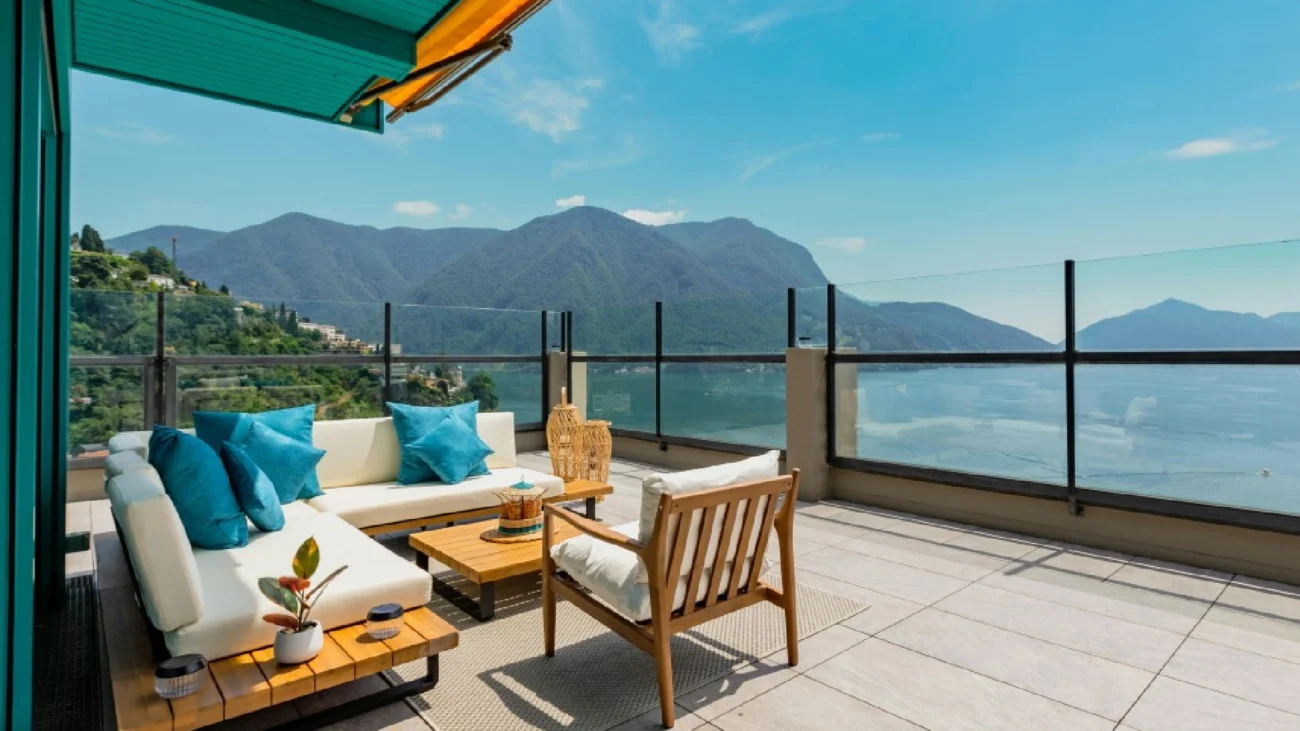
In Mediterranean, Caribbean, and Pacific contexts alike, the terrace often becomes the true heart of the home. Outdoor lounges, dining areas, and shaded reading corners deserve the same design rigor as interiors.
Zoning outdoor areas enhances usability:
- Lounge zone: Deep seating oriented toward views.
- Dining zone: Generous tables accommodating extended gatherings.
- Retreat zone: Daybeds or chaise longues positioned for privacy.
When thoughtfully curated, these arrangements elevate luxury coastal interiors into holistic indoor–outdoor compositions.
Weather-Responsive Accessories
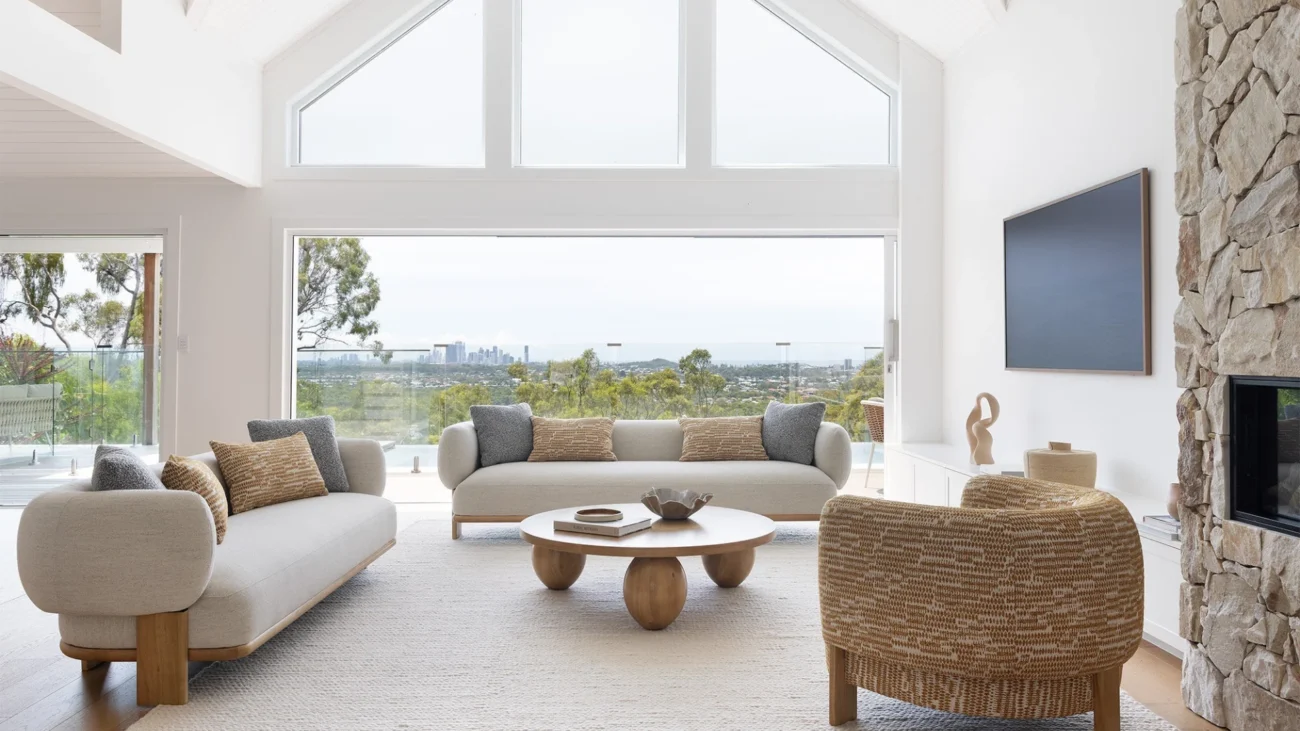
Umbrellas in neutral canvases, sculptural fire features for cooler evenings, and portable lanterns with rechargeable LED systems enhance flexibility. Accessories in premium materials—ceramic, handblown glass, braided marine rope—add character without fragility.
These layers refine beach house furniture ideas, transforming terraces into immersive environments aligned with the principles of high-end vacation home design.
Art, Craft, and Cultural Context
A second home should reflect its geographic and cultural setting. Commissioning local artisans for ceramics, woven textiles, or carved wood accents embeds authenticity into the design narrative.
In luxury coastal interiors, art selection often gravitates toward abstract seascapes, textured canvases, and sculptural objects that echo natural forms. However, restraint is critical. Intermittent living calls for curated minimalism rather than over-layered decor.
Investment Perspective: Designing for Long-Term Value
For real estate professionals and high-net-worth owners, design choices directly influence property valuation. Durable materials reduce lifecycle costs. Cohesive indoor–outdoor planning enhances market appeal. Energy-efficient shading and ventilation strategies increase sustainability credentials.
Thoughtful high-end vacation home design not only elevates daily experience but also strengthens the asset’s competitive positioning within the luxury market. Carefully considered beach house furniture ideas become part of the home’s architectural identity, contributing to its perceived permanence and prestige.
Designing for Arrival: The Emotional Dimension
Perhaps the most profound objective in furnishing coastal second homes is emotional immediacy. After months away, owners should arrive to spaces that feel serene, composed, and effortlessly beautiful.
Achieving this requires:
- Clutter-free surfaces.
- Neutral foundational palettes.
- Layered but restrained textiles.
- Furniture scaled generously for comfort.
When executed with precision, luxury coastal interiors evoke calm rather than complexity. They allow architecture, landscape, and horizon to take precedence.
The Art of Designing for Intermittent Living
Furnishing coastal second homes is an exercise in foresight and refinement. It requires understanding environmental realities, anticipating patterns of occupancy, and curating materials that mature gracefully over time.
By integrating resilient craftsmanship, flexible spatial planning, and culturally attuned aesthetics, designers can create residences that withstand absence yet celebrate presence. The most compelling beach house furniture ideas support both durability and delight, while high-end vacation home design frames architecture as a lasting investment.
Ultimately, exceptional luxury coastal interiors are not defined by ornament, but by intention. They embody the quiet confidence of spaces designed to rest, to reawaken, and to endure—season after season, tide after tide.