

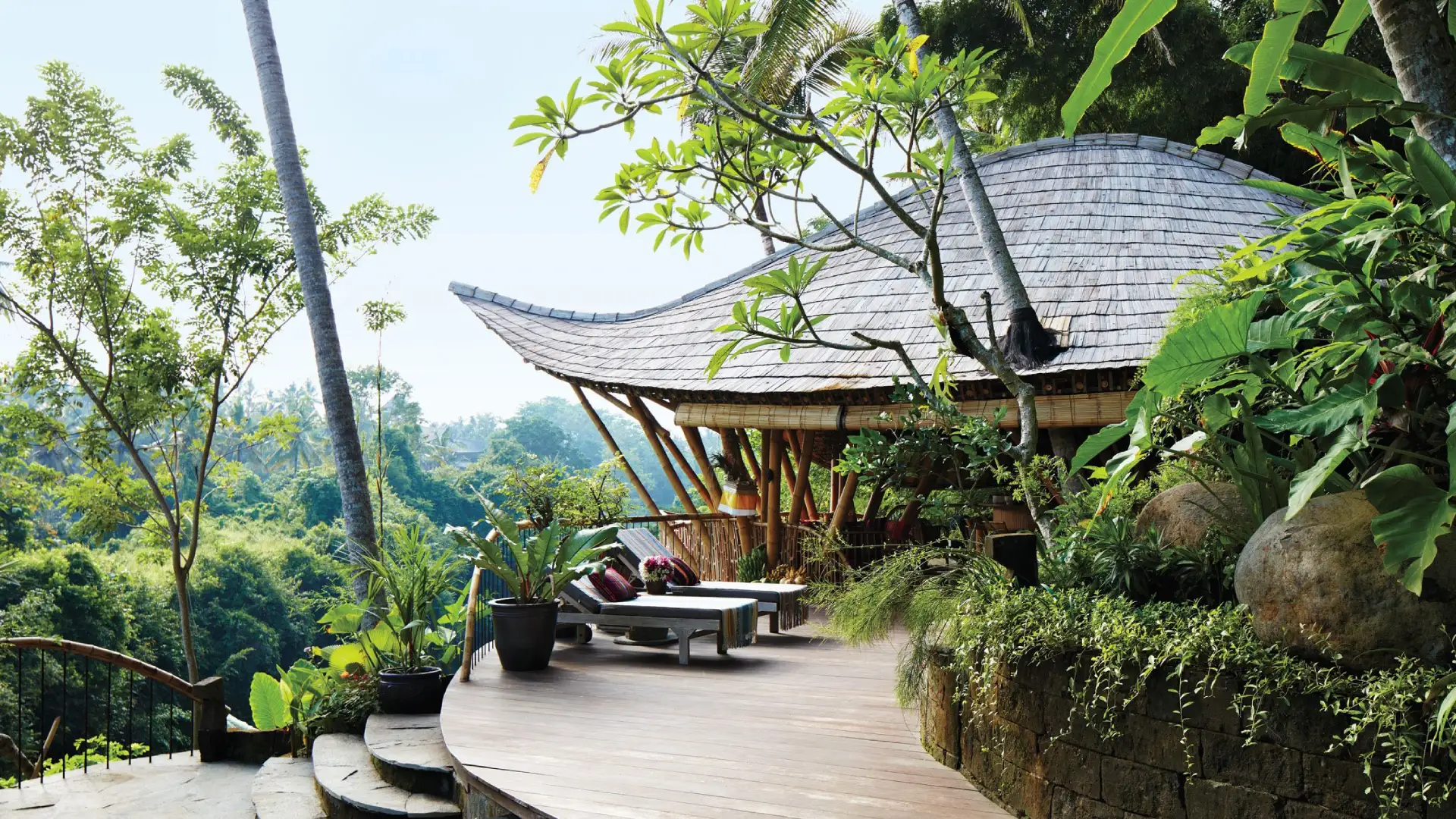
Across the Indonesian archipelago, Bali villas have become an international reference for
seamless indoor–outdoor living. Nestled between lush jungle canopies, terraced rice fields, and volcanic
landscapes, these residences redefine the concept of luxury through openness, climate responsiveness,
and a profound dialogue with nature. What distinguishes tropical villa architecture Bali is not
simply aesthetic beauty but a design philosophy rooted in balance — between architecture and landscape,
shelter and exposure, privacy and immersion.
For architects, designers, and global tastemakers, Bali represents a masterclass in
open living design. Outdoor living rooms unfold directly toward jungle valleys, infinity pools
appear suspended above tropical forests, and architecture dissolves boundaries that traditionally
separate interior and exterior spaces. The result is a refined yet relaxed lifestyle that feels deeply
connected to the environment.
In recent decades, Bali villas have attracted visionary architects and international property
investors eager to reinterpret tropical modernism. Today, these homes stand as some of the most
influential examples of contemporary resort-inspired residential design in the world.
The Philosophy Behind Tropical Villa Architecture in Bali
The origins of tropical villa architecture Bali lie in the island’s traditional compounds, where
pavilions were arranged around courtyards to encourage airflow, spiritual alignment, and harmony with
the surrounding landscape. Modern Bali villas reinterpret this heritage through contemporary
materials, structural innovation, and minimalist spatial planning.
Rather than imposing architecture onto the terrain, designers embrace the site’s natural contours.
Buildings cascade along hillsides, roofs follow jungle clearings, and pathways weave through
vegetation as if they had always belonged there. This philosophy reflects the Balinese concept of
Tri Hita Karana — the harmonious relationship between people, nature, and the spiritual realm.
In practical terms, this means that open living design is not simply stylistic; it is climatically
intelligent. By allowing breezes, daylight, and vegetation to shape the architecture, homes remain
cool, naturally ventilated, and intimately tied to their environment.
Outdoor Living Rooms: The Heart of Bali Villas
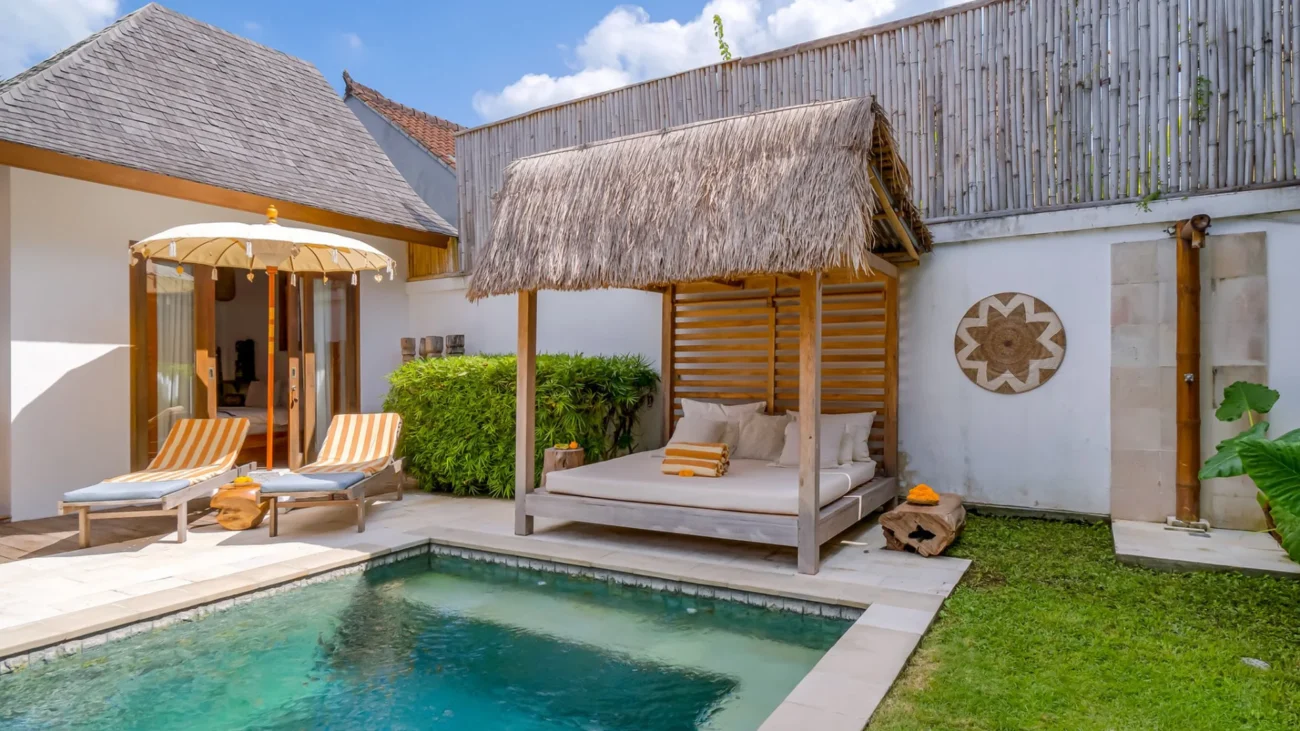
Perhaps the most iconic feature of contemporary Bali villas is the outdoor living room. Instead of
enclosed lounges, expansive pavilions open entirely toward the jungle or garden, creating a
transitional space that feels both protected and fully immersed in nature.
Within tropical villa architecture Bali, these spaces serve as the social and emotional center of
the home. Families gather for evening meals as cicadas begin their chorus, guests lounge beside
reflecting pools, and morning yoga sessions unfold with mist rising through the forest canopy.
Architecturally, the success of these spaces depends on proportion, orientation, and carefully chosen
materials. A typical outdoor living room integrates:
- Deep roof overhangs that protect from tropical rain and midday sun
- Open-sided pavilions supported by slender columns or timber frames
- Natural stone or terrazzo floors that remain cool underfoot
- Custom-built seating designed for relaxed, resort-style comfort
- Visual axes framing jungle views, rice terraces, or infinity pools
This refined interpretation of open living design transforms daily life into a sensory experience —
one where architecture quietly amplifies the rhythms of the landscape.
Materials that Root Architecture in the Landscape
Material selection is central to the character of Bali villas. While international designers often
bring contemporary sensibilities, they frequently rely on locally sourced materials that age
beautifully within the tropical climate.
Among the most common materials in tropical villa architecture Bali are:
- Teak and ironwood for structural beams and custom furniture
- Natural volcanic stone for walls, pathways, and water features
- Bamboo used in expressive roof structures and sculptural pavilions
- Polished concrete providing a modern yet understated base palette
- Handwoven rattan and textiles adding warmth and craftsmanship
These materials are not only visually harmonious with the jungle surroundings but also durable in
humid tropical conditions. Over time, patina and weathering deepen their character, reinforcing the
organic identity of the home.
Landscape as Architecture
In many Bali villas, landscape design is as important as the built structure itself. Rather than
formal gardens, architects collaborate with tropical landscape specialists to create environments
that feel almost untouched.
Dense vegetation frames the architecture while also providing privacy. Towering palms, heliconia,
frangipani, and banana trees soften the lines of modern structures and reinforce the sense that
the house belongs within the jungle ecosystem.
Key landscape elements commonly integrated into tropical villa architecture Bali include:
- Reflecting ponds that cool surrounding air
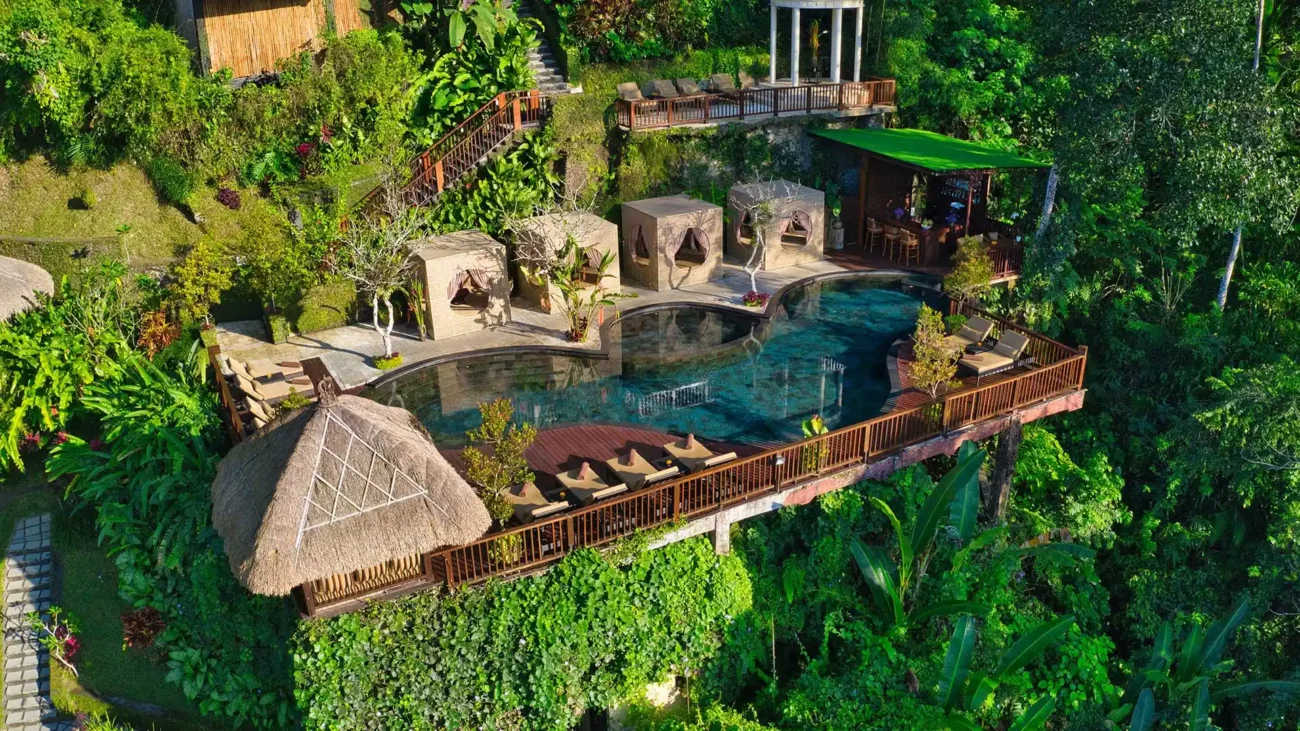
- Infinity-edge pools visually merging with jungle valleys
- Stone stepping paths winding through tropical gardens
- Open-air bathing pavilions surrounded by vegetation
- Sunken lounges designed for social gatherings outdoors
This layering of architecture and landscape strengthens the philosophy of open living design,
where nature becomes an integral component of daily living rather than a distant view.
Influential Architects Shaping Bali’s Villa Design
Over the past two decades, several architectural studios have helped define the contemporary
language of Bali villas. Their work blends tropical modernism, sustainability, and an
understanding of local craftsmanship.
Designers such as John Hardy’s celebrated Green School campus and visionary bamboo architect
Ibuku have demonstrated how organic structures can redefine tropical villa architecture Bali.
These projects explore innovative structural systems while maintaining a deep respect for the
island’s cultural context.
Similarly, international firms working in Bali often collaborate closely with local artisans, ensuring
that stone carving, woodwork, and textile traditions remain embedded in the design process.
According to the ArchDaily architecture platform,
Bali has become one of the most influential destinations for contemporary tropical architecture.
Sustainability and Climate Intelligence
A defining strength of tropical villa architecture Bali lies in its inherent sustainability. Long
before environmental design became a global priority, Balinese builders understood the value of
passive cooling, shading, and natural ventilation.
Today’s most innovative Bali villas continue this tradition through advanced yet discreet
strategies that enhance the efficiency of open living design.
Key Sustainable Strategies
- Cross ventilation created through open pavilions and aligned openings
- Deep roof overhangs reducing solar heat gain
- Rainwater harvesting systems integrated into landscape design
- Solar energy powering lighting and pool systems
- Local materials minimizing transportation impact
These approaches ensure that Bali villas remain comfortable while significantly reducing
energy consumption compared with conventional air-conditioned homes.
The Luxury Real Estate Appeal of Bali Villas
For international buyers and investors, Bali villas represent a compelling blend of lifestyle
and architectural prestige. Properties overlooking jungle valleys in Ubud, clifftop estates in Uluwatu,
and beachfront compounds in Canggu consistently attract global attention.
What differentiates these residences is not simply location but the experiential quality of
tropical villa architecture Bali. Owners are drawn to the emotional resonance of waking up
to birdsong, hosting dinners in candlelit pavilions, and enjoying an uninterrupted relationship
with the landscape.
The success of open living design in these properties has also influenced high-end resort
development worldwide, inspiring similar architectural approaches in destinations from Mexico
to the Maldives.
Design Lessons for Global Architects
The enduring appeal of Bali villas offers valuable lessons for architects and designers working
far beyond Indonesia. While climatic conditions may differ, the principles of openness,
environmental sensitivity, and spatial fluidity remain universally relevant.
Core Principles Inspired by Bali
- Blur interior and exterior boundaries through transitional spaces.
- Design with climate in mind rather than relying solely on mechanical systems.
- Integrate architecture with landscape as a unified composition.
- Prioritize natural materials that age gracefully.
- Create experiential spaces that engage the senses.
By embracing these principles, architects can reinterpret the spirit of tropical villa architecture
Bali in projects ranging from Mediterranean estates to contemporary urban retreats.
The Enduring Allure of Open Living Design
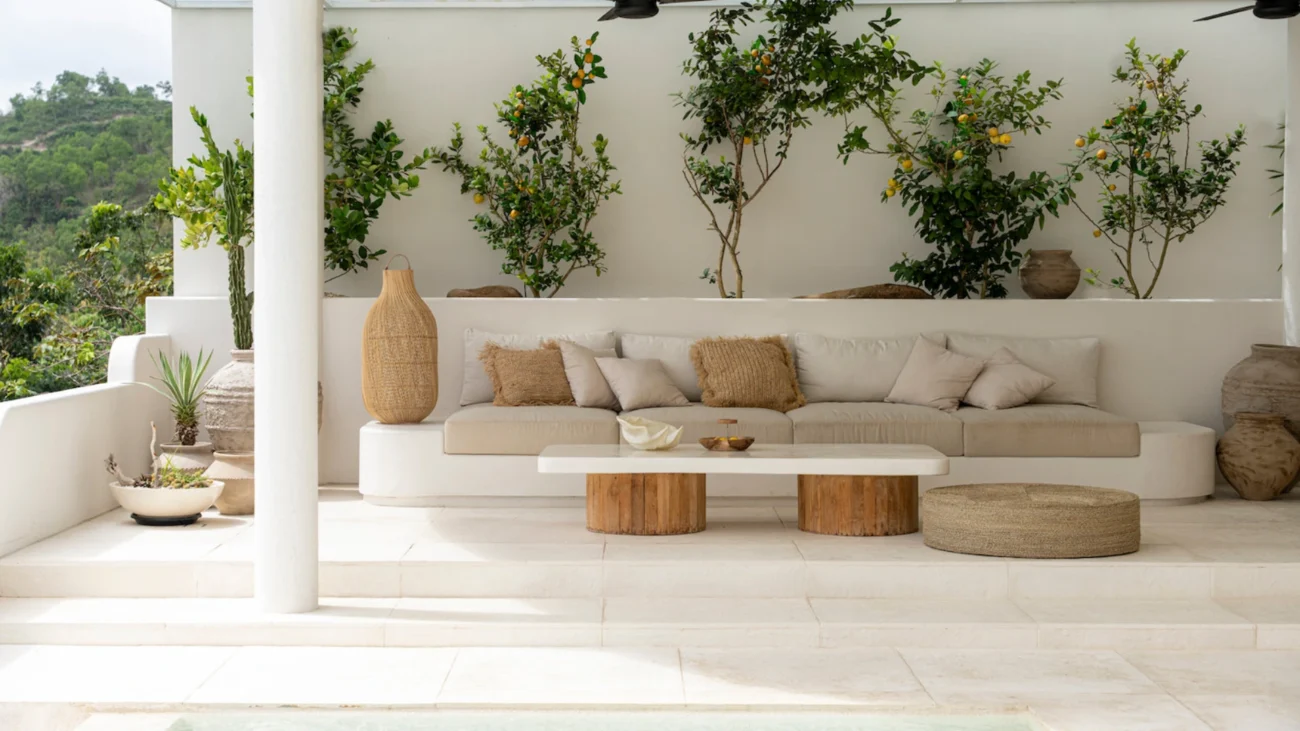
Few architectural typologies capture the imagination quite like Bali villas. Through an elegant
fusion of tradition, climate intelligence, and modern design, these homes embody a lifestyle that
feels simultaneously luxurious and deeply grounded in nature.
The genius of tropical villa architecture Bali lies in its ability to transform simple moments
into extraordinary experiences: morning coffee overlooking a jungle valley, an afternoon swim
beneath towering palms, or an evening gathering in an open pavilion illuminated by lanterns.
As global interest in wellness-oriented living and sustainable design continues to grow, the
principles behind open living design will likely influence residential architecture for decades
to come. Bali’s villas, poised between architecture and landscape, remain a timeless reminder
that the most powerful luxury is often the freedom to live in harmony with nature.