

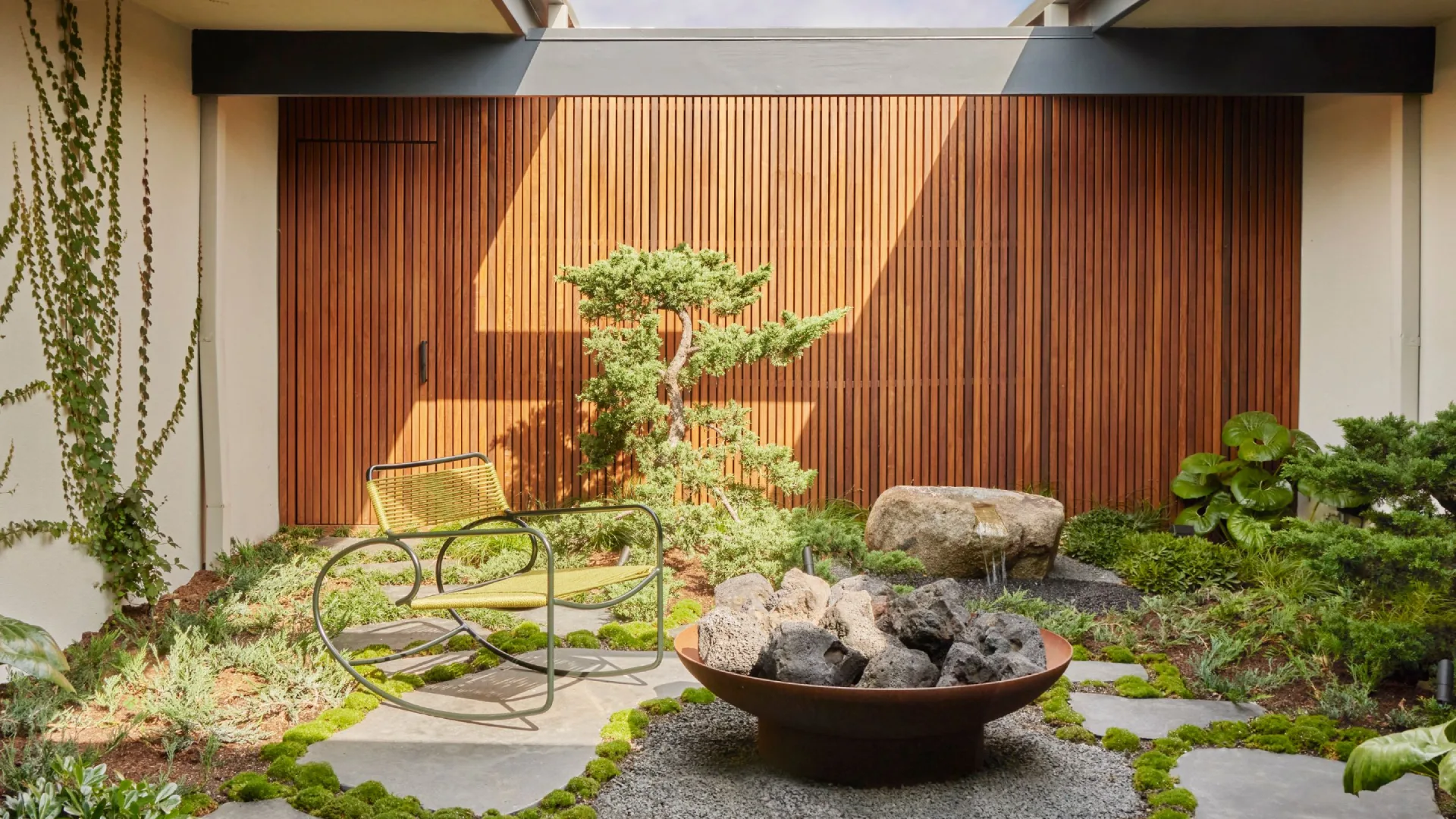
Across centuries of architectural evolution, few domestic typologies have expressed harmony with nature as poetically as the Japanese courtyard house. Rooted in principles of balance, contemplation, and spatial fluidity, these homes transform the courtyard from a mere architectural void into a living landscape. Within the framework of traditional Japanese architecture, the courtyard acts as a mediating element between interior and exterior, cultivating a quiet dialogue between built form, garden, and seasonal change.
Today, as architects and designers worldwide seek more meaningful connections between living spaces and the natural environment, Japanese courtyard design offers a compelling model. With its refined minimalism, layered spatial composition, and reverence for nature, this architectural tradition remains profoundly relevant for contemporary residential design. For professionals shaping luxury residences, boutique hospitality projects, and wellness-focused developments, the Japanese courtyard house represents both cultural heritage and forward-thinking spatial philosophy.
The Cultural Foundations of the Japanese Courtyard House
To understand the enduring influence of the courtyard in Japanese domestic architecture, one must first explore the cultural values that shaped it. Unlike many Western residential models that emphasize separation between house and landscape, traditional Japanese architecture is built upon a philosophy of coexistence with the natural world.
Key aesthetic and philosophical principles—including wabi-sabi (the beauty of imperfection), ma (the spatial interval), and shakkei (borrowed scenery)—inform how courtyards function within the home. Rather than decorative elements, courtyards become contemplative spaces that frame natural phenomena such as wind, rain, moss, and seasonal foliage.
Historically, courtyard layouts appeared in multiple residential typologies, including merchant townhouses known as machiya, samurai residences, and temple compounds. In these contexts, Japanese courtyard design served several purposes: providing light and ventilation, offering moments of quiet reflection, and creating spatial transitions between public and private areas of the home.
For a deeper architectural perspective on Japanese domestic spatial concepts, the Japan Guide architectural overview provides valuable historical context.
Spatial Philosophy: Courtyard as the Heart of the Home
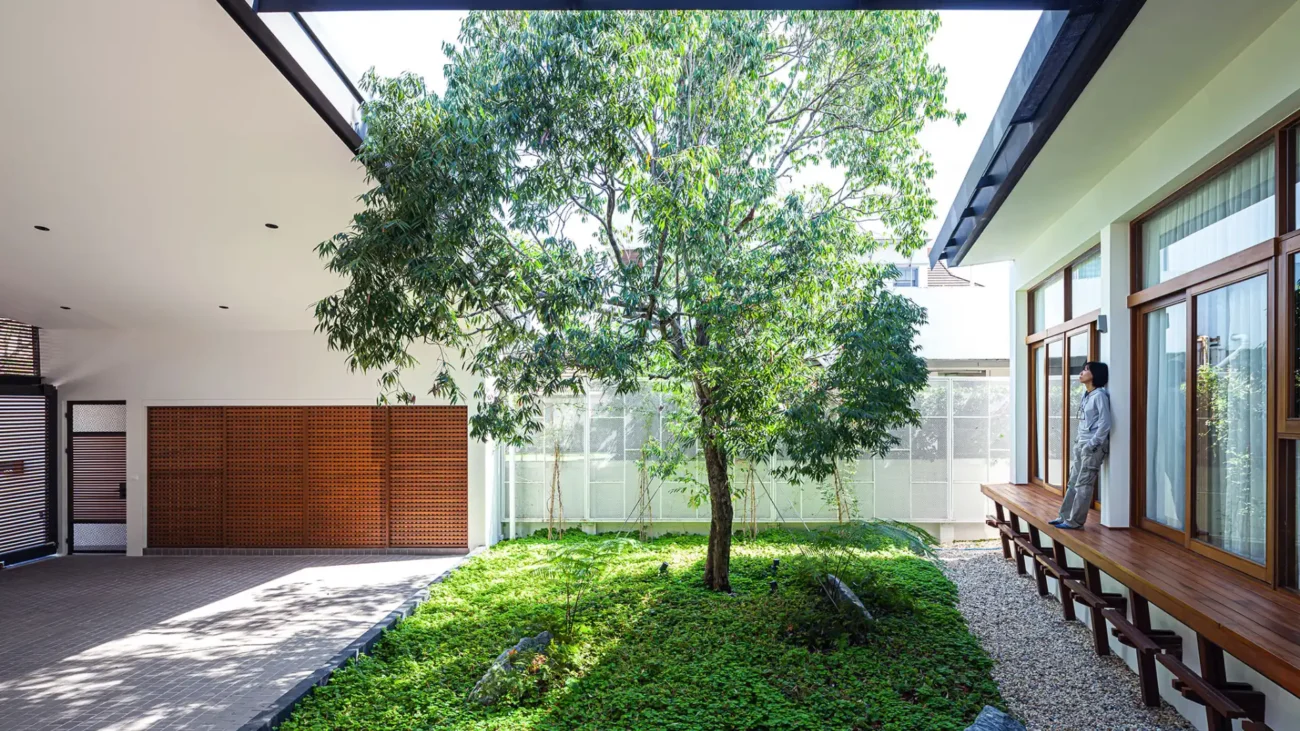
Unlike Western courtyards that often function as central gathering spaces, the Japanese interpretation tends to be more introspective. The courtyard is typically intimate in scale, carefully composed, and visually integrated with interior rooms through sliding partitions and framed openings.
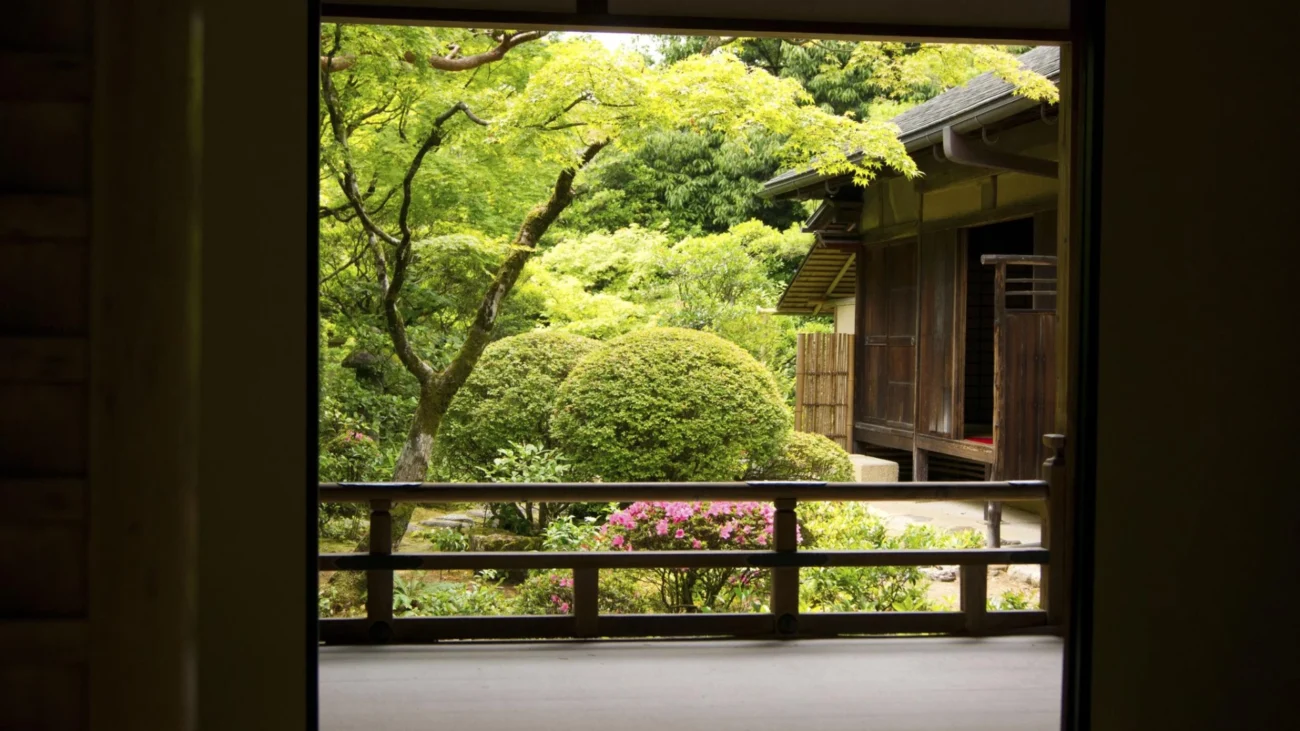
Within Japanese courtyard design, the courtyard becomes a central organizing device around which rooms unfold. The architecture does not simply surround the garden—it observes it. Every corridor, window, and threshold is designed to offer a different perspective of the courtyard landscape.
Core Spatial Characteristics
- Visual permeability through sliding doors (shoji and fusuma)
- Layered thresholds between interior, veranda, and garden
- Compact yet expressive gardens composed of stone, moss, and sculptural plants
- Subtle framing that turns everyday views into living artworks
- Integration of natural light throughout the interior
These spatial strategies ensure that even modest homes feel expansive, tranquil, and deeply connected to nature. For contemporary architects designing dense urban residences, the courtyard model provides an elegant response to limited space.
Architectural Elements That Define Japanese Courtyard Design
1. The Engawa: A Transitional Living Edge
A defining feature of many Japanese courtyard houses is the engawa, a narrow wooden veranda that runs along the perimeter of interior rooms. Neither fully indoors nor outdoors, the engawa creates a soft threshold where architecture and landscape meet.
Within traditional Japanese architecture, the engawa allows inhabitants to experience the courtyard intimately—sitting, observing, or simply pausing between activities. It transforms the garden into an extension of daily life rather than a distant visual feature.
2. Sliding Screens and Flexible Interiors
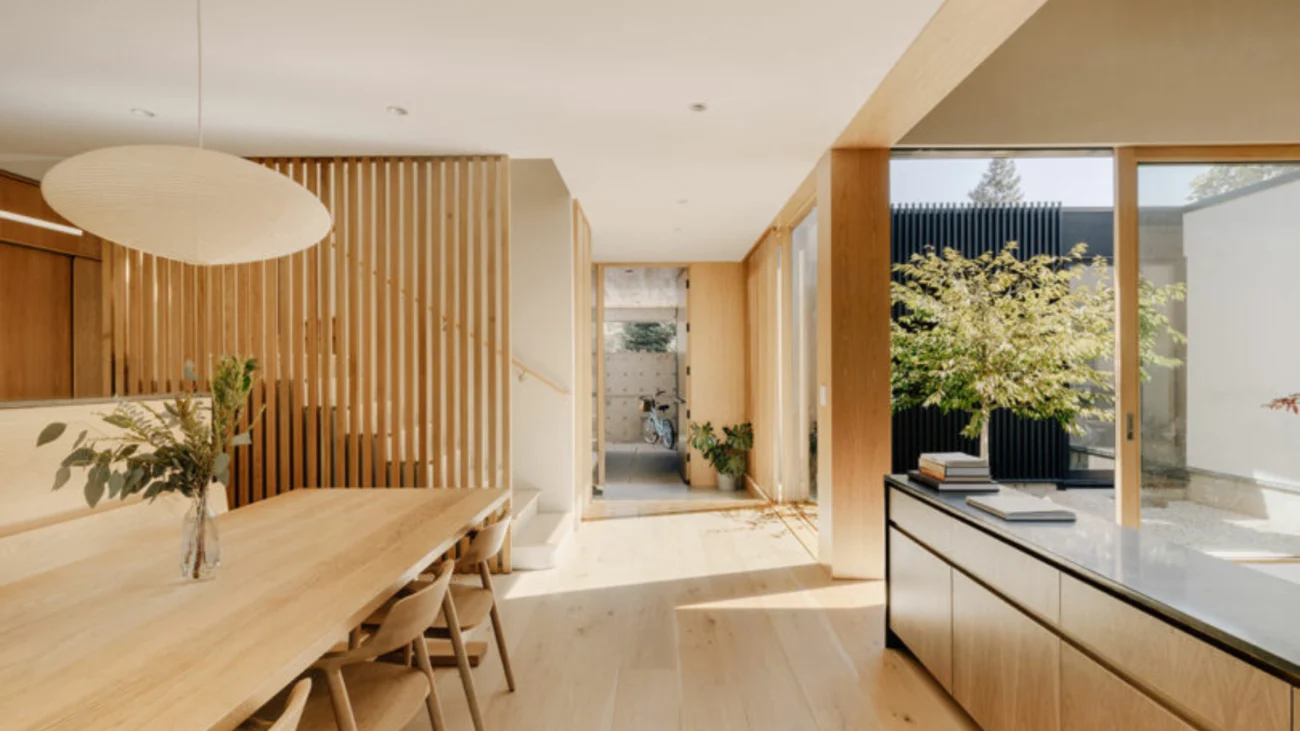
Flexibility is fundamental to Japanese domestic architecture. Sliding panels allow rooms to expand or contract according to daily needs, while maintaining uninterrupted visual connections to the courtyard.
This fluid spatial arrangement supports the philosophical concept of ma, the meaningful interval between spaces. In the context of Japanese courtyard design, this flexibility ensures that the garden remains visible and present throughout the home.
3. Minimalist Garden Composition
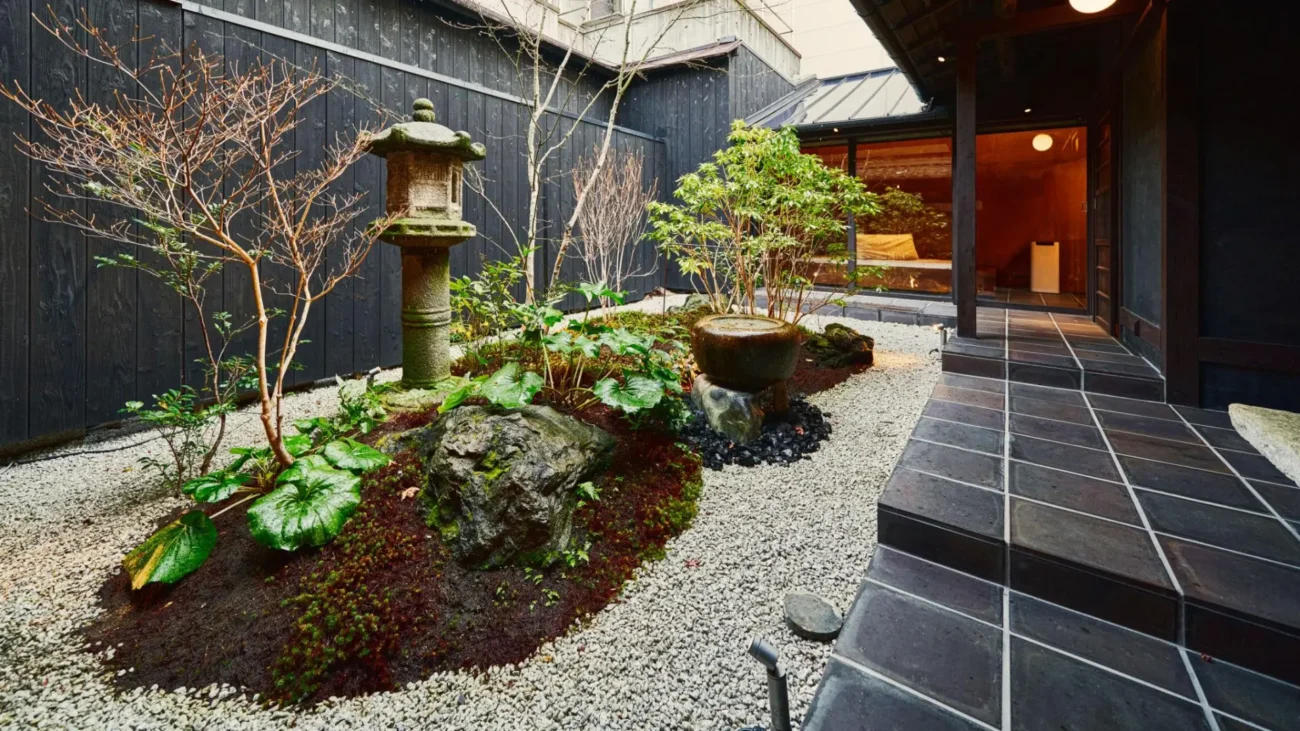
Courtyard gardens in Japan are rarely elaborate. Instead, they are meticulously composed to evoke natural landscapes in miniature.
- Weathered stone arrangements
- Moss-covered ground planes
- Carefully pruned shrubs and small trees
- Subtle water elements or stone basins
- Lanterns or sculptural focal points
The result is a landscape that feels both timeless and dynamic. Seasonal transformations—autumn leaves, spring blossoms, winter snow—become part of the architectural experience.
Environmental Intelligence in Traditional Japanese Architecture
Long before sustainability became a central architectural concern, traditional Japanese architecture employed climate-responsive strategies that remain highly relevant today.
Natural Ventilation
Courtyards act as natural ventilation shafts, allowing air to circulate through the home. Openable screens and permeable facades encourage airflow during humid summers.
Daylight Optimization
In dense urban environments where exterior windows may be limited, courtyards bring filtered daylight deep into the interior. Light reflected from pale gravel, stone, and wood surfaces creates a calm, diffuse atmosphere.
Seasonal Adaptability
Japanese homes traditionally adapt to seasonal change through flexible architectural components—removable screens, adjustable partitions, and verandas that mediate sunlight and shade.
These strategies make Japanese courtyard design an instructive precedent for contemporary sustainable architecture, particularly in high-density cities where natural light and ventilation are precious resources.
Modern Interpretations of the Japanese Courtyard House
In recent decades, architects across Japan and internationally have revisited the courtyard house typology, translating its principles into contemporary materials and spatial languages.
Concrete, glass, and steel now complement traditional wood construction, while minimalist landscaping retains the contemplative spirit of historic courtyards. These modern interpretations often appear in urban contexts where privacy and natural light must coexist.
Common Characteristics of Contemporary Designs
- Central or multiple micro-courtyards
- Glass walls framing garden views
- Minimalist landscaping inspired by Zen gardens
- Integration of water features for sensory calm
- Seamless transitions between indoor living and outdoor terraces
By embracing the principles of Japanese courtyard design, contemporary architects create homes that feel serene despite their urban surroundings. The courtyard becomes an internal sanctuary—a private world defined by quiet, light, and greenery.
The Courtyard as a Luxury Lifestyle Concept
For today’s global clientele—particularly those seeking wellness-oriented homes—the courtyard house offers an increasingly attractive residential model. High-net-worth individuals are prioritizing environments that provide calm, privacy, and connection to nature.
In this context, the spatial philosophy of traditional Japanese architecture resonates strongly. Courtyards introduce nature without sacrificing security or discretion, making them ideal for luxury villas, urban retreats, and resort residences.
Benefits for Contemporary Living
- Privacy without sacrificing outdoor space
- Wellness-oriented design through natural light and greenery
- Architectural elegance rooted in timeless principles
- Improved microclimates through natural ventilation
- Quiet spaces for contemplation and relaxation
These qualities explain why elements of Japanese courtyard design increasingly appear in international architecture—from Mediterranean villas to modern desert homes and boutique hospitality projects.
Lessons for Architects and Designers
For professionals working in residential architecture and landscape design, the Japanese courtyard house offers enduring lessons in spatial restraint and environmental sensitivity.
Rather than maximizing built area, traditional Japanese architecture emphasizes the importance of carefully orchestrated voids. These empty spaces—the courtyards—become the emotional and visual anchors of the home.
Key Design Principles to Apply
- Design around the void, allowing the courtyard to organize the floor plan.
- Frame nature intentionally through controlled sightlines.
- Use material simplicity to highlight natural elements.
- Create layered thresholds between interior and exterior.
- Embrace seasonal change as part of the architectural narrative.
By incorporating these principles, architects can reinterpret Japanese courtyard design in diverse cultural and climatic contexts while maintaining its essence: a profound relationship between human habitation and the natural world.
A Timeless Dialogue Between Architecture and Nature
The Japanese courtyard house represents far more than a historic residential typology. It is a philosophy of living—one that values quiet observation, spatial clarity, and deep respect for nature.
Through the lens of traditional Japanese architecture, the courtyard becomes a place where architecture dissolves into landscape, and everyday life unfolds within a carefully composed natural setting. In an era when urban density and digital distraction increasingly dominate modern life, this architectural model offers a powerful reminder: the most meaningful luxury may simply be space, light, and nature at the center of the home.
For architects, designers, and global homeowners alike, the enduring elegance of Japanese courtyard design continues to inspire new ways of imagining residential space—where interior comfort and natural beauty exist in perfect equilibrium.