

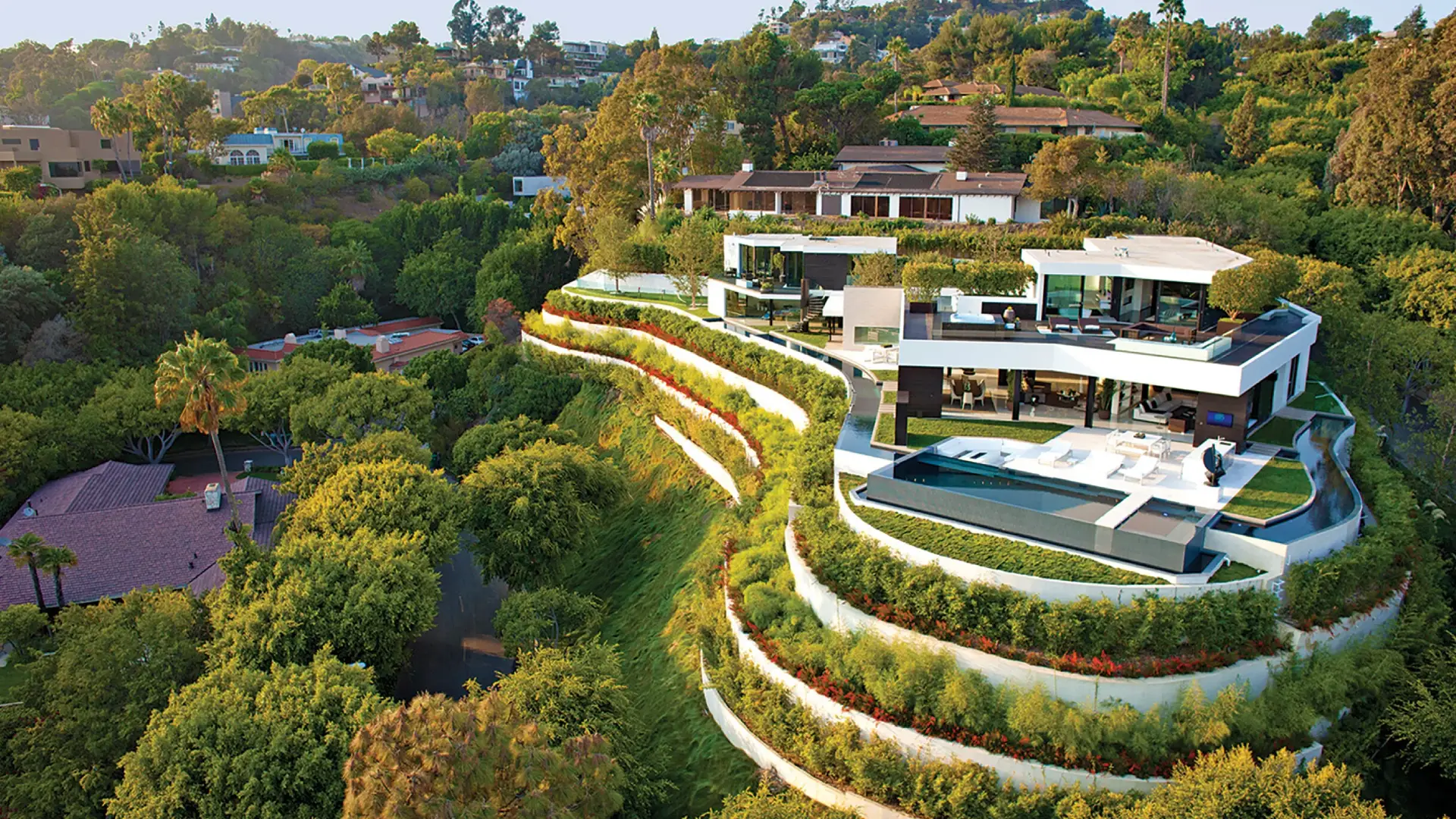
Across the Mediterranean, California, and the dramatic coastlines of Southern Europe, architects and landscape designers increasingly embrace terraces carved into hillsides as a refined way to inhabit steep terrain. Rather than fighting the slope, contemporary design celebrates it—transforming challenging gradients into layered outdoor living environments that feel both architectural and deeply connected to nature.
A well-executed hillside terrace design does more than stabilize land or maximize views. It establishes a sequence of spatial experiences: dining platforms overlooking valleys, lounge decks framed by stone retaining walls, and secluded garden levels immersed in vegetation. For professionals in architecture and real estate—as well as design-conscious homeowners—the true artistry lies in how luxury outdoor furniture is arranged within these levels to enhance flow, comfort, and visual harmony.
Designing a sophisticated hillside garden requires a careful balance of landscape engineering, spatial planning, and furniture curation. The following guide explores how terraces on sloping landscapes can become elegant outdoor rooms—each one thoughtfully composed to respond to topography, climate, and panoramic views.
The Architectural Logic of Hillside Terraces
Throughout history, civilizations have carved terraces into steep landscapes to cultivate land and inhabit difficult terrain. From the agricultural terraces of the Amalfi Coast to the ancient mountain settlements of Peru, the concept remains both functional and poetic. Today’s hillside terrace design adapts this historical logic into residential architecture and landscape design.
By cutting the slope into a series of flat planes supported by retaining walls, designers create stable platforms that can host a variety of outdoor functions. Each terrace becomes an independent spatial layer while still contributing to the overall composition of the hillside garden.
According to the American Society of Landscape Architects, terracing steep landscapes not only improves usability but also enhances erosion control and water management—making it a sustainable strategy in contemporary landscape architecture.
Within these terraced platforms, luxury outdoor furniture plays a critical role. Furniture placement defines how the space is experienced: where people gather, how circulation flows, and how sightlines frame the surrounding landscape.
Designing Outdoor Rooms on Sloping Landscapes
The Principle of Layered Living
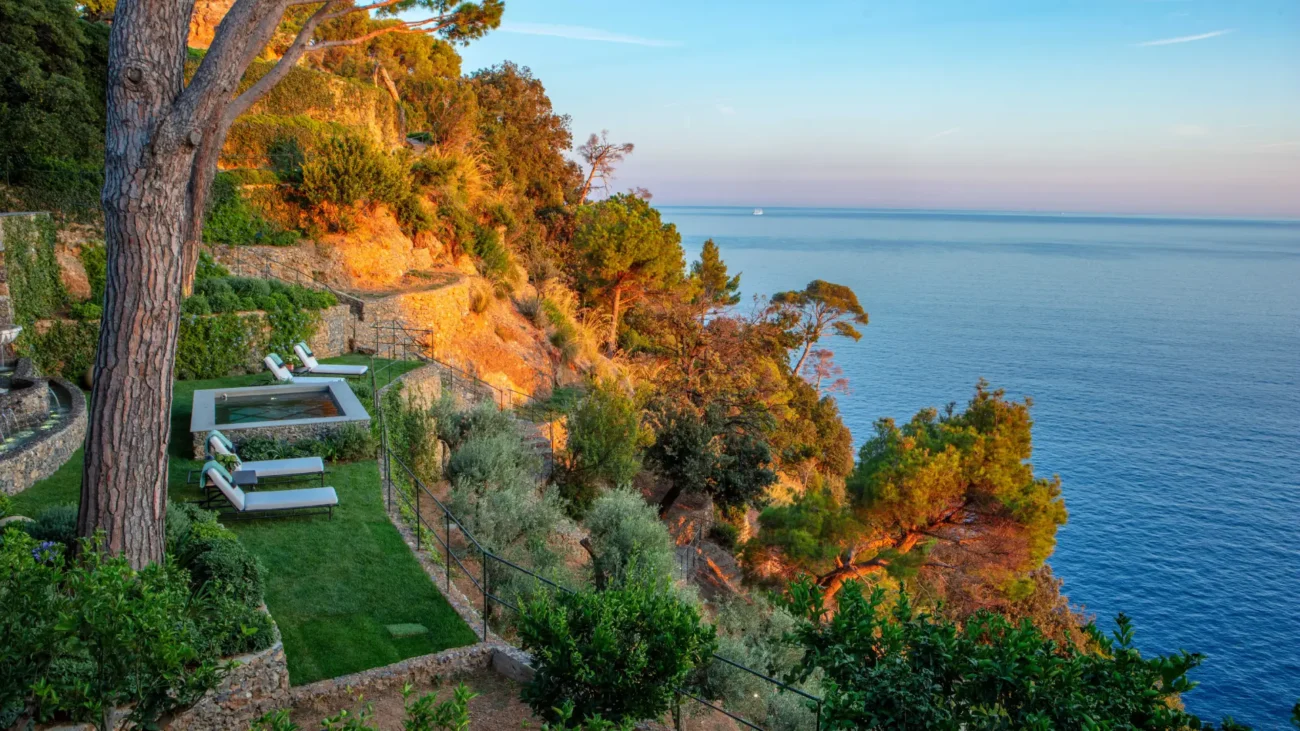
One of the defining characteristics of refined hillside terrace design is the idea of layered living. Rather than placing all outdoor functions on a single deck, terraces allow designers to distribute experiences vertically.
This approach creates a journey through the hillside garden, where each level reveals a new atmosphere and perspective.
- Upper terraces often host dining spaces with expansive views.
- Middle terraces become social lounges or poolside relaxation areas.
- Lower terraces may function as contemplative gardens or private retreats.
Carefully selected luxury outdoor furniture ensures that each terrace functions as a distinct outdoor room while maintaining visual continuity across the landscape.
Respecting the Natural Topography
Successful hillside landscapes begin with a profound respect for the terrain. Instead of forcing geometry onto the slope, designers often allow the hillside terrace design to follow the natural contours of the land.
Curved retaining walls, staggered platforms, and gently shifting levels create a more organic transition between terraces. Within this framework, luxury outdoor furniture should echo the rhythm of the landscape—favoring modular arrangements that adapt to irregular spaces.
In a thoughtfully composed hillside garden, furniture becomes part of the architectural narrative rather than a decorative afterthought.
Strategic Furniture Layouts for Hillside Terraces
1. Framing the View
One of the greatest advantages of a hillside terrace design is its elevated vantage point. Whether overlooking vineyards, ocean horizons, or city skylines, the furniture layout should always respond to the view.
A refined approach includes:
- Positioning lounge seating to face the landscape.
- Creating symmetrical arrangements that frame sightlines.
- Using low-profile luxury outdoor furniture that does not obstruct the panorama.
On a sloping property, the uppermost terrace often becomes the primary viewing platform. Here, minimalist seating compositions allow the surrounding landscape to remain the focal point of the hillside garden.
2. Creating Transitional Zones
Movement between terraces is an essential aspect of hillside terrace design. Staircases, ramps, and pathways connect each level, forming a vertical sequence through the landscape.
Furniture can help soften these transitions. Small seating clusters, benches, or sculptural lounge chairs placed near stair landings provide moments of pause within the hillside garden.
These transitional spaces benefit from compact yet refined luxury outdoor furniture that enhances comfort without obstructing circulation.
3. Establishing Social Anchors
Every terrace needs a focal point. In sloped landscapes, designers often establish social anchors—central features around which furniture is organized.
Examples include:
- A fire pit lounge framed by curved seating.
- A dining table positioned at the terrace edge.
- A shaded pergola with modular lounge seating.
These anchors provide spatial clarity within the hillside terrace design, ensuring that each platform feels intentional and welcoming. Carefully selected luxury outdoor furniture enhances the sense of permanence and sophistication within the hillside garden.
Material Harmony Between Architecture and Landscape
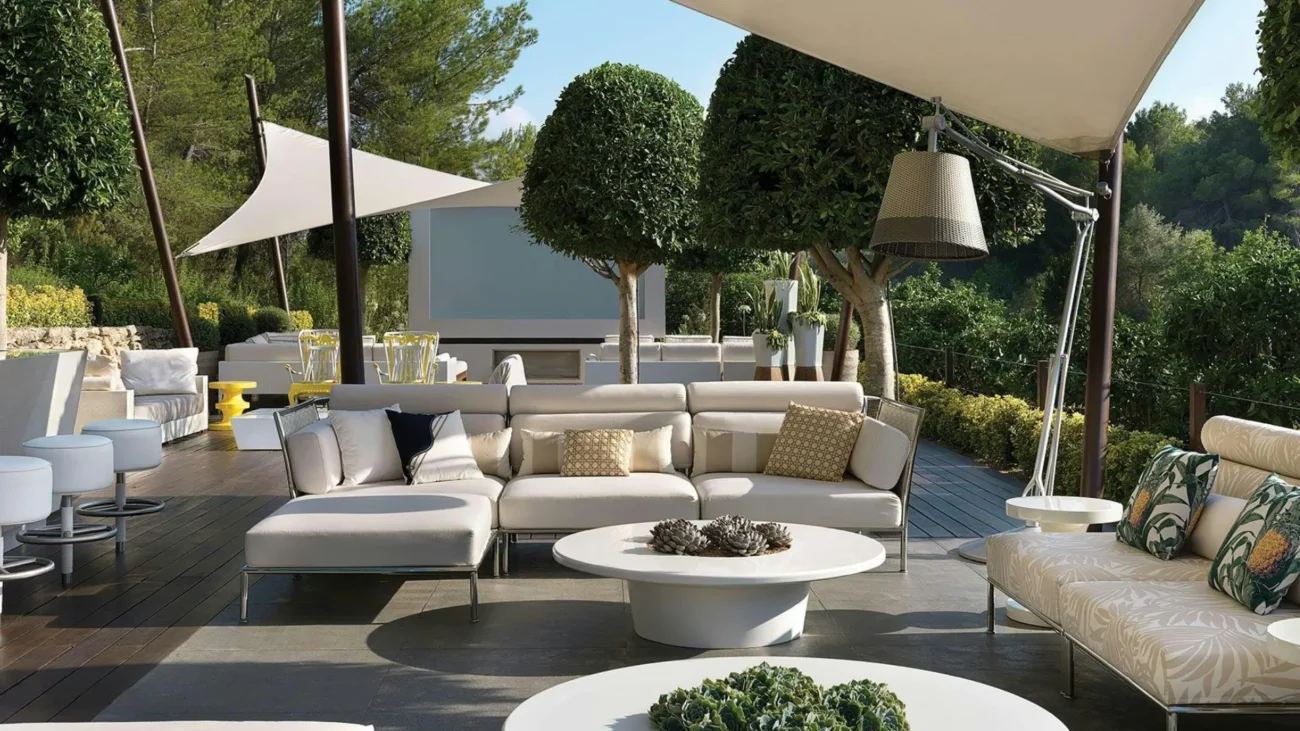
In hillside environments, materials must bridge the architectural and natural worlds. Stone retaining walls, timber decks, and gravel pathways often define the structure of a hillside terrace design.
Furniture materials should complement these elements while maintaining durability in outdoor conditions. High-quality teak, powder-coated aluminum, and woven textiles are common choices in contemporary luxury outdoor furniture.
The palette of the hillside garden typically favors natural tones—sand, terracotta, charcoal, and olive—allowing the terraces to blend seamlessly into the surrounding landscape.
Landscape Integration and Planting Strategies
Softening the Terraces
Without thoughtful planting, terraces risk feeling overly architectural. Vegetation softens edges and reconnects the hillside terrace design with the natural environment.
Designers frequently incorporate layered planting schemes that cascade across retaining walls and pathways. Lavender, rosemary, ornamental grasses, and climbing vines create a Mediterranean-inspired atmosphere within the hillside garden.
When paired with elegant luxury outdoor furniture, this botanical richness transforms terraces into immersive living spaces.
Microclimates and Shelter
Sloped landscapes generate diverse microclimates. Upper terraces may be exposed to wind and sun, while lower terraces remain shaded and sheltered.
A well-considered hillside terrace design responds to these variations by placing specific activities in the most comfortable zones:
- Dining terraces in breezy upper areas.
- Lounge terraces in protected mid-levels.
- Quiet garden retreats in shaded lower terraces.
Selecting appropriate luxury outdoor furniture for each microclimate ensures both comfort and longevity within the hillside garden.
Lighting Design for Hillside Terraces
As evening falls, lighting reveals a different dimension of hillside terrace design. Rather than flooding the landscape with illumination, sophisticated projects rely on subtle, layered lighting strategies.
Common techniques include:
- Recessed lighting integrated into retaining walls.
- Step lights along staircases and pathways.
- Soft ambient lighting around lounge areas.
When combined with refined luxury outdoor furniture, these lighting elements transform the hillside garden into a serene nighttime environment—ideal for entertaining or quiet reflection.
Global Inspirations: Hillside Terraces Around the World
Some of the most celebrated residential landscapes today are built on dramatic slopes. In the hills above Lake Como, terraces step down toward the water with sculptural elegance. In Southern California, contemporary villas integrate glass architecture with multi-level outdoor living platforms.
Across these diverse regions, the core principles of hillside terrace design remain consistent: respect for terrain, fluid spatial sequencing, and thoughtful furniture placement.
When carefully curated, luxury outdoor furniture transforms each terrace into a distinct setting—whether for dining under olive trees or relaxing beside an infinity pool within a lush hillside garden.
The Future of Hillside Outdoor Living
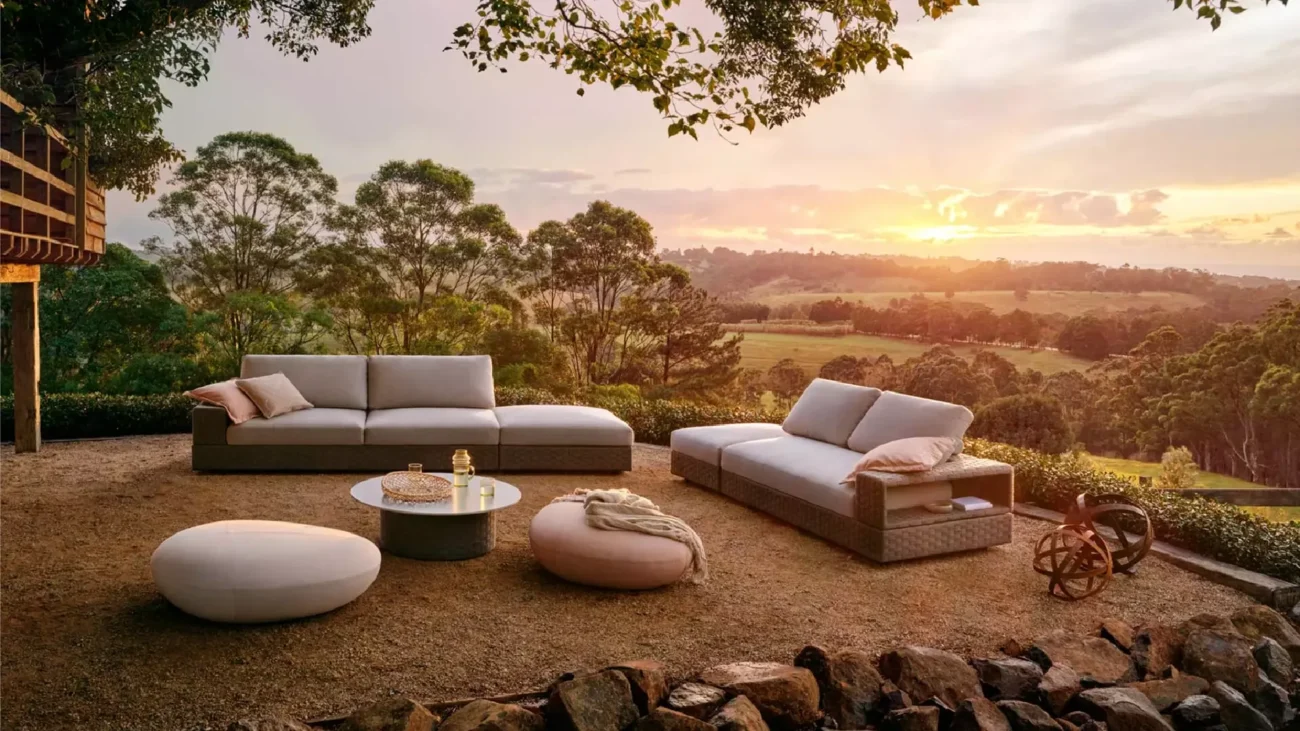
As architecture increasingly embraces natural landscapes, terraces carved into hillsides will continue to shape the future of outdoor design. These projects demonstrate how challenging terrain can become an opportunity for creativity, spatial richness, and environmental sensitivity.
For architects, designers, and discerning homeowners, the art of hillside terrace design lies not only in engineering the slope but in choreographing experiences across levels. Thoughtfully arranged luxury outdoor furniture, harmonious materials, and immersive planting strategies together create a hillside garden that feels both sophisticated and timeless.
Ultimately, terraces on sloping landscapes represent one of the most compelling expressions of contemporary outdoor living—where architecture, landscape, and lifestyle converge in a layered dialogue with nature.