

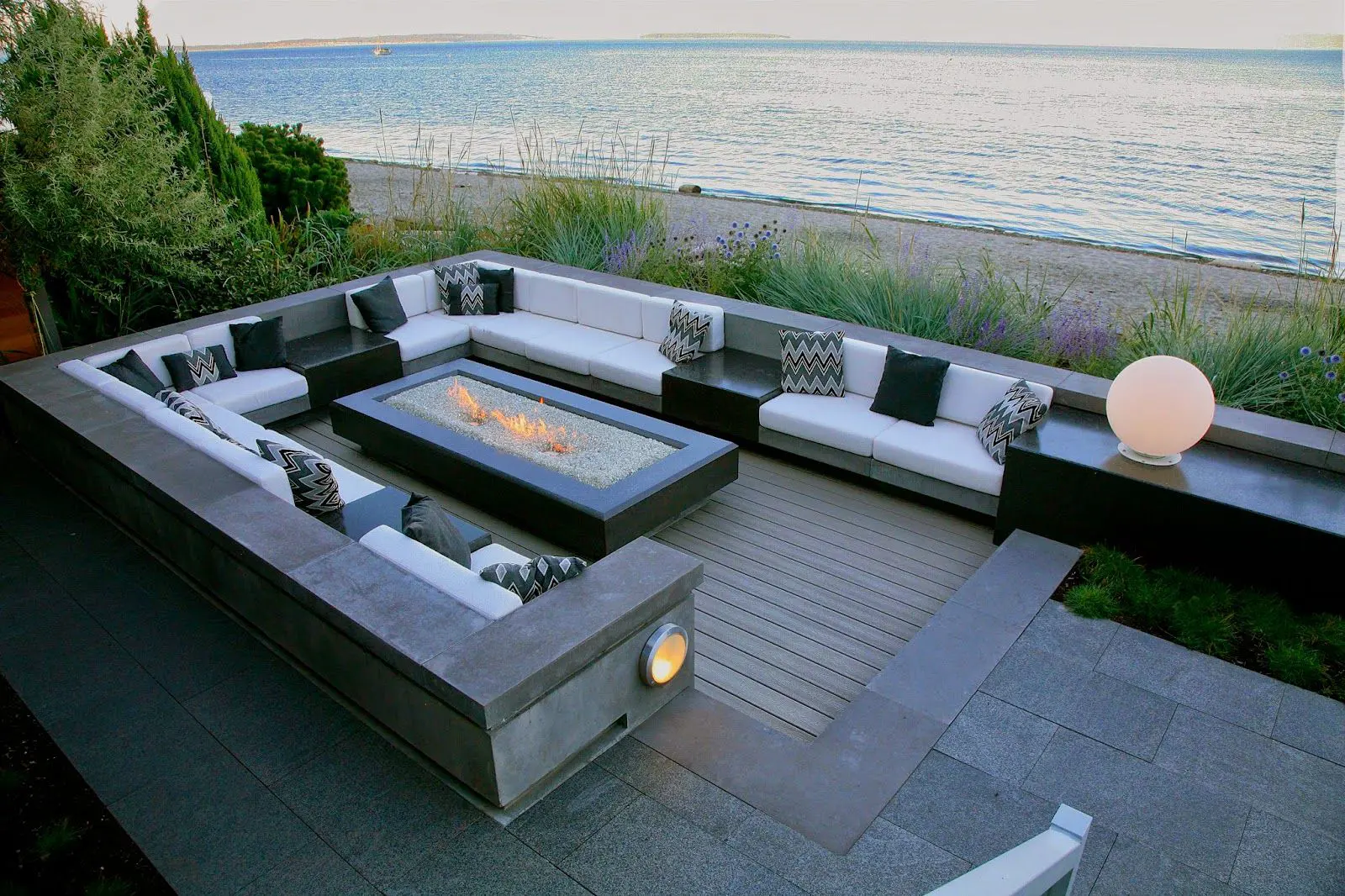
In recent years, Outdoor Living Design has evolved far beyond traditional patios and garden seating areas. Architects and outdoor designers now treat exterior environments as fully integrated living spaces that reflect the sophistication of interior design. Among the most influential trends shaping high-end residential landscapes is the sunken lounge terrace.
Sunken lounges create intimate outdoor environments that feel both architectural and experiential. By lowering seating areas below the surrounding terrace or landscape level, designers establish a natural sense of enclosure while maintaining visual openness toward the surrounding environment.
Luxury homes, resorts, and contemporary villas increasingly incorporate this design concept as part of a broader movement toward immersive outdoor living. For architects, furniture brands, and luxury design studios, sunken lounge terraces represent a powerful tool for redefining how outdoor spaces function within modern residential environments.
The Architectural Origins of Sunken Lounge Spaces
Sunken seating concepts did not originate in contemporary outdoor design. Architects explored similar ideas in interior architecture during the mid-20th century. One well-known example appears in the conversation pits of modernist homes designed by architects such as Eero Saarinen.
These interior spaces lowered the seating area slightly below floor level to encourage social interaction and create visual intimacy. Over time, landscape architects and outdoor designers adapted the concept for exterior environments, particularly in luxury residential projects where terraces function as social gathering areas.
Today, the sunken lounge terrace represents a refined evolution of this earlier design idea, tailored specifically for modern Outdoor Living Design.
Why Sunken Lounge Terraces Are Gaining Popularity
Several design factors explain the rapid growth of sunken lounge terraces in contemporary residential architecture.
Spatial Definition Without Walls
Traditional outdoor seating areas often rely on furniture arrangements to define space. Sunken terraces achieve spatial definition through architecture itself. Lowering the seating area creates a subtle enclosure that feels comfortable and protected without the need for walls or heavy structures.
This strategy allows designers to maintain openness toward gardens, pools, and surrounding landscapes.
Enhanced Social Interaction
The geometry of sunken seating naturally encourages conversation. Guests sit closer together within the recessed space, creating a more intimate environment than typical terrace seating arrangements.
Luxury residential clients increasingly prioritize outdoor spaces designed for social gatherings, making this layout highly attractive.
Seamless Landscape Integration
Sunken terraces also integrate beautifully with landscape design. Designers can surround the recessed lounge with planting beds, stone edges, or water features that visually blend the architecture into the garden.
This layered composition strengthens the relationship between built space and nature.
Key Design Elements of Sunken Lounge Terraces
Successful sunken lounges require careful planning and coordination between architecture, landscape design, and outdoor furniture.
Architectural Framing
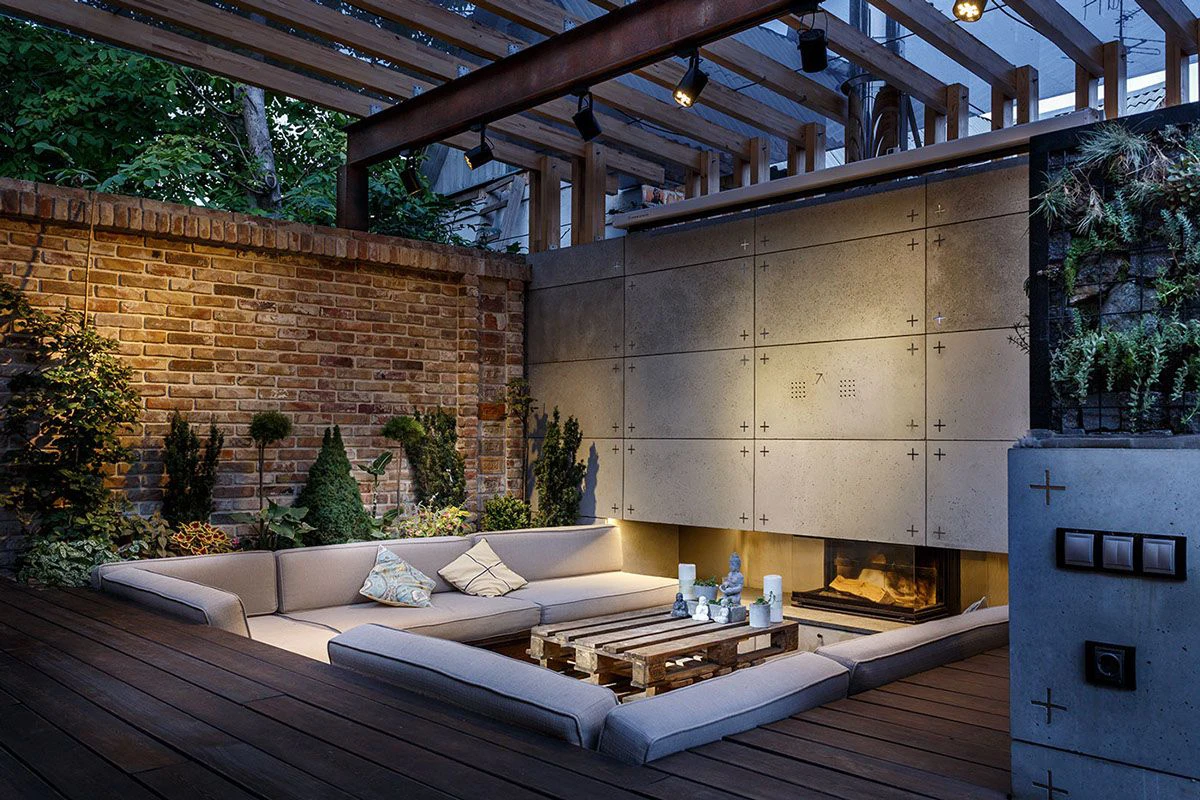
The recessed seating area typically sits between 12 and 24 inches below the surrounding terrace. Designers often frame the perimeter with stone retaining edges, integrated seating platforms, or architectural steps that guide circulation into the space.
Materials frequently include natural stone, concrete, or wood decking depending on the architectural language of the home.
Integrated Seating and Furniture
While some sunken lounges incorporate built-in seating, many luxury projects combine architectural benches with movable outdoor furniture.
Furniture brands increasingly design collections specifically for these environments. Low-profile modular sofas, sculptural lounge chairs, and weather-resistant upholstery help maintain visual harmony with the surrounding architecture.
High-end outdoor furniture brands such as Paola Lenti and Kettal produce collections that complement the relaxed geometry of recessed lounge areas.
Fire Features and Ambient Lighting
Many designers incorporate fire pits or linear fireplaces at the center of sunken lounges. These elements reinforce the social atmosphere while providing warmth during cooler evenings.
Integrated LED lighting along steps and seating edges enhances safety and adds subtle nighttime ambiance.
Landscape Integration Strategies
Landscape design plays a crucial role in the success of sunken terrace concepts.
Surrounding plantings often soften the architectural edges of the recessed space. Ornamental grasses, Mediterranean shrubs, or sculptural succulents help blend the lounge area into the garden.
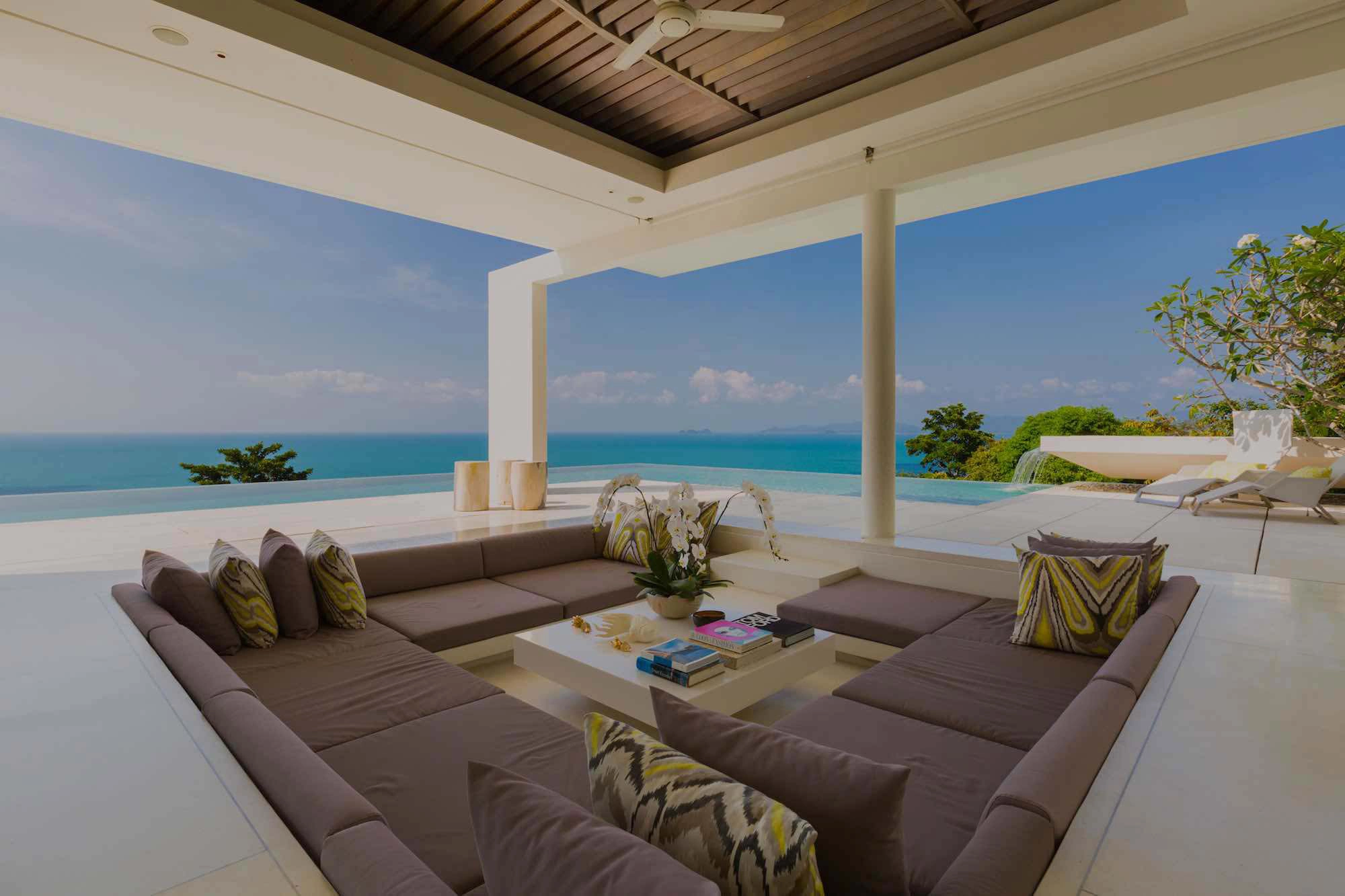
In hillside homes or coastal villas, designers frequently orient the sunken lounge toward panoramic views. This orientation transforms the recessed space into a viewing platform that frames the surrounding landscape.
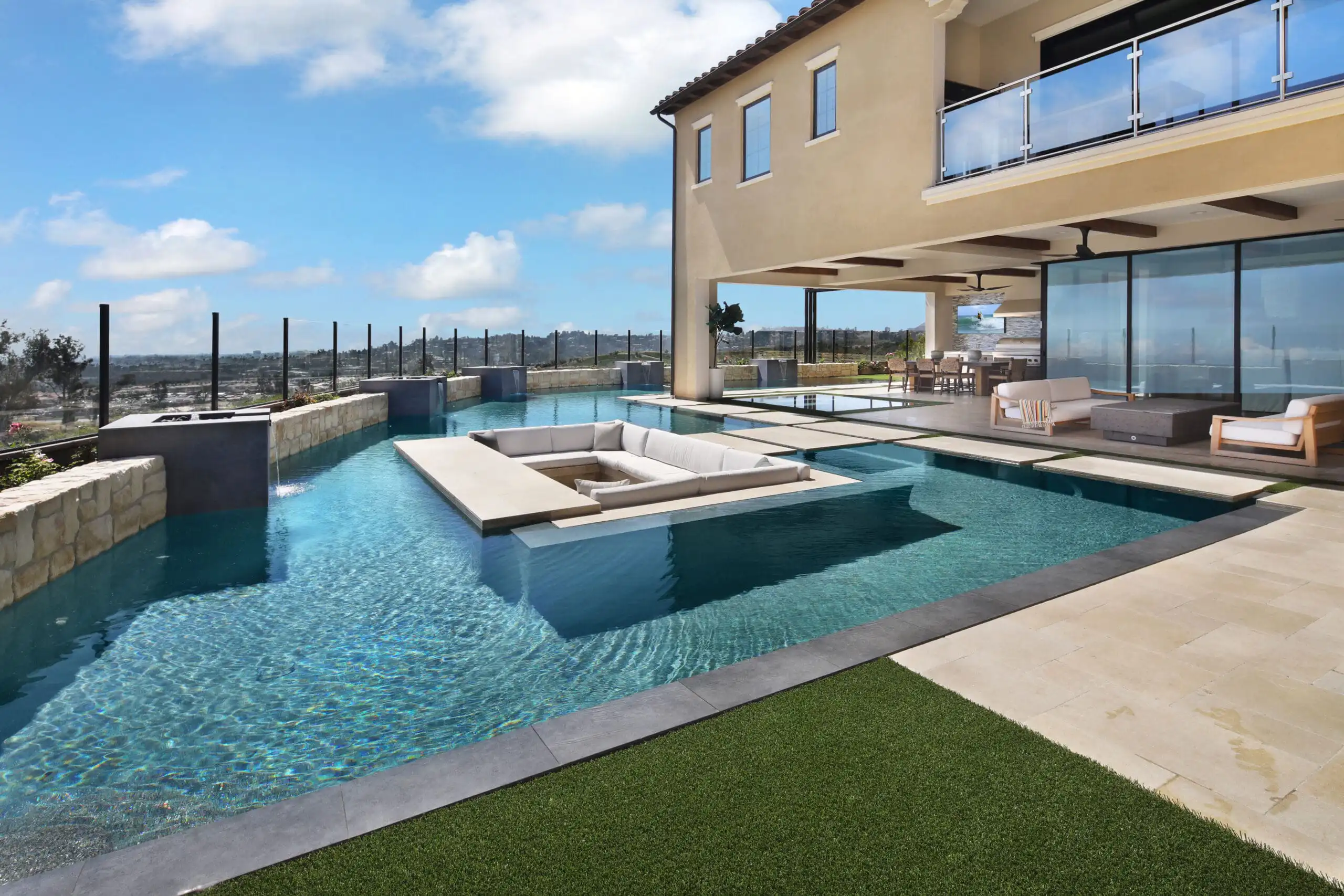
Infinity pools and reflecting water features also pair effectively with sunken seating. The visual alignment between water surfaces and lounge areas creates dramatic spatial experiences in luxury outdoor environments.
Material Choices for Contemporary Outdoor Living Design
Material selection strongly influences the visual character of sunken lounge terraces.
Natural materials often work best in outdoor environments because they weather gracefully and connect the architecture to its surroundings.
Common material choices include:
- Limestone or travertine paving
- Board-formed concrete walls
- Teak decking surfaces
- Weathered steel accents
- Handcrafted ceramic or stone tiles
Designers frequently maintain a restrained material palette to emphasize architectural clarity and durability.
Furniture brands that collaborate with architects on custom pieces can also reinforce this material consistency.
Sunken Lounges in Luxury Hospitality and Resorts
While residential architecture drives much of the popularity of sunken terraces, luxury hospitality design has also embraced the trend.
High-end resorts and boutique hotels increasingly use recessed outdoor lounges to create intimate gathering spaces within larger landscapes. These environments allow guests to relax near pools, gardens, or oceanfront terraces while enjoying a sense of privacy.
Hospitality designers often pair sunken seating with dramatic lighting, custom furniture, and landscape features that enhance the guest experience.
The concept therefore translates effectively across both residential and commercial outdoor environments.
Intellectual Property Considerations in Outdoor Design
As sunken lounge terraces gain popularity, designers should remain aware of intellectual property considerations within architecture and furniture design.
While general spatial concepts such as recessed seating cannot be copyrighted, specific architectural designs, custom furniture pieces, and unique landscape compositions often qualify for legal protection.
Design studios and furniture brands should ensure that new projects reinterpret design strategies rather than replicate distinctive architectural works.
Maintaining originality not only protects intellectual property rights but also strengthens a studio’s design reputation within the industry.
The Future of Outdoor Living Design
Sunken lounge terraces reflect a broader transformation in Outdoor Living Design. Contemporary architecture no longer treats outdoor spaces as secondary features. Instead, designers consider them essential components of residential life.
As luxury homes continue to blur the boundaries between interior and exterior environments, recessed lounge spaces will likely become a defining feature of high-end outdoor architecture.
For outdoor designers, furniture brands, architects, and luxury design studios, the sunken lounge terrace offers a versatile design strategy—one that combines architectural sophistication, social functionality, and landscape integration within a single cohesive outdoor environment.