

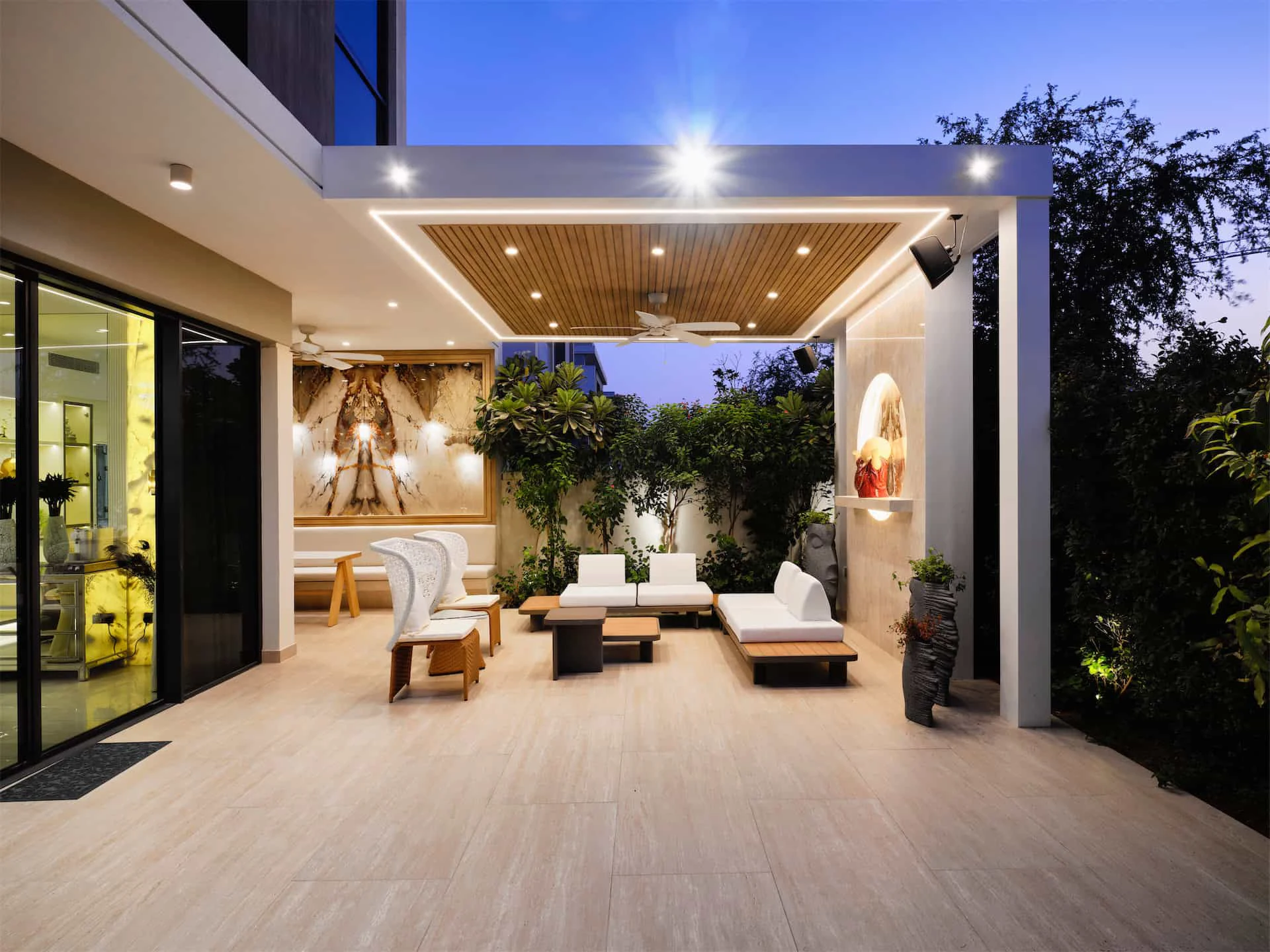
The integration of smart technology is transforming how luxury outdoor spaces are designed, experienced, and maintained. What was once limited to furniture and landscaping now includes advanced systems that enhance comfort, usability, and efficiency.
For architects and outdoor designers, technology is no longer an afterthought – it is a core design layer. From climate control to automated lighting, smart systems allow outdoor environments to adapt in real time. This evolution reflects a broader shift in luxury design, where outdoor spaces are expected to deliver the same level of performance and convenience as interiors.
Core Smart Features Transforming Outdoor Environments
Several key technologies are redefining how luxury outdoor spaces function:
- Automated lighting systems that adjust based on time of day
- Smart irrigation systems optimizing water usage
- Integrated sound systems for immersive outdoor entertainment
- Climate-responsive shading solutions such as motorized pergolas
- App-controlled fire features and outdoor kitchens
These innovations enhance usability while maintaining aesthetic coherence, ensuring that technology supports rather than disrupts the overall design vision.
Lighting as a Dynamic Architectural Element
Lighting plays a central role in the technological evolution of luxury outdoor spaces. No longer limited to static fixtures, modern lighting systems are programmable, adaptive, and integrated into the architectural concept.
Designers can now create layered lighting schemes that shift throughout the evening, enhancing both ambiance and functionality. Pathways, terraces, and landscape features can be illuminated selectively, guiding movement and emphasizing key design elements. Smart lighting also contributes to energy efficiency, allowing systems to operate only when needed while maintaining a refined visual atmosphere.
Smart Lighting Capabilities Designers Should Consider
When specifying lighting systems, professionals often focus on the following capabilities:
- Dimming and color temperature control for mood variation
- Motion sensors improving energy efficiency and security
- Zoned lighting systems allowing independent control of areas
- Integration with mobile apps or home automation systems
- Synchronization with architectural and landscape features
These features allow designers to create flexible and responsive outdoor environments tailored to different uses and times of day.
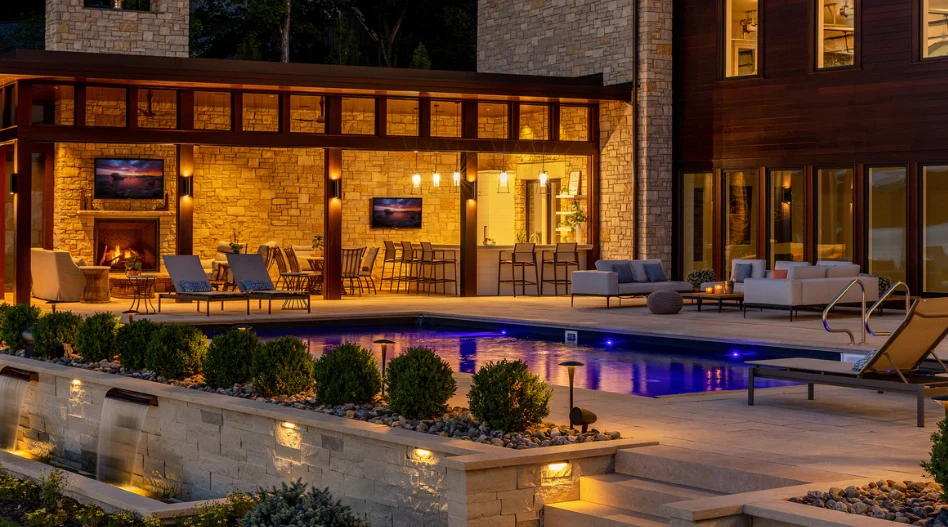
Climate Control and Outdoor Comfort
One of the most significant advancements in outdoor design is the ability to control environmental conditions. Smart climate systems make luxury outdoor spaces usable year-round, regardless of location.
Heated flooring, outdoor misting systems, and automated shading structures can respond to temperature, sunlight, and wind conditions. These technologies enable designers to create environments that remain comfortable without compromising aesthetics. By integrating climate control into the design phase, architects can ensure that outdoor spaces function as true extensions of interior living areas.
Key Climate Technologies in Outdoor Design
Modern climate solutions often include:
- Motorized pergolas and retractable roofs adapting to weather changes
- Infrared heating systems for cooler climates
- Misting and cooling systems for hot environments
- Wind sensors that automatically adjust shading elements
- Thermal materials enhancing passive temperature regulation
These systems provide comfort while maintaining the clean lines and visual integrity of luxury outdoor environments.
Audio-Visual Integration in Outdoor Living
Entertainment is a defining feature of many luxury outdoor spaces, and smart technology has elevated this aspect significantly. Outdoor audio-visual systems are now seamlessly integrated into architectural and landscape elements.
Hidden speakers, weatherproof screens, and projection systems allow designers to create immersive entertainment environments without disrupting the aesthetic. Whether for private residences or hospitality projects, these systems support a range of experiences – from intimate gatherings to large-scale events – while maintaining a discreet and refined design approach.
Essential Audio-Visual Features for Outdoor Spaces
Designers frequently incorporate the following elements:
- Weather-resistant speakers concealed within landscaping
- Outdoor televisions and projection systems
- Multi-zone audio control for different areas
- Wireless connectivity and streaming integration
- Acoustic planning to ensure sound quality without disturbance
These features ensure that technology enhances the user experience while remaining visually unobtrusive.
Smart Irrigation and Landscape Management
Landscape maintenance is another area where technology is reshaping luxury outdoor spaces. Smart irrigation systems use sensors and data to optimize water usage, ensuring that plants receive the right amount of moisture without waste.
These systems can respond to weather conditions, soil moisture levels, and plant types, creating efficient and sustainable landscapes. For designers, this technology supports both environmental responsibility and long-term performance, allowing outdoor spaces to maintain their visual quality with minimal manual intervention.
Intelligent Landscape Systems and Their Benefits
Smart landscape management systems typically include:
- Soil moisture sensors for precise irrigation control
- Weather-based automation adjusting watering schedules
- Remote monitoring via mobile applications
- Integration with broader home automation systems
- Water conservation features supporting sustainability goals
These innovations help designers create landscapes that are both visually rich and environmentally responsible.
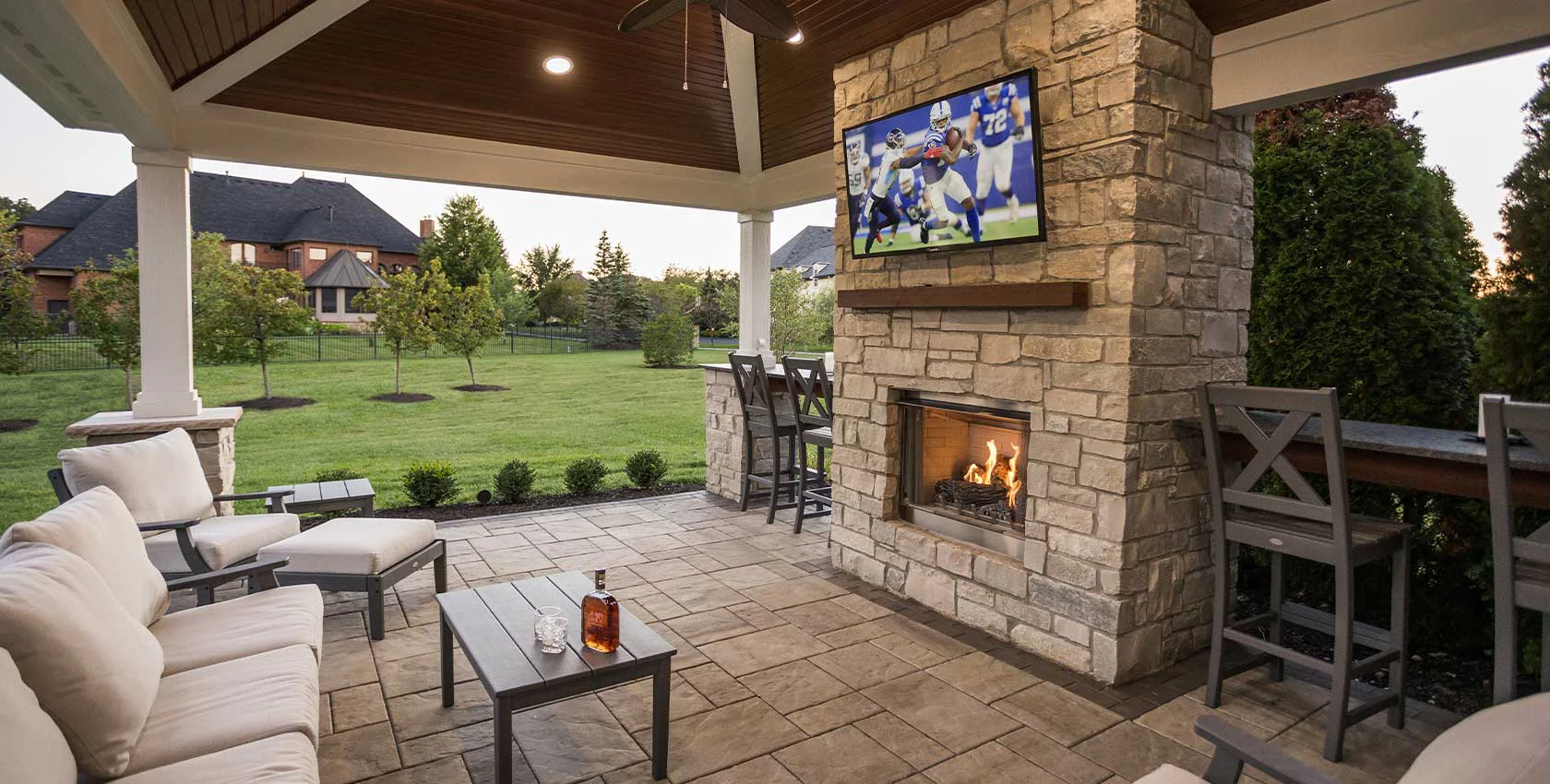
Security and Privacy Through Technology
Security is a critical consideration in luxury outdoor spaces, particularly in high-end residential and hospitality projects. Smart systems provide advanced solutions that enhance safety without compromising design.
Discreet cameras, motion sensors, and automated gates can be integrated into architectural and landscape elements. Lighting can also play a role, with systems programmed to activate in response to movement. For designers, the challenge lies in incorporating these features in a way that preserves the aesthetic integrity and privacy of the space.
Smart Security Features in Outdoor Design
Key technologies used to enhance security include:
- Integrated surveillance systems with discreet placement
- Motion-activated lighting improving visibility and safety
- Automated access control systems for gates and entry points
- Remote monitoring and alerts via mobile devices
- Perimeter sensors enhancing property protection
These systems provide peace of mind while maintaining the refined appearance expected in luxury environments.
The Role of Connectivity and Centralized Control
At the core of smart technology integration is connectivity. Centralized control systems allow users to manage lighting, climate, audio, and security from a single interface.
For designers, this means creating outdoor spaces that are not only visually cohesive but also technologically unified. Systems can be controlled via smartphones, tablets, or voice commands, offering convenience and flexibility. This level of integration ensures that outdoor environments respond seamlessly to user preferences, enhancing both functionality and overall experience.
Design Considerations for Smart Integration
When integrating technology into luxury outdoor spaces, several considerations are essential:
- Early coordination between designers, engineers, and technology specialists
- Concealment of wiring and equipment to maintain aesthetics
- Selection of durable, weather-resistant components
- User-friendly interfaces for intuitive control
- Future-proofing systems to accommodate technological advancements
These strategies ensure that technology enhances rather than disrupts the design vision.
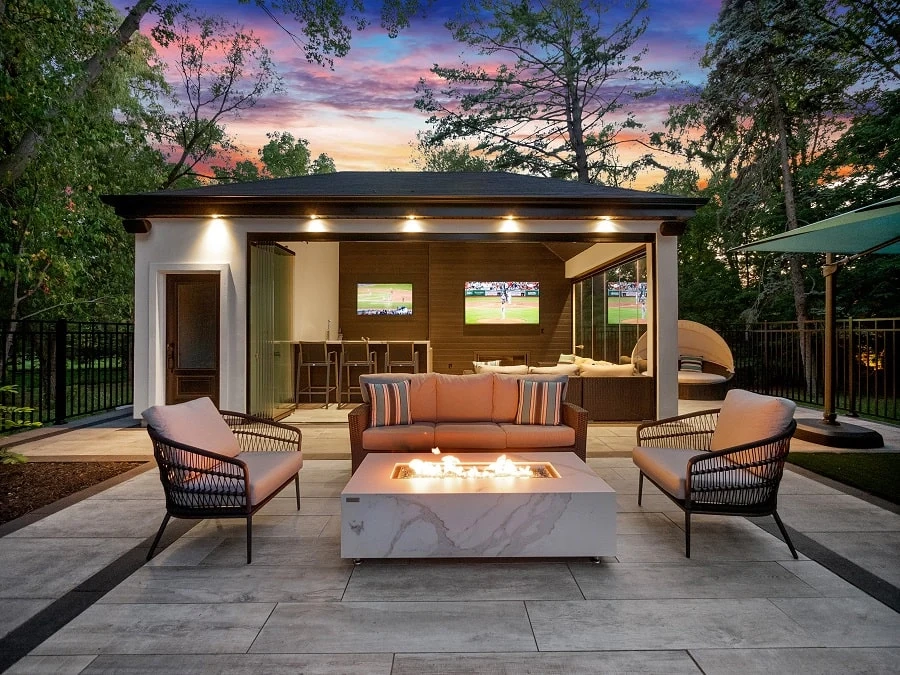
Sustainability and Energy Efficiency
Smart technology also plays a key role in improving the sustainability of luxury outdoor spaces. Energy-efficient lighting, water-saving irrigation systems, and climate-responsive structures reduce environmental impact while maintaining high performance.
Designers are increasingly expected to balance luxury with responsibility. By integrating smart systems, they can create outdoor environments that are both elegant and environmentally conscious. This alignment with sustainability goals is becoming a defining characteristic of contemporary high-end design.
The Future of Smart Outdoor Living
As technology continues to evolve, the possibilities for luxury outdoor spaces will expand even further. Artificial intelligence, advanced sensors, and new materials will enable environments that adapt dynamically to user behavior and environmental conditions.
For architects and outdoor designers, this evolution presents both challenges and opportunities. The key will be to integrate technology in ways that enhance human experience without overshadowing the natural and architectural elements that define outdoor spaces.
Ultimately, smart technology is not replacing design – it is enhancing it, enabling outdoor environments that are more responsive, comfortable, and inspiring than ever before.