

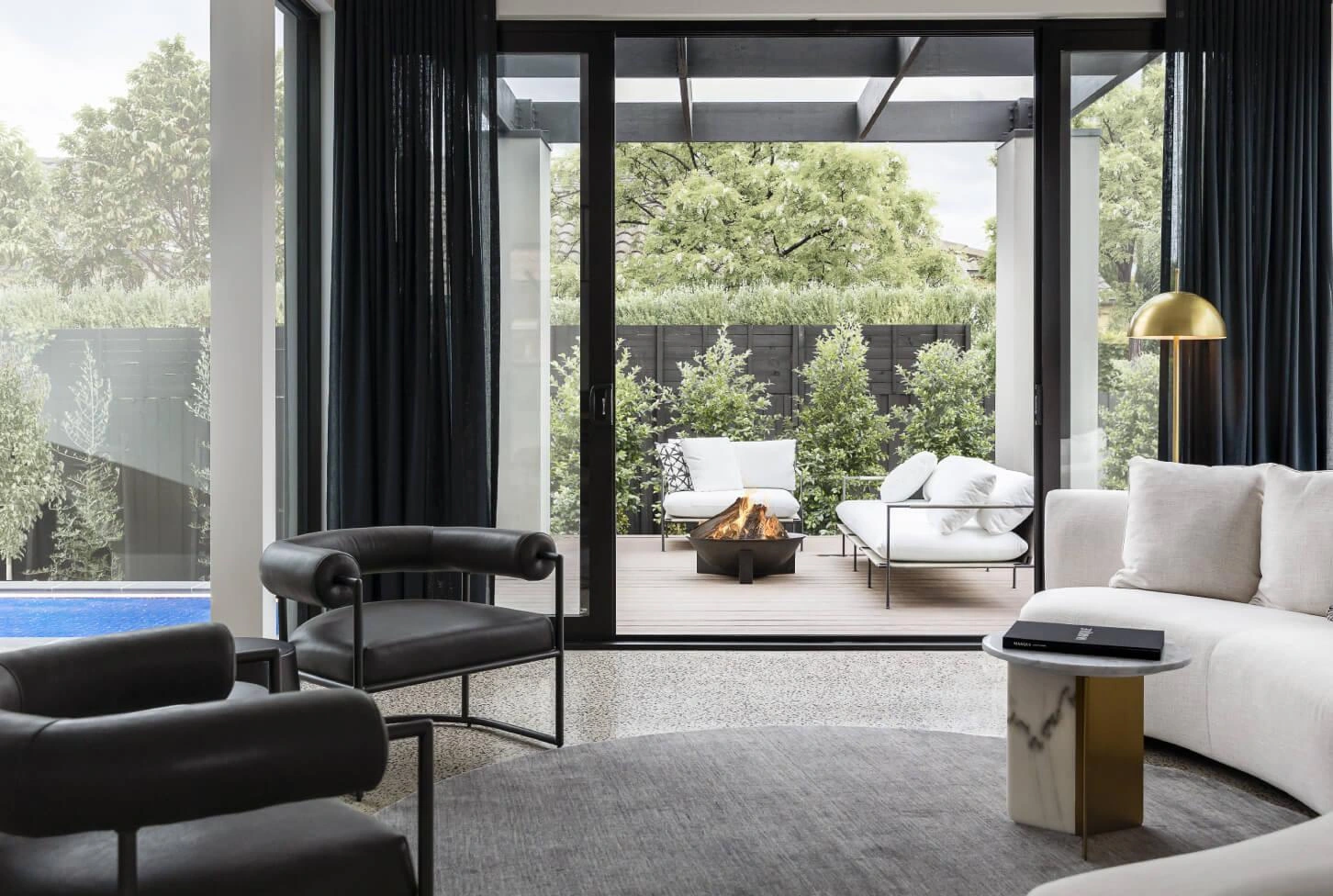
In today’s luxury homes, the boundary between interior and exterior spaces is increasingly fluid. Architects and designers are redefining residential environments by creating seamless transitions that extend living areas beyond traditional walls.
This approach enhances spatial continuity, natural light, and the overall living experience. Outdoor areas are no longer secondary—they are integral to the architectural concept. By carefully aligning materials, proportions, and functions, designers can create environments where indoor and outdoor spaces feel like a unified, cohesive whole.
Core Principles of Seamless Indoor–Outdoor Design
To achieve successful transitions, designers rely on several key principles:
- Visual continuity through consistent materials and color palettes
- Spatial alignment between interior and exterior layouts
- Large openings such as sliding or folding glass doors
- Integration of natural elements like greenery and water features
- Functional consistency between indoor and outdoor zones
These principles ensure that transitions feel intentional and harmonious rather than abrupt or disconnected.
Architectural Openings as Transitional Elements
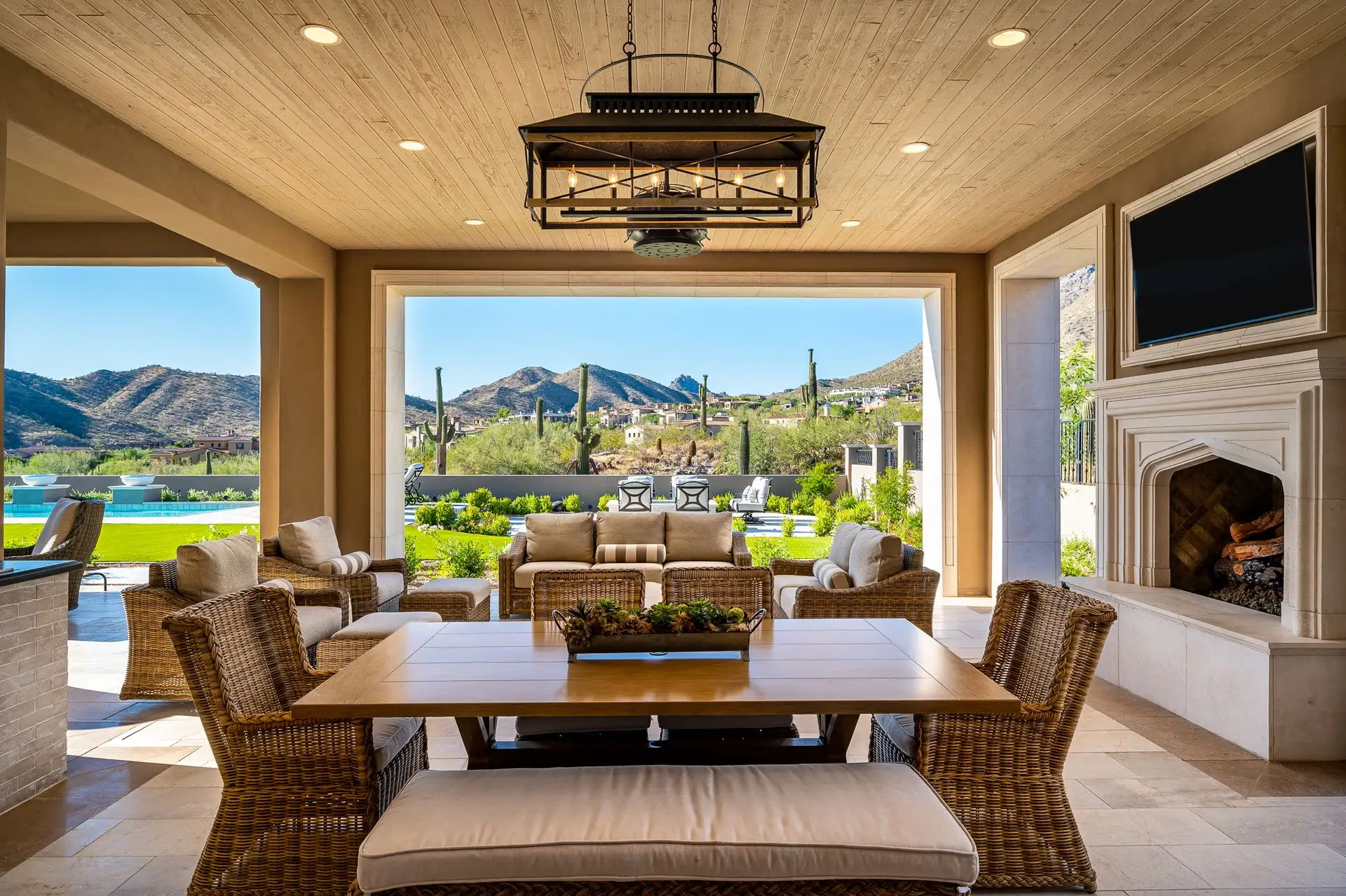
Architectural openings are among the most powerful tools for connecting indoor and outdoor spaces. Expansive glazing systems, sliding panels, and retractable walls allow interiors to open directly onto terraces, gardens, or courtyards.
In luxury homes, these elements are often custom-designed to maximize views and natural light while maintaining structural integrity. When fully opened, they dissolve the physical barrier between inside and outside, creating a continuous living environment that enhances both functionality and aesthetic appeal.
Types of Openings Used in Luxury Residential Design
Designers frequently incorporate the following systems:
- Sliding glass doors for clean, modern transitions
- Bi-fold doors allowing wide, unobstructed openings
- Pivot doors creating dramatic architectural statements
- Retractable walls enabling full spatial integration
- Floor-to-ceiling glazing maximizing visual connection
Each option offers different benefits depending on the architectural style and spatial requirements.
Material Continuity and Visual Cohesion
Material selection plays a critical role in creating seamless transitions. By extending interior materials into outdoor spaces, designers establish a sense of continuity that visually connects the two environments.
For example, stone flooring used inside can continue onto a terrace, while wood finishes can be echoed in outdoor furniture or decking. This approach reduces visual fragmentation and reinforces the architectural narrative. In luxury homes, material consistency is carefully balanced with durability, ensuring that outdoor elements withstand environmental conditions without compromising design integrity.
Materials That Support Indoor–Outdoor Continuity
Common materials used to unify spaces include:
- Natural stone for flooring and walls
- Wood and composite decking for warmth and texture
- Ceramic or porcelain tiles for durability
- Glass and metal elements enhancing modern aesthetics
- Weather-resistant finishes maintaining long-term performance
These materials help create a cohesive design language across indoor and outdoor environments.
Furniture as a Bridging Element
Furniture plays a vital role in reinforcing the connection between interior and exterior spaces. In modern luxury homes, outdoor furniture is designed to mirror the comfort and style of indoor pieces.
Sofas, dining tables, and lounge chairs are often selected to complement interior furnishings, creating a unified aesthetic. Designers prioritize high-performance materials that withstand outdoor conditions while maintaining a refined appearance. This approach ensures that outdoor areas feel like natural extensions of interior living spaces rather than separate zones.
Key Characteristics of Transitional Furniture
Luxury furniture used in these spaces often features:
- Consistent design language with interior pieces
- Weather-resistant materials ensuring durability
- Neutral color palettes enhancing visual continuity
- Modular configurations for flexibility
- High levels of comfort and ergonomics
These characteristics help blur the distinction between indoor and outdoor environments.
Landscape Design as an Extension of Architecture
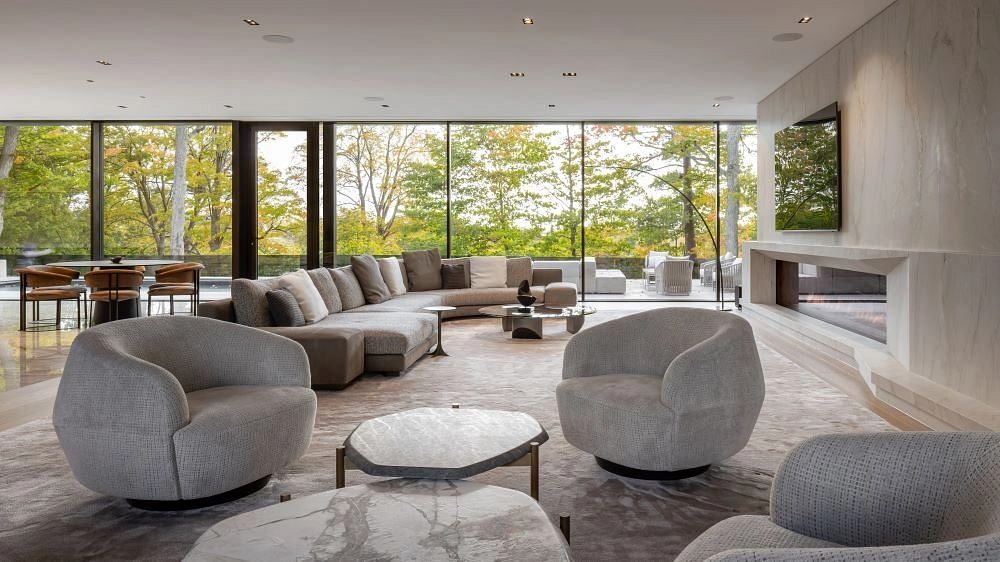
Landscape design is essential in creating seamless indoor–outdoor transitions. Rather than treating the garden as a separate entity, designers integrate it into the architectural framework.
Planting schemes, pathways, and water features are carefully aligned with interior spaces, guiding movement and visual flow. In luxury homes, landscapes are often designed to frame views, create privacy, and enhance the overall spatial experience. This integration ensures that outdoor environments feel like a natural continuation of the architecture.
Landscape Strategies for Seamless Transitions
Effective landscape design often includes:
- Aligned pathways extending interior circulation
- Layered planting creating depth and privacy
- Water features enhancing sensory experience
- Framed views connecting interior sightlines to the outdoors
- Gradual elevation changes smoothing spatial transitions
These strategies help unify architecture and landscape into a cohesive whole.
Lighting and Atmosphere Across Spaces
Lighting is a critical factor in maintaining continuity between indoor and outdoor environments. A well-designed lighting scheme ensures that both spaces feel connected, especially during evening hours.
Designers often use similar lighting temperatures and fixture styles to create a consistent ambiance. Outdoor lighting highlights architectural features, pathways, and landscape elements, while interior lighting extends visually into exterior spaces. This layered approach enhances both functionality and atmosphere, making the transition between spaces feel seamless at all times.
Lighting Techniques for Unified Environments
Key lighting strategies include:
- Matching color temperatures indoors and outdoors
- Layered lighting combining ambient, task, and accent elements
- Integrated fixtures within architecture and landscape
- Subtle pathway lighting guiding movement
- Energy-efficient LED systems for sustainability
These techniques ensure visual harmony and enhance the user experience.
Climate Considerations in Transitional Design
Designing seamless transitions in luxury homes requires careful consideration of climate. Outdoor spaces must remain comfortable and usable throughout the year, regardless of weather conditions.
Architects often incorporate shading structures, heating systems, and natural ventilation strategies to regulate temperature. These elements are integrated into the design to maintain aesthetic coherence while enhancing functionality. By addressing climate from the outset, designers can create outdoor environments that support year-round living.
Climate Solutions for Indoor–Outdoor Spaces
Common solutions include:
- Pergolas and shading systems reducing heat exposure
- Outdoor heating elements extending usability in cooler climates
- Natural ventilation strategies improving airflow
- Wind barriers enhancing comfort
- Climate-responsive materials supporting thermal performance
These features ensure that outdoor spaces remain comfortable and functional.
Spatial Planning and Flow
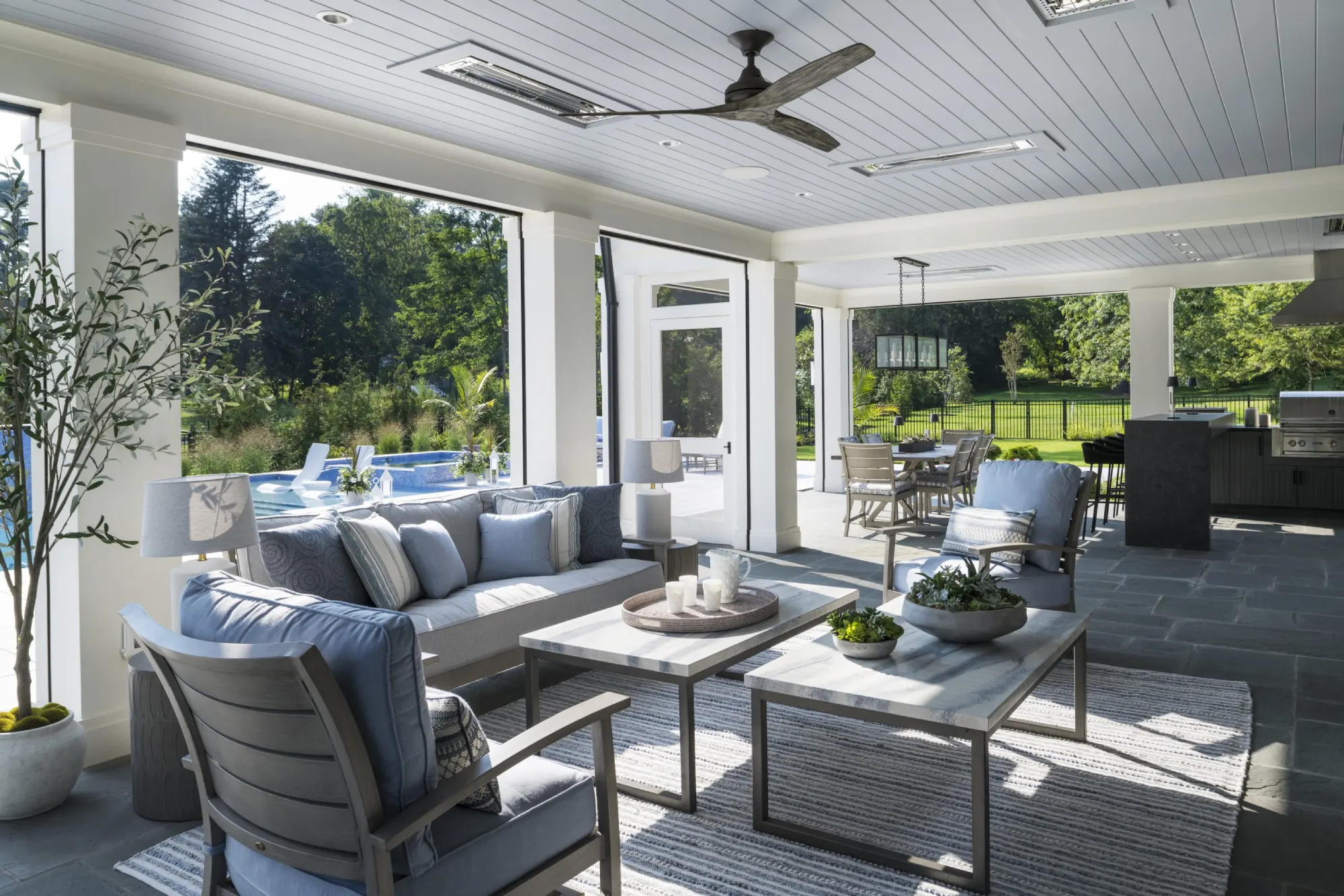
Successful indoor–outdoor transitions depend on thoughtful spatial planning. Designers must consider how people move between spaces and how different areas are used.
Open-plan interiors often extend directly onto terraces or patios, creating a natural flow between living, dining, and outdoor areas. Circulation paths are designed to be intuitive, minimizing barriers and encouraging interaction. In luxury homes, this seamless flow enhances both usability and the overall sense of openness.
Planning Strategies for Seamless Transitions
Designers often implement:
- Open-plan layouts connecting interior zones to outdoor areas
- Aligned furniture arrangements supporting circulation
- Clear sightlines enhancing spatial connection
- Defined zones for dining, lounging, and entertainment
- Flexible spaces adapting to different usesThese strategies help create environments that feel both functional and cohesive.
The Role of Technology in Modern Transitions
Technology is increasingly influencing how indoor and outdoor spaces interact. Automated systems allow homeowners to control lighting, shading, and climate with ease, enhancing the overall experience.
Motorized doors, smart lighting, and climate control systems can be integrated into the design, providing convenience without disrupting aesthetics. In luxury homes, technology supports seamless transitions by ensuring that both indoor and outdoor environments respond to user needs in real time.
The Future of Indoor–Outdoor Living in Luxury Homes
As design continues to evolve, the integration of indoor and outdoor spaces will remain a defining feature of luxury homes. Advances in materials, technology, and architecture will further enhance the possibilities for creating seamless environments.
For outdoor designers and architects, the challenge is to balance innovation with timeless design principles. By focusing on continuity, functionality, and user experience, professionals can create spaces that blur the boundaries between inside and outside.
Ultimately, seamless transitions are not just a design trend—they are a fundamental aspect of modern luxury living.