

Luxury outdoor living spaces have become essential elements in high-end residential architecture. Today’s homeowners expect outdoor areas to offer the same comfort, functionality, and aesthetic sophistication as interior spaces. For outdoor designers, furniture brands, architects, and luxury design studios, thoughtful layout planning plays a critical role in shaping these environments.
A well-designed outdoor layout balances relaxation, entertainment, and visual harmony with the surrounding landscape. Instead of a single patio or terrace, luxury properties now feature multi-functional outdoor zones that support a wide range of activities.
Below are five layout strategies that define the most compelling luxury outdoor living spaces today.
1. The Multi-Zone Outdoor Living Layout
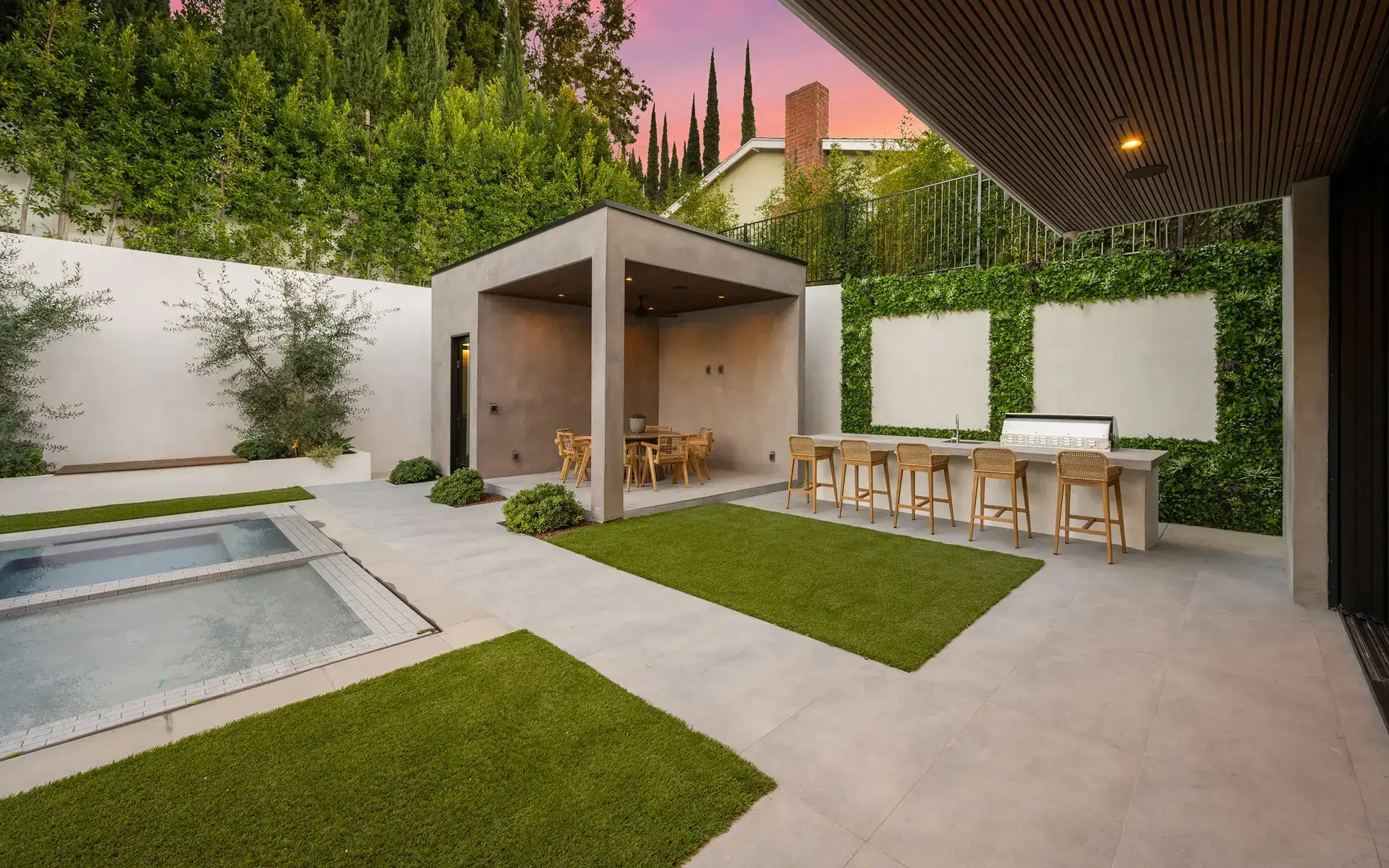
One of the most effective layouts for luxury outdoor living spaces organizes the exterior into clearly defined functional zones. This approach mirrors the planning principles used inside the home.
Designers typically divide the outdoor environment into separate areas for lounging, dining, cooking, and social gatherings. Each zone receives its own spatial identity while maintaining visual continuity with the rest of the landscape.
A common configuration might include:
- A lounge area with deep seating and a fire feature
- An outdoor dining terrace positioned near the kitchen
- A poolside relaxation zone with chaise lounges
- A bar or entertainment pavilion
Careful circulation paths connect these areas, allowing guests to move comfortably between spaces. Designers often use subtle changes in flooring materials, elevation, or landscaping to define each zone.
Furniture brands play an important role in this layout concept. Modular seating systems, sculptural dining tables, and outdoor rugs help anchor each zone and create the feeling of distinct “rooms” outdoors.
2. The Resort-Style Pool-Centered Layout
Many luxury outdoor living spaces revolve around a dramatic pool design. In this layout strategy, the pool becomes the central architectural feature that organizes the surrounding outdoor environment.
Designers place lounge terraces, cabanas, and dining areas around the water to create a resort-like atmosphere. The arrangement often emphasizes symmetry and unobstructed sightlines.
Key elements in this layout include:
- Infinity-edge or geometric pools as visual anchors
- Sun shelves with integrated seating
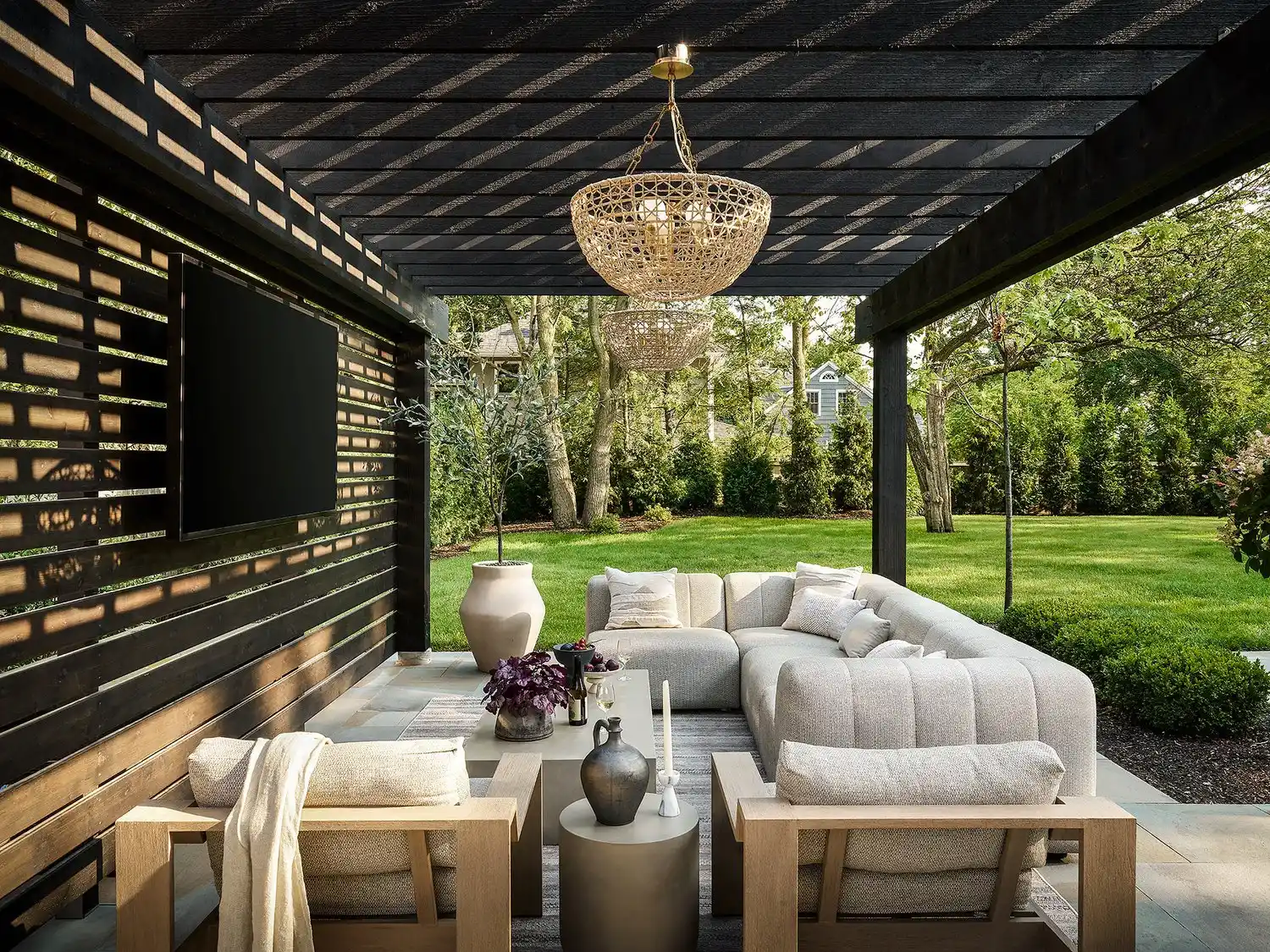
- Poolside pavilions or shaded pergolas
- Sculptural outdoor showers or changing areas
Outdoor furniture brands often collaborate with architects to ensure seating arrangements complement the pool’s geometry. Curved lounge chairs or minimalist teak platforms can echo the shapes of the water feature.
Lighting design also becomes critical. Underwater illumination, pathway lighting, and integrated LED accents allow the pool area to transform into a striking nighttime entertainment space.
This layout works especially well for properties with expansive views, as the pool can align visually with oceans, lakes, or mountain horizons.
3. The Outdoor Entertainment Pavilion Layout
Luxury homes increasingly include dedicated entertainment structures within their outdoor living spaces. These pavilions function as outdoor living rooms designed for gatherings and events.
Architects often design these structures with partial walls, open ceilings, and retractable glass systems to maintain a connection with the surrounding landscape. The pavilion may house several program elements within one cohesive space.
Typical features include:
- Outdoor kitchens with professional-grade appliances
- Integrated dining areas with large communal tables
- Lounge seating arranged around fireplaces or media walls
- Cocktail bars and wine storage
The pavilion layout allows designers to create a fully functional outdoor environment that remains usable in different seasons. Retractable shading systems, ceiling fans, and radiant heating elements extend usability beyond warm summer months.
Furniture brands often contribute statement pieces such as oversized sectional seating or custom dining tables designed to withstand outdoor conditions while maintaining luxury aesthetics.
When combined with landscape lighting and surrounding gardens, entertainment pavilions become focal points within the broader outdoor design.
4. The Terrace Cascade Layout
For hillside properties or multi-level landscapes, the terrace cascade layout provides a sophisticated spatial solution. This approach organizes luxury outdoor living spaces across several stepped levels rather than one large platform.
Each terrace hosts a distinct activity zone while maintaining visual continuity with the rest of the property.
For example:
- The upper terrace may include a dining and kitchen area connected to the interior living room.
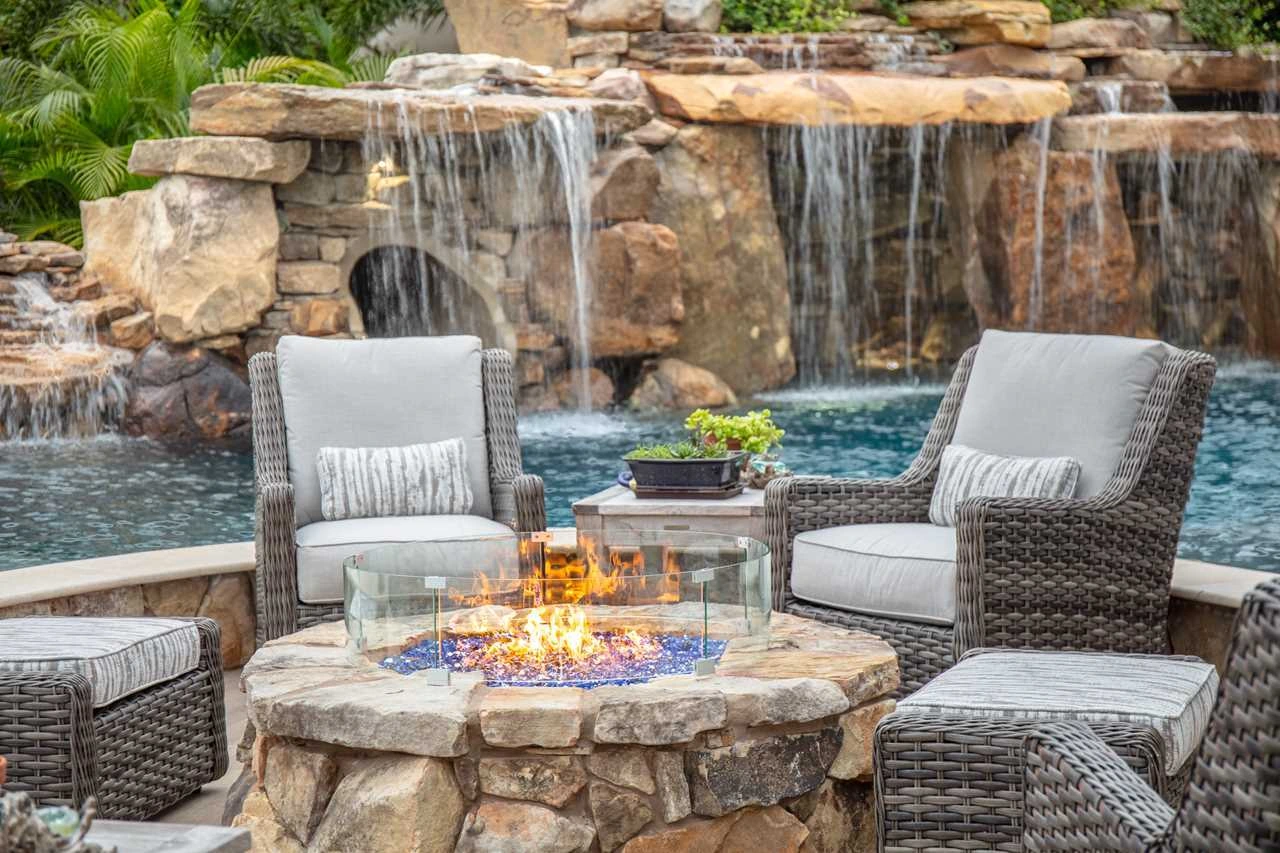
- The middle terrace can feature lounge seating, fire pits, or garden seating areas.
- The lowest level may contain a pool, spa, or sun deck.
Stone retaining walls, sculptural staircases, and integrated planting beds unify the composition. Designers often use natural materials such as limestone, travertine, or wood decking to emphasize elegance and durability.
Terraced layouts offer several design advantages:
- Improved views from each level
- Greater spatial variety
- Enhanced landscape integration
Architects and landscape designers frequently collaborate closely on these projects to ensure drainage, structural integrity, and visual harmony.
5. The Indoor–Outdoor Continuity Layout
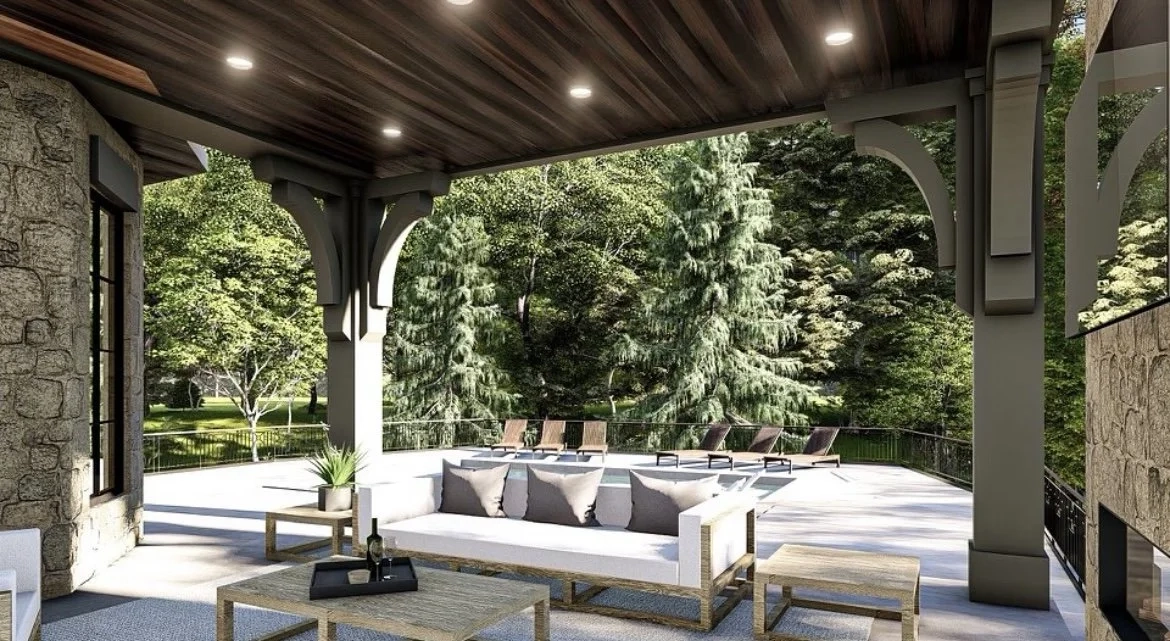
One of the most influential trends in luxury residential architecture is the seamless integration of indoor and outdoor spaces. In this layout concept, the outdoor living area functions as a natural extension of the interior.
Architects achieve this effect through large sliding glass walls, continuous flooring materials, and aligned ceiling heights between interior and exterior zones.
When the doors open, the home and outdoor terrace become a single expansive environment.
Key design strategies include:
- Matching indoor and outdoor flooring materials
- Using consistent furniture palettes across spaces
- Aligning interior seating with exterior lounge arrangements
- Integrating outdoor fireplaces or sculptural water features
This layout works particularly well in warm climates where homeowners spend significant time outdoors. It also allows natural light and fresh air to circulate through the home.
Furniture brands increasingly design collections specifically for this hybrid environment. High-end outdoor pieces now incorporate upholstery and finishes that closely resemble indoor furniture while maintaining weather resistance.
The result is a cohesive lifestyle experience where boundaries between architecture and landscape almost disappear.
Designing the Future of Luxury Outdoor Living Spaces
Luxury outdoor living spaces continue to evolve as designers explore new ways to merge architecture, landscape, and lifestyle. Thoughtful layout planning remains the foundation of successful outdoor environments.
Whether organized around multi-zone terraces, resort-style pools, entertainment pavilions, cascading levels, or seamless indoor–outdoor connections, these spaces transform residential properties into immersive living environments.
For outdoor designers, architects, furniture brands, and luxury design studios, the most compelling projects treat the outdoor environment with the same attention to detail as interior architecture.
When layout, materials, and furnishings work together, luxury outdoor living spaces become more than extensions of the home—they become destinations in their own right.