

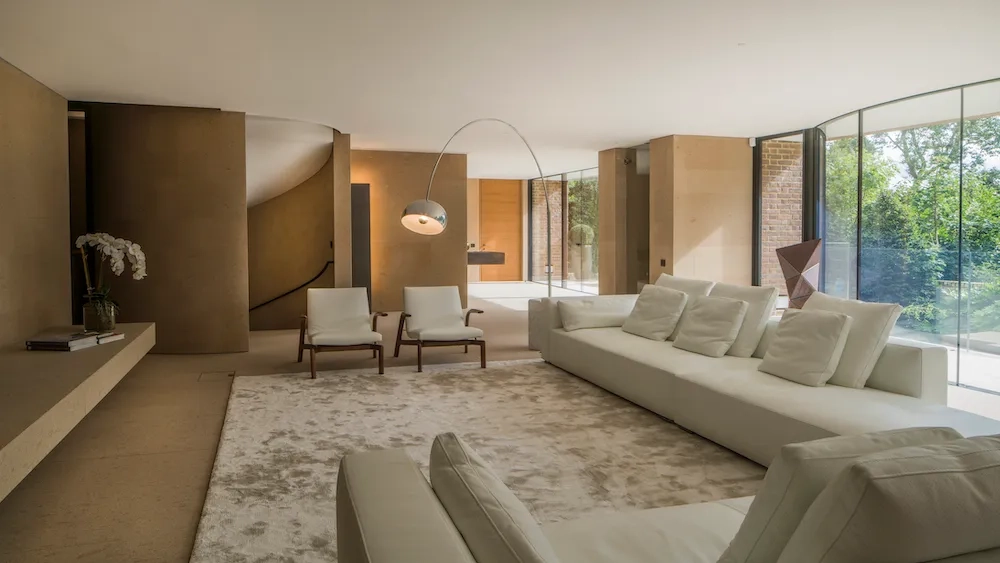
Minimalism in architecture often aims to remove excess, but only a few designers manage to transform simplicity into an emotionally powerful spatial experience. Among them, Claudio Silvestrin stands out as one of the most influential voices in contemporary minimalist architecture.
For outdoor designers, furniture brands, architects, and luxury design studios, Silvestrin’s work offers a compelling exploration of how landscape, materials, and architecture can merge into a unified spatial language. His projects show that outdoor architecture does not rely on decorative gestures. Instead, it thrives on proportion, silence, light, and the tactile presence of natural materials.
This article explores how Claudio Silvestrin defines minimalist outdoor architecture and why his work continues to influence global design culture.
The Architectural Philosophy of Claudio Silvestrin
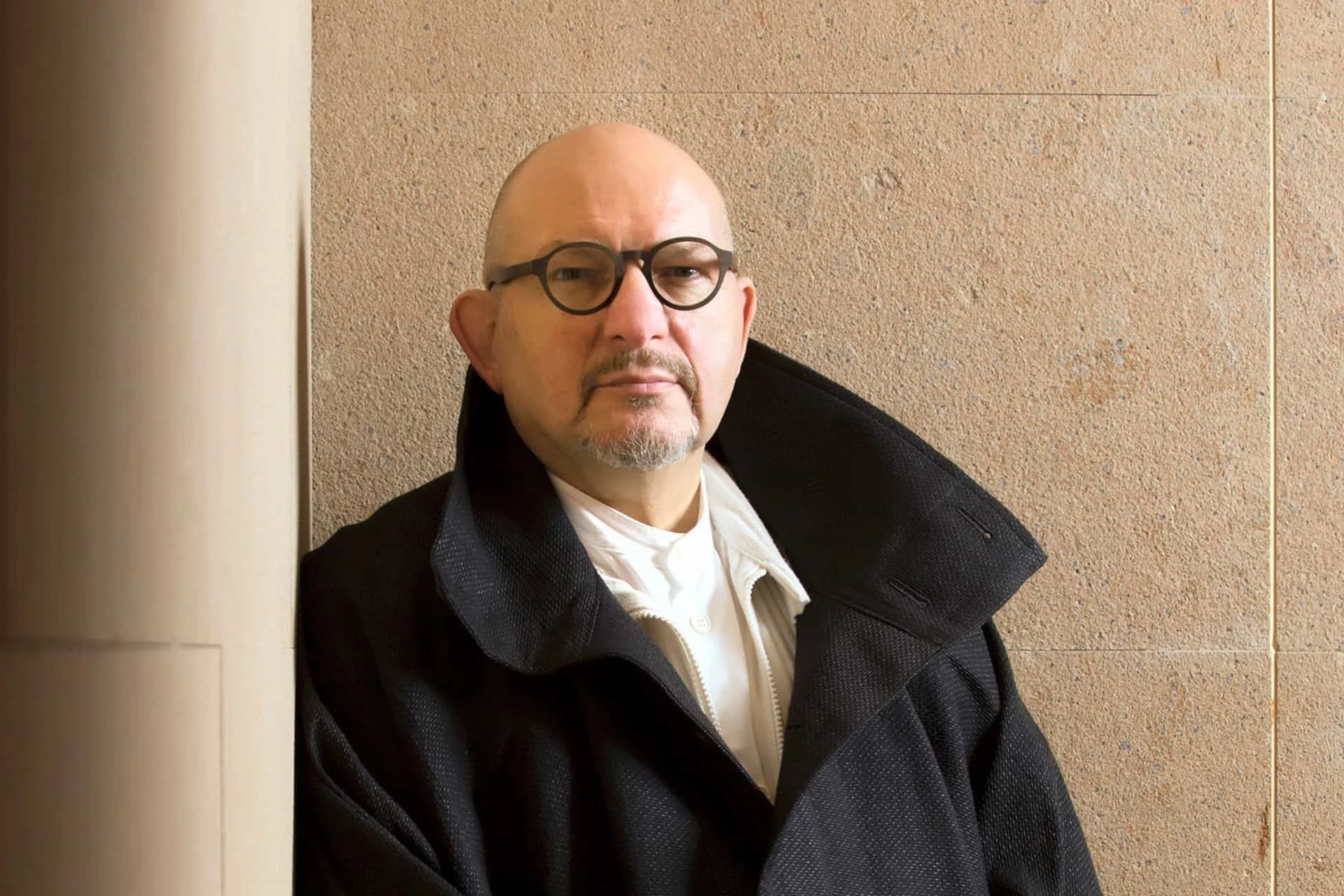
Claudio Silvestrin built his reputation around a philosophy rooted in purity and essential form. After studying architecture in London, he established his own practice and quickly gained recognition for spaces that combine spiritual calm with architectural precision.
Silvestrin’s approach draws inspiration from classical architecture, early modernism, and contemplative traditions such as monastic design. His architecture often reduces forms to their most fundamental elements: walls, planes, light, and void.
Rather than filling outdoor environments with visual complexity, Silvestrin creates architectural compositions that allow landscape and atmosphere to take center stage.
This philosophy has shaped projects across residential architecture, retail spaces, cultural buildings, and luxury hospitality environments.
Minimalism as Spatial Experience
Minimalist architecture often focuses on clean lines, but Silvestrin pushes the concept further. He designs outdoor environments that encourage slow movement and quiet observation.
Key elements frequently appear in his outdoor architecture:
- Monumental stone surfaces
- Carefully proportioned walls and openings
- Reflective water features
- Long perspectives and framed views
- Subtle transitions between interior and exterior space
Through these elements, outdoor spaces become immersive architectural experiences rather than simple extensions of interior environments.
For outdoor designers and landscape architects, Silvestrin’s work demonstrates how minimal form can amplify the emotional impact of natural surroundings.
Integration of Architecture and Landscape
One of the defining characteristics of Claudio Silvestrin’s outdoor architecture lies in its seamless integration with landscape.
His buildings rarely dominate their surroundings. Instead, they emerge gradually from the terrain, often using materials that echo the local environment.
Stone walls, gravel courtyards, and open terraces create transitions that blur the boundary between built form and landscape.
In many projects, Silvestrin uses long horizontal lines to emphasize the relationship between architecture and horizon. These lines guide the viewer’s eye across landscapes, reinforcing a sense of calm and balance.
Outdoor terraces, courtyards, and pathways become architectural elements in their own right, rather than decorative additions.
The Role of Natural Materials
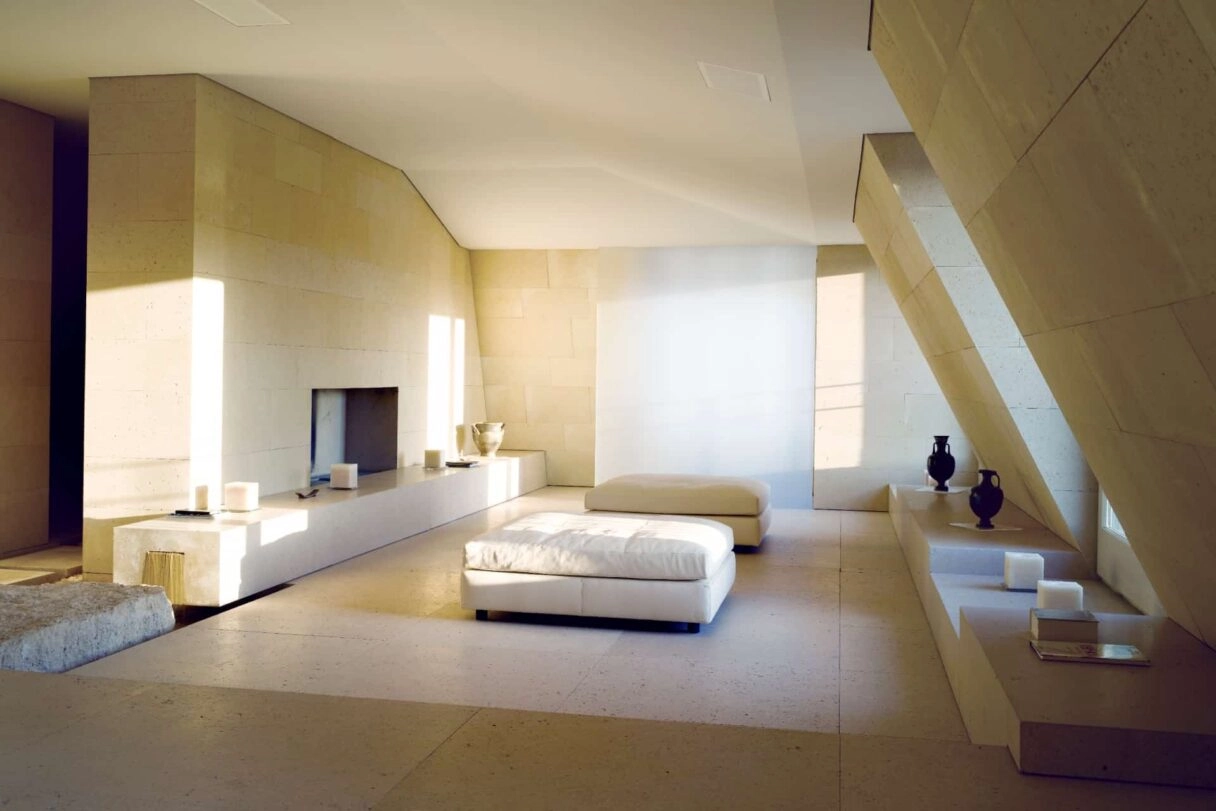
Material selection plays a central role in Silvestrin’s architectural language. He often works with materials that possess both structural strength and tactile richness.
Common materials include:
- Limestone
- Travertine
- Raw concrete
- Timber
- Water and polished stone surfaces
These materials age naturally and develop subtle patinas over time, strengthening the connection between architecture and environment.
Stone surfaces, in particular, appear frequently in Silvestrin’s outdoor spaces. Large monolithic slabs create a sense of permanence and quiet monumentality.
For luxury outdoor design studios, this approach highlights the importance of authenticity in material selection.
The Influence of Classical Geometry
Although Silvestrin embraces minimalist design, classical architectural principles strongly influence his work. Geometry, proportion, and symmetry remain fundamental to his spatial compositions.
Courtyards often follow strict rectangular proportions, while pathways align with central axes that organize the surrounding landscape.
This geometric clarity brings a sense of order to outdoor environments and reinforces the calm atmosphere characteristic of Silvestrin’s architecture.
The result feels timeless rather than trendy. Designers and architects frequently study these spatial strategies when developing luxury residential estates or contemplative landscapes.
Luxury Residential Outdoor Architecture
Silvestrin has designed numerous private residences where outdoor architecture plays a dominant role.
These homes often feature:
- Expansive stone terraces
- Linear reflecting pools
- Enclosed courtyards
- Framed landscape views
- Outdoor spaces designed for quiet reflection
In these projects, exterior environments often carry equal importance as interior rooms. Large sliding walls and minimal thresholds allow indoor spaces to open directly onto terraces or gardens.
The architecture therefore becomes a continuous spatial experience that flows between interior living areas and outdoor landscapes.
For luxury residential architects, this strategy offers a powerful model for integrating architecture with nature.
Retail Architecture and Exterior Minimalism
Silvestrin’s minimalist philosophy extends beyond residential architecture into high-end retail environments.
One of his most influential collaborations occurred with Giorgio Armani. Silvestrin designed several retail spaces for Giorgio Armani that reflect the same minimalist clarity seen in his architectural projects.
Although retail design focuses primarily on interior space, these buildings often incorporate exterior courtyards, entry sequences, and architectural thresholds that reinforce Silvestrin’s design principles.
Visitors experience a gradual transition from city streets into calm, contemplative retail environments.
This architectural choreography demonstrates how minimalism can shape spatial perception even in commercial environments.
Outdoor Furniture and Architectural Simplicity
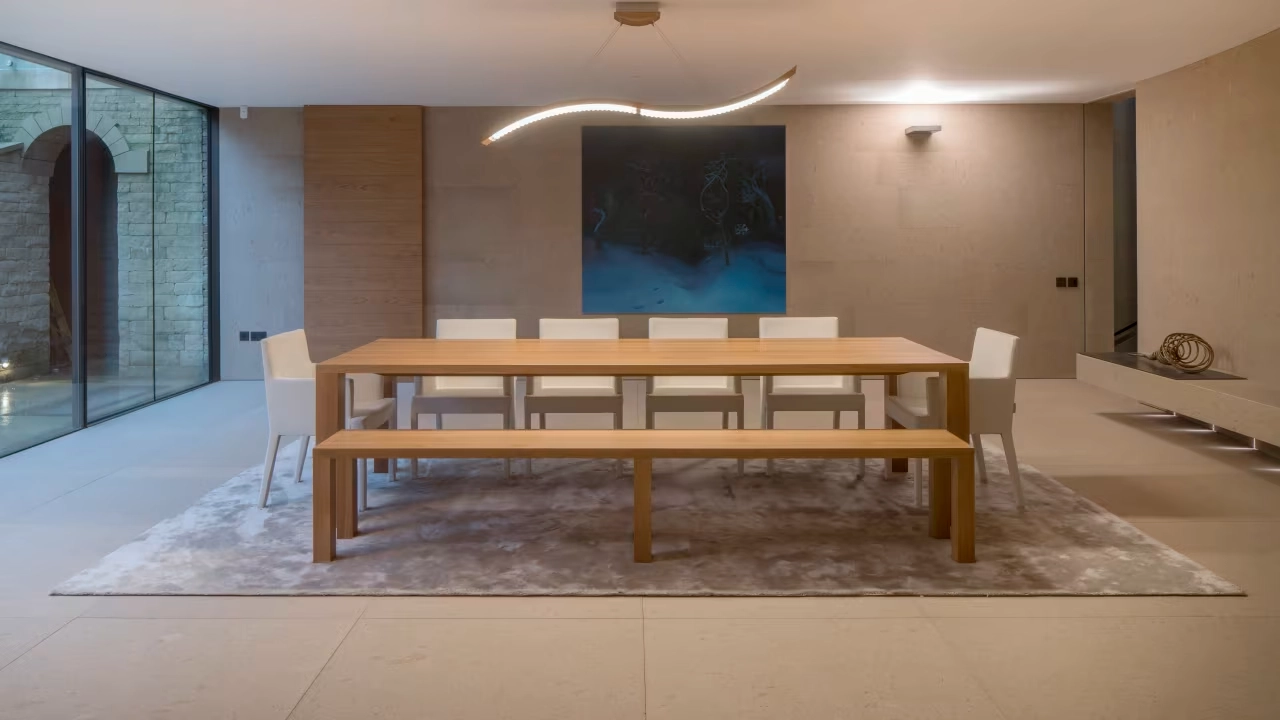
Silvestrin’s architectural philosophy also influences outdoor furniture design. His projects frequently incorporate furniture that echoes the same geometric clarity found in the surrounding architecture.
Typical characteristics include:
- Rectilinear seating elements
- Stone or timber benches integrated into architectural structures
- Minimalist dining tables with strong proportions
- Neutral material palettes
Furniture rarely dominates the environment. Instead, it complements architectural geometry and supports the overall spatial composition.
For outdoor furniture brands, Silvestrin’s environments illustrate how product design can reinforce architectural identity.
The Role of Light and Shadow
Natural light represents one of the most powerful elements in Silvestrin’s outdoor architecture.
Walls, courtyards, and terraces often create strong contrasts between light and shadow throughout the day. These shifting patterns animate otherwise minimal surfaces.
Morning light may highlight the texture of stone walls, while evening shadows stretch across terraces and reflecting pools.
Rather than relying on decorative features, Silvestrin uses light as a dynamic design material.
This approach proves especially relevant for outdoor designers working with Mediterranean climates or open landscapes.
Global Influence on Contemporary Outdoor Design
Claudio Silvestrin’s projects appear in Europe, North America, and Asia. His work continues to influence architects and landscape designers seeking a refined approach to minimalism.
Luxury resorts, private villas, and contemporary estates increasingly adopt similar architectural strategies:
- Strong geometric layouts
- Monolithic materials
- Quiet spatial transitions
- Integrated outdoor living environments
Silvestrin’s influence reflects a broader shift toward architecture that prioritizes atmosphere, material authenticity, and connection to nature.
The Enduring Vision of Claudio Silvestrin
Minimalist architecture requires discipline. Removing visual complexity demands careful attention to proportion, material quality, and spatial composition. Few architects demonstrate this discipline as consistently as Claudio Silvestrin.
Through his work, Claudio Silvestrin has defined a distinctive vision of minimalist outdoor architecture—one that combines monumental simplicity with deep sensitivity to landscape and light.
For outdoor designers, furniture brands, architects, and luxury design studios, his projects offer a powerful reminder that the most compelling environments often emerge from restraint rather than excess. Silence, material honesty, and architectural clarity remain the true foundations of timeless outdoor design.