

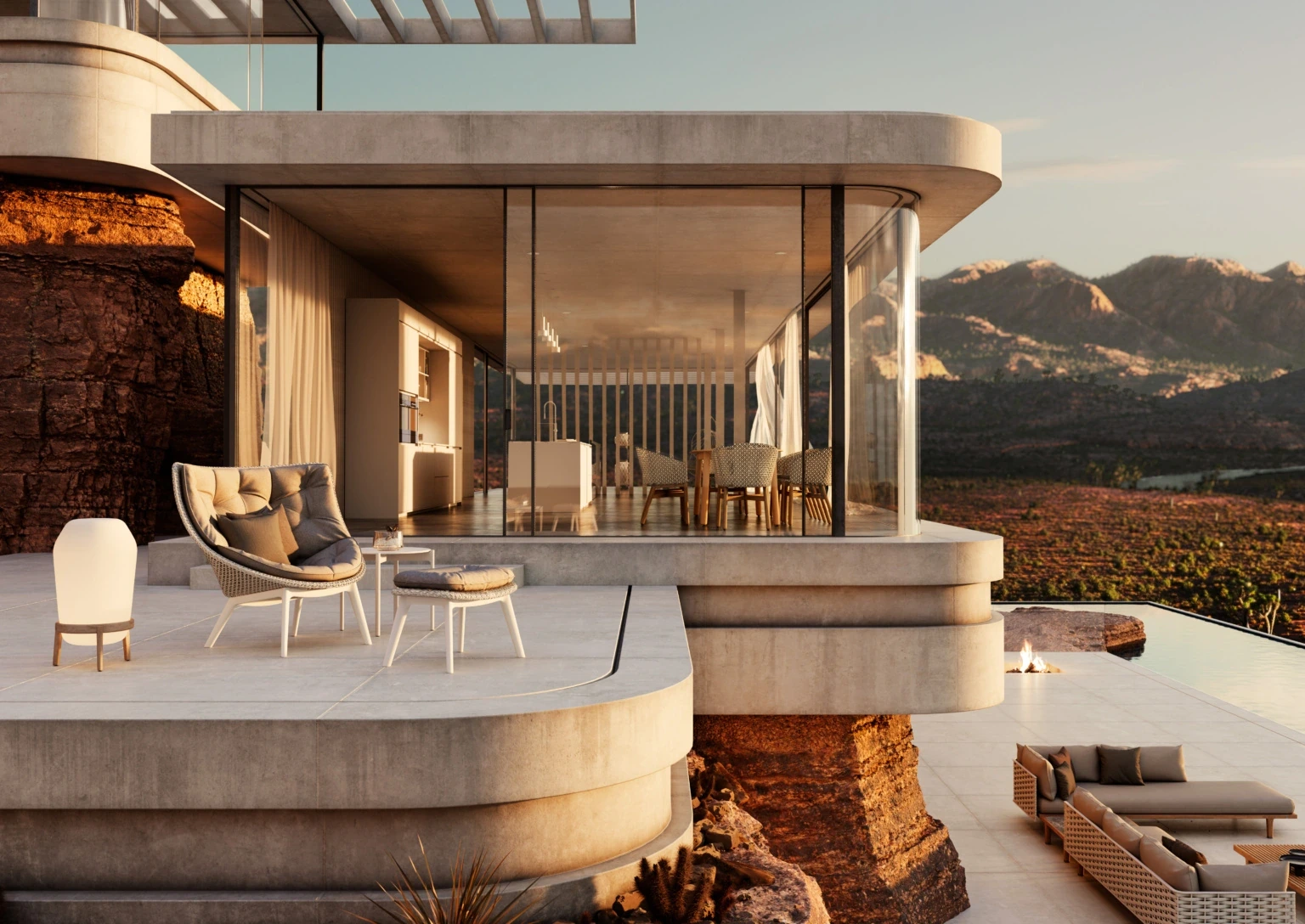
In the evolving landscape of high-end outdoor environments, Sebastian Herkner has established a distinctive voice that bridges craftsmanship, material sensitivity, and contemporary design language. For outdoor designers, architects, and luxury design studios, his work offers a refined perspective on how furniture can shape spatial experience beyond interiors.
Founded in 2006, his studio operates across furniture, lighting, textiles, and spatial concepts, consistently merging traditional craftsmanship with modern production techniques. This cross-disciplinary approach allows Sebastian Herkner to create outdoor design pieces that are not only functional but deeply expressive-objects that carry cultural narratives while responding to contemporary living.
A Design Philosophy Rooted in Material and Culture
Sebastian Herkner’s design philosophy is grounded in a deep respect for materials and their origins. Rather than treating materials as neutral components, he explores their textures, histories, and emotional resonance.
His work often translates influences from travel, craftsmanship traditions, and cultural contexts into contemporary objects. As a result, each piece carries a narrative dimension, connecting users to broader stories and environments.
This approach is particularly relevant in outdoor design, where materials are constantly exposed to light, weather, and touch. By emphasizing authenticity and sensory richness, Herkner creates pieces that evolve over time while maintaining their conceptual integrity.
Organic Forms and the Language of Outdoor Comfort
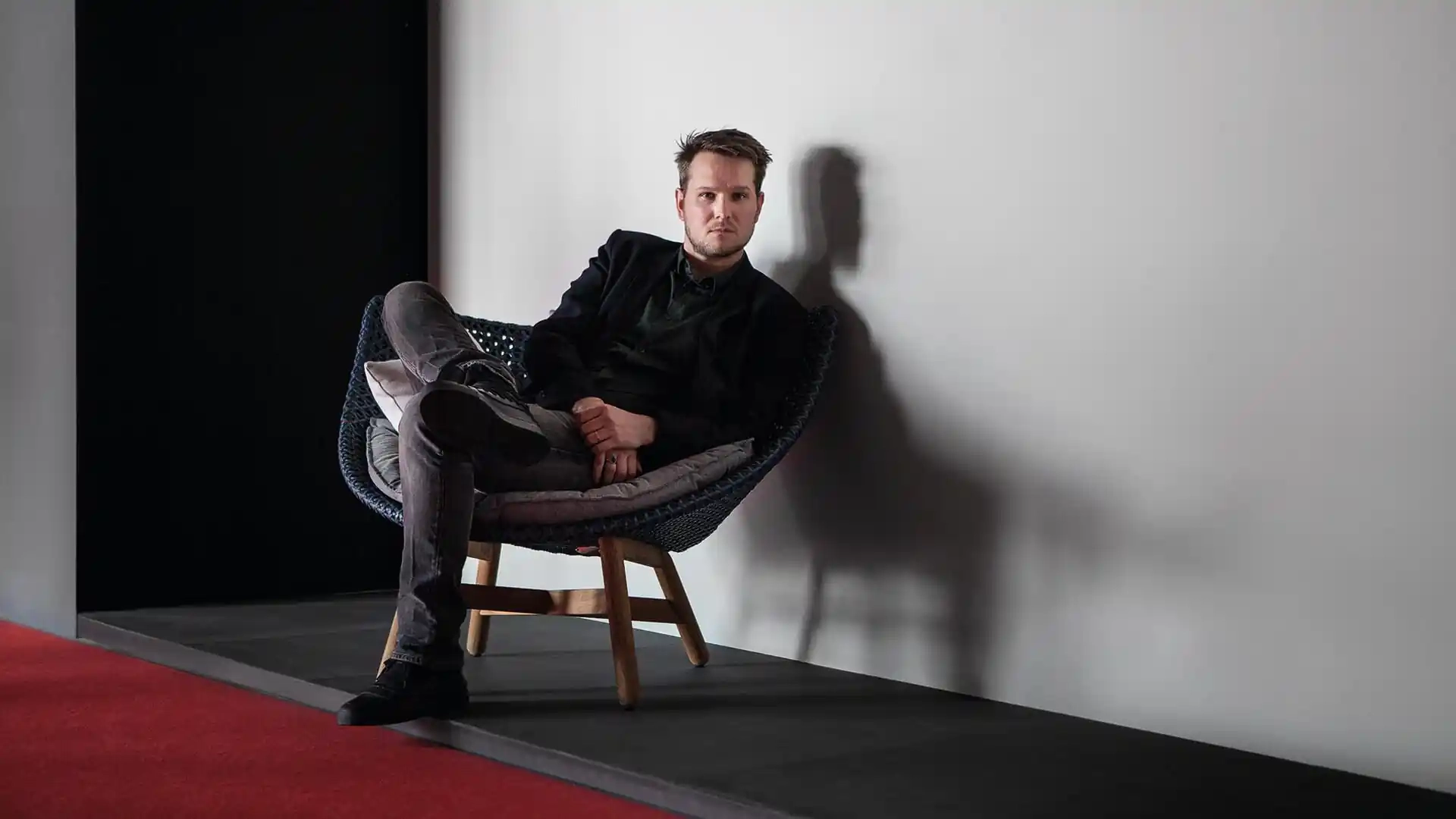
A defining characteristic of Sebastian Herkner’s outdoor collections is the use of organic, fluid forms. These shapes soften architectural environments and introduce a sense of ease and comfort.
Key design qualities include:
- Curved silhouettes that invite relaxation
- Soft transitions between structure and upholstery
- Forms inspired by natural elements such as leaves or landscapes
- A balance between sculptural presence and ergonomic comfort
- Visual lightness despite generous proportions
This language allows outdoor furniture to feel integrated within the landscape, rather than imposed upon it.
Modular Thinking and Flexible Outdoor Living
One of the most significant contributions of Sebastian Herkner to outdoor design is his exploration of modularity. Collections such as MDear redefine how outdoor furniture adapts to different contexts and user needs.
The MDear system, composed of five organic modules, can function as individual pieces or be combined into larger compositions. This flexibility reflects a broader shift in luxury outdoor living, where spaces must accommodate multiple uses and evolve over time.
For designers, this modular approach offers new possibilities in spatial planning. Furniture becomes a dynamic element that can reshape the environment, supporting both intimate settings and large gatherings.
Craftsmanship as a Core Design Value
Craftsmanship remains central to Sebastian Herkner’s work. Across his collaborations, there is a consistent emphasis on hand-finished details, traditional techniques, and high-quality production.
This focus is evident in:
- The integration of woven elements in outdoor seating
- The use of hand-shaped surfaces and natural finishes
- Collaborations with skilled artisans and specialized manufacturers
- Attention to detail in joints, textures, and transitions
- A balance between industrial precision and handmade character
For luxury outdoor design, this level of craftsmanship elevates furniture from functional objects to collectible design pieces.
Material Combinations and Sensory Contrast
Sebastian Herkner is known for combining diverse materials to create rich sensory experiences. In outdoor furniture, this often involves pairing natural and industrial elements to achieve both durability and aesthetic depth.
Typical material combinations include:
- Teak wood with woven fibers or rope
- Aluminum structures with soft textile surfaces
- Glass and ceramic elements that reflect light
- Stone or marble accents for visual weight
- Textiles that enhance comfort while resisting outdoor conditions
These contrasts create a layered experience, where each material contributes to the overall perception of the piece.
Blurring Indoor and Outdoor Boundaries
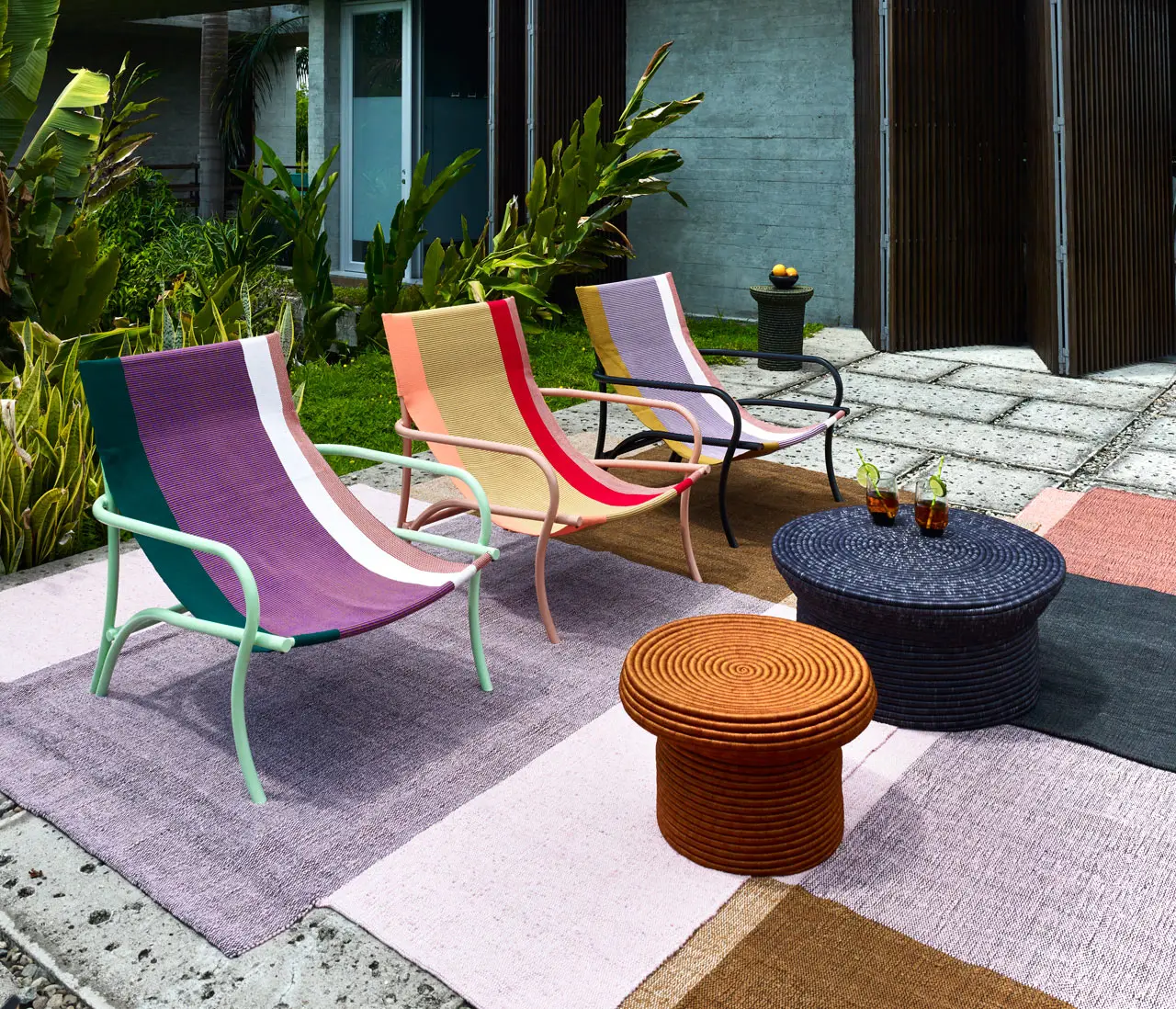
A recurring theme in Sebastian Herkner’s work is the dissolution of boundaries between indoor and outdoor spaces. His furniture is designed to transition seamlessly between these environments, reflecting contemporary lifestyle trends.
Outdoor collections often incorporate the same level of refinement found in interior pieces. Upholstery, finishes, and proportions are carefully considered to ensure consistency across spaces.
This approach aligns with the growing demand for cohesive environments, where terraces, gardens, and interiors function as a unified whole.
Emotional Design and User Experience
Beyond form and material, Sebastian Herkner prioritizes emotional engagement. His designs aim to create a sense of comfort, familiarity, and connection.
This is achieved through:
- Soft, enveloping forms that encourage relaxation
- Tactile materials that invite touch
- Balanced proportions that feel intuitive
- Design narratives that resonate with users
- Spaces that support both social interaction and solitude
For outdoor designers, this focus on emotion highlights the importance of creating environments that go beyond visual appeal.
Collaborations with Leading Design Brands
Sebastian Herkner’s influence extends through collaborations with some of the most respected names in the design industry. These partnerships allow him to explore different materials, technologies, and contexts.
Notable collaborations include work with brands such as Dedon, ClassiCon, and Cappellini, among others. Each collaboration brings a unique perspective, resulting in a diverse portfolio that spans both indoor and outdoor environments.
For luxury design studios, these collaborations demonstrate how partnerships can drive innovation and expand creative possibilities.
Outdoor Furniture as Spatial Architecture
In Sebastian Herkner’s work, outdoor furniture is not treated as an accessory but as an integral part of spatial design. Pieces are conceived as architectural elements that define zones, guide movement, and shape experience.
Design strategies often include:
- Using furniture to create informal boundaries within open spaces
- Aligning seating arrangements with views and circulation
- Integrating furniture with landscape features
- Designing pieces that function as focal points
- Ensuring adaptability across different environments
This perspective reinforces the role of furniture as a key component in the overall composition of outdoor spaces.
The Future of Outdoor Design Through Herkner’s Lens
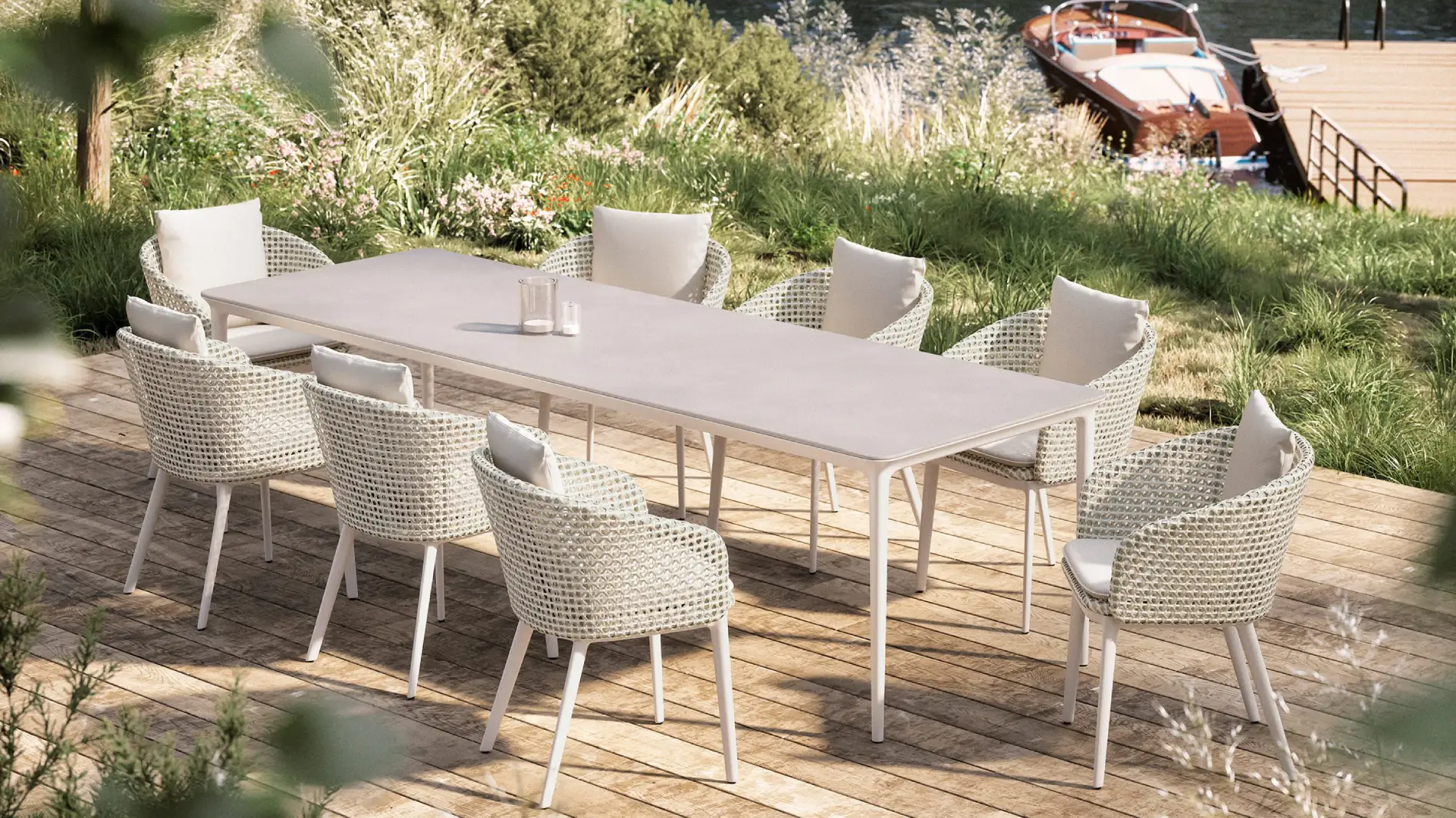
As outdoor living continues to evolve, Sebastian Herkner’s work provides valuable insight into future directions. His emphasis on modularity, material authenticity, and emotional design aligns with broader industry trends.
Future developments are likely to build on these principles, incorporating new materials and technologies while maintaining a strong connection to craftsmanship. The integration of flexible systems and sensory-rich materials will continue to shape luxury outdoor environments.
For designers, Herkner’s approach offers a framework that balances innovation with timeless design values.
Conclusion
Sebastian Herkner has redefined the language of outdoor design pieces through a unique combination of craftsmanship, material exploration, and contemporary thinking. His work demonstrates that outdoor furniture can be both functional and deeply expressive, contributing to the overall spatial narrative.
For outdoor designers, architects, and luxury studios, his philosophy provides a compelling model for creating environments that are refined, adaptable, and emotionally engaging. As the boundaries between indoor and outdoor living continue to blur, the influence of Sebastian Herkner will remain central in shaping the future of luxury outdoor design.