

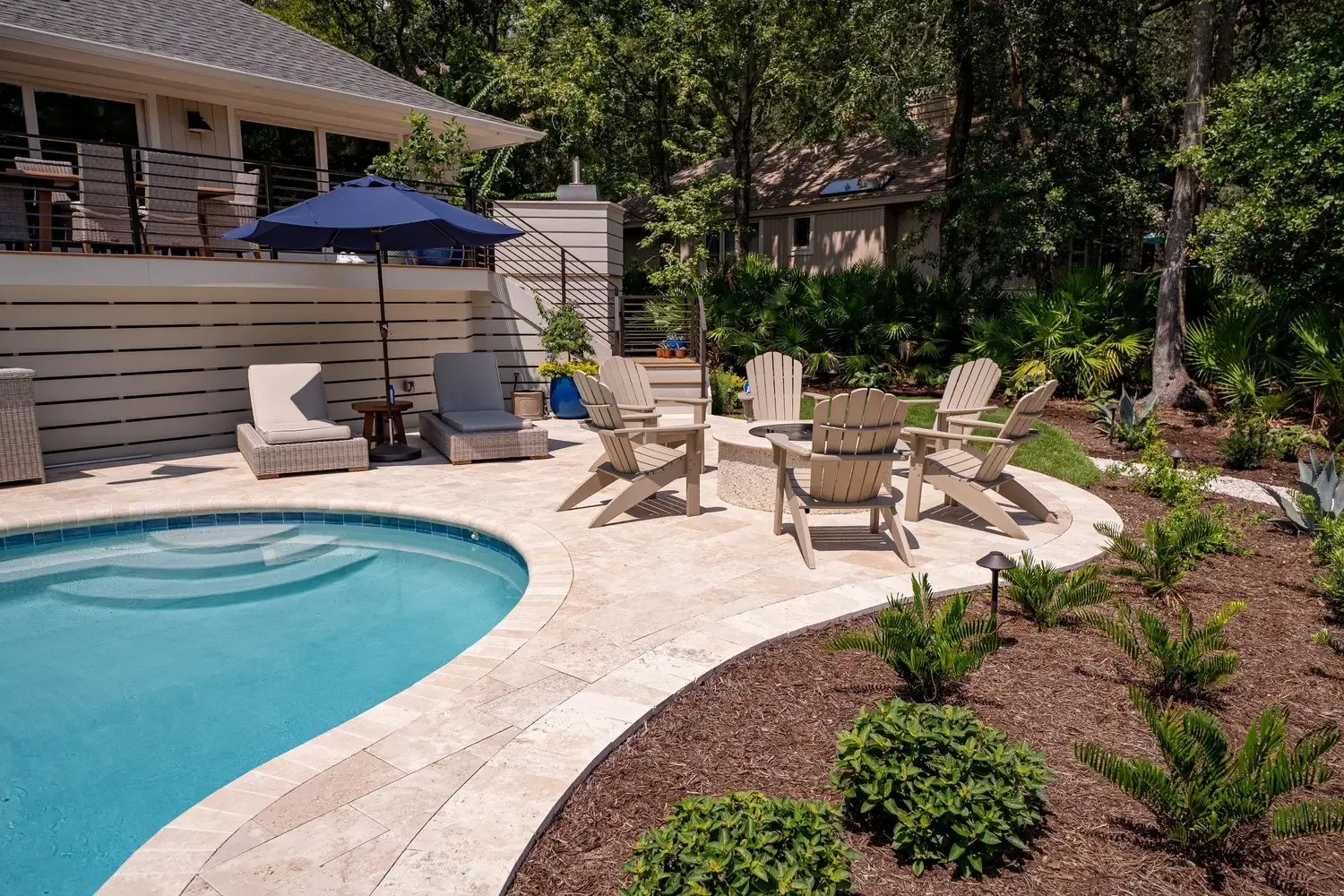
Across contemporary residential and hospitality architecture, the luxury terrace has evolved into a fully integrated living environment where materials play a defining role in both aesthetics and performance. Among the most influential surfaces shaping this transformation, travertine has emerged as a dominant choice for terraces and pool areas. Its natural texture, tonal softness, and architectural versatility have made it a preferred material for outdoor designers, architects, and luxury design studios worldwide.
From Mediterranean villas to minimalist coastal residences, travertine creates a refined visual continuity between architecture and landscape. More importantly, it responds exceptionally well to outdoor conditions, offering both tactile comfort and timeless elegance in high-end exterior environments.
The Architectural Appeal of Travertine
Travertine has been used in architecture for centuries, yet its contemporary resurgence is closely tied to the growing demand for understated luxury. Unlike highly polished stones, travertine introduces softness and depth through subtle tonal variation and porous texture.
In luxury terrace projects, this material creates a calm and natural atmosphere that complements modern architectural forms. Its neutral palette works effortlessly alongside concrete, wood, glass, and metal, allowing designers to maintain visual balance across indoor and outdoor spaces.
Because of this adaptability, travertine functions equally well in Mediterranean-inspired homes, contemporary villas, and luxury hospitality projects.
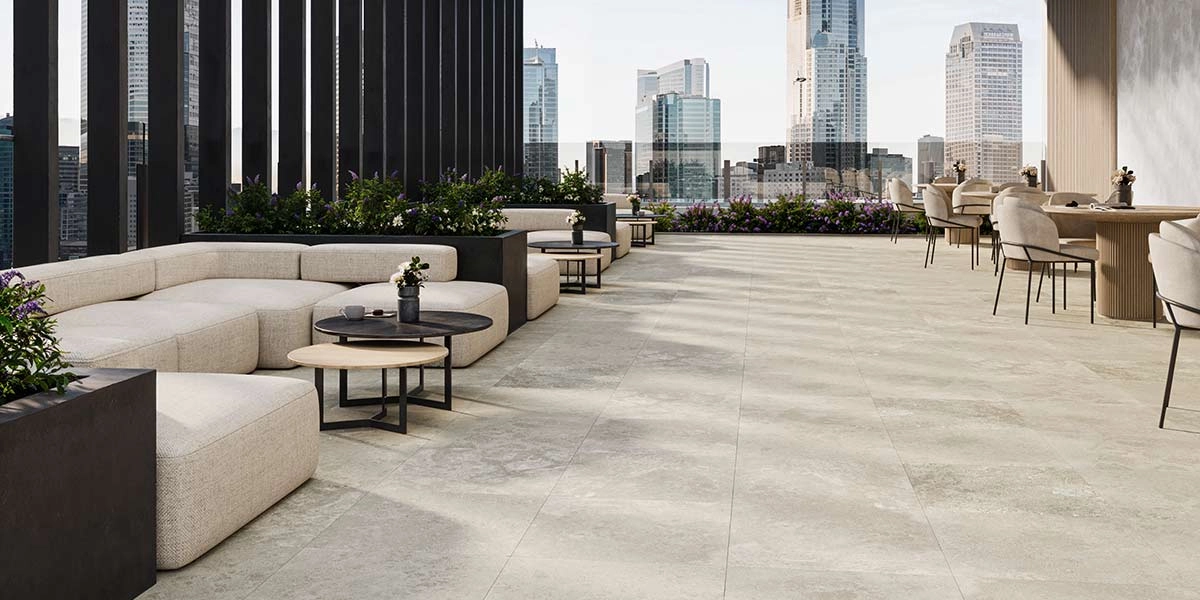
Why Travertine Performs So Well Outdoors
Beyond aesthetics, travertine offers practical advantages that make it highly suitable for exterior applications. Its natural composition allows it to perform effectively under varying climate conditions.
Key performance benefits include:
- Cooler surface temperatures under direct sunlight
- Natural slip resistance around pools
- High durability in outdoor environments
- Resistance to fading from UV exposure
- Compatibility with multiple finish options
These characteristics make travertine particularly valuable in warm climates where comfort and safety are essential components of outdoor living design.
Travertine and the Contemporary Luxury Terrace
In modern luxury terrace design, visual continuity has become increasingly important. Travertine supports this approach by creating seamless transitions between interior and exterior surfaces.
Large-format travertine slabs are often used to extend flooring from indoor living spaces directly onto terraces. This continuity enhances openness and reinforces architectural clarity. At the same time, the natural texture of the stone introduces warmth that balances minimalist compositions.
For designers, travertine offers a way to soften contemporary architecture without compromising sophistication or material precision.
The Influence of Mediterranean Design
The popularity of travertine is closely linked to the enduring influence of Mediterranean architecture. Across coastal regions in Italy, Greece, and southern France, natural stone has long shaped outdoor living environments.
Contemporary projects reinterpret these traditions through a more minimal and refined lens. Instead of ornate detailing, designers focus on:
- Clean geometric layouts
- Soft neutral palettes
- Organic material combinations
- Open terraces oriented toward light and views
- Integration between architecture and landscape
Travertine supports this language perfectly, reinforcing the relaxed yet sophisticated atmosphere associated with Mediterranean outdoor living.
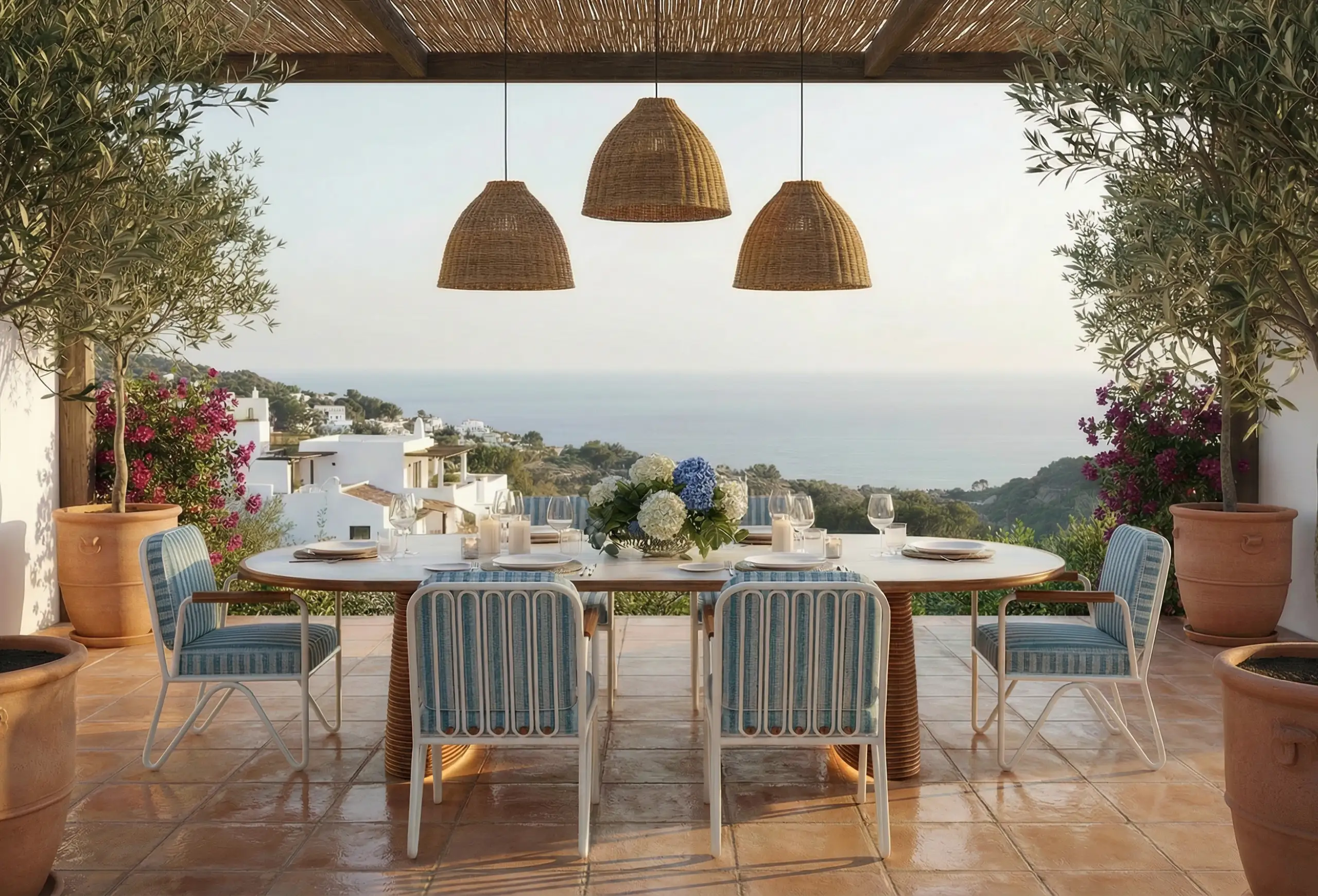
Pool Deck Design and Thermal Comfort
One of the primary reasons travertine dominates pool design is its thermal performance. Unlike darker stones or synthetic materials, travertine remains relatively cool under intense sun exposure.
This quality significantly improves comfort around pools, particularly in luxury hospitality and residential projects where barefoot circulation is constant. In addition, its textured surface provides grip without appearing overly rough or utilitarian.
Designers frequently pair travertine pool decks with infinity-edge pools and minimalist water features, creating environments where the material enhances both comfort and visual serenity.
Finishes and Surface Treatments
Travertine can be adapted through different finishes, allowing it to suit a wide variety of architectural styles and outdoor conditions.
Popular outdoor finishes include:
- Honed finishes for smooth contemporary surfaces
- Tumbled travertine for a softer, aged appearance
- Brushed textures that enhance natural character
- Vein-cut slabs for linear visual movement
- Cross-cut finishes emphasizing organic variation
Each treatment changes how the stone interacts with light, shadow, and surrounding materials, giving designers significant creative flexibility.
Material Pairings in Luxury Outdoor Spaces
Travertine works particularly well when combined with other natural and architectural materials. Its understated appearance allows stronger textures and forms to coexist harmoniously.
Common combinations include travertine with teak furniture, powder-coated aluminum structures, lime plaster walls, and reflective water surfaces. These pairings create layered environments where no single material dominates the composition.
This balance is especially important in luxury terrace projects, where the objective is often to create spaces that feel calm, immersive, and timeless rather than overly decorative.
Sustainability and Longevity
Natural materials increasingly play a central role in sustainable outdoor design, and travertine aligns with this shift through its durability and longevity.
Rather than requiring frequent replacement, high-quality travertine can maintain its appearance for decades when properly installed and maintained. Its aging process often enhances its character, allowing outdoor spaces to develop visual depth over time.
Important sustainability advantages include:
Long material lifespan
- Reduced need for synthetic finishes
- Timeless aesthetics that resist trend cycles
- Compatibility with passive cooling strategies
- Natural integration within landscape environments
For luxury design studios, these qualities support long-term value and architectural integrity.
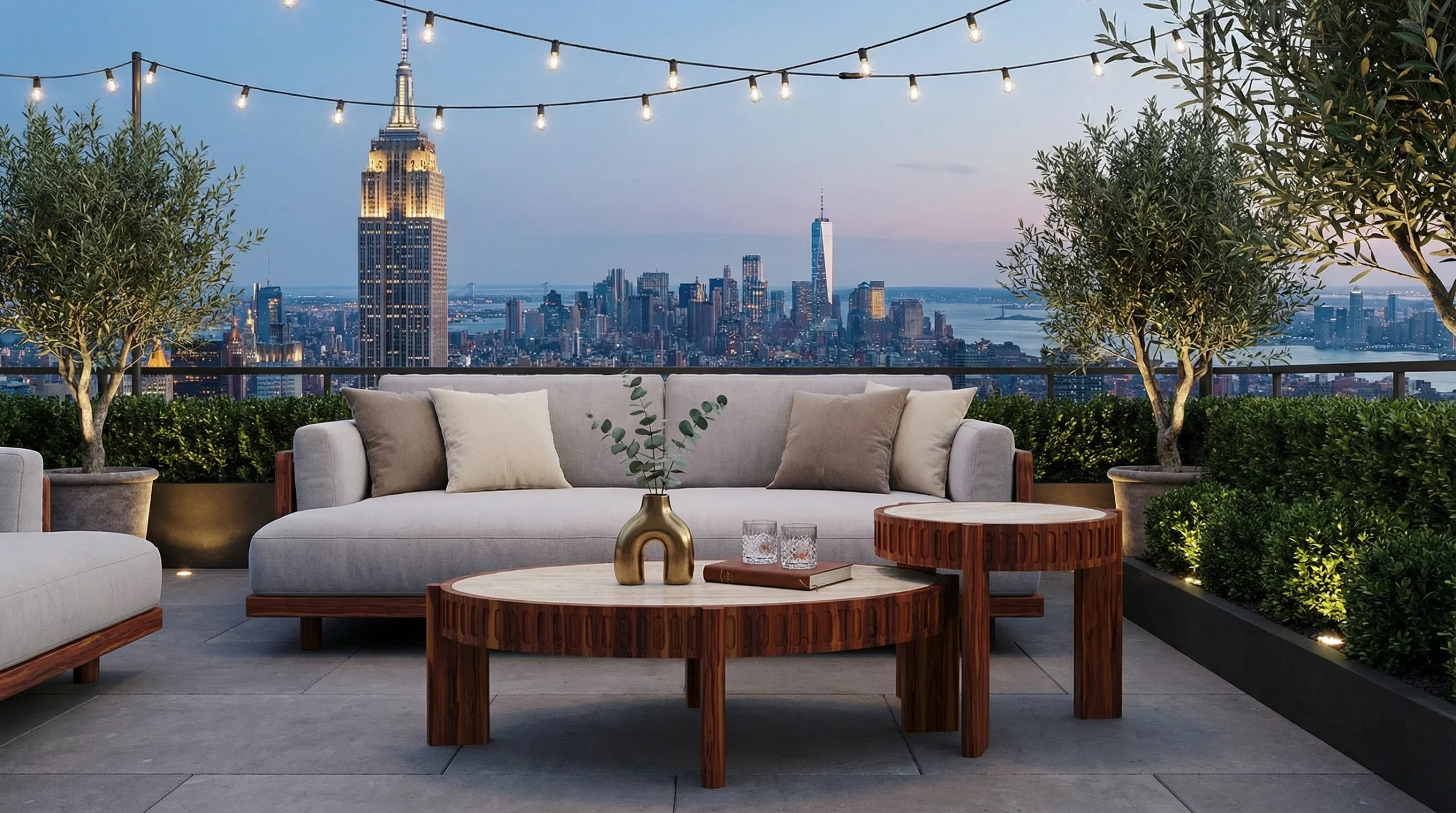
Travertine in Hospitality and Residential Projects
Luxury hotels and private residences increasingly use travertine to create cohesive outdoor environments that prioritize experience and atmosphere.
In hospitality projects, travertine terraces often frame infinity pools, outdoor lounges, and dining spaces overlooking the sea or landscape. In residential architecture, the material is used to unify courtyards, pathways, and pool decks into a single visual composition.
This versatility allows travertine to function across different scales and typologies while maintaining a strong architectural identity.
The Emotional Quality of Natural Stone
Part of travertine’s appeal lies in its emotional and sensory qualities. Unlike synthetic materials, natural stone introduces variation, texture, and imperfection that enrich the user experience.
Light interacts differently across each surface, creating subtle changes throughout the day. Shadows deepen within the stone’s pores, while warm tones emerge during sunset conditions. These qualities make travertine feel alive within the landscape.
For outdoor designers, this sensory dimension is increasingly valuable as luxury environments move toward more immersive and experiential forms of design.
The Future of Travertine in Outdoor Design
As outdoor living continues to influence contemporary architecture, travertine is likely to remain one of the defining materials of the luxury terrace. Its ability to combine durability, elegance, and environmental responsiveness positions it perfectly for future design trends.
Emerging applications include larger monolithic slabs, seamless indoor-outdoor transitions, and integration with sustainable landscape strategies. At the same time, designers continue to explore new finishes and installation techniques that highlight the stone’s natural beauty.
This evolution ensures that travertine will remain relevant across both modern and timeless architectural styles.
Conclusion
Travertine has become a defining material in luxury terrace and pool design because it balances aesthetics, comfort, and performance with remarkable precision. Its natural texture, thermal qualities, and architectural versatility allow designers to create outdoor spaces that feel both sophisticated and deeply connected to their environment.
For outdoor designers, architects, and luxury design studios, travertine offers more than a surface material, it provides a foundation for creating timeless outdoor experiences. As luxury outdoor living continues to evolve, travertine will remain central to shaping terraces and pool environments where simplicity, craftsmanship, and natural beauty coexist.