
In the evolving landscape of Italian design, Francesco Meda stands out as a leading voice in contemporary outdoor furniture innovation. His work reflects a deep understanding of materiality, craftsmanship, and architectural language – qualities that resonate strongly with outdoor designers, architects, and luxury design studios. Through collaborations with brands such as Gandia Blasco, Francesco Meda has contributed to redefining how outdoor furniture interacts with space, nature, and lifestyle.
Rather than treating furniture as isolated objects, his approach positions each piece as part of a broader spatial composition. This perspective aligns closely with current luxury outdoor design trends, where furniture plays an integral role in shaping experience, movement, and atmosphere.
The Design Foundations of Francesco Meda
Born in Milan in 1984, Francesco Meda developed his design language through a combination of formal education and hands-on experience. After graduating from the European Institute of Design, he worked in London with designers such as Sebastian Bergne and Ross Lovegrove.
Returning to Milan, he collaborated with his father, Alberto Meda, on projects for major design brands. This early exposure to both industrial production and experimental design laid the foundation for a practice that balances technical precision with creative exploration.
His work spans furniture, lighting, and collectible design, with pieces exhibited in international galleries and institutions, including the Triennale Design Museum in Milan.
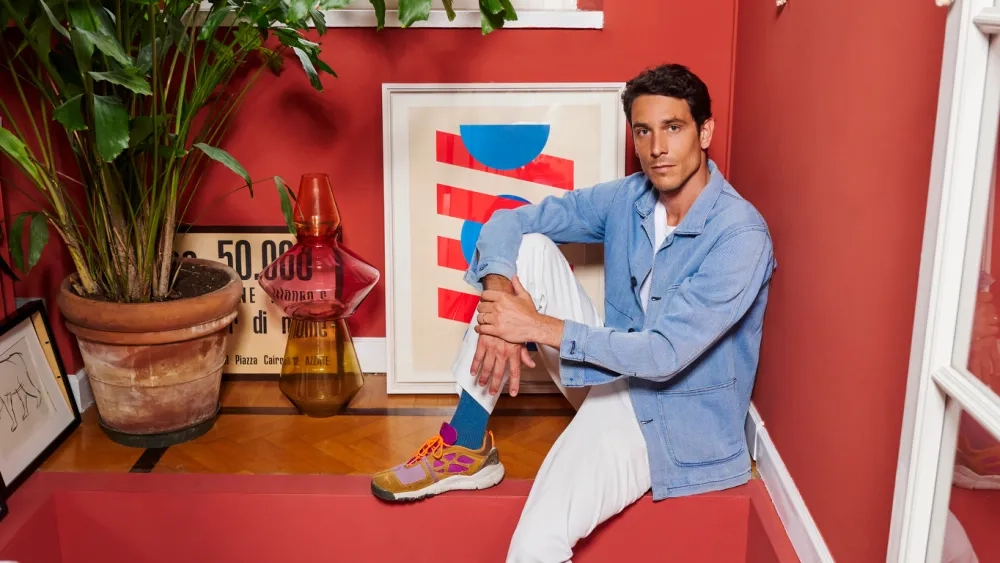
Collaboration with David Quincoces
A significant aspect of Francesco Meda’s outdoor work is his collaboration with David Quincoces. Based in Milan, Quincoces brings an architectural perspective that complements Meda’s material-driven approach.
Together, they have developed collections that blur the boundaries between architecture and furniture. Their work emphasizes spatial coherence, ensuring that each piece contributes to the overall environment rather than existing as a standalone object.
This partnership reflects a broader trend in luxury outdoor design, where interdisciplinary collaboration leads to more holistic and refined results.
The Onsen Collection: A Contemporary Outdoor Language
One of the most significant expressions of Francesco Meda’s approach is the Onsen collection, developed for Gandia Blasco. This collection represents a synthesis of material experimentation and architectural clarity.
Material Contrast and Innovation
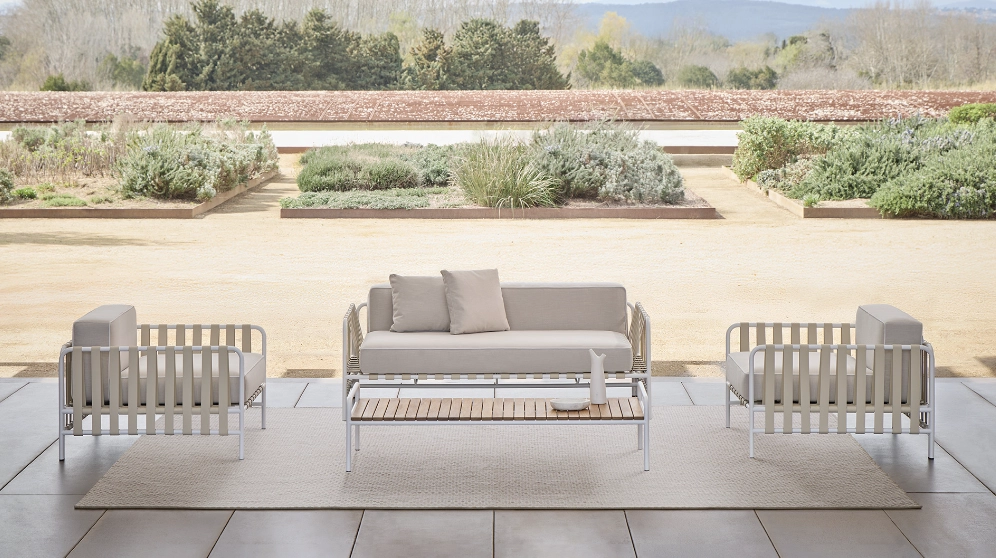
The Onsen collection is defined by its use of contrasting materials, combining stainless steel, leather, and outdoor fabrics. These elements create a balanced composition where structural strength meets tactile softness.
Key characteristics include:
- Tubular stainless steel frames for durability
- Leather straps that introduce warmth and texture
- Waterproof fabrics designed for outdoor use
- Modular components that support flexible layouts
- A restrained aesthetic focused on essential forms
This combination allows the collection to perform in outdoor environments while maintaining a refined, contemporary identity.
Design Philosophy: Calm, Simplicity, and Geometry
At the core of Francesco Meda’s work is a commitment to simplicity and clarity. The Onsen collection, for example, was designed to “convey calm” through rational, geometric forms that avoid unnecessary decoration.
This philosophy aligns with broader architectural principles, particularly those associated with Japanese design and modernist traditions. By focusing on essential forms and balanced proportions, Meda creates furniture that feels timeless and adaptable.
For outdoor designers, this approach offers a valuable framework. It demonstrates how restraint and precision can produce spaces that are both elegant and highly functional.
Lademadera: Reinterpreting Wood in Outdoor Design
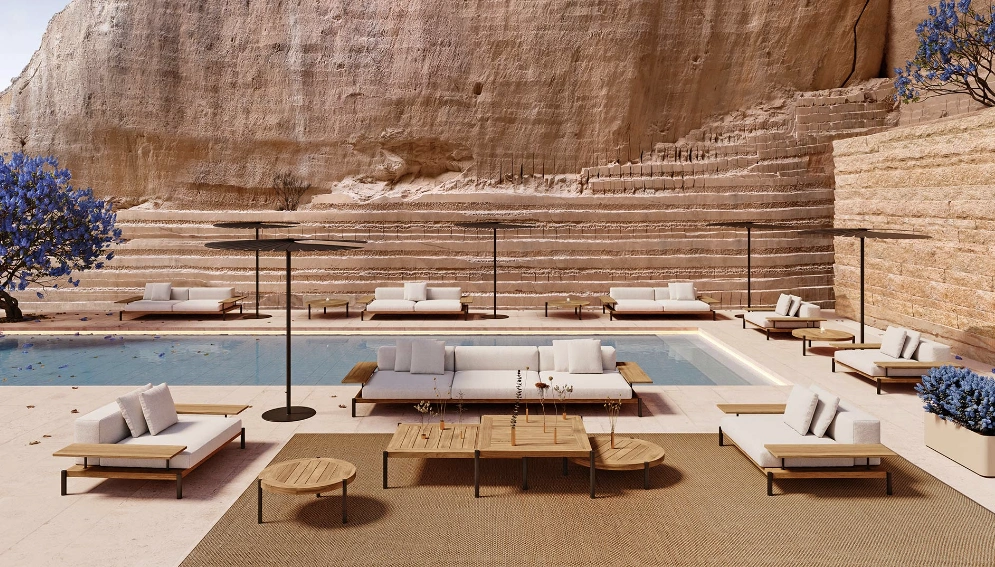
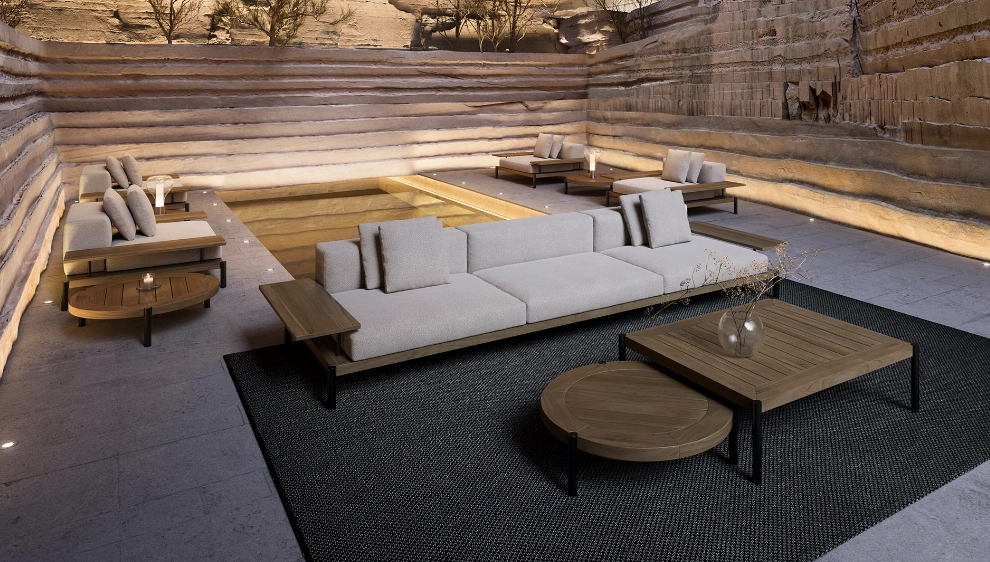
Another key project is the Lademadera collection, which explores the use of teak wood in contemporary outdoor furniture. Developed for Gandia Blasco, this collection introduces a material traditionally associated with warmth into a design language often dominated by metal.
Sustainability and Material Integrity
Lademadera is built around the concept of designing with respect for nature. The use of teak from sustainable sources reflects a commitment to environmental responsibility.
Key design features include:
- Clean, geometric lines that emphasize structure
- Combination of teak and aluminum for balance
- Modular elements that adapt to different spaces
- A focus on material efficiency and reduced waste
- Compatibility with diverse architectural environments
This approach highlights how natural materials can be integrated into contemporary outdoor design without compromising performance.
Furniture as Micro-Architecture
A defining aspect of Francesco Meda’s work is the concept of furniture as micro-architecture. Rather than viewing pieces as decorative elements, he treats them as structural components that shape space.
This perspective is particularly relevant in outdoor environments, where furniture defines zones, guides movement, and influences how spaces are used. Collections like Onsen and Lademadera demonstrate how modular systems can create flexible, layered environments.
For luxury design studios, this approach reinforces the importance of considering furniture as part of the overall architectural strategy.
Craftsmanship and Industrial Precision
Francesco Meda’s work balances craftsmanship with industrial production. His designs often incorporate traditional techniques while leveraging modern manufacturing processes.
This duality is evident in:
- The integration of handcrafted details within industrial frameworks
- The use of advanced materials alongside natural finishes
- Precision engineering that ensures durability and performance
- Attention to detail in joints, connections, and textures
- A commitment to long-lasting design over short-term trends
This balance allows his furniture to achieve both technical excellence and emotional resonance.
Integration with Contemporary Outdoor Living
The work of Francesco Meda reflects broader shifts in how outdoor spaces are designed and experienced. His collections are conceived to function seamlessly across different contexts, from private terraces to hospitality environments.
Design strategies often include:
- Modular configurations that support flexibility
- Neutral color palettes that integrate with architecture
- Materials that respond to environmental conditions
- Forms that encourage both relaxation and social interaction
- Seamless transitions between indoor and outdoor spaces
These principles align with the growing demand for cohesive, adaptable outdoor environments.
The Italian Influence on Outdoor Innovation
Italy has long been a center of design excellence, and Francesco Meda continues this tradition through a contemporary lens. His work reflects a uniquely Italian approach, combining technical expertise with a strong cultural and aesthetic sensibility.
This influence is evident in the emphasis on proportion, material quality, and craftsmanship. At the same time, his collaborations with international brands and designers demonstrate a global perspective, positioning his work within the broader context of contemporary design.
The Future of Outdoor Furniture Innovation
As outdoor living continues to evolve, the work of Francesco Meda offers valuable insight into future directions. His emphasis on modularity, sustainability, and material exploration aligns with emerging trends in luxury design.
Future developments are likely to build on these principles, incorporating new technologies and materials while maintaining a focus on simplicity and clarity. The integration of furniture with architecture and landscape will continue to define the next generation of outdoor environments.
Conclusion
Francesco Meda has redefined contemporary outdoor furniture through a design language that combines material innovation, architectural thinking, and refined craftsmanship. His work demonstrates that outdoor furniture can go beyond functionality, becoming an integral part of spatial design.
For outdoor designers, architects, and luxury studios, his approach provides a compelling framework for creating environments that are both sophisticated and adaptable. As the boundaries between architecture, landscape, and furniture continue to blur, Francesco Meda’s influence will remain central to the evolution of outdoor design.