

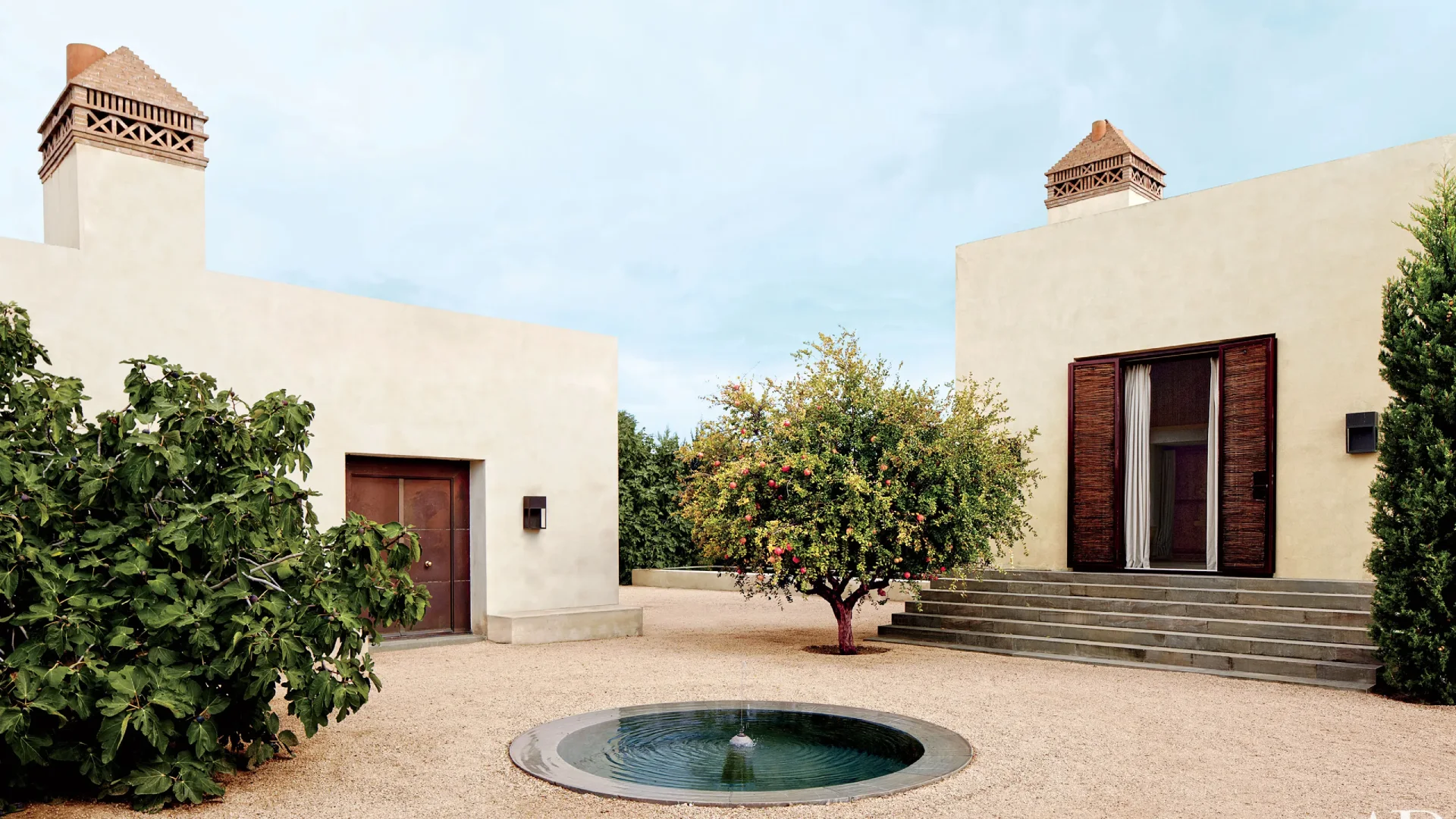
In the world of contemporary landscape design, few names evoke the same quiet authority and timeless sophistication as Fernando Caruncho. Known for his deeply poetic approach to gardens, the Spanish landscape architect has redefined how outdoor spaces can be experienced as contemplative environments—places where geometry, light, and nature converge to create serenity.
Across Europe, the United States, and the Middle East, Caruncho’s gardens demonstrate a profound sensitivity to place. His work draws heavily on traditions of Mediterranean garden design, yet transcends regional aesthetics to produce landscapes that feel both ancient and strikingly contemporary.
Among the most compelling aspects of Fernando Caruncho‘s philosophy is his interpretation of the garden as a sequence of outdoor “rooms.” Through carefully composed spaces framed by natural materials, vegetation, and architectural lines, his projects offer immersive spatial experiences that unfold gradually. These gardens are not merely decorative landscapes—they are environments designed for reflection, movement, and connection with nature.
This article explores how Fernando Caruncho integrates garden rooms and natural materials to create some of the most refined examples of modern Mediterranean garden design, shaping a legacy that continues to influence architects, designers, and landscape visionaries worldwide.
The Philosophy Behind Fernando Caruncho’s Landscape Design
The essence of Fernando Caruncho‘s landscape design lies in restraint. His gardens are not exuberant displays of botanical diversity; instead, they rely on subtle repetition, disciplined geometry, and carefully chosen materials that echo the surrounding environment.
Influenced by classical gardens of Spain, Islamic courtyard traditions, and Renaissance spatial composition, Caruncho approaches each project as a dialogue between architecture and nature. His landscapes often appear deceptively simple, yet they are constructed with extraordinary precision.
In many of his works, visitors experience a gradual progression through the landscape, moving from one defined space to another. These spaces—what Caruncho calls garden rooms—allow the garden to function as an extension of architecture while maintaining the emotional richness of nature.
The designer himself has frequently emphasized that gardens should evoke timelessness. According to an interview published by the Architectural Digest, Caruncho believes that a successful garden must feel as though it has always existed, even when newly created.

Garden Rooms: The Architecture of Outdoor Space
The Garden as a Sequence of Experiences
A defining characteristic of Fernando Caruncho‘s landscape design is the structuring of outdoor space into distinct but interconnected garden rooms. Rather than presenting a garden as a single open vista, Caruncho organizes landscapes into a sequence of spatial moments.
This approach reflects centuries of Mediterranean spatial tradition. Courtyards, terraces, shaded walkways, and enclosed gardens have long shaped the rhythm of life in southern Europe. By reinterpreting these ideas in contemporary form, Caruncho elevates Mediterranean garden design into an architectural discipline.
Each garden room serves a particular emotional or functional purpose. Some encourage contemplation, while others frame views, guide circulation, or provide intimate gathering spaces.
Key Characteristics of Caruncho’s Garden Rooms
- Defined boundaries created by hedges, walls, or rows of trees
- Precise geometry that reinforces spatial clarity
- Carefully framed perspectives that direct the eye
- Transitions of light and shade that enhance atmosphere
- Minimal but powerful planting schemes
Through this spatial organization, Fernando Caruncho transforms gardens into experiences that unfold gradually, rewarding slow movement and attentive observation.
The Emotional Dimension of Spatial Sequencing
What distinguishes Caruncho’s work from many contemporary landscapes is the emotional depth embedded within these garden rooms. Moving through one of his gardens often feels like passing through a series of meditative environments.
In many projects, a visitor may begin in a shaded courtyard, continue along a narrow path lined with cypress trees, and finally arrive at a sunlit terrace overlooking open countryside. This choreography of space demonstrates how landscape design can influence perception, mood, and even the pace at which people move.
Such carefully orchestrated sequences remain a cornerstone of Caruncho’s interpretation of Mediterranean garden design.
The Power of Natural Materials
Material Authenticity in Mediterranean Landscapes
Another essential element in the work of Fernando Caruncho is his unwavering commitment to natural materials. Stone, gravel, wood, terracotta, and water are used not simply as decorative elements but as structural components that shape the character of the garden.
In traditional Mediterranean garden design, materials often reflect the geology and climate of the surrounding landscape. Caruncho continues this tradition by selecting materials that feel deeply connected to place.
For example, warm limestone terraces echo the color of nearby hillsides, while gravel pathways evoke historic agricultural landscapes. These materials age gracefully, developing patina over time and reinforcing the timeless quality that defines Caruncho’s gardens.
Stone as an Architectural Element
Stone plays a particularly significant role in many projects by Fernando Caruncho. From dry-stone walls to paved courtyards, the material introduces structure and permanence within the landscape.
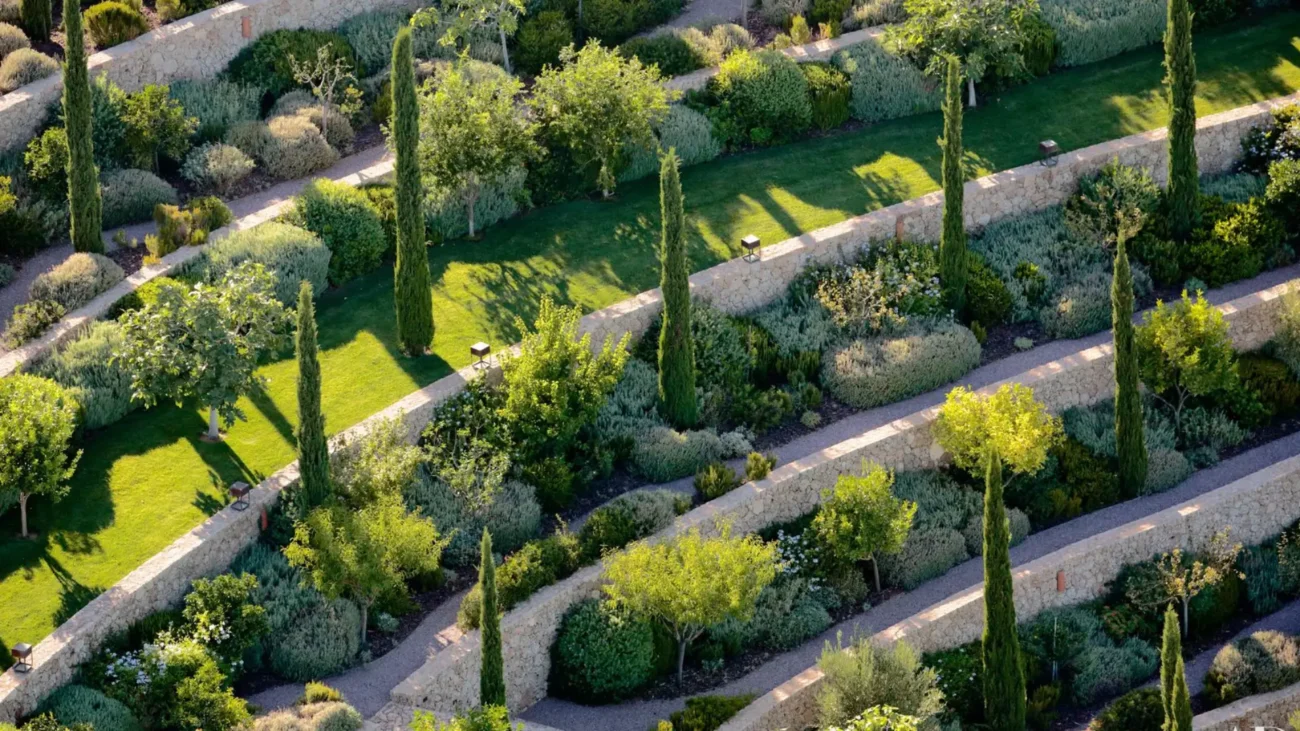
In Caruncho’s landscape design, stone is rarely ornamental. Instead, it becomes a framework that organizes the garden. Terraces carved into slopes, stone steps guiding circulation, and subtle retaining walls allow vegetation and geometry to coexist in harmony.
This dialogue between stone and vegetation exemplifies the enduring principles of Mediterranean garden design.
The Quiet Elegance of Gravel and Earth
Gravel is another signature element in the gardens of Fernando Caruncho. Simple yet expressive, gravel surfaces reflect light beautifully and create soft acoustic textures as visitors walk through the landscape.
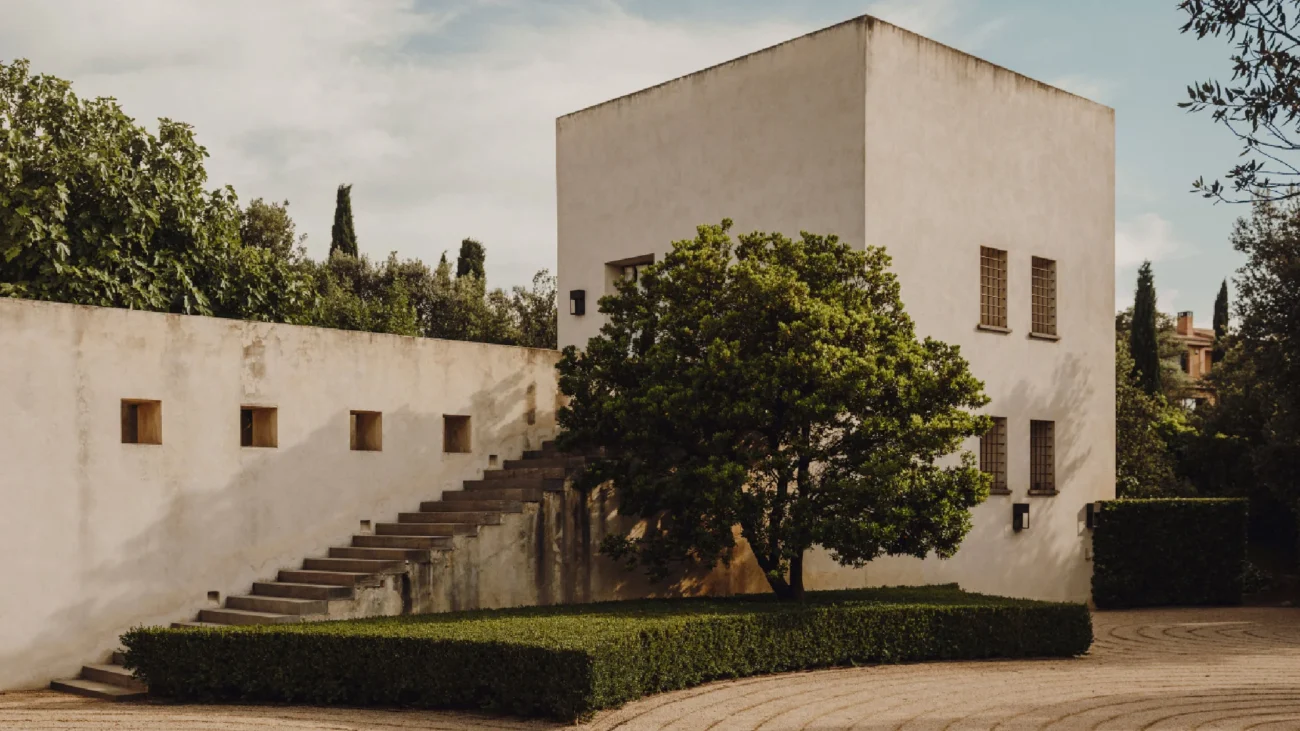
In many projects, expansive gravel courtyards become central garden rooms, surrounded by hedges or architectural structures. These spaces emphasize emptiness and proportion, demonstrating how restraint can produce powerful spatial effects.
By combining earth-based materials with disciplined planting schemes, Caruncho ensures that his landscape design remains rooted in the natural language of the Mediterranean.
Vegetation as Structure
The Strategic Use of Trees
Although materials and geometry define the framework of Caruncho’s gardens, vegetation provides their living architecture. Trees in particular play a crucial role in shaping space within his projects.
Rows of cypress trees, grids of olive trees, and orchards arranged in geometric patterns frequently appear in his landscapes. These plantings are not random—they are carefully positioned to create rhythm and visual continuity.
Through this disciplined approach, Fernando Caruncho demonstrates how planting can function as an architectural device within landscape design.
Minimalism in Plant Selection
Unlike gardens that emphasize botanical diversity, Caruncho’s landscapes often rely on a limited palette of plants. This deliberate simplicity reinforces the structural clarity of the garden rooms.
Common elements within his interpretation of Mediterranean garden design include:
- Olive trees arranged in geometric orchards
- Cypress trees creating vertical accents
- Lavender and aromatic shrubs forming low borders
- Evergreen hedges defining garden rooms
- Seasonal grasses that introduce movement
The restrained use of vegetation ensures that the underlying geometry of the garden remains legible while maintaining a strong connection to regional landscape traditions.
Light, Shadow, and the Mediterranean Atmosphere
Designing with Light
Light is one of the most powerful materials in the work of Fernando Caruncho. Mediterranean climates offer intense sunlight, deep shadows, and dramatic seasonal changes—conditions that Caruncho uses to sculpt atmosphere.
Arcades, pergolas, tree canopies, and walls create layers of shadow that soften the brightness of open spaces. As visitors move through these environments, light becomes a dynamic element within the landscape design.
This sensitivity to light further reinforces the emotional richness of Caruncho’s interpretation of Mediterranean garden design.
The Role of Water
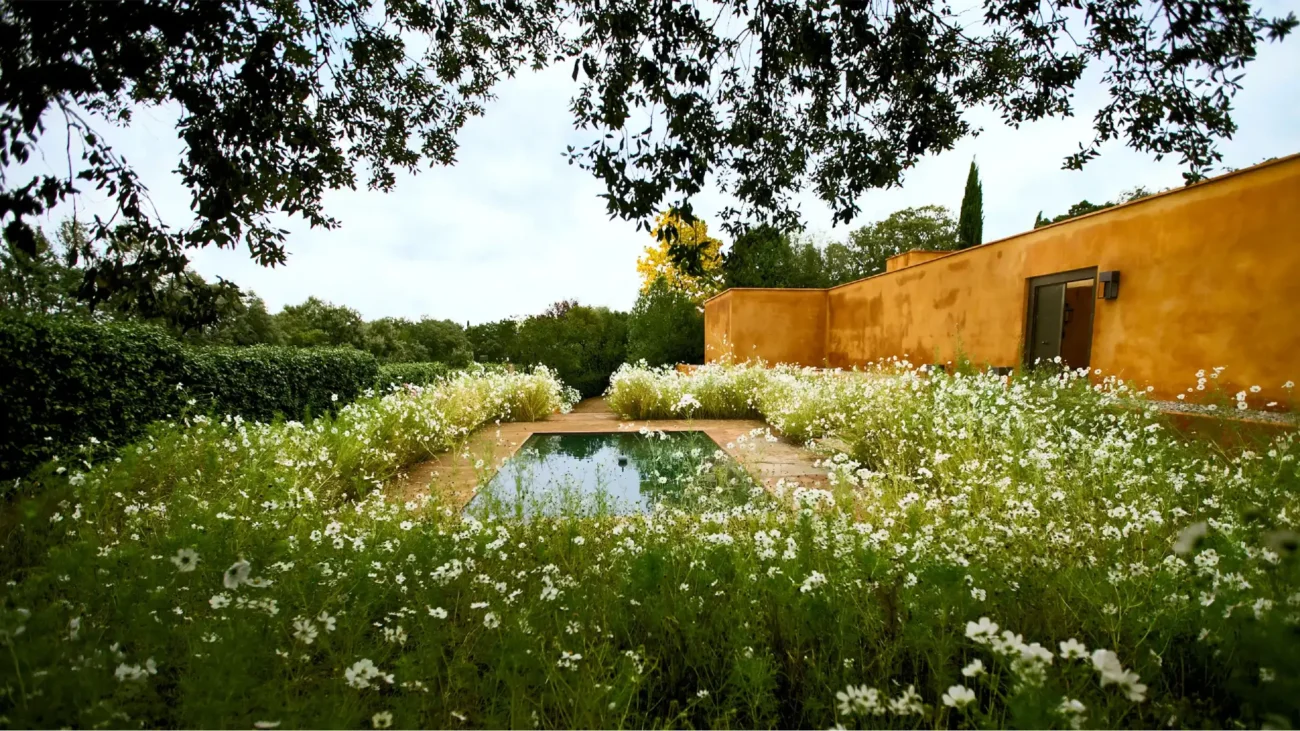
Water also appears frequently in Caruncho’s gardens, often in the form of reflective pools or narrow channels. These features enhance the sense of calm while amplifying surrounding geometry through reflection.
Rather than elaborate fountains, Caruncho prefers quiet water surfaces that mirror the sky, trees, and architectural lines of the garden. The result is a contemplative atmosphere consistent with the philosophical depth that characterizes his work.
The Global Influence of Fernando Caruncho
From Spain to the World
Although deeply rooted in Spanish culture, the influence of Fernando Caruncho extends far beyond the Mediterranean region. His projects can be found across Europe, North America, and the Middle East, where his refined approach to landscape design resonates with architects and property owners seeking timeless outdoor environments.
In luxury estates and contemporary residences alike, Caruncho’s work demonstrates how the principles of Mediterranean garden design can be adapted to diverse climates and architectural contexts.
Lessons for Contemporary Designers
For architects and landscape professionals, the work of Fernando Caruncho offers valuable insights into the future of outdoor design. His gardens reveal how simplicity, material authenticity, and spatial discipline can produce environments of extraordinary beauty.
Key lessons include:
- Prioritize spatial structure before decorative planting.
- Use natural materials that age gracefully.
- Create sequences of garden rooms rather than single open spaces.
- Allow light and shadow to shape atmosphere.
- Embrace restraint as a design principle.
These principles continue to influence contemporary interpretations of landscape design and modern Mediterranean garden design.
A Timeless Vision of the Garden
The gardens of Fernando Caruncho demonstrate that landscape architecture can transcend aesthetics to become an art of experience. Through the creation of carefully composed garden rooms and the thoughtful use of natural materials, he has established a design language that is both deeply rooted in tradition and unmistakably modern.
His interpretation of Mediterranean garden design reveals the enduring power of geometry, light, and nature working in harmony. In an era increasingly defined by rapid development and visual excess, Caruncho’s work reminds designers and homeowners alike that true elegance often emerges from simplicity.
For architects, landscape designers, and discerning clients around the world, the legacy of Fernando Caruncho continues to shape how outdoor environments are imagined, designed, and experienced—one garden room at a time.