

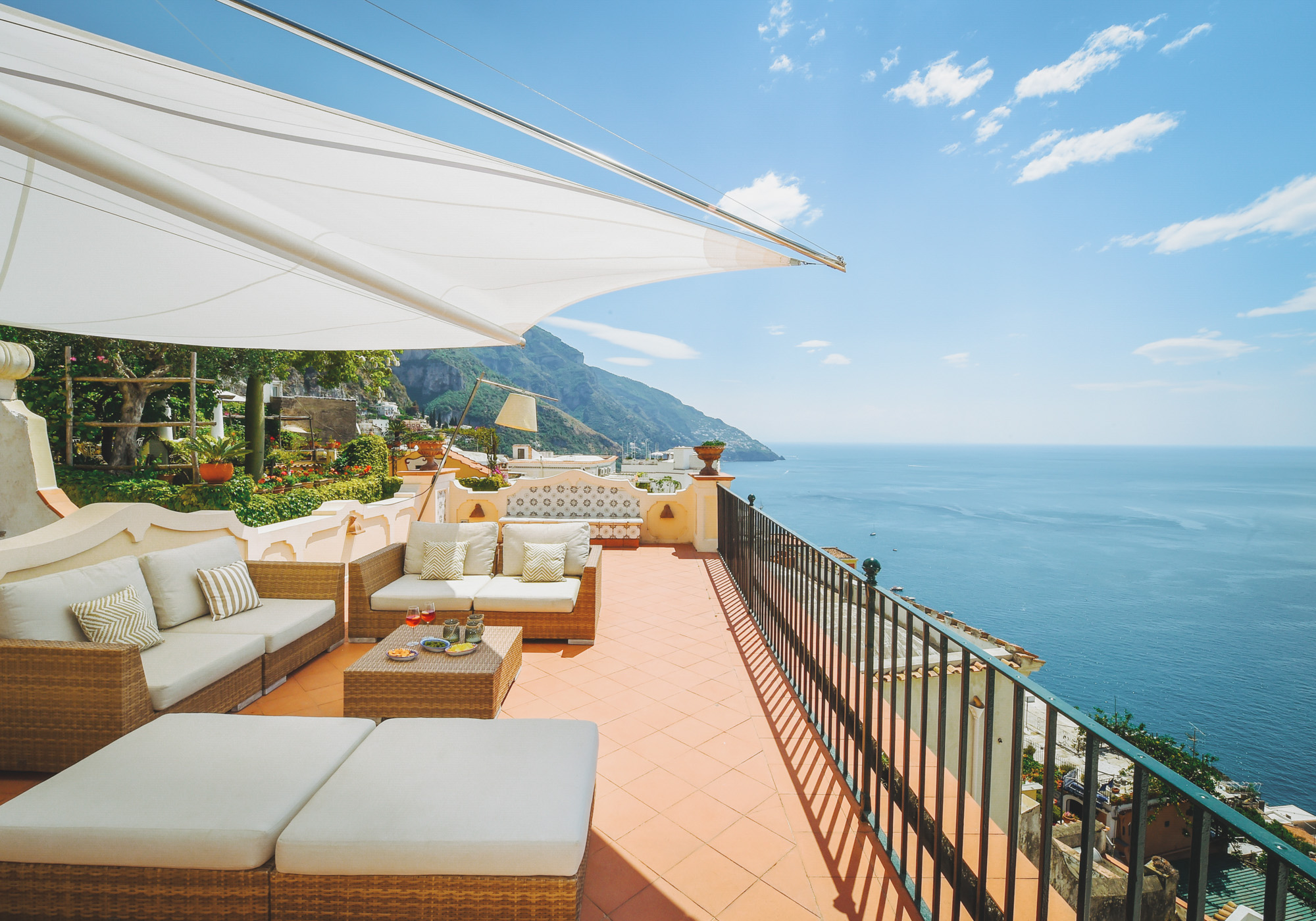
Where Landscape Becomes Living Space
The Amalfi Coast is not merely a destination; it is a cultivated dialogue between land, architecture, and lifestyle. Rising dramatically from the Tyrrhenian Sea, its cliffs, terraces, and gardens have shaped one of the world’s most distinctive approaches to outdoor living. Here, nature dictates form, and beauty emerges from constraint. For architects, designers, and discerning homeowners, the region offers an enduring lesson in how outdoor spaces can be both expressive and functional, deeply rooted in place yet globally influential.
The outdoor aesthetics of the Amalfi Coast reveal a philosophy of living that transcends trends. From vertiginous terraces carved into rock to shaded pergolas overlooking citrus groves, every exterior space is conceived as an extension of daily life. This ethos continues to influence luxury coastal outdoor living worldwide, particularly within high-end residential and hospitality projects seeking authenticity, craftsmanship, and emotional resonance.
The Geographic DNA of Amalfi Coast Outdoor Design
Understanding Amalfi Coast aesthetics begins with geography. The coastline’s steep topography leaves little room for horizontality, compelling architecture to grow vertically and outward. Terraces, loggias, and balconies are not decorative afterthoughts but structural necessities.
These spatial constraints have fostered a design language defined by layered outdoor environments. Each terrace becomes a stage, oriented toward the sea, capturing light, breeze, and view. This vertical sequencing is now a defining reference in Amalfi Coast real estate, where outdoor square meters often hold greater experiential value than interior volume.
Cliffs as Framework
The cliffs themselves act as both foundation and backdrop. Natural stone walls, often left exposed or lightly finished, blur the boundary between built and natural. Rather than concealing geology, Amalfi architecture celebrates it, creating outdoor spaces that feel anchored and timeless.
This approach contrasts sharply with flat coastal developments elsewhere in the Mediterranean, where landscaping is imposed rather than inherited. On the Amalfi Coast, outdoor design is inseparable from the land itself.
Mediterranean Terrace Aesthetics: A Language of Restraint and Warmth
At the heart of the region’s appeal lies its distinctive Mediterranean terrace aesthetics. These terraces are not designed for spectacle alone; they are lived-in spaces, shaped by climate, ritual, and material honesty.

Materiality Rooted in Place
Materials play a central role in defining the sensory quality of Amalfi terraces. Locally sourced stone, hand-painted ceramic tiles, limewashed walls, and weathered wood create surfaces that age gracefully under sun and salt.
- Stone flooring offers thermal comfort and visual continuity with the cliffs.
- Ceramic tiles, often featuring regional motifs, introduce color without excess.
- Wrought iron balustrades provide delicacy and transparency.
The restrained palette allows the surrounding landscape—sea blues, citrus greens, and bougainvillea pinks—to remain the true protagonists.
Shadows, Light, and Seasonal Use
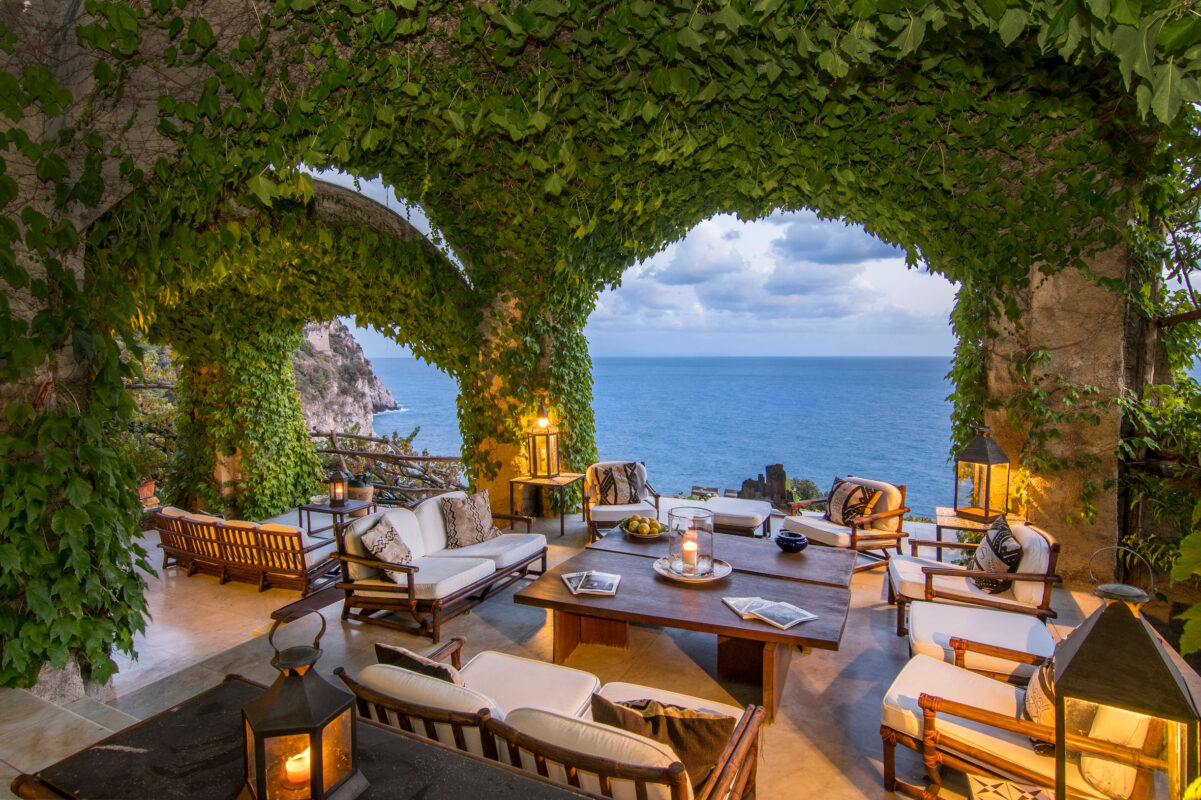
Outdoor spaces along the Amalfi Coast are choreographed around light. Pergolas draped with vines, retractable awnings, and arched loggias create shaded zones that respond to the intense Mediterranean sun. These elements transform terraces into usable living rooms for much of the year, reinforcing the region’s culture of outdoor conviviality.
This sensitivity to climate is increasingly influential in contemporary interpretations of luxury coastal outdoor living, particularly as sustainability and passive comfort become global design priorities.
Gardens Suspended Between Sea and Sky
Gardens on the Amalfi Coast defy conventional definitions. Often perched on narrow terraces or cascading down slopes, they function as both productive and ornamental landscapes.
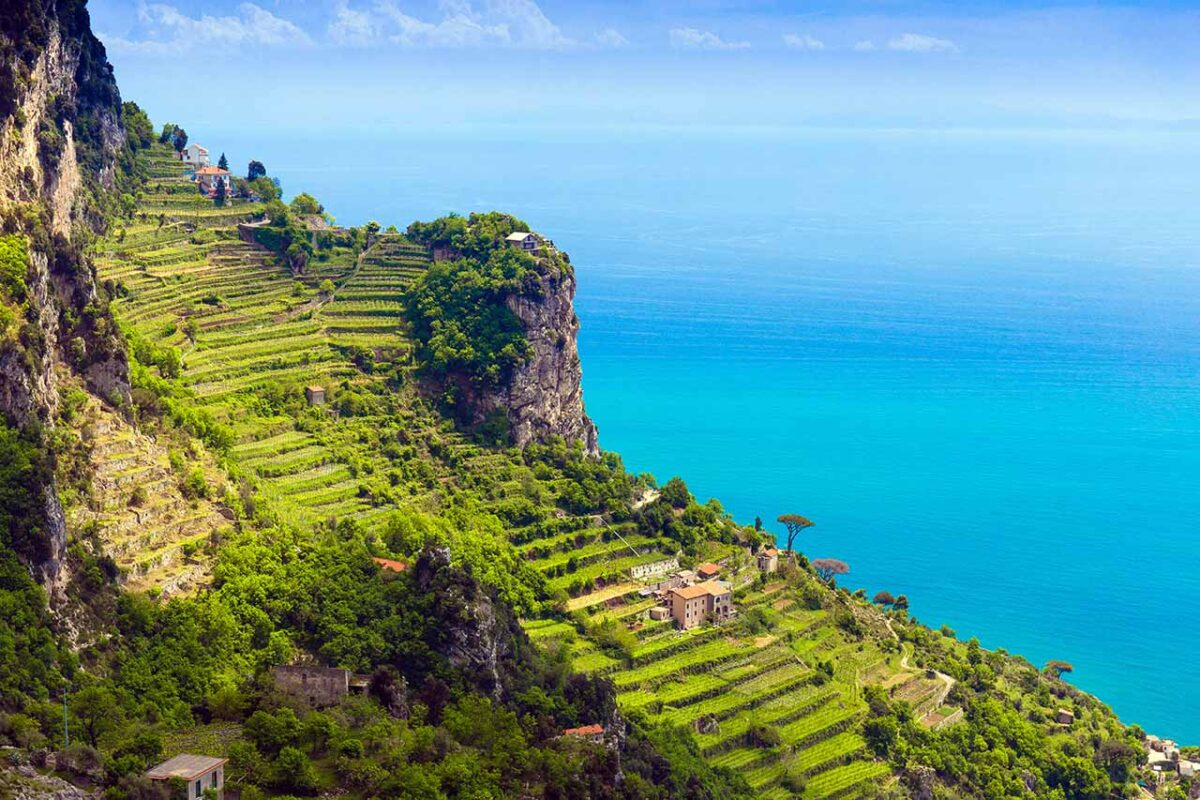
Beautiful views from path of the gods with lemon tree fields, Amalfi coast, Campagnia region, Italy
Citrus Groves and Fragrant Botanicals
Lemon trees, a symbol of the region, are integral to outdoor aesthetics. Their sculptural forms, glossy foliage, and aromatic blossoms bring multisensory richness to terraces and courtyards. Rosemary, jasmine, olive trees, and geraniums further reinforce a garden language that is tactile and intimate.
These planted environments reflect a philosophy of abundance without excess, aligning beauty with utility. The garden is not separate from daily life; it is woven into it.
Vertical Greenery as Spatial Strategy
Given limited horizontal space, vertical gardens and climbing plants are essential tools. Green walls soften stone facades, provide natural cooling, and visually connect multiple levels of a property. This layered greenery is now frequently referenced in high-end Amalfi Coast real estate projects seeking to preserve visual harmony while meeting contemporary living standards.
Furniture as Architecture: The Role of Outdoor Living Elements
Outdoor furniture on the Amalfi Coast is traditionally understated, emphasizing comfort, durability, and proportion. Pieces are chosen not to dominate but to belong.
Low Profiles and Organic Forms
Seating is often low and expansive, encouraging relaxation and extended social gatherings. Curved forms echo the coastline’s natural contours, while modular arrangements allow terraces to adapt to different moments of the day.
This approach has become a reference point for designers curating luxury coastal outdoor living environments that favor longevity over seasonal novelty.
Textiles and Tactility
Cushions, throws, and outdoor rugs introduce softness and domesticity. Natural fibers in neutral tones—linen, cotton, and woven blends—reinforce a sense of quiet elegance. Pattern, when used, is subtle and often inspired by regional craftsmanship.
Amalfi Coast Real Estate: Outdoor Space as Primary Value
In the context of Amalfi Coast real estate, outdoor areas are not ancillary amenities; they are central to property value. A modest interior paired with an exceptional terrace can command global attention.
Terraces as Emotional Capital
High-net-worth buyers are drawn to the experiential quality of Amalfi properties. Sunrise breakfasts overlooking the sea, shaded afternoons under pergolas, and candlelit evenings framed by stone walls are emotional assets that transcend square footage.
This emphasis on outdoor living has reshaped luxury residential development far beyond Italy, influencing coastal projects from Southern California to the Aegean.
Preservation and Contemporary Adaptation
Regulatory frameworks along the Amalfi Coast prioritize preservation, limiting excessive development. As a result, contemporary interventions focus on refinement rather than reinvention. Outdoor upgrades often involve improved materials, discreet lighting, and enhanced comfort while maintaining architectural integrity.
Global Influence of Amalfi Outdoor Aesthetics
The visual and cultural language of the Amalfi Coast resonates globally. Its principles—contextual design, material authenticity, and climate-responsive outdoor living—are increasingly adopted in international luxury projects.
Designers and architects frequently reference the region when seeking to create outdoor environments that feel rooted rather than styled.
From Regional Identity to Universal Model
While unmistakably local, Amalfi outdoor aesthetics offer a universal framework for coastal design. They demonstrate how restraint can amplify beauty, how limitations can foster creativity, and how outdoor spaces can shape lifestyle as powerfully as interiors.
An Enduring Blueprint for Outdoor Living
The outdoor aesthetics of the Amalfi Coast represent more than a picturesque ideal; they offer a blueprint for thoughtful, sustainable, and emotionally rich outdoor living. From cliffside terraces to fragrant gardens, every element reflects a deep respect for place, climate, and human experience.
For professionals shaping the future of design and for individuals seeking meaningful luxury, the Amalfi Coast remains a timeless reference. Its approach to Mediterranean terrace aesthetics, its redefinition of luxury coastal outdoor living, and its influence on Amalfi Coast real estate continue to inspire a global audience—one terrace at a time.