

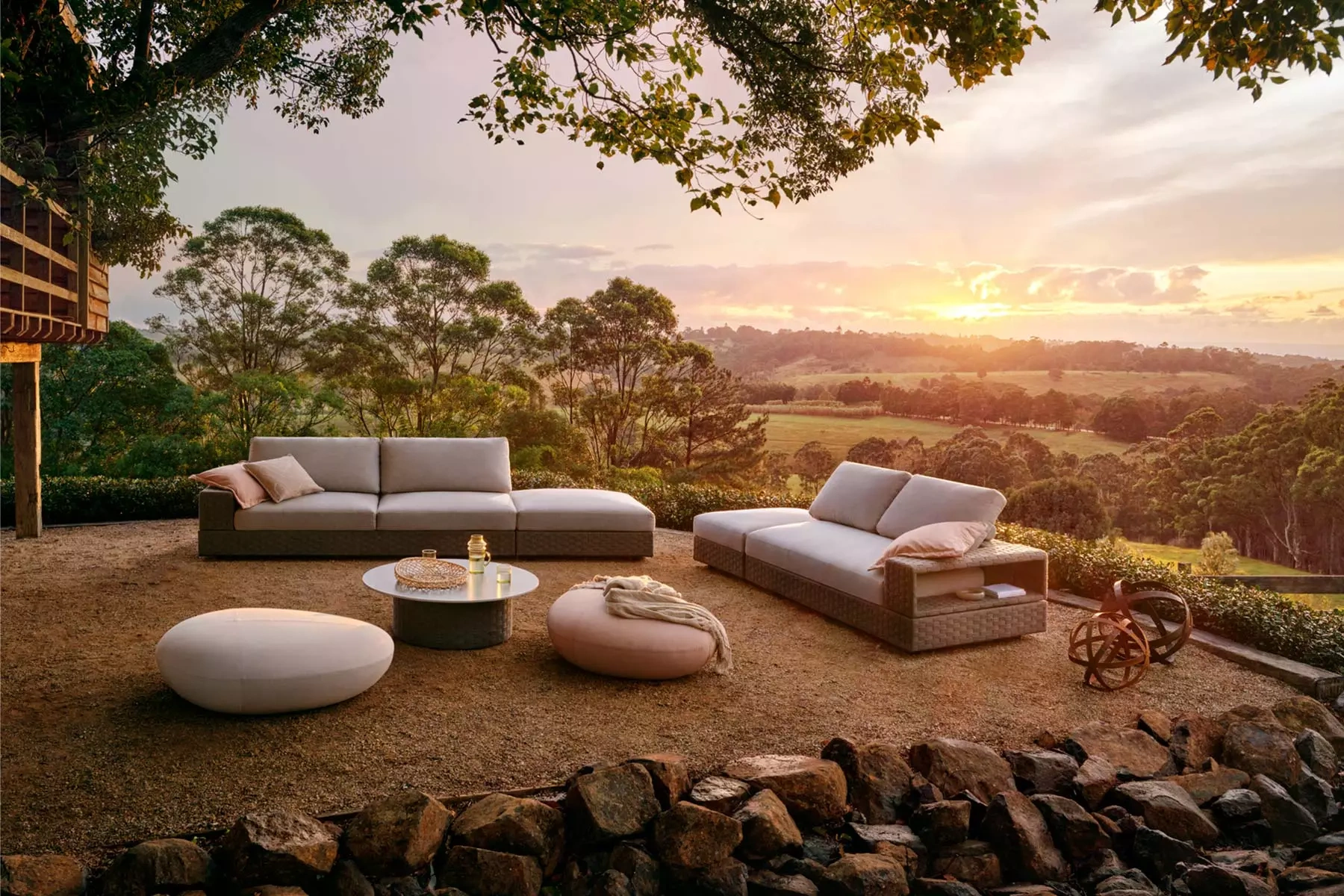
In contemporary outdoor living, comfort is no longer seasonal. Terraces, rooftops, coastal gardens, and poolside lounges are curated with the same precision as interior salons. Yet while furniture frames may be sculptural and enduring, the true test of sophistication lies in the performance of the soft elements—especially in climates defined by rain, humidity, and salt-laden air.
For architects, designers, and discerning homeowners, understanding the engineering behind waterproof outdoor cushions, quick dry outdoor cushions, and weather resistant outdoor fabrics is essential. These are not merely accessories; they are technical components that determine longevity, hygiene, comfort, and aesthetic integrity.
This guide explores how drainage systems, quick-dry foam technologies, and advanced textile innovations work together to create resilient, elegant outdoor seating in even the most demanding environments.
Why Rain and Humidity Demand Technical Precision
Outdoor cushions are uniquely vulnerable. Unlike interior upholstery, they are exposed to:
- Direct rainfall and pooling water
- High atmospheric humidity
- Condensation and dew cycles
- UV radiation and temperature fluctuations
- Salt air in coastal settings
Without proper construction, moisture becomes trapped within the cushion core, leading to mold growth, odor, fiber breakdown, and structural collapse. According to the U.S. Environmental Protection Agency (EPA), mold can begin developing within 24–48 hours in damp environments—an important reminder that design and health are inseparable in humid climates.
To meet these conditions, today’s most advanced waterproof outdoor cushions are engineered as systems rather than decorative layers.
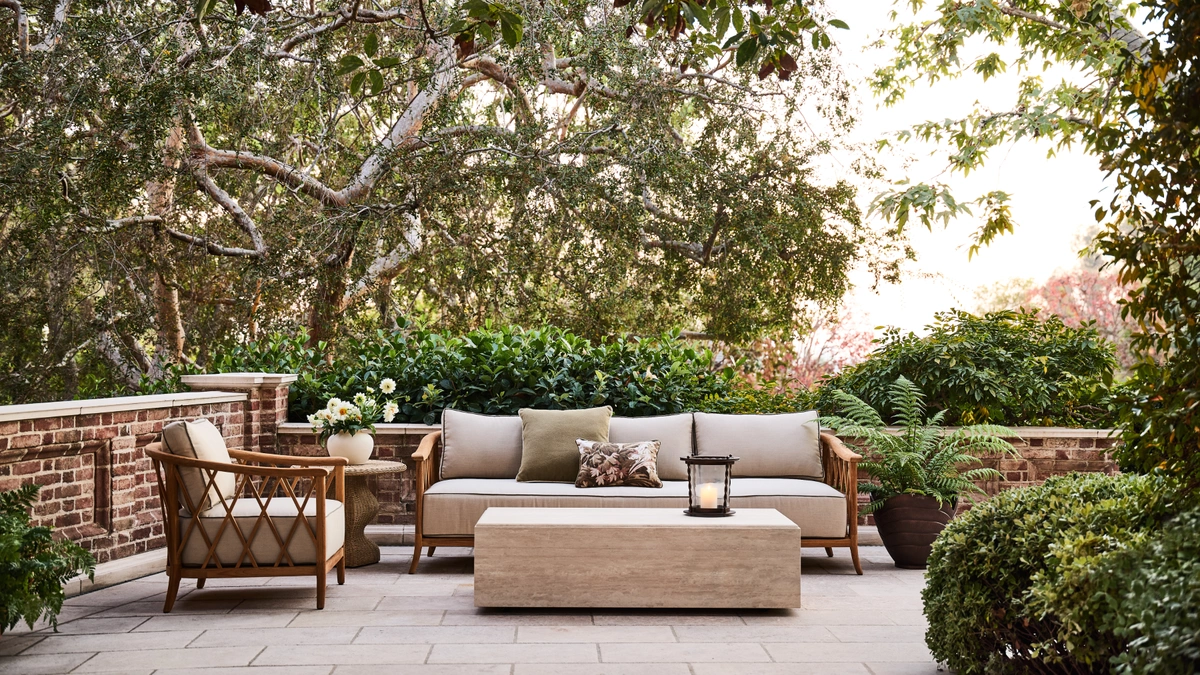
The Anatomy of High-Performance Outdoor Cushions
1. Drainage: The Invisible Foundation of Longevity
Drainage is often overlooked, yet it is the first line of defense against moisture retention. Even the most sophisticated weather resistant outdoor fabrics cannot compensate for stagnant water trapped inside a cushion.
Open-Cell vs. Closed-Cell Foam
Traditional closed-cell foam resists water penetration but traps moisture if it enters through seams or zippers. By contrast, high-performance quick dry outdoor cushions typically use reticulated open-cell foam—an engineered material with enlarged pores that allow water to pass through rather than accumulate.
Integrated Drainage Channels
Premium cushion construction often incorporates:
- Perforated bottom panels
- Mesh underlayers
- Slightly elevated bases to encourage airflow
- Strategically placed grommets
These design details allow gravity and air circulation to work together, accelerating drying time after rainfall.
Why It Matters in High-End Projects
For hospitality terraces, yacht decks, or luxury residential developments, drainage systems reduce maintenance costs and preserve aesthetic standards. A visibly waterlogged cushion undermines even the most refined architectural composition.
2. Quick-Dry Foam: Engineering Comfort and Resilience
The core of quick dry outdoor cushions is not a marketing phrase but a material innovation. Reticulated polyurethane foam undergoes a process that removes cell membranes, creating a skeletal structure with up to 97% open space. Water flows through it rapidly, and airflow accelerates evaporation.
Performance Advantages
- Rapid moisture release after heavy rain
- Reduced mold and mildew risk
- Improved breathability in humid climates
- Consistent structural integrity over time
Comfort Considerations
High-density reticulated foam ensures that comfort is not sacrificed for performance. In well-designed waterproof outdoor cushions, the foam density is calibrated to maintain ergonomic support while still allowing for fast drainage.
For architects specifying seating in tropical or Mediterranean climates, foam density and airflow capacity should be included in technical documentation alongside fabric specifications.
3. Fabric Choices: The Science Behind Weather Resistance
Textile technology has advanced dramatically in recent years. Today’s weather resistant outdoor fabrics combine UV stability, water repellency, and antimicrobial properties—without compromising tactile refinement.
Solution-Dyed Acrylic
Among the most respected materials in outdoor design, solution-dyed acrylic fibers are colored during the extrusion process. Pigment penetrates the core of the fiber rather than sitting on the surface, ensuring exceptional fade resistance.
For waterproof outdoor cushions, these fabrics are often treated with additional water-repellent finishes, allowing rain to bead and roll off the surface.
Olefin (Polypropylene)
Olefin fabrics are naturally moisture resistant and quick drying. They resist staining, mildew, and chemical exposure, making them ideal for poolside environments and high-traffic hospitality projects.
Performance Polyester with Protective Coatings
Modern performance polyester blends combine strength and color versatility. When enhanced with protective coatings, they contribute to the functionality of quick dry outdoor cushions in humid regions.
Key Fabric Qualities to Evaluate
- UV resistance rating
- Water repellency or waterproof backing
- Mildew resistance certification
- Breathability
- Abrasion resistance (Martindale rating)
Waterproof vs. Water-Resistant: Understanding the Distinction
The terms are often used interchangeably, yet they are technically distinct.
Water-Resistant Outdoor Fabrics
Weather resistant outdoor fabrics typically repel water but are not fully impermeable. They are breathable and comfortable, making them suitable for climates with intermittent rain.
Waterproof Outdoor Cushions
Waterproof outdoor cushions incorporate additional barriers—such as laminated backings or internal liners—that prevent water from penetrating the core. These are especially valuable in coastal or tropical regions with frequent downpours.
The most refined solutions combine both approaches: breathable outer textiles with engineered foam cores and internal moisture barriers.
Humidity: The Silent Design Challenge
While rainfall is visible and immediate, humidity is a slower adversary. In coastal cities or tropical destinations, relative humidity can remain above 70% for extended periods.
In such environments:
- Air-drying times increase
- Mold spores proliferate more easily
- Metal hardware may corrode
Specifying quick dry outdoor cushions becomes critical, not optional. Open-cell foam and breathable weather resistant outdoor fabrics ensure that cushions dry even when evaporation conditions are less than ideal.
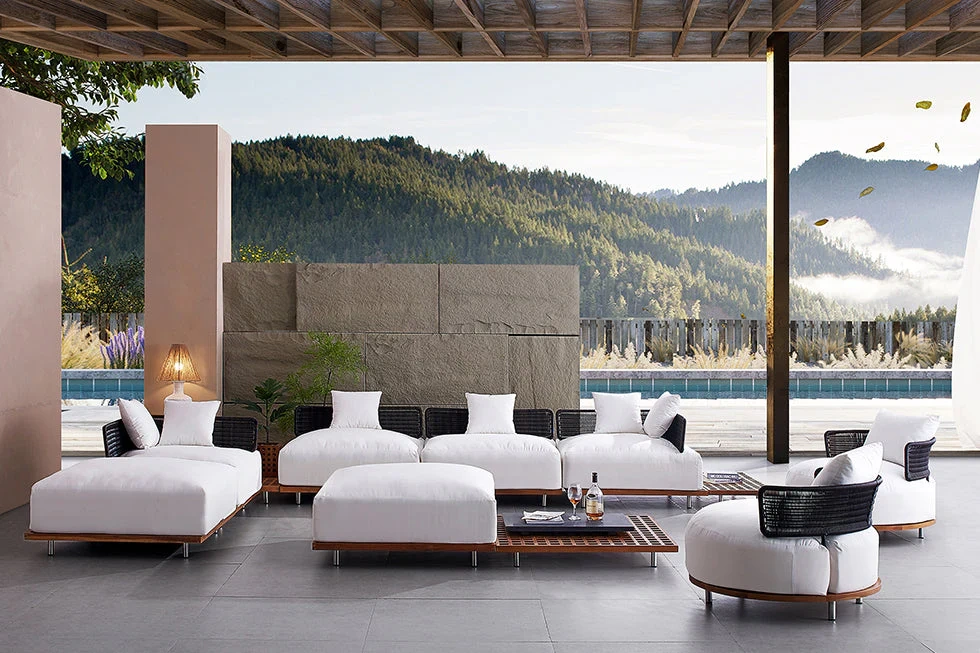
Construction Details That Elevate Performance
Seams and Thread
Marine-grade thread and reinforced seams prevent water infiltration and seam failure. Heat-sealed seams further enhance the performance of waterproof outdoor cushions.
Zippers and Closures
High-quality zippers with protective flaps reduce water ingress. For fully exposed settings, concealed or waterproof zippers provide additional protection.
Ventilation Panels
Mesh panels placed discreetly on cushion undersides encourage airflow while maintaining aesthetic refinement.
Design Aesthetics and Material Integrity
Performance need not compromise elegance. Today’s weather resistant outdoor fabrics are available in nuanced neutrals, architectural charcoals, warm sands, and saturated Mediterranean blues. Textures range from refined linen-like weaves to contemporary bouclé interpretations engineered for outdoor use.
For luxury developments and private estates, the ability to specify waterproof outdoor cushions that mirror interior upholstery palettes creates a seamless spatial narrative between indoor and outdoor living.
Specification Checklist for Professionals
When evaluating quick dry outdoor cushions for high-end projects, consider the following framework:
- Foam Type: Reticulated open-cell foam with documented drainage capacity.
- Fabric Composition: Certified weather resistant outdoor fabrics with UV stability.
- Waterproofing Strategy: Surface repellency, internal liners, or laminated backings.
- Ventilation: Mesh undersides or drainage grommets.
- Maintenance Plan: Removable covers and washable materials.
Sustainability and Longevity
Durability is inherently sustainable. Cushions that resist degradation reduce replacement cycles and material waste. Many advanced weather resistant outdoor fabrics are now produced using low-impact dye processes and recyclable fibers.
Specifying long-lasting waterproof outdoor cushions aligns environmental responsibility with financial prudence—an increasingly relevant consideration for global developers and hospitality operators.

Maintenance Best Practices
Even the most advanced quick dry outdoor cushions benefit from mindful care:
- Allow cushions to stand vertically after heavy rain to accelerate drainage.
- Ensure airflow beneath seating platforms.
- Clean spills promptly with mild soap and water.
- Store cushions during extended off-seasons in breathable covers.
Preventative care preserves both the technical performance and the refined appearance of weather resistant outdoor fabrics.
Performance as the New Luxury
In contemporary outdoor design, true luxury is measured not only by aesthetic sophistication but by resilience. The integration of advanced drainage systems, reticulated foam cores, and innovative weather resistant outdoor fabrics ensures that waterproof outdoor cushions and quick dry outdoor cushions perform as beautifully as they look.
For architects, designers, and globally minded homeowners, understanding these technologies transforms specification from routine procurement into strategic design. When every detail is engineered for rain and humidity, outdoor living becomes effortless—an extension of interior refinement that withstands climate, time, and the rhythms of nature.
In this convergence of material science and aesthetic ambition, outdoor cushions are no longer vulnerable accents. They are essential architectural elements—quietly engineered, impeccably crafted, and designed to endure.