

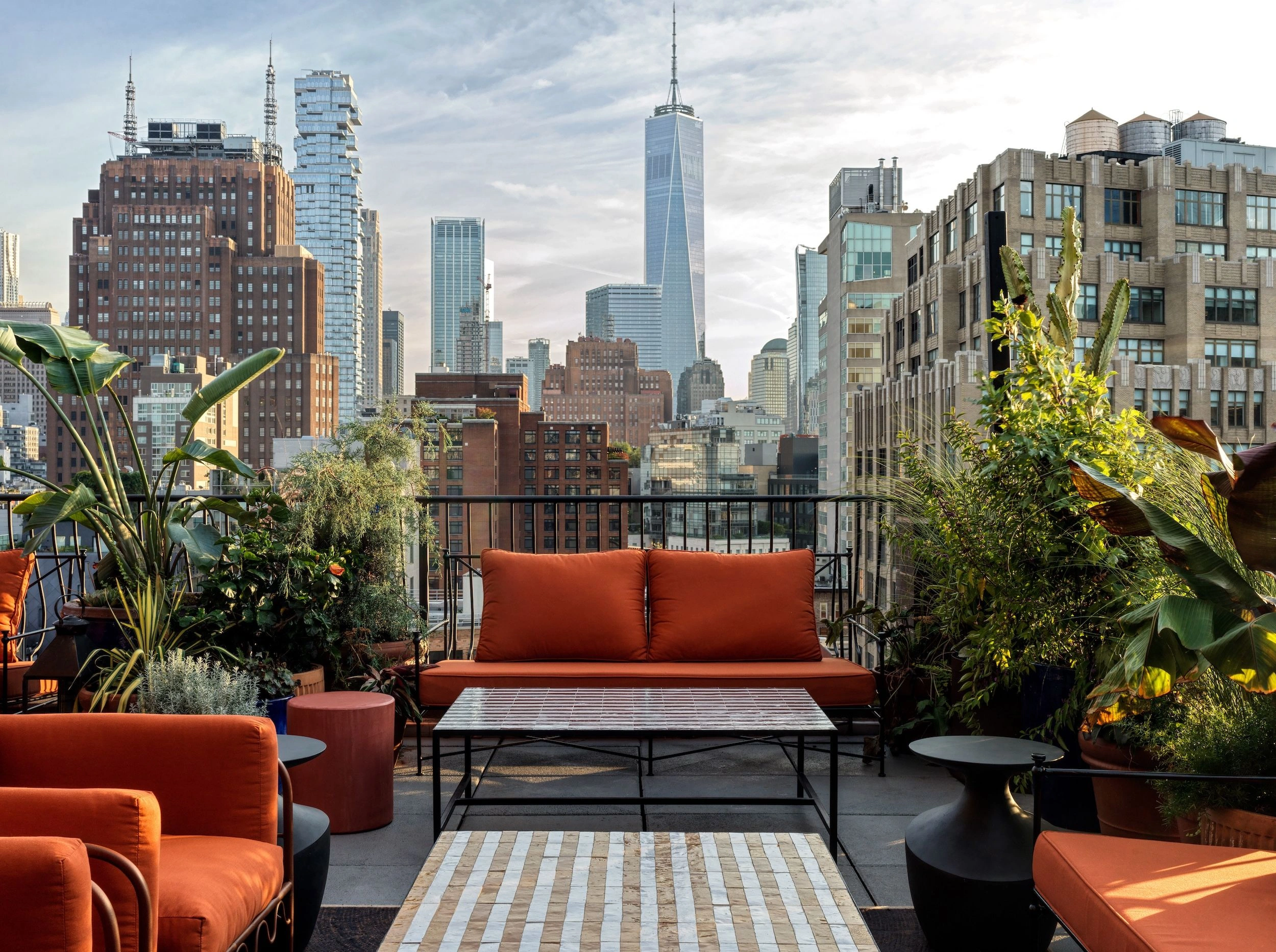
In a city defined by velocity, density, and vertical ambition, outdoor space has become New York’s most precious domestic luxury. Above the traffic-clogged avenues and illuminated grids, rooftops, terraces, and balconies offer a rare counterpoint: stillness. Outdoor design in New York is no longer about maximizing square footage alone; it is about crafting emotional refuge—places that soften the city’s intensity while celebrating its unmistakable energy.
From penthouse rooftops in Tribeca to intimate terraces overlooking Central Park, New York rooftop design has evolved into a sophisticated discipline that merges architecture, landscape, and lifestyle. This article explores how thoughtful urban outdoor living strategies are redefining calm above the city, balancing resilience with refinement, and transforming elevated spaces into meaningful extensions of contemporary life.
The Urban Paradox: Intensity Below, Tranquility Above
New York’s outdoor spaces exist in a paradoxical context. Below, the city pulses relentlessly—sirens, construction, crowds. Above, there is an opportunity to curate a different rhythm. Successful rooftop and terrace design begins with understanding this duality.
Rather than competing with the city’s drama, the most compelling New York rooftop design projects embrace contrast. Soft materials, organic forms, and layered planting create visual and acoustic buffers, allowing residents to disengage without disconnecting. The skyline remains present, but it becomes a backdrop rather than a focal stressor.
Designing for Psychological Comfort
Calm is not accidental; it is designed. In dense urban environments, outdoor spaces must respond to psychological as much as physical needs. Designers increasingly prioritize:
- Visual relief through greenery, textured surfaces, and natural palettes
- Acoustic comfort using plants, screens, and water elements to diffuse noise
- Spatial zoning that separates social areas from contemplative corners
These principles are central to contemporary urban outdoor living, where the goal is restoration as much as recreation.
New York Rooftop Design: Architecture Meets Atmosphere
Rooftop spaces in New York are architectural feats. Load restrictions, wind exposure, zoning regulations, and microclimates demand precision. Yet within these constraints lies remarkable creative freedom.
Materiality at Elevation
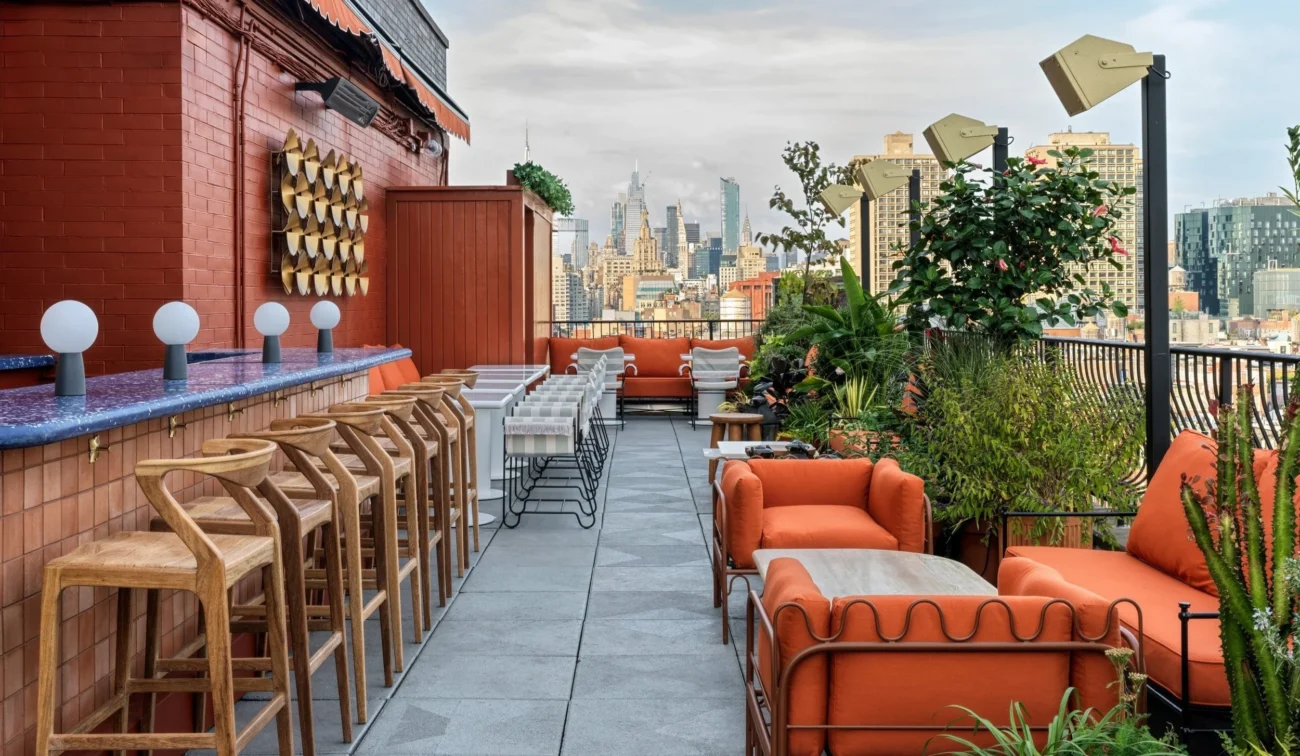
Materials selected for rooftops must perform under extreme conditions while maintaining visual elegance. Advanced composites, weather-resistant woods, and high-performance textiles are now staples of refined New York rooftop design.
Equally important is tactile experience. Underfoot textures, ergonomic seating, and temperature-sensitive finishes contribute to a sense of comfort that feels effortless, even though it is highly engineered.
Key Material Considerations
- UV and frost resistance for year-round durability
- Lightweight construction to meet structural limits
- Low-maintenance surfaces suited to urban lifestyles
The best outdoor environments disguise technical rigor beneath an atmosphere of ease—an essential quality for high-level urban outdoor living.
Landscape as Sanctuary: Green Architecture Above the City
Greenery is the emotional core of outdoor design in New York. Rooftop gardens and terrace plantings provide not only visual softness but also measurable environmental benefits, from improved air quality to thermal regulation.
Curated Nature, Not Wilderness
Unlike suburban landscapes, New York’s elevated gardens are curated with intention. Designers favor architectural planting schemes—ornamental grasses, sculptural trees, and evergreen backbones—that offer structure year-round.
In the context of urban outdoor living, planting becomes spatial architecture, defining pathways, boundaries, and moments of pause.
Popular Planting Strategies in New York Rooftop Design
- Wind-tolerant species such as grasses and hardy perennials
- Layered planters to create depth in limited footprints
- Seasonal variation to maintain visual interest throughout the year
According to research highlighted by the ArchDaily architecture platform, green roofs significantly enhance urban well-being while reinforcing sustainable design practices—an increasingly important consideration for luxury developments.
Furniture as Architecture: Defining Urban Outdoor Living
In New York, outdoor furniture is not decorative afterthought; it is architectural. Given limited space, each piece must justify its presence through function, comfort, and aesthetic coherence.
Flexibility and Intentionality
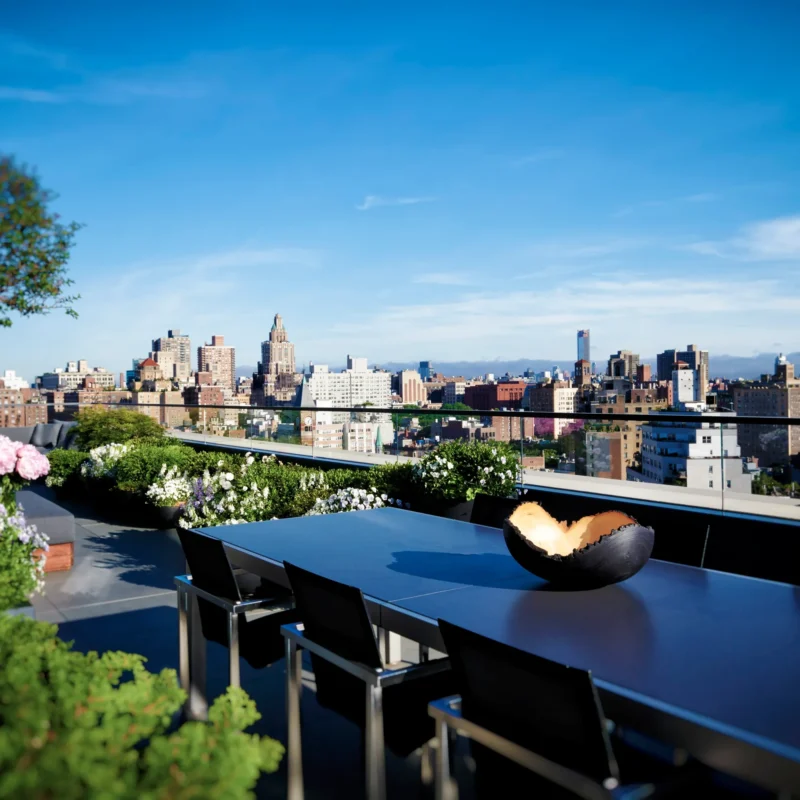
Modern urban outdoor living favors modular systems that adapt to changing needs—morning solitude, evening gatherings, seasonal transitions. Clean-lined silhouettes, generous proportions, and neutral tones allow furniture to integrate seamlessly with both skyline views and interior architecture.
Furniture placement is equally strategic. Aligning seating with views while maintaining privacy requires careful choreography, particularly in dense neighborhoods where sightlines are complex.
Privacy Without Isolation
Privacy is one of the most nuanced challenges in outdoor design in New York. Rooftops are exposed by nature, yet residents seek seclusion.
Layered Solutions
Rather than opaque barriers, designers employ layered approaches that preserve openness while filtering views:
- Slatted screens that allow light and airflow
- Living walls that soften boundaries organically
- Textile elements such as outdoor curtains for adaptable privacy
This approach reflects a broader philosophy in New York rooftop design: separation without disconnection.
Seasonality and Year-Round Use
True luxury in urban outdoor living lies in continuity. New York’s climate demands spaces that transition gracefully through seasons.
Designing for All Weather
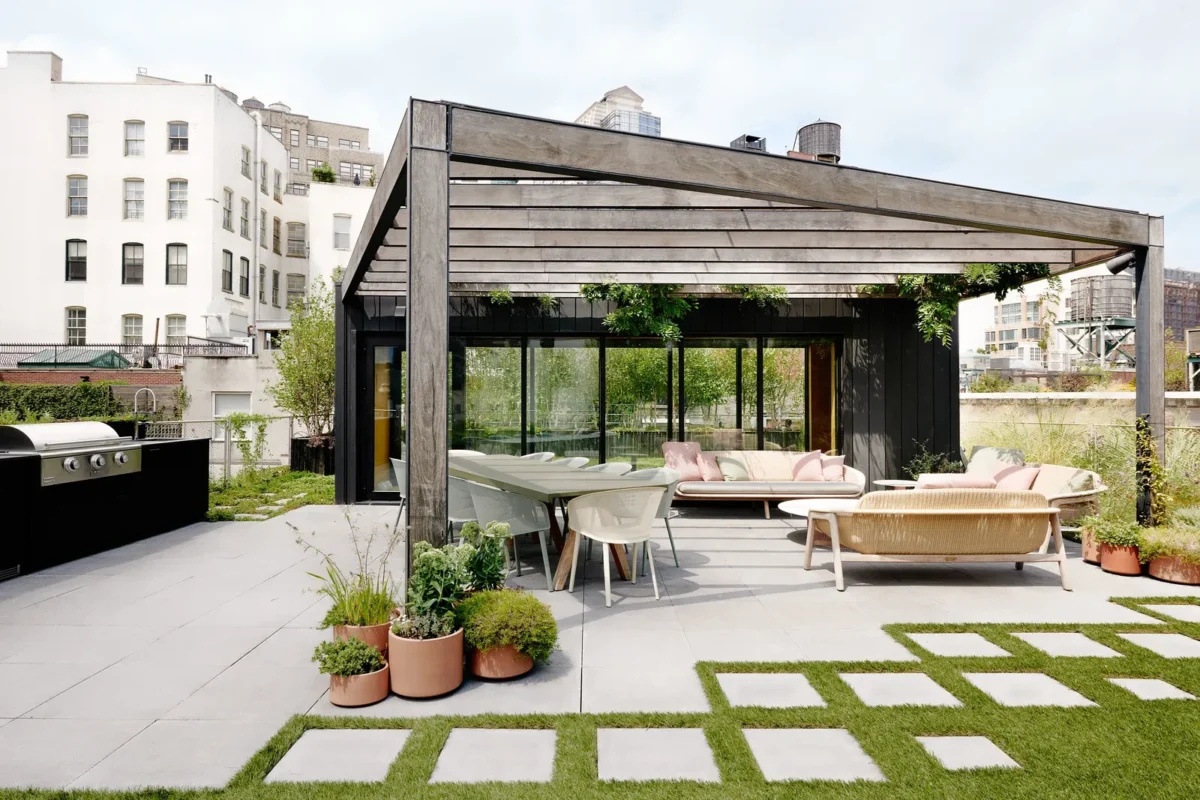
Heated flooring, integrated fire features, and sheltered zones extend usability well beyond summer. In warmer months, pergolas, retractable canopies, and strategically placed shade structures provide relief from intense sun exposure.
By planning for year-round comfort, outdoor design in New York transforms rooftops into enduring lifestyle assets rather than seasonal indulgences.
Cultural Context: New York as Design Catalyst
New York’s cultural density profoundly shapes its outdoor spaces. The city’s global perspective encourages design that is eclectic yet restrained, expressive yet disciplined.
References to Mediterranean courtyards, Japanese gardens, or modernist European terraces often appear—not as literal translations, but as subtle influences adapted to the city’s vertical reality. This cultural layering enriches urban outdoor living, making each rooftop a reflection of both place and personal identity.
Crafting Calm in the Vertical City
As New York continues to build upward, the importance of elevated outdoor spaces will only intensify. New York rooftop design is no longer a niche specialization; it is a central component of contemporary urban architecture and luxury living.
When designed with intention, these spaces offer more than views. They provide pause, perspective, and balance—qualities increasingly rare in modern cities. In the realm of urban outdoor living, calm is not an escape from New York, but a refined dialogue with it, unfolding quietly above the city’s relentless rhythm.