

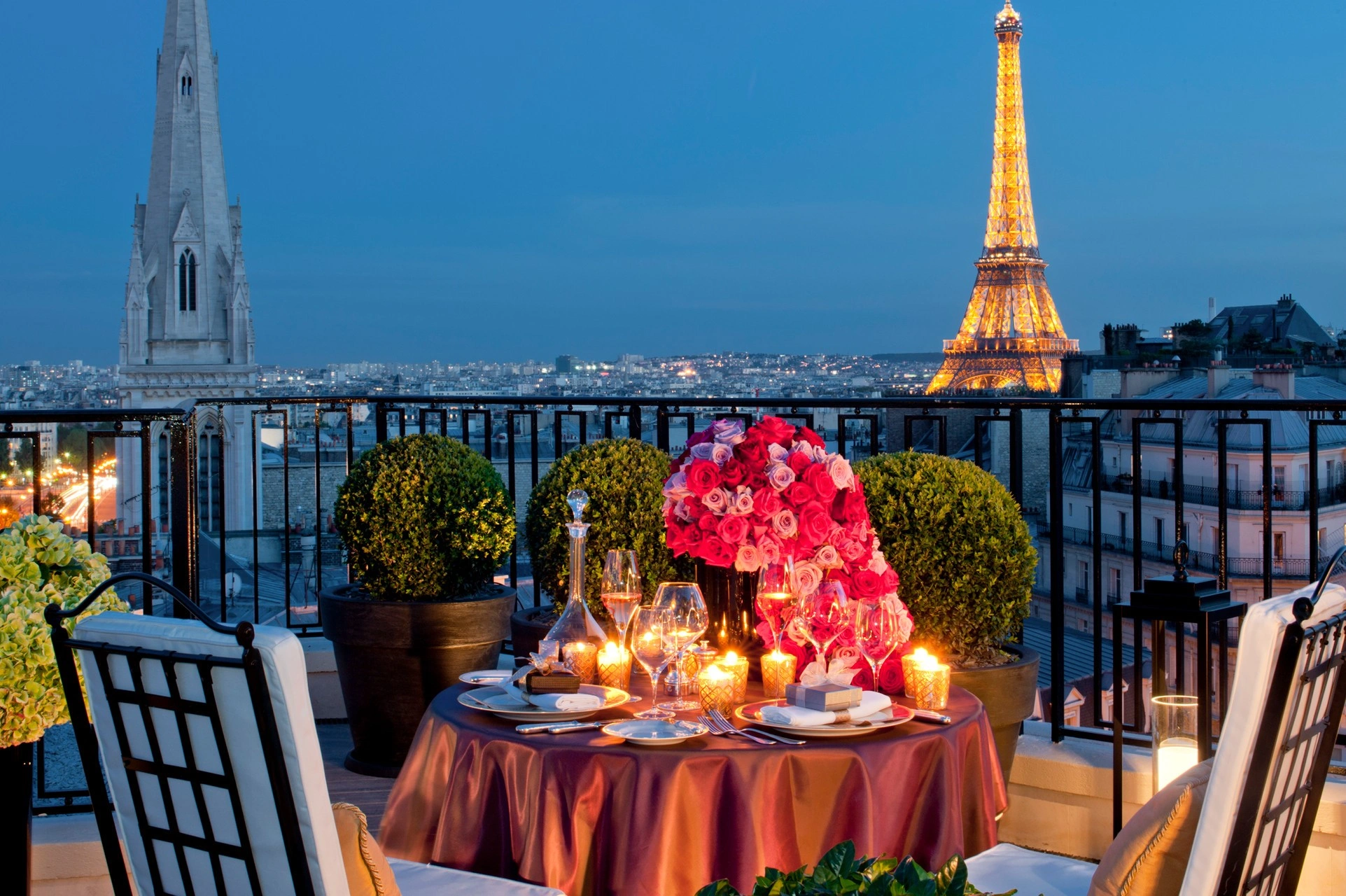
In the dense urban fabric of Paris, where Haussmannian façades meet contemporary glass volumes, outdoor space is not a luxury—it is a cultural asset. Parisian terraces, balconies, and loggias have long served as intimate extensions of the interior, offering moments of light, air, and ritual within one of the world’s most architecturally layered cities. Today, these compact outdoor spaces are undergoing a refined transformation, driven by evolving lifestyles, sustainability concerns, and a renewed appreciation for design-led urban living.
This reimagining places outdoor furniture at the center of the conversation. No longer treated as secondary or seasonal, well-designed balcony furniture now plays an architectural role—shaping how city dwellers inhabit, perceive, and curate their private outdoor environments. For architects, interior designers, real estate developers, and design-conscious homeowners, Paris offers a compelling case study in how constraints inspire elegance.
The Cultural Legacy of Parisian Terraces
The notion of the terrace in Paris is deeply rooted in social and architectural history. From the narrow wrought-iron balconies of 19th-century residential buildings to the generous terraces of modern Left Bank apartments, outdoor spaces have always mediated between public streets and private interiors.
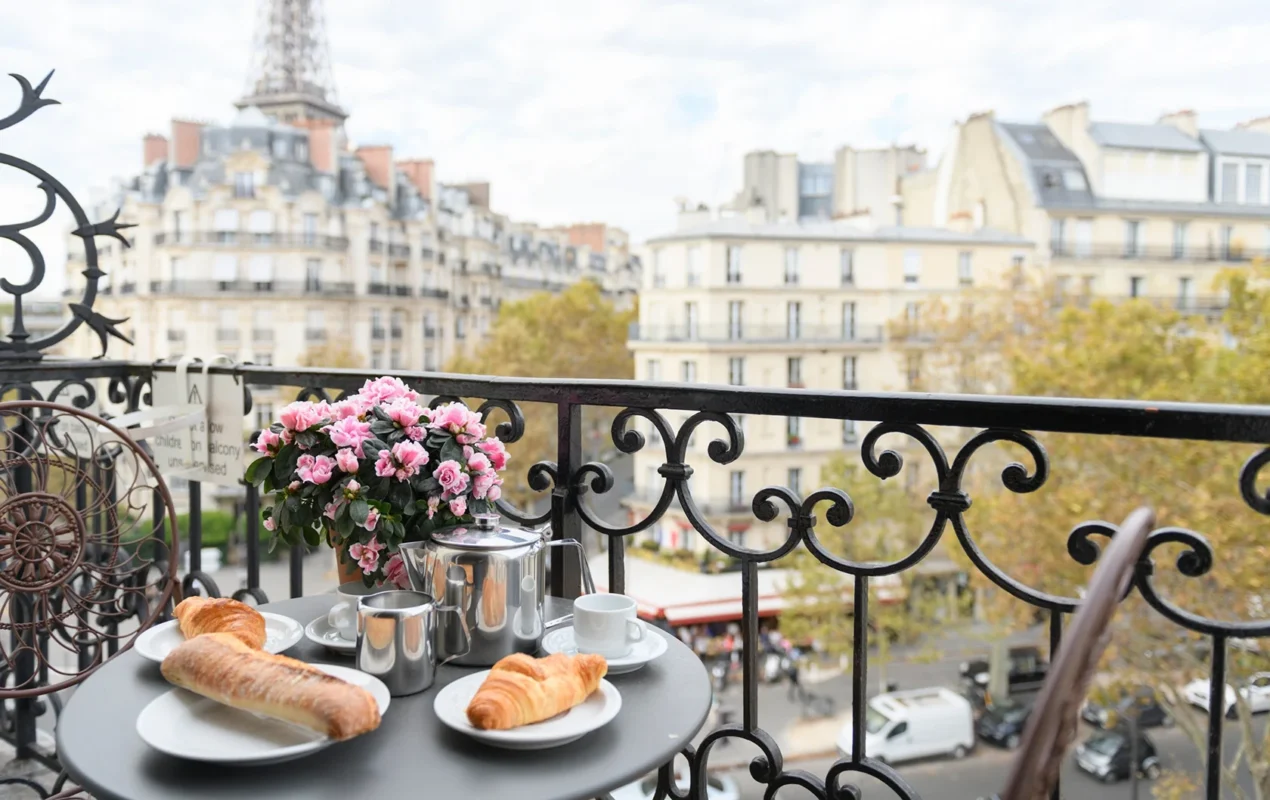
Traditionally, Parisian terraces were modest in scale, designed more for visual rhythm along façades than for prolonged use. Yet even these slender balconies became stages for daily rituals—morning coffee, evening aperitifs, or the cultivation of potted greenery. Today’s reinterpretation builds upon this heritage, balancing historical sensitivity with contemporary expectations of comfort and functionality.
Urban Density as a Design Catalyst
Paris’s density has forced designers to think vertically and efficiently. Small balconies demand precise proportions, lightweight materials, and multifunctional pieces. This constraint-driven approach has influenced a broader European design language, where restraint and intelligence often trump excess.
In this context, outdoor furniture must perform several roles simultaneously: seating, storage, visual anchor, and sometimes even spatial divider. The success of a Parisian balcony lies not in abundance, but in curation.
Design Principles for Urban Balconies
Reimagining terraces in Paris requires a distinct design mindset—one that merges architectural clarity with lifestyle sensibility. The most successful urban balconies follow a set of principles that prioritize proportion, materiality, and continuity.
Scale, Proportion, and Visual Lightness
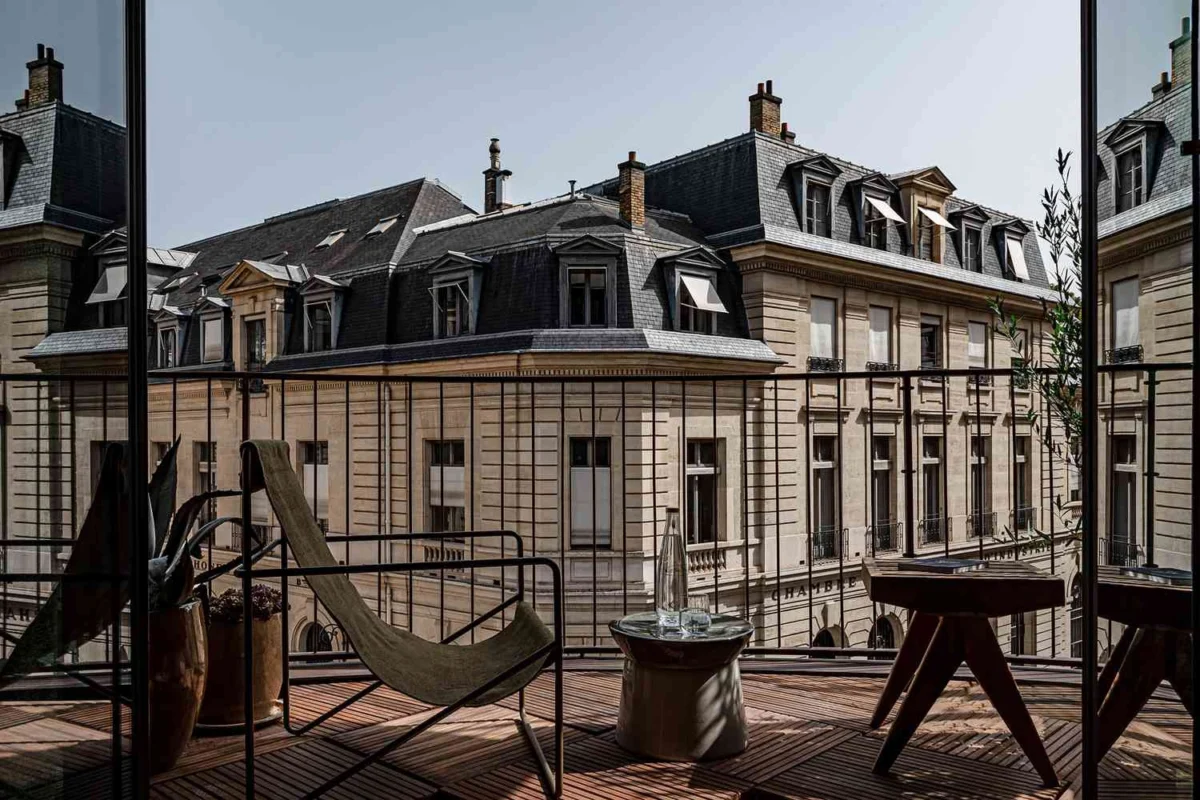
Given the compact dimensions of most balconies, furniture must feel visually light without sacrificing durability. Slim frames, open structures, and elevated silhouettes allow light to pass through, preventing the space from feeling overcrowded.
- Low-profile lounge chairs that maintain sightlines
- Stackable or foldable balcony furniture for flexibility
- Modular pieces that adapt to different layouts
Material Intelligence in the Urban Climate
Paris’s temperate yet unpredictable climate calls for materials that age gracefully. Powder-coated aluminum, treated teak, ceramic tabletops, and high-performance outdoor textiles are increasingly favored for their resilience and refined appearance.
Material selection is not purely technical—it is aesthetic. Subtle textures and matte finishes complement limestone façades, zinc rooftops, and the muted tones of Parisian architecture.
Outdoor Furniture as an Extension of Interior Design
One of the defining trends in contemporary Parisian living is the dissolution of boundaries between inside and out. Balconies are no longer styled independently; instead, they echo the interior’s palette, mood, and spatial logic.
Continuity of Style and Color
Designers increasingly approach terraces as “outdoor rooms.” Neutral tones—stone, sand, charcoal, and olive—dominate, allowing greenery and city views to take center stage. Upholstery often mirrors interior fabrics in texture, if not in exact hue.
This continuity enhances perceived space, a crucial factor in urban real estate where every square meter carries value. Thoughtfully selected outdoor furniture reinforces architectural coherence rather than competing with it.
Furniture as Spatial Architecture
On larger terraces, seating arrangements define zones: dining, lounging, and contemplation. On smaller balconies, a single bench or café-style table can establish a clear purpose. In both cases, furniture becomes a spatial tool, shaping movement and use.
Parisian Terraces and Real Estate Value
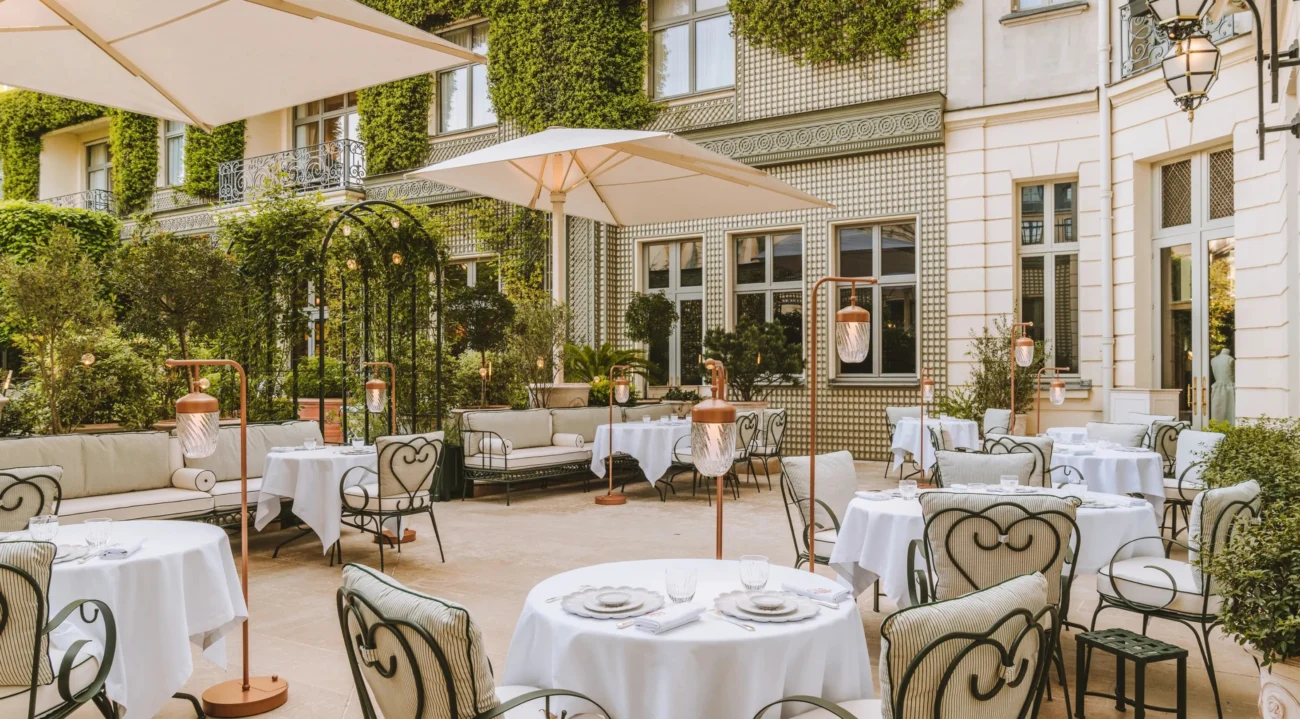
In the competitive Parisian property market, outdoor space significantly enhances desirability. Real estate professionals increasingly emphasize terraces and balconies as lifestyle differentiators, particularly in premium segments.
According to data from leading European property analysts, apartments with well-designed outdoor areas command higher prices and shorter time-to-market. The presence of curated balcony furniture during showings allows potential buyers to immediately visualize daily life, transforming abstract square footage into lived experience.
The Rise of the “Turnkey Terrace”
High-end developments now present terraces as fully realized environments rather than empty appendages. This approach aligns with the expectations of international buyers accustomed to hospitality-level outdoor design.
Sustainability and Responsible Urban Outdoor Living
Sustainability has become inseparable from contemporary design discourse, particularly in cities like Paris where environmental regulations and cultural awareness intersect. Reimagined terraces increasingly reflect a commitment to longevity, ethical sourcing, and environmental responsibility.
Durability Over Disposability
Rather than seasonal replacements, today’s outdoor furniture is chosen for endurance. High-quality materials, repairable components, and timeless design reduce waste and align with circular design principles.
- Furniture designed for long-term use rather than trends
- Materials sourced with environmental certifications
- Designs that transcend seasons and styles
Urban Nature and Micro-Gardens
Parisian balconies often double as micro-gardens. Integrated planters, vertical greenery, and herb gardens soften urban edges and improve air quality. Furniture designs that accommodate greenery—through built-in planters or adaptable layouts—support this biophilic approach.
Global Influence of the Parisian Balcony Aesthetic
While deeply rooted in local culture, the Parisian terrace aesthetic resonates globally. Cities such as Milan, Barcelona, New York, and Tokyo increasingly draw inspiration from Paris’s balance of elegance and restraint.
For international designers, the appeal lies in the philosophy rather than the form: an emphasis on proportion, quality, and lifestyle over spectacle. Parisian terraces demonstrate that even the smallest outdoor spaces can embody sophistication when approached thoughtfully.
Looking Forward: The Future of Urban Outdoor Furniture
As cities continue to densify, the role of balconies and terraces will only grow. Future innovations are likely to focus on modularity, smart materials, and adaptive designs that respond to changing urban needs.
Yet despite technological advances, the essence of Parisian outdoor living remains unchanged. It is about creating moments—of pause, connection, and beauty—within the rhythm of the city. Thoughtfully designed balcony furniture and refined outdoor furniture will continue to shape these moments, quietly elevating everyday life.
The Takeaway
Reimagined Parisian terraces offer more than visual charm; they represent a sophisticated response to urban living. Through intelligent design, material integrity, and cultural sensitivity, balconies become meaningful extensions of the home.
For architects, designers, and discerning homeowners, the lesson is clear: elegance thrives within constraints. In Paris, where space is precious and history omnipresent, outdoor furniture is not merely an accessory—it is an architectural statement, shaping how the city is lived, one terrace at a time.