

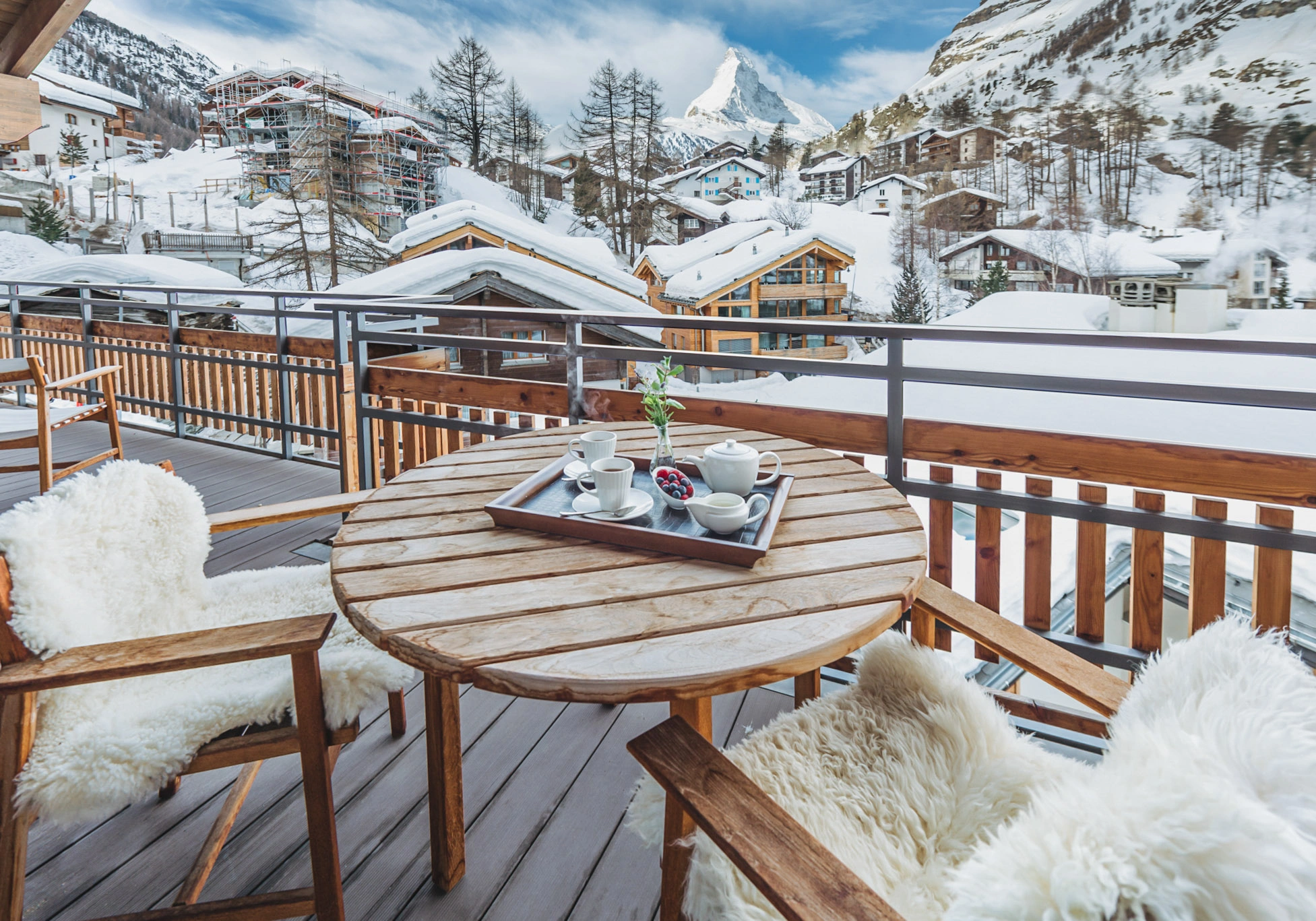
Outdoor Living Above the Clouds
High in the Alps, where air thins and landscapes command reverence, the Swiss mountain chalet has evolved far beyond its pastoral origins. Once conceived as purely functional shelters for alpine life, today’s chalets represent a refined intersection of architecture, landscape, and lifestyle. Outdoor living at altitude is no longer an afterthought—it is a central design narrative that shapes how residents and guests engage with nature, climate, and time itself.
For architects, designers, and discerning homeowners, Swiss mountain chalet design now embraces terraces, balconies, and outdoor lounges as extensions of interior life. These alpine outdoor spaces balance exposure and protection, tradition and innovation, permanence and seasonal change. The result is a sophisticated form of mountain chalet outdoor living that feels both deeply rooted and unmistakably contemporary.
The Evolution of Swiss Mountain Chalet Design
The archetypal Swiss chalet—defined by pitched roofs, deep eaves, timber façades, and stone bases—was shaped by necessity. Snow loads, harsh winds, and extreme temperature shifts dictated architectural responses long before aesthetic considerations entered the conversation.
In contemporary Swiss mountain chalet design, these vernacular principles are reinterpreted through advanced engineering, refined craftsmanship, and global design influences. Outdoor spaces, once limited to narrow balconies or functional porches, are now expansive and intentional.
From Agricultural Shelter to Alpine Retreat
Historically, chalets served agrarian communities, prioritizing durability and efficiency. Today, they function as second homes, private retreats, and ultra-luxury residences for an international clientele. This shift has elevated expectations for comfort, spatial flow, and experiential quality—particularly outdoors.
Outdoor Living as Architectural Continuity
Rather than treating terraces and balconies as appendages, contemporary chalets integrate them seamlessly into the architectural envelope. Floor-to-ceiling glazing, sliding façades, and continuous materials dissolve boundaries between interior warmth and alpine openness.
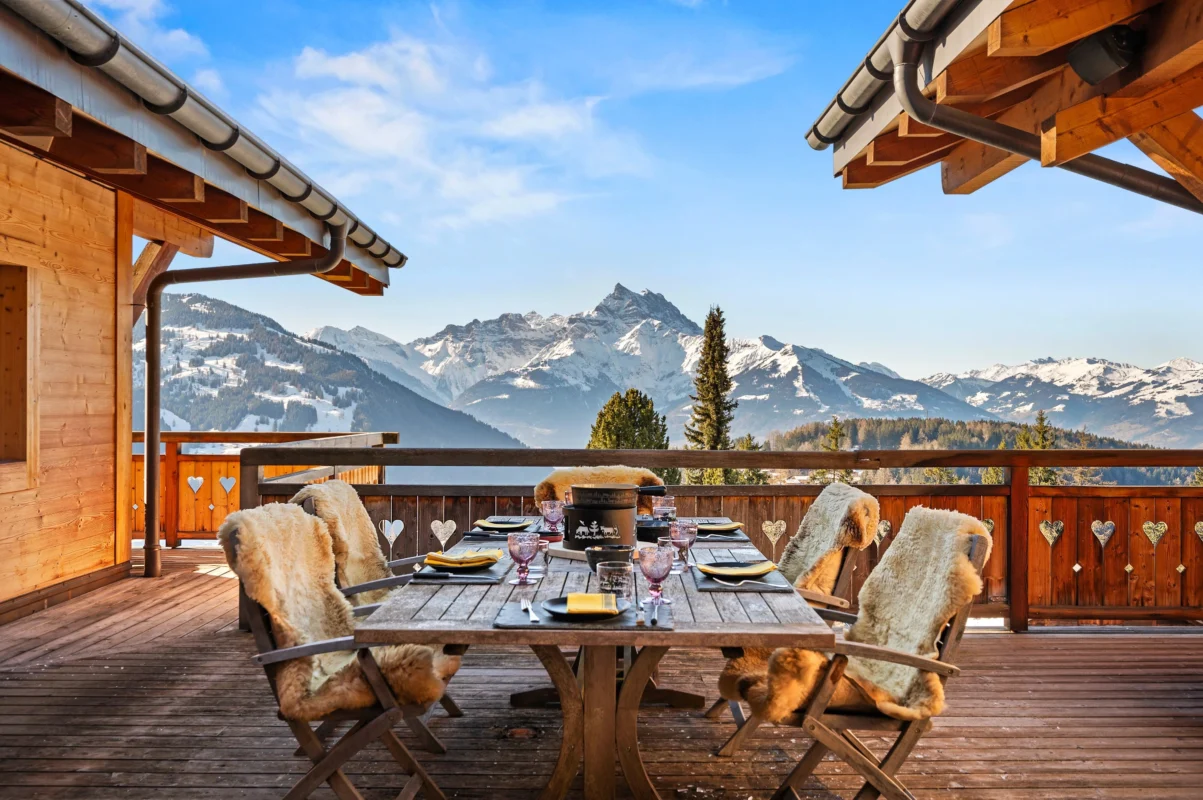
Mountain Chalet Outdoor Living: Designing for Altitude
Outdoor living in the Alps is defined by paradox: intense sunlight and sudden snowfall, expansive views and intimate shelter. Successful mountain chalet outdoor living responds to these contrasts with precision.
Microclimates and Orientation
At altitude, orientation is everything. South-facing terraces maximize solar gain, extending outdoor usability well into colder months. East-facing balconies capture morning light, while sheltered west-facing spaces protect against prevailing winds.
Designers increasingly map microclimates across a single property, creating a sequence of outdoor environments that shift throughout the day and season.
Key Environmental Considerations
- Solar exposure and snow accumulation
- Wind patterns and natural shelter
- Thermal comfort across seasons
- Visual alignment with mountain panoramas
Material Intelligence in Alpine Outdoor Spaces
Material selection is critical in alpine outdoor spaces. At high altitude, UV radiation, freeze-thaw cycles, and moisture place extraordinary demands on surfaces and furnishings.
Design-led chalets favor materials that weather gracefully while maintaining tactile and visual refinement.
Preferred Materials for Alpine Outdoor Living
- Thermally treated woods that resist moisture and temperature shifts
- Natural stone sourced locally to anchor the chalet in its context
- Powder-coated metals engineered for extreme climates
- High-performance outdoor textiles with UV and frost resistance
The Aesthetics of Alpine Outdoor Spaces
While performance is non-negotiable, aesthetics remain central to Swiss mountain chalet design. Outdoor areas are curated with the same discipline as interiors, reflecting a restrained, timeless elegance.
Visual Continuity Between Inside and Out
Designers often mirror interior palettes outdoors—neutral tones, natural textures, and layered materials—to create visual continuity. This approach reinforces the idea of outdoor spaces as open-air rooms rather than secondary zones.
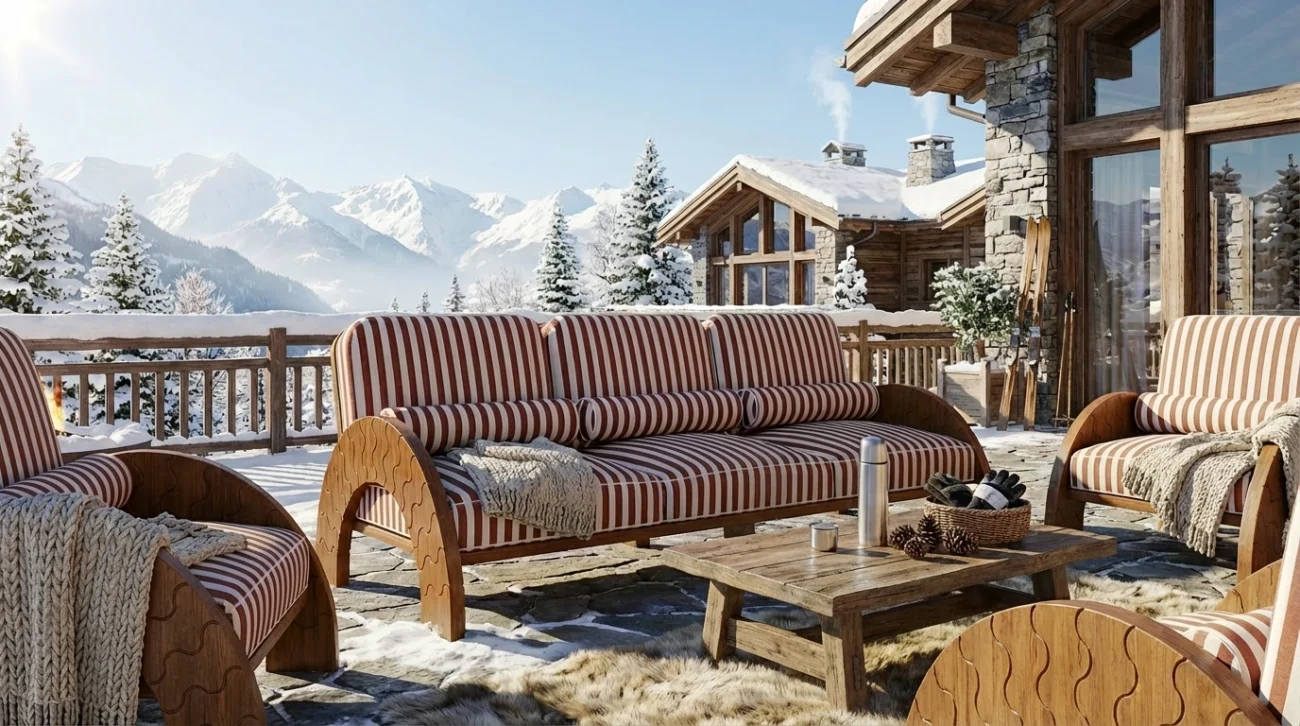
Furniture as Architectural Element
In high-end chalets, outdoor furniture is not decorative—it is architectural. Low-profile seating preserves sightlines, modular arrangements adapt to social rituals, and sculptural forms echo the geometry of the building itself.
Functional Roles of Outdoor Furniture
- Defining spatial zones without physical barriers
- Providing thermal comfort through upholstery and form
- Encouraging slow living and prolonged outdoor use
Seasonality and the Art of Year-Round Use
One of the most compelling aspects of mountain chalet outdoor living is its relationship with seasonality. Unlike temperate climates, alpine environments demand flexibility and foresight.
Winter Outdoor Living
Contrary to expectation, winter is not a dormant season for alpine outdoor spaces. Heated terraces, fire features, and sheltered lounges transform snow-covered landscapes into immersive experiences.
Winter-Ready Design Features
- Integrated radiant heating systems
- Wind-protected seating niches
- Fire pits and outdoor fireplaces
- Snow-resistant drainage and surfaces
Summer at Altitude
During summer, the Alps offer crisp air and intense light. Outdoor dining terraces, sun decks, and panoramic lounges become social hubs, often outperforming interior spaces in daily use.
Cultural Context and Alpine Lifestyle
Beyond architecture, Swiss mountain chalet design reflects a broader cultural philosophy—one rooted in respect for nature, craftsmanship, and measured luxury.
Outdoor living at altitude encourages slower rhythms, deeper sensory engagement, and a heightened awareness of landscape. It aligns with contemporary values of well-being, sustainability, and experiential richness.
Craft, Heritage, and Modernity
Many of today’s most compelling alpine projects emerge from collaborations between local artisans and international designers. This dialogue preserves regional identity while introducing global perspectives on comfort and aesthetics.
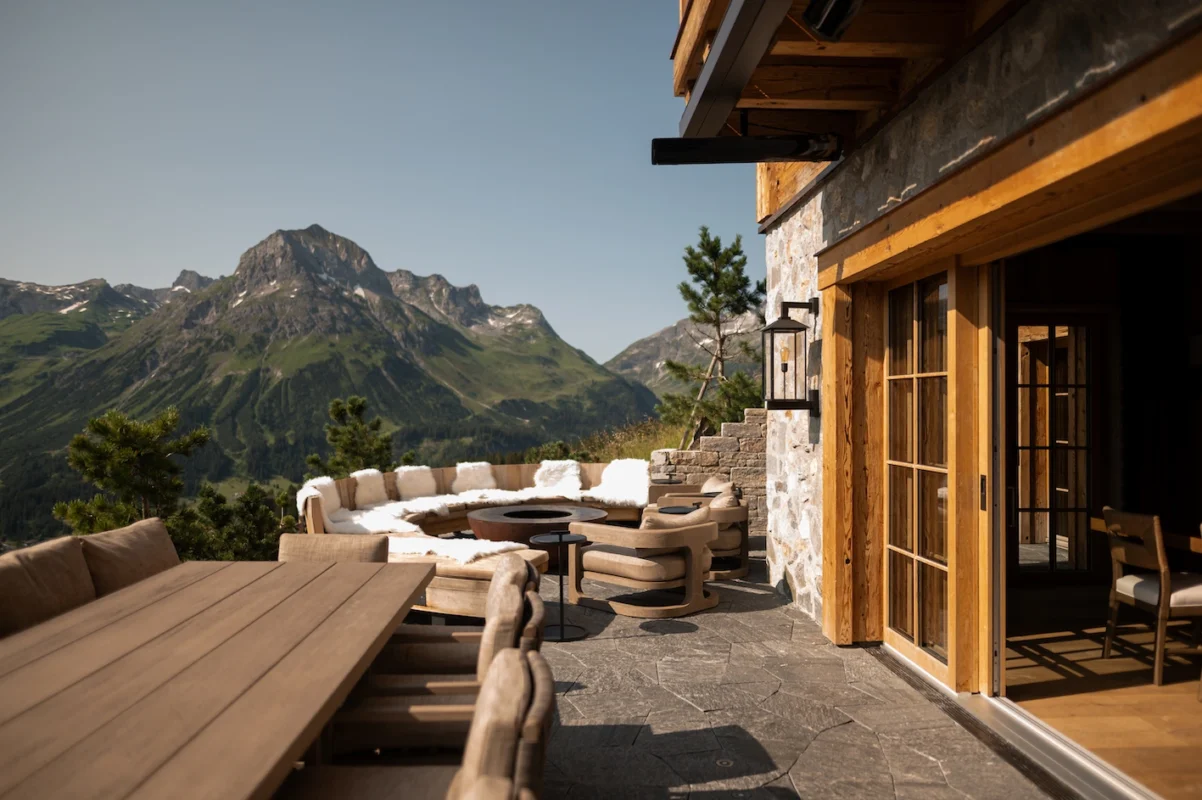
Sustainability in Alpine Outdoor Design
Sustainability is not optional in the fragile alpine ecosystem. Thoughtful alpine outdoor spaces prioritize longevity, environmental integration, and minimal intervention.
Responsible Design Strategies
- Locally sourced materials to reduce transport impact
- Durable furniture designed for decades of use
- Passive solar strategies to extend outdoor seasons
- Landscape design that respects native flora
Authoritative research on sustainable alpine architecture, such as studies published by the ArchDaily architecture platform, highlights the importance of contextual and climate-responsive design in mountain regions.
Elevated Living, Redefined
In the contemporary Alps, outdoor living is no longer seasonal, secondary, or symbolic. It is central to how chalets are conceived, experienced, and valued. Mountain chalet outdoor living represents a refined dialogue between shelter and exposure, intimacy and vastness.
For architects, designers, and high-net-worth individuals alike, Swiss mountain chalet design offers a compelling model of how outdoor spaces can elevate lifestyle while honoring place. At altitude, luxury is not excess—it is clarity, comfort, and a profound connection to the landscape.