

Reading the Language of Exterior Architecture
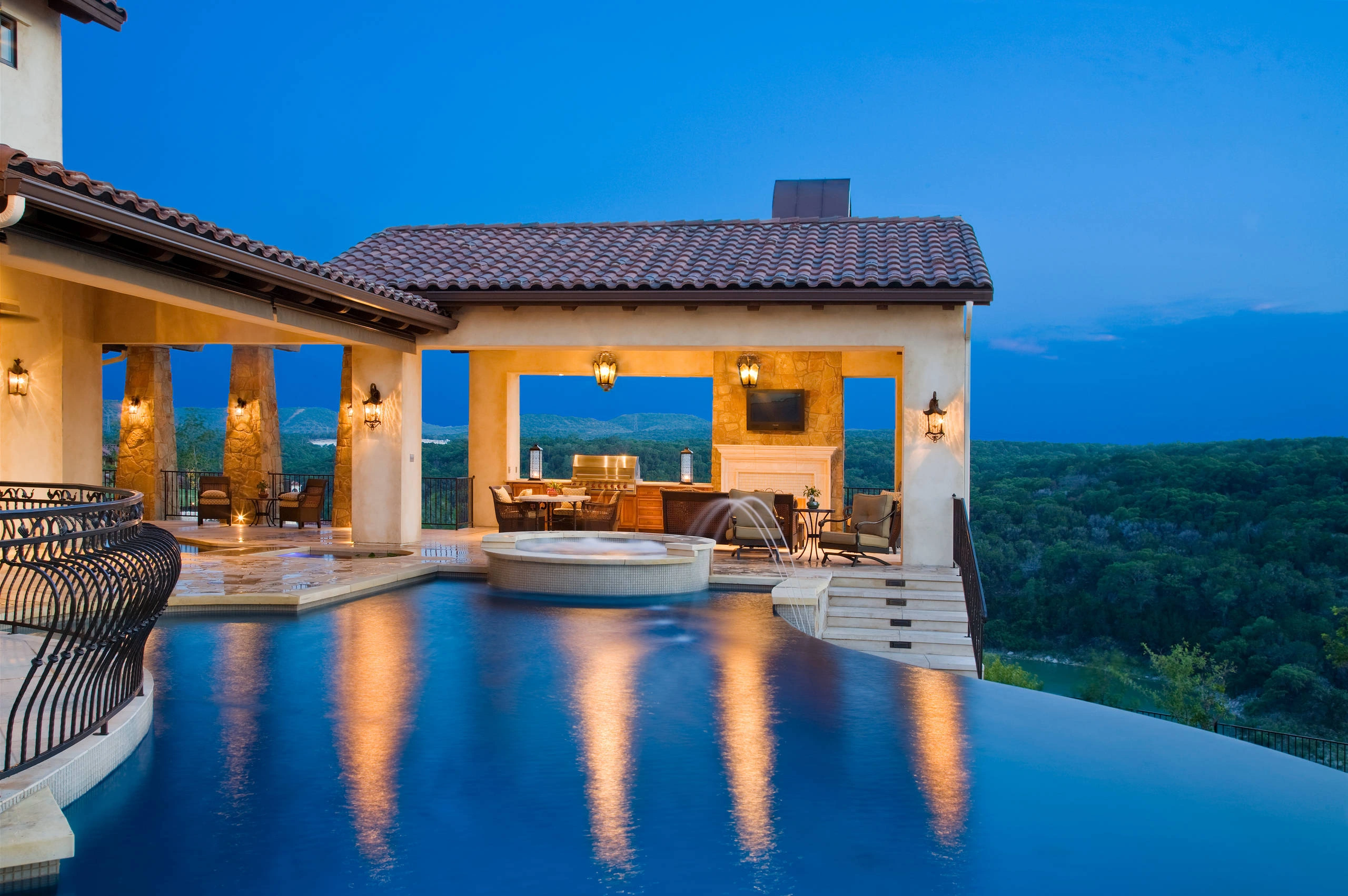
Architecture, like language, is governed by a grammar—an underlying structure that gives meaning, rhythm, and coherence to space. In exterior architecture, this grammar is articulated through elements that mediate between inside and outside, enclosure and openness, movement and pause. Among the most enduring of these are architectural thresholds, pergola design, and the colonnade.
Far from being merely decorative, these architectural devices shape how buildings are approached, entered, inhabited, and remembered. They choreograph experience, establish hierarchy, and express cultural values. In contemporary practice—particularly within luxury residential, hospitality, and landscape-led projects—they have re-emerged as essential tools for crafting meaningful outdoor environments.
The Threshold: Architecture as Transition
At its most fundamental level, architecture is about transition. The threshold is where this transition becomes explicit. An architectural threshold marks the passage from public to private, exterior to interior, landscape to shelter. It is not a line, but a zone—a moment of recalibration for the body and the senses.
The Cultural Meaning of Architectural Thresholds
Across civilizations, thresholds have carried symbolic weight. From the torii gates of Japan to the courtyards of Islamic architecture, the act of crossing into a space has long been ritualized. In classical architecture, porticos and vestibules signaled civic importance; in vernacular traditions, shaded porches offered hospitality and protection.
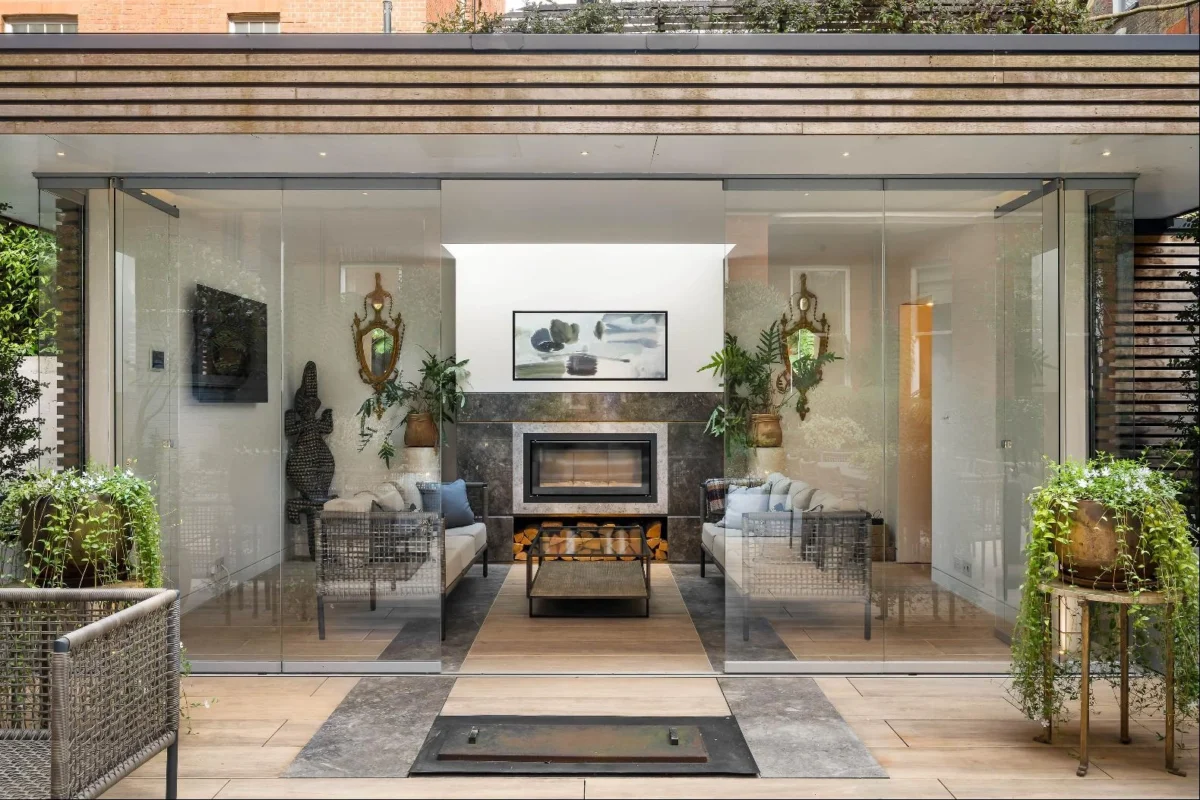
In contemporary exterior architecture, thresholds continue to perform this cultural function, though often in more understated ways. A change in material underfoot, a compression of ceiling height, or the filtering of light through screens can all signal arrival without overt formality.
Designing Thresholds for Climate and Comfort
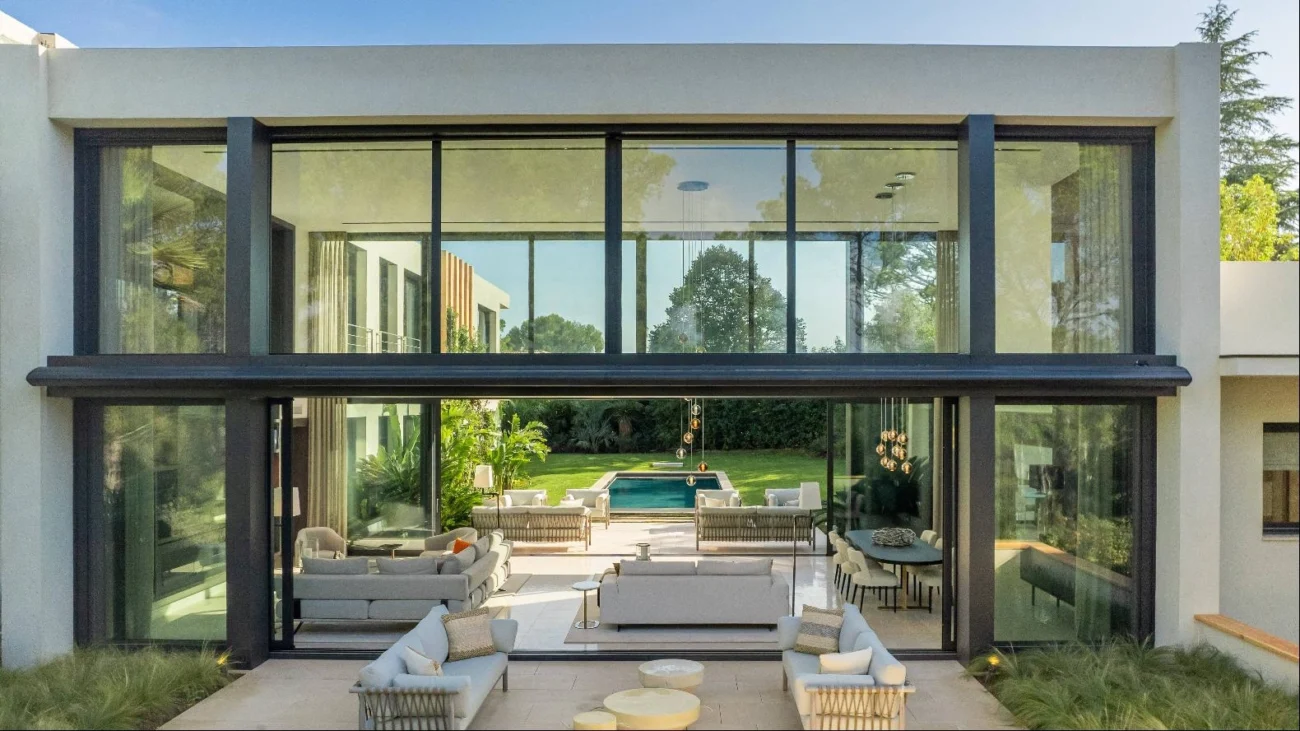
Beyond symbolism, architectural thresholds play a critical environmental role. In warm climates, they act as buffers—tempering heat, glare, wind, and rain before one enters an enclosed space. Deep overhangs, recessed entries, and transitional terraces enhance thermal comfort while extending usable outdoor areas.
Well-considered thresholds often include:
- Shaded entry platforms or loggias
- Gradual transitions between hardscape and landscape
- Filtered light through screens, louvers, or vegetation
- Material shifts that signal spatial change
Pergola Design: Structure Without Enclosure
Few elements express the elegance of exterior architecture as subtly as the pergola. Defined by its open framework and rhythmic supports, pergola design offers shade without enclosure, structure without heaviness. It is architecture reduced to its essentials.
A Brief History of the Pergola
Historically, pergolas emerged as garden structures in classical Roman villas, later reinterpreted in Renaissance landscapes as vine-covered walkways. Their purpose was both practical and poetic: to frame views, guide movement, and create moments of repose within the landscape.
Today, pergola design has evolved into a highly adaptable architectural element—integrated into residential terraces, hotel courtyards, rooftop gardens, and poolside environments. Its enduring appeal lies in its capacity to define space while remaining visually permeable.
Pergolas as Spatial Devices
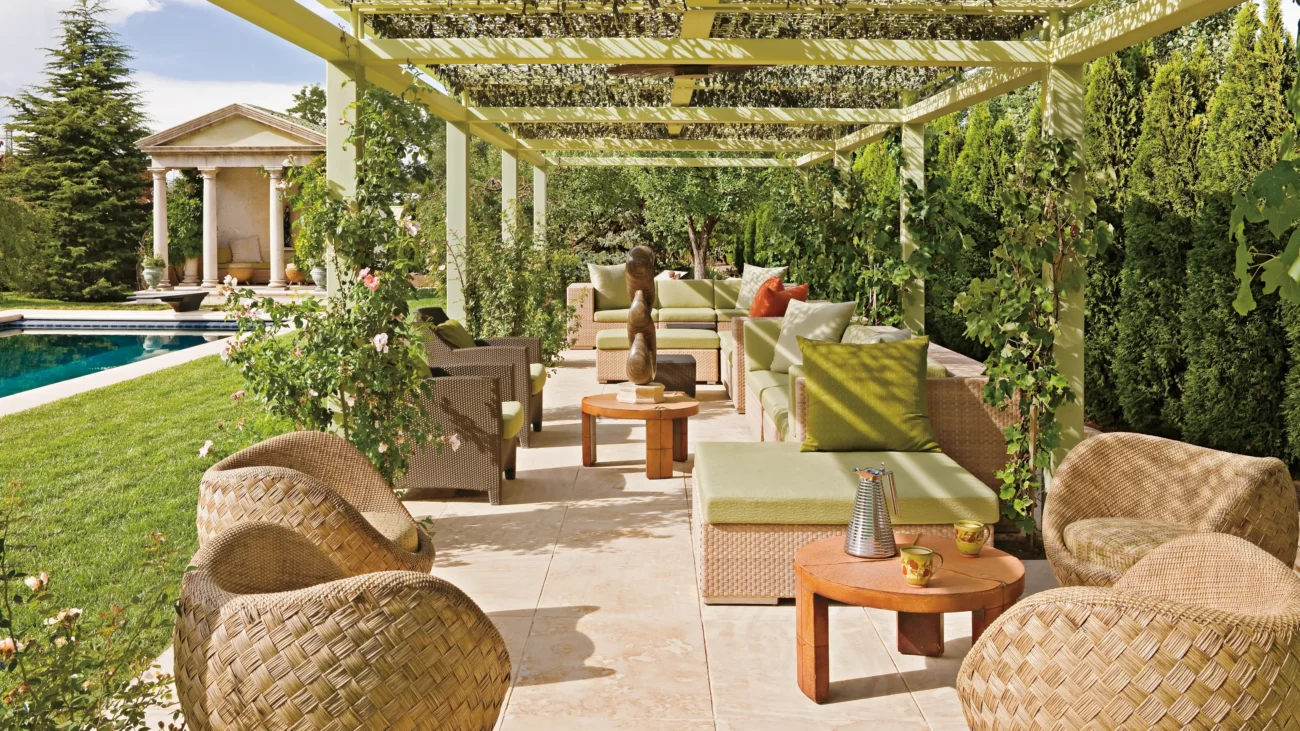
In contemporary practice, pergolas are less about ornament and more about spatial clarity. They establish outdoor “rooms,” align circulation paths, and mediate scale between architecture and landscape. A pergola can extend the geometry of a building into the garden, reinforcing continuity between built form and nature.
Modern pergola design often emphasizes:
- Clean structural lines and precise proportions
- Natural materials such as wood, stone, or metal
- Integration with planting, textiles, or lighting
- Flexibility through operable louvers or screens
Light, Shadow, and Temporal Experience
One of the pergola’s most compelling qualities is its relationship with light. As the sun moves, shadows shift across floors and furnishings, creating a dynamic environment that changes throughout the day. This temporal dimension adds depth to exterior architecture, making outdoor spaces feel alive rather than static.
The Colonnade: Rhythm, Order, and Permanence
If the pergola suggests lightness, the colonnade speaks of order and permanence. Defined by a sequence of columns supporting a roof or entablature, the colonnade has been a cornerstone of architectural expression since antiquity.
The Classical Legacy of the Colonnade
From Greek temples to Roman forums, colonnades established rhythm and proportion in civic architecture. They framed public life, offering shelter while maintaining openness. Their repetition created a sense of procession—a measured pace that encouraged contemplation.
This legacy continues to influence contemporary exterior architecture, particularly in projects that seek to convey dignity, continuity, and architectural gravitas.
Modern Interpretations of the Colonnade
In modern and contemporary contexts, the colonnade has been reinterpreted with restraint. Columns may be slimmer, materials more minimal, and detailing reduced. Yet the essential qualities remain: rhythm, structure, and spatial definition.
Today’s colonnades often appear in:
- Luxury residential verandas and galleries
- Hotel and resort circulation spaces
- Museums and cultural institutions
- Landscape-integrated walkways
The Colonnade as Threshold and Frame
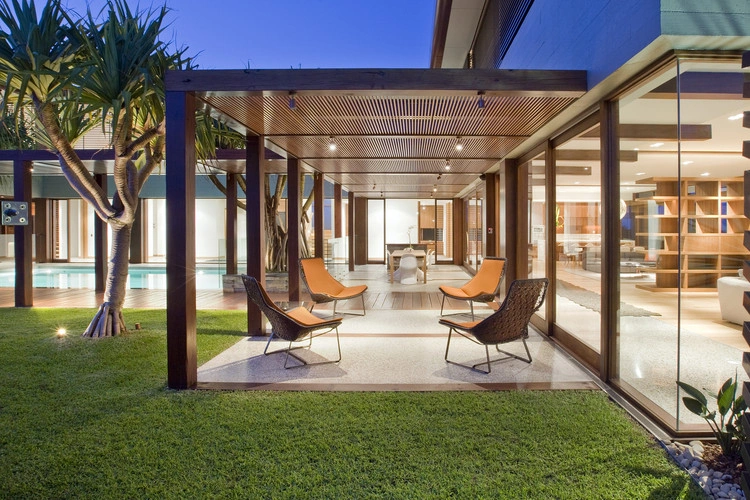
Importantly, the colonnade often functions as both threshold and destination. It mediates between exterior and interior while framing views outward. Walking beneath a colonnade is a tactile experience—defined by repetition, shadow, and perspective.
The Grammar of Exterior Architecture
When considered together, architectural thresholds, pergola design, and the colonnade form a coherent grammar of exterior architecture. Each element serves a distinct function, yet all contribute to a layered spatial narrative.
Hierarchy and Sequence
Exterior architecture is rarely experienced all at once. It unfolds through movement. Thresholds mark beginnings, pergolas guide transitions, and colonnades sustain continuity. Their arrangement establishes hierarchy—what is revealed first, what is concealed, and what endures.
Materiality and Craft
Material choices are central to this grammar. Stone conveys permanence, wood warmth, metal precision. In high-end exterior architecture, these materials are selected not only for durability but for how they age, weather, and interact with light.
Human Scale and Proportion
Perhaps most importantly, these elements anchor architecture to the human body. A well-proportioned colonnade invites walking; a pergola encourages lingering; a thoughtfully designed threshold offers a moment of pause. Together, they humanize scale, even in large or monumental projects.
Exterior Architecture and Contemporary Luxury
In the context of luxury real estate and hospitality, exterior architecture has become a primary expression of value. Discerning clients increasingly prioritize outdoor living environments that are architecturally considered, climatically responsive, and culturally resonant.
Rather than spectacle, the new language of luxury favors restraint—spaces that feel inevitable rather than imposed. Architectural thresholds, pergolas, and colonnades provide this sense of quiet authority.
Looking Forward: Enduring Principles in a Changing World
As architects and designers respond to climate challenges, shifting lifestyles, and a renewed focus on well-being, the grammar of exterior architecture remains remarkably relevant. These time-tested elements offer adaptable solutions that balance shelter and openness, structure and freedom.
Architecture That Speaks Through Space
Thresholds, pergolas, and colonnades are more than components of exterior architecture—they are its syntax. Through them, architecture speaks: guiding movement, shaping experience, and articulating the relationship between human life and the built environment.
In revisiting and refining these elements, contemporary designers are not looking backward, but engaging in a dialogue with history—one that enriches the present and ensures that exterior architecture remains legible, meaningful, and profoundly human.