

The Art of Paris Outdoor Dining
In Paris, dining is never merely about cuisine. It is an orchestration of architecture, atmosphere, and social ritual — a living tableau that unfolds across terraces, courtyards, and grand boulevards. Paris outdoor dining has long shaped the city’s cultural identity, from the café-lined avenues of Saint-Germain-des-Prés to the secret gardens hidden behind Haussmannian façades.
For architects, designers, and real estate visionaries, alfresco dining Paris offers a masterclass in spatial choreography. The best terraces demonstrate how furniture selection, materiality, lighting, and landscaping converge to create environments that feel both effortless and meticulously composed. These destinations provide not only culinary excellence but enduring Alfresco Design Ideas applicable to hospitality projects, luxury residences, and curated outdoor living spaces worldwide.
Below, we explore ten Parisian restaurants where Paris outdoor dining becomes an aesthetic experience — each offering refined inspiration for contemporary Alfresco Design Ideas.
1. Le Jardin Français at Hôtel Plaza Athénée
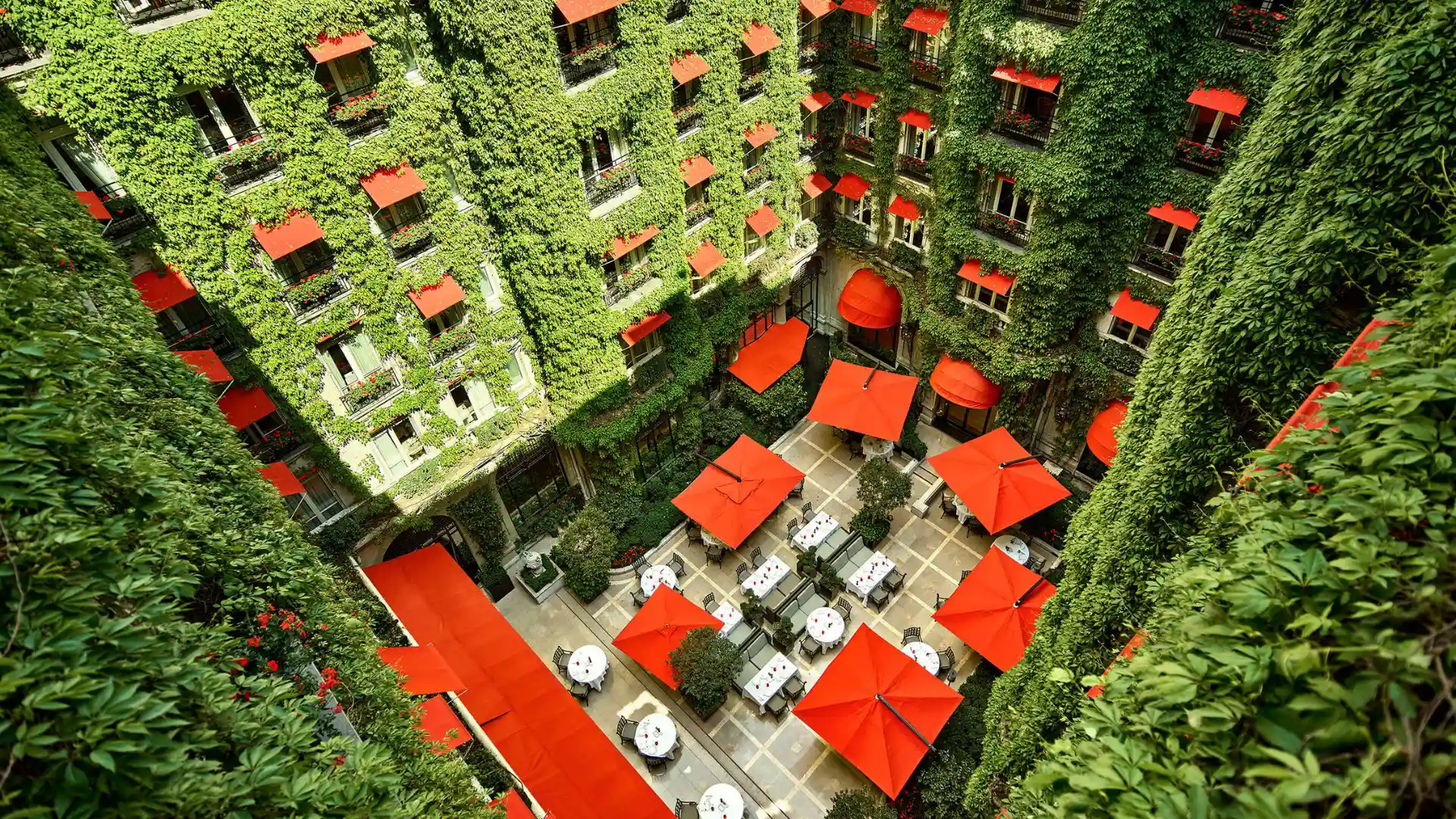
Le Jardin Français at Hôtel Plaza Athénée epitomizes haute couture elegance in terrace design. Nestled within a refined courtyard off Avenue Montaigne, the space is structured around symmetrical planting beds and tailored red awnings — a chromatic signature that reinforces brand identity.
Design Takeaways
- Architectural symmetry enhances visual calm and luxury perception.
- High-performance textiles in signature tones create cohesion.
- Layered greenery softens stone façades while preserving urban refinement.
This setting demonstrates how alfresco dining Paris balances grandeur and intimacy — a key lesson for luxury residential courtyards and boutique hospitality projects.
2. Girafe
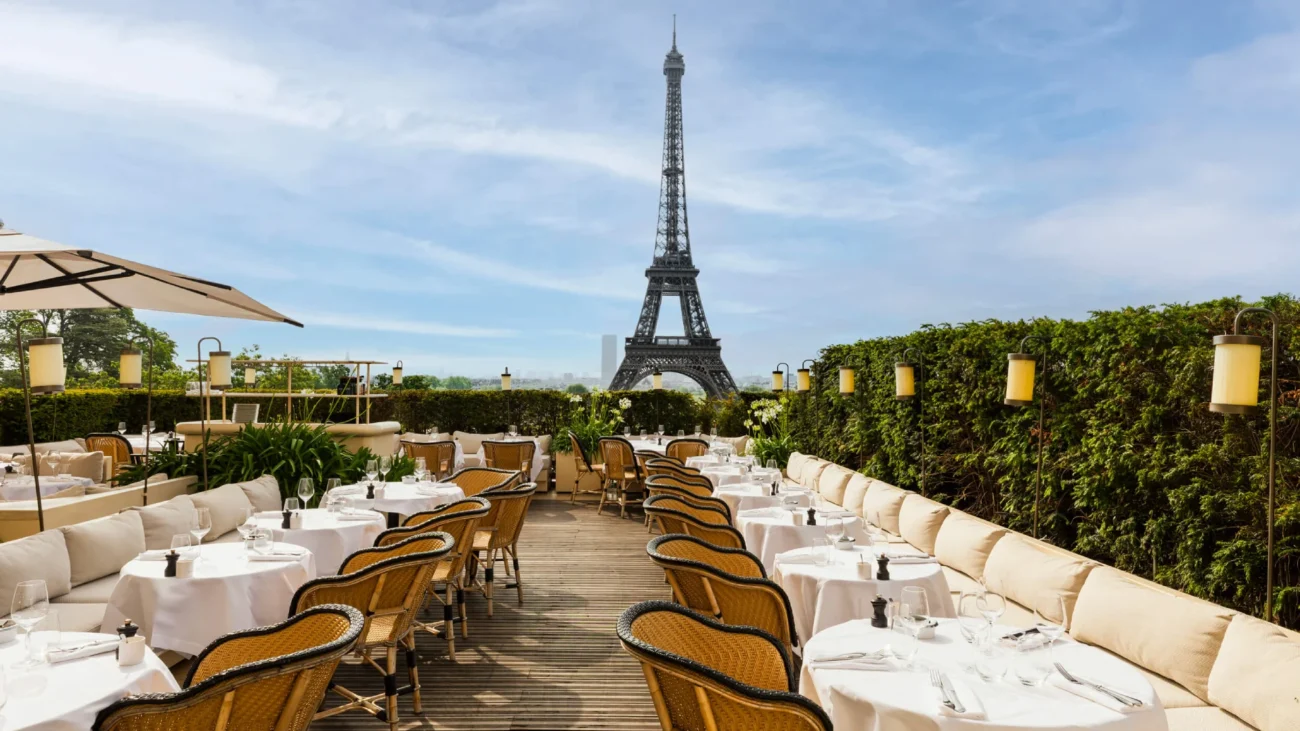
Overlooking the Eiffel Tower from Place du Trocadéro, Girafe transforms Paris outdoor dining into cinematic spectacle. Its expansive terrace employs pale stone, marine-inspired seating, and rhythmic colonnades to frame the skyline.
Design Takeaways
- Neutral palettes amplify panoramic views.
- Low-profile lounge seating maintains visual flow.
- Subtle brass accents introduce warmth without distraction.
For waterfront villas or penthouse terraces, this approach to Alfresco Design Ideas proves the power of restraint in dramatic contexts.
3. LouLou
Set within the Musée des Arts Décoratifs garden, LouLou merges Italian Riviera charm with Parisian precision. White parasols punctuate the landscape, while woven seating introduces texture against gravel and greenery.
Design Takeaways
- Natural fibers add tactile sophistication.
- Repetition of parasols creates rhythm and shade continuity.
- Integration with historic gardens elevates experiential value.
Among the city’s most photographed terraces, it remains a reference point for alfresco dining Paris that feels timeless yet contemporary.
4. Monsieur Bleu
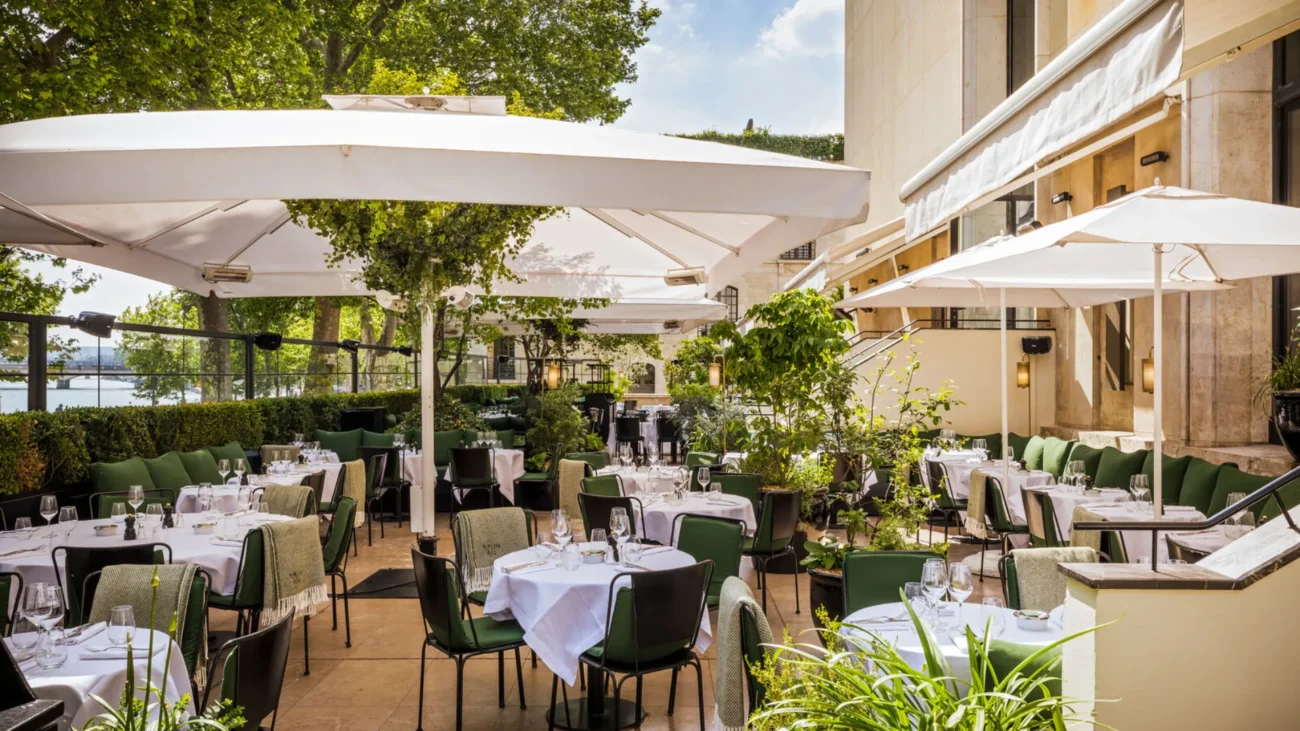
Inside the Palais de Tokyo, Monsieur Bleu presents a modernist terrace defined by sculptural seating and uninterrupted views of the Seine. Here, Paris outdoor dining becomes architectural theatre.
Design Takeaways
- Monochromatic schemes enhance architectural lines.
- Integrated lighting extends usability into evening hours.
- Generous circulation spaces support fluid social movement.
This terrace exemplifies how Alfresco Design Ideas can embrace bold contemporary forms while remaining welcoming.
5. Ralph’s Restaurant
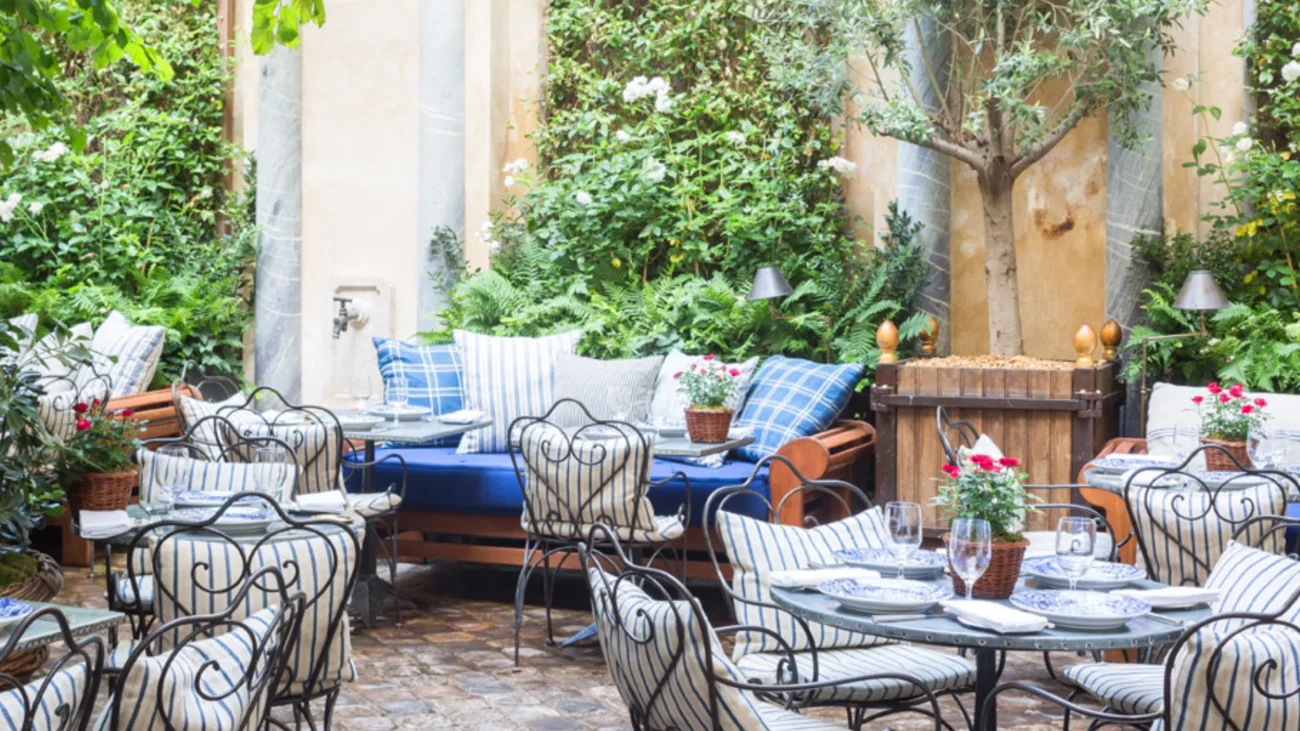
Hidden within a Left Bank courtyard, Ralph’s Restaurant offers a study in transatlantic elegance. Brick walls, climbing ivy, and classic bistro seating produce a layered, residential ambience.
Design Takeaways
- Climbing greenery adds vertical softness.
- Mixed materials — brick, wrought iron, wood — create heritage depth.
- Compact layouts encourage conviviality.
For townhouse gardens, this is alfresco dining Paris distilled into intimate charm.
6. Le Train Bleu
While famed for its Belle Époque interiors, Le Train Bleu also features select terrace moments that reinterpret classical opulence outdoors. Ornamental details meet polished stone surfaces, reinforcing Paris’s legacy of decorative artistry.
Design Takeaways
- Historic detailing can transition gracefully outdoors.
- Refined metalwork enhances authenticity.
- Lighting fixtures echo interior heritage themes.
For heritage properties, this approach to Paris outdoor dining illustrates continuity between eras.
7. Perruche
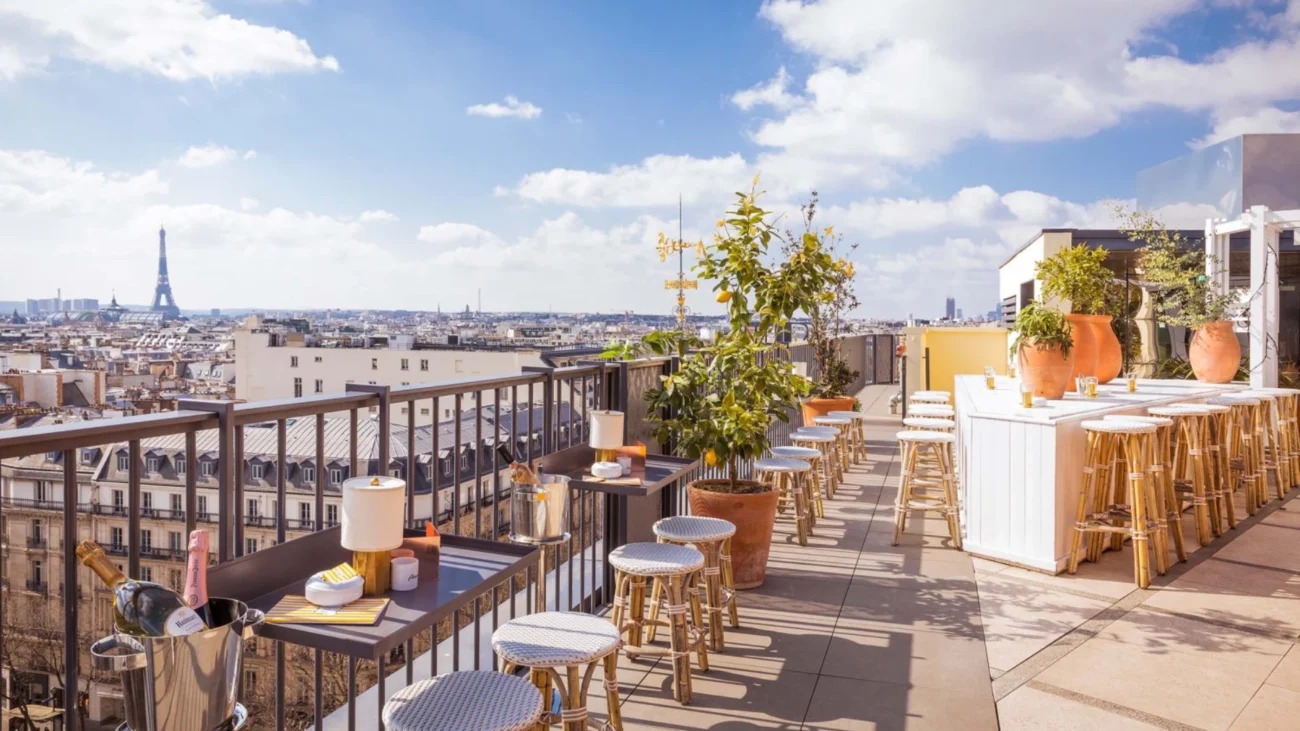
Perched atop Printemps Haussmann, Perruche offers Mediterranean-inflected alfresco dining Paris with abundant greenery, rattan furnishings, and sun-washed palettes.
Design Takeaways
- Rooftop planting fosters oasis-like privacy.
- Organic materials temper urban density.
- Flexible seating accommodates varied group sizes.
This rooftop setting provides dynamic Alfresco Design Ideas for contemporary mixed-use developments.
8. La Fontaine de Mars
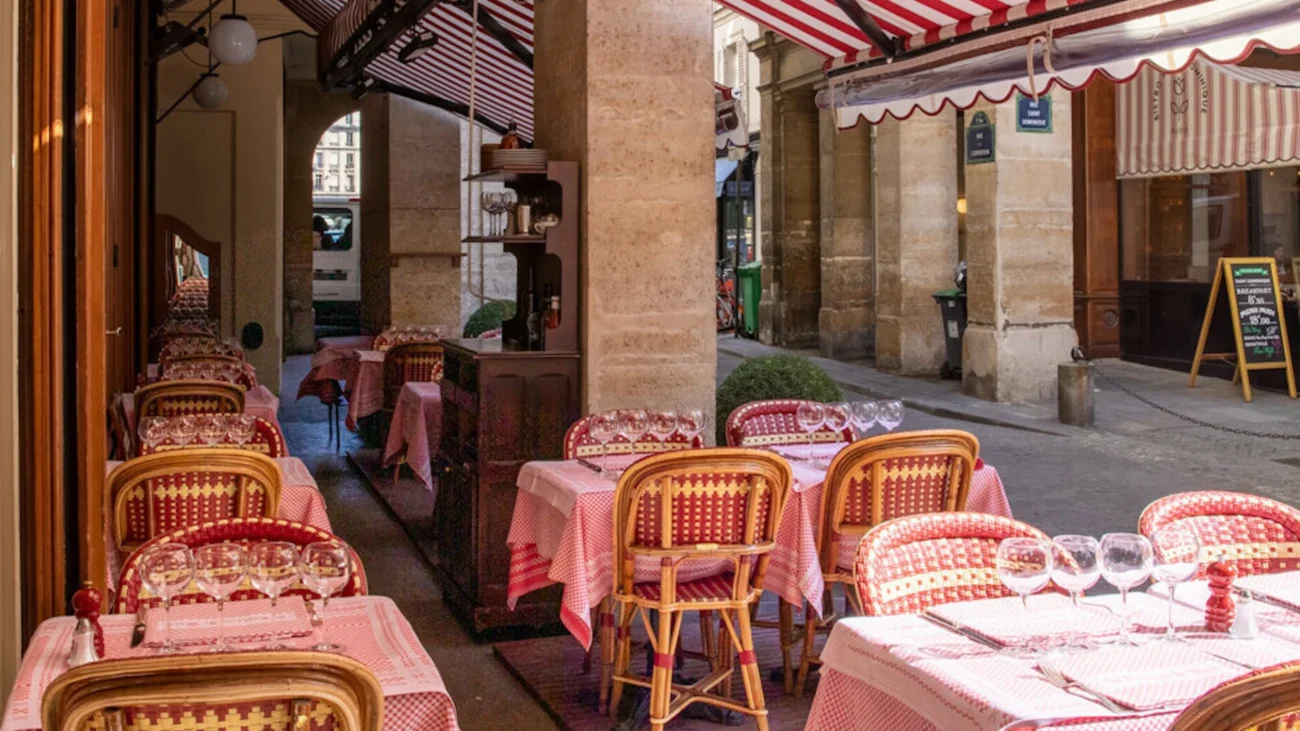
A quintessential 7th arrondissement bistro, La Fontaine de Mars embraces striped awnings, tightly arranged tables, and warm-toned façades.
Design Takeaways
- Awning stripes define brand identity.
- High table density encourages vibrancy.
- Traditional café chairs remain enduringly functional.
Few places capture the spontaneity of Paris outdoor dining with such authenticity.
9. Café de Flore
Legendary Café de Flore continues to shape global perceptions of alfresco dining Paris. Its sidewalk seating demonstrates the power of continuity — identical chairs, uniform table settings, and consistent alignment.
Design Takeaways
- Visual uniformity strengthens brand recognition.
- Compact furniture maximizes narrow pavements.
- Timeless silhouettes resist fleeting trends.
For urban hospitality ventures, these principles remain foundational Alfresco Design Ideas.
10. Les Ombres
Located atop the Musée du Quai Branly, Les Ombres offers panoramic Paris outdoor dining beneath retractable glass panels. The terrace merges advanced engineering with refined minimalism.
Design Takeaways
- Retractable roofing extends seasonal functionality.
- Glass barriers preserve views while ensuring safety.
- Neutral furnishings allow architecture to dominate.
This rooftop is a benchmark for contemporary alfresco dining Paris, where innovation enhances experience.
Strategic Lessons for Designers and Developers
Across these ten venues, several principles consistently define exceptional Paris outdoor dining environments:
- Contextual integration: Terraces respond to surrounding architecture and urban rhythm.
- Material authenticity: Stone, wrought iron, rattan, and linen reinforce sensory richness.
- Spatial layering: Planting, lighting, and furniture create depth and intimacy.
- Seasonal adaptability: Heaters, retractable roofs, and high-performance textiles extend usability.
- Brand coherence: Color palettes and furniture silhouettes reinforce identity.
According to the UNESCO Creative Cities Network, Paris’s designation as a City of Design reflects its enduring commitment to aesthetic excellence and urban innovation. This ethos permeates its terraces, where alfresco dining Paris operates as both social ritual and spatial experiment.
From Parisian Terrace to Global Inspiration
The terraces of Paris demonstrate that Paris outdoor dining is not an accessory to architecture — it is an extension of it. Each restaurant above reveals how thoughtful furniture selection, proportion, and environmental harmony transform outdoor space into immersive lifestyle theatre.
For architects shaping luxury residences, developers curating mixed-use projects, and designers envisioning elevated hospitality concepts, the lessons of alfresco dining Paris are clear: refinement lies in restraint, cohesion, and material intelligence. These iconic terraces provide enduring Alfresco Design Ideas that transcend geography, season, and trend — reaffirming that the most compelling outdoor environments are those where culture, comfort, and craftsmanship converge.