

Across the Middle East, a new generation of luxury resorts is transforming the relationship between architecture and outdoor living. Rather than relying solely on opulent interiors, these destinations prioritize immersive landscapes, climate-responsive design, and highly curated exterior environments. For outdoor designers, architects, and luxury design studios, the region has become an important laboratory for understanding how hospitality design can merge environmental sensitivity with contemporary luxury.
From desert retreats in Saudi Arabia to coastal resorts in Oman and the United Arab Emirates, these projects redefine outdoor living through pools, terraces, landscape integration, and architectural innovation. Each resort demonstrates how outdoor environments can become the defining feature of the guest experience.
Six Senses Zighy Bay
Located between dramatic mountains and the Gulf of Oman, Six Senses Zighy Bay remains one of the region’s most influential examples of landscape-integrated hospitality. Inspired by traditional Omani villages, the resort uses natural stone, timber, and shaded courtyards to create a highly immersive outdoor environment.
The spatial planning prioritizes privacy and openness simultaneously. Villas feature private pools, outdoor showers, and expansive terraces framed by mountain views. Pathways weave organically through palm groves and gardens, encouraging slow movement across the property.
For designers, the project demonstrates how vernacular architecture and luxury outdoor living can coexist seamlessly.
Anantara Al Jabal Al Akhdar Resort
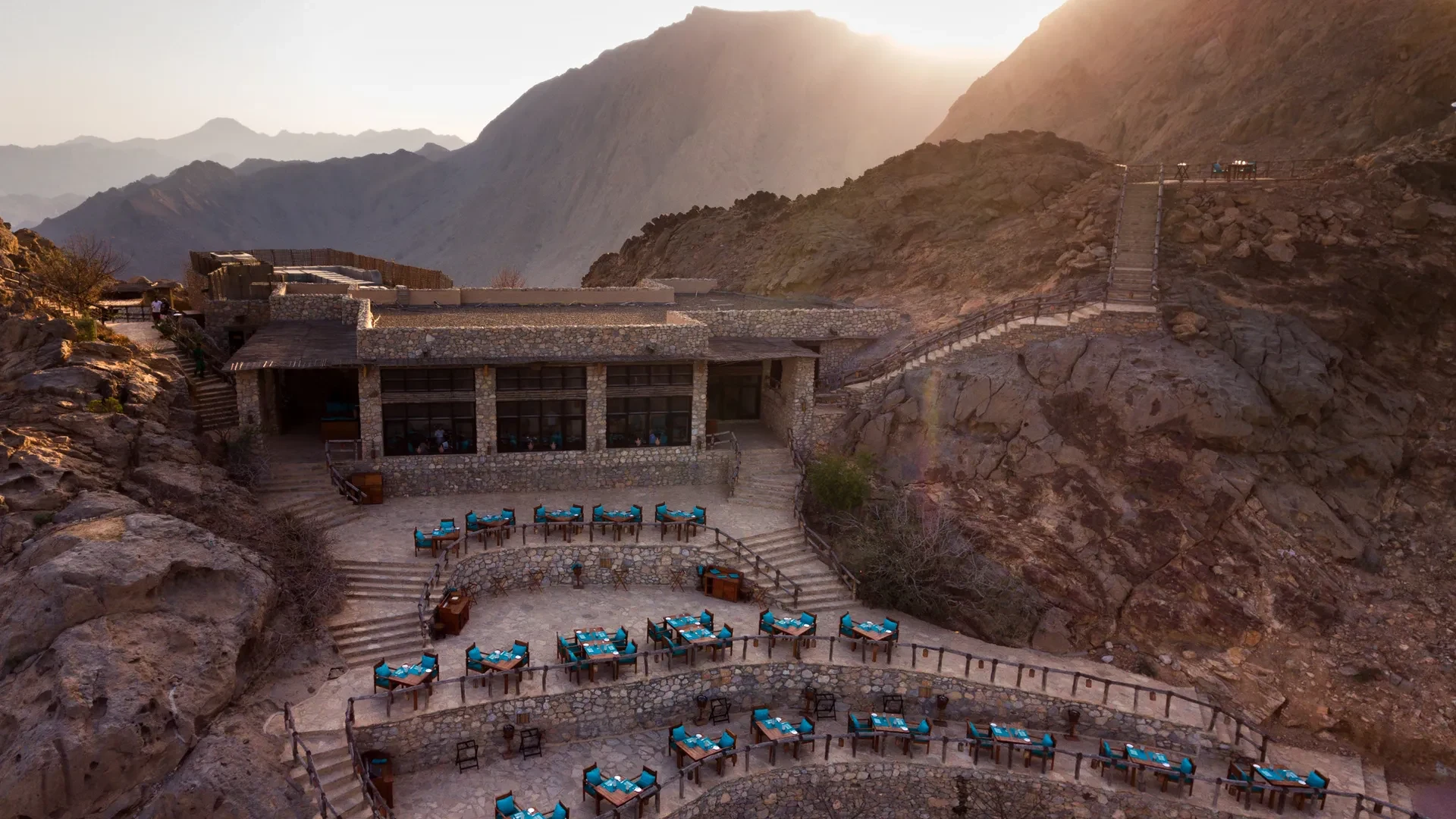
Perched more than 2,000 meters above sea level, Anantara Al Jabal Al Akhdar is among the highest luxury resorts in the Middle East. Designed by Atelier Pod, the resort integrates architecture directly into the canyon landscape of Oman’s Green Mountain.
Key outdoor design features include:
- Cliff-edge terraces overlooking dramatic canyon views
- Infinity pools integrated into the mountain horizon
- Open-air courtyards inspired by Omani architecture
- Shaded outdoor lounges enhancing thermal comfort
- Landscape planning that preserves the natural terrain
The project illustrates how topography can become a central architectural asset within luxury hospitality design.
Shebara Resort
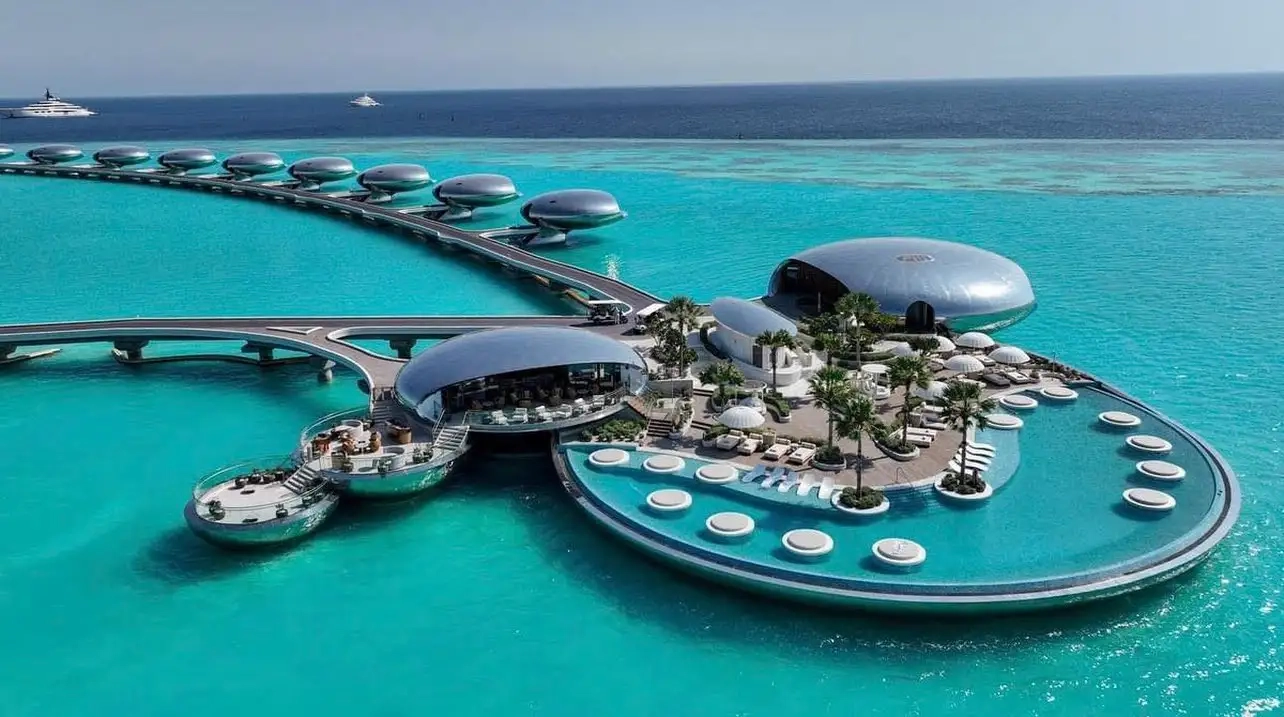
Situated on Sheybarah Island along Saudi Arabia’s Red Sea coast, Shebara Resort introduces a futuristic approach to outdoor hospitality. Designed by Killa Design, the resort features reflective overwater villas inspired by the appearance of floating pearls.
The resort’s architecture dissolves visually into the surrounding sea and sky, creating an extraordinary relationship between built form and environment. Outdoor circulation, terraces, and ocean-facing decks become central experiential elements rather than secondary amenities.
Importantly, the project also integrates sustainability through solar infrastructure and water treatment systems, reinforcing how contemporary luxury resorts increasingly combine environmental responsibility with design innovation.
Banyan Tree AlUla
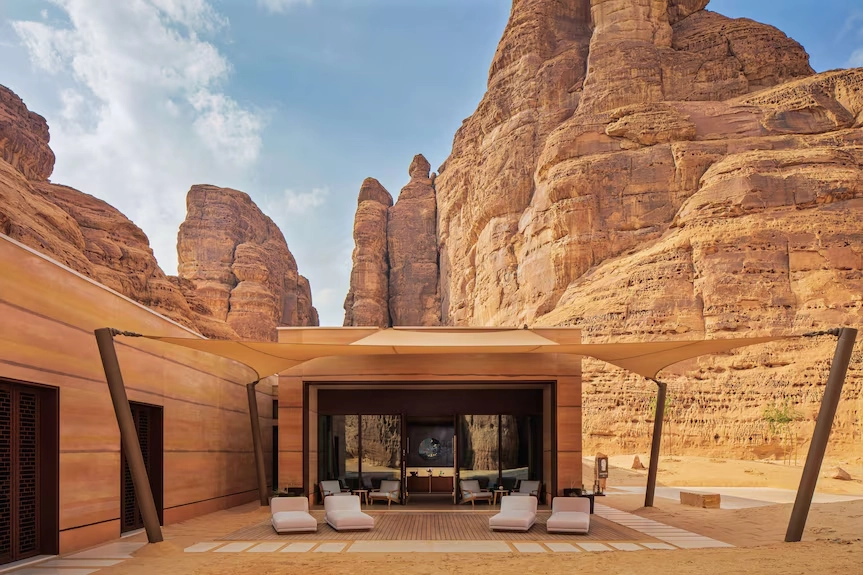
Set within the sandstone landscapes of Ashar Valley, Banyan Tree AlUla demonstrates how outdoor living can be shaped through restraint and contextual sensitivity. Designed by AW2 Architecture & Interiors, the resort draws inspiration from Bedouin traditions while maintaining a contemporary architectural language.
Outdoor environments play a defining role throughout the property. Open-air pathways, shaded courtyards, and expansive terraces blur the distinction between architecture and desert landscape.
Key spatial strategies include:
- Villas integrated carefully into the surrounding terrain
- Outdoor lounges positioned for sunset and canyon views
- Use of natural textures reflecting the desert palette
- Breezeways supporting passive cooling and airflow
- Furniture layouts extending living into open-air environments
This project highlights how subtle architectural gestures can produce deeply immersive outdoor experiences.
Al Wathba, a Luxury Collection Desert Resort & Spa
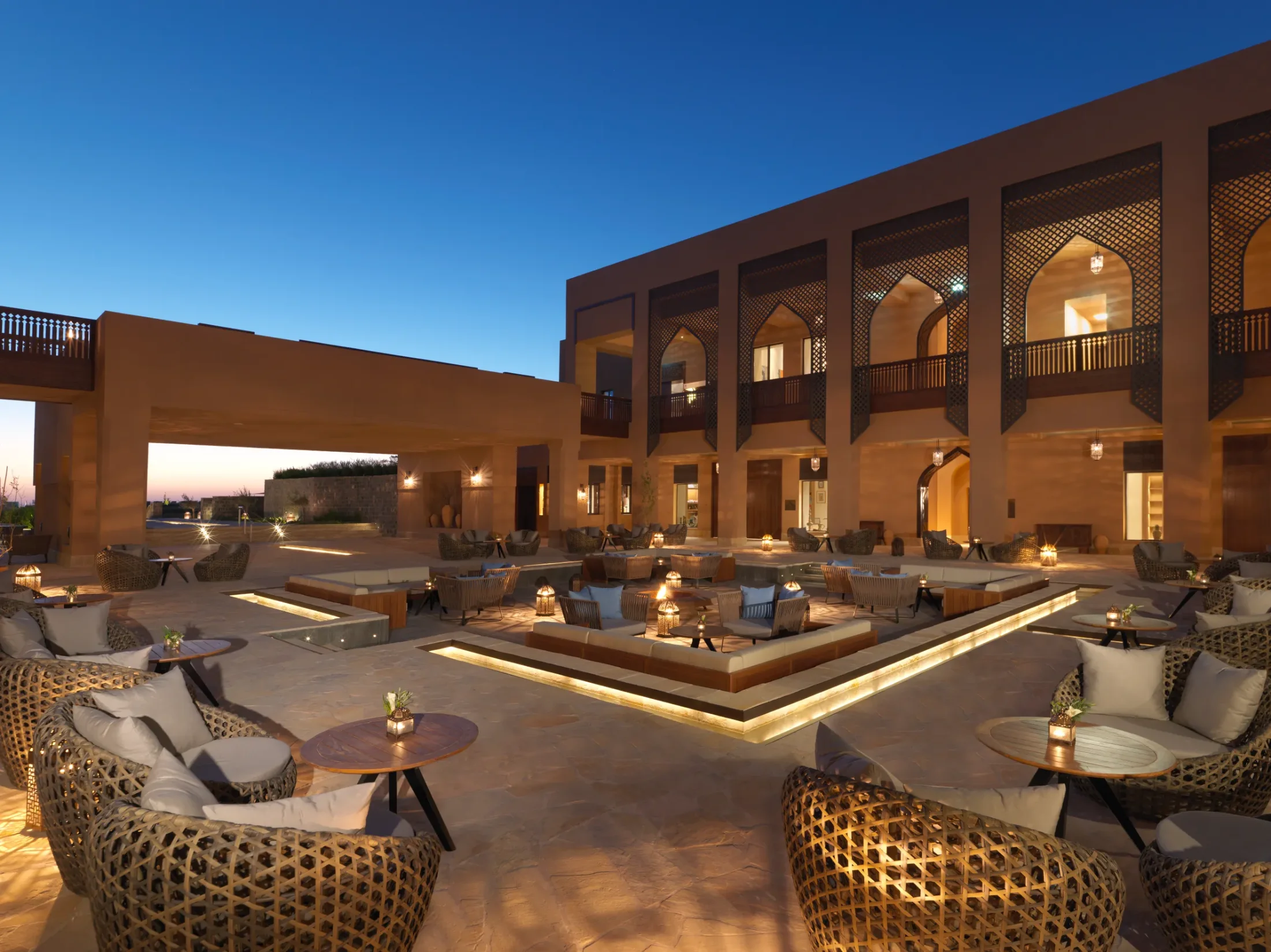
Located within the desert landscape outside Abu Dhabi, Al Wathba reinterprets traditional Bedouin architecture through a contemporary hospitality lens. The resort combines intimate courtyards, shaded pathways, and private terraces to create highly atmospheric outdoor environments.
The villas are particularly notable for their relationship with outdoor living. Private plunge pools, broad terraces, and sunbathing pavilions create layered exterior experiences that remain comfortable despite the desert climate.
This climate-responsive approach demonstrates how luxury resorts in the Middle East increasingly use architectural planning to support outdoor comfort and long-term environmental performance.
Climate-Responsive Outdoor Design in the Middle East
One reason these luxury resorts stand out internationally is their sophisticated response to climate. Extreme temperatures and intense sunlight require outdoor spaces to be carefully engineered for comfort without compromising visual elegance.
Common regional strategies include:
- Deep overhangs and shaded terraces
- Courtyards enhancing passive cooling
- Reflective materials reducing heat absorption
- Water features creating localized cooling effects
- Landscape integration supporting natural ventilation
These principles allow outdoor environments to remain functional and inviting throughout the year.
The Role of Landscape Architecture
Landscape design has become central to contemporary resort development across the Middle East. Rather than functioning as decorative additions, landscapes now shape circulation, privacy, and atmosphere.
In coastal resorts, planting frames ocean views while softening architectural forms. In desert environments, native vegetation and terrain-sensitive planning create immersive experiences rooted in local geography.
For outdoor designers and architects, these resorts demonstrate how landscape architecture can become a structural component of hospitality design rather than a secondary layer.
Outdoor Furniture and Spatial Experience
Furniture selection also plays a major role in defining the outdoor identity of luxury resorts. Across these projects, furniture is used to organize social interaction, frame views, and reinforce architectural character.
Contemporary resort environments frequently incorporate:
- Modular lounge systems for flexible layouts
- Low-profile seating enhancing openness
- Natural materials such as teak and stone
- Neutral fabrics reflecting desert and coastal palettes
- Custom outdoor pieces integrated into architecture
These elements create cohesive spaces where furniture feels inseparable from the surrounding environment.
The Future of Outdoor Hospitality in the Middle East
The next generation of luxury resorts in the Middle East will likely continue emphasizing sustainability, environmental integration, and sensory experience. Rather than pursuing visual excess, future projects are increasingly focused on emotional connection, wellness, and landscape immersion.
This evolution is reshaping hospitality design globally. Resorts are no longer defined only by interior luxury but by how effectively they engage guests with climate, nature, and outdoor living.
For luxury design studios and architects, the Middle East now offers some of the world’s most ambitious and innovative examples of outdoor hospitality design.
Conclusion
These five luxury resorts demonstrate how outdoor living has become central to contemporary hospitality architecture in the Middle East. Through climate-responsive planning, landscape integration, and refined material palettes, they create immersive environments that redefine luxury beyond interiors alone.
For outdoor designers, architects, and luxury studios, these projects offer valuable insight into the future of resort design. They show how architecture and landscape can work together to create destinations where outdoor experience becomes the true measure of luxury.