
Barcelona stands as one of Europe’s most visually compelling destinations for outdoor designers, architects, and luxury design studios. The city blends Mediterranean climate, bold architectural identity, and a deep connection between built space and landscape. From sculptural parks to iconic buildings that reshape urban experience, Barcelona offers a curated environment where design and nature coexist with intention.
For professionals in outdoor design and furniture, the city presents a powerful combination of form, material innovation, and spatial storytelling. These five landmarks capture the essence of Barcelona’s design culture and offer rich inspiration for contemporary projects.
1. Park Güell
Park Güell ranks among the most recognizable landmarks in Barcelona, designed by Antoni Gaudí. Originally conceived as a residential development, it evolved into a public park that merges architecture with landscape in a highly expressive way.
The park’s organic forms, mosaic surfaces, and integrated seating redefine how outdoor spaces function. The serpentine bench, covered in colorful ceramic fragments, demonstrates how furniture can become part of the terrain rather than a separate element. Designers can observe how curvature enhances comfort while also guiding movement through space.
Material experimentation plays a central role. Gaudí used trencadís, a technique that repurposes broken tiles, to create texture and reflect light. This approach remains relevant for sustainable outdoor design and custom furniture concepts.
The park also shows how topography shapes design decisions. Elevated pathways, terraces, and viewpoints create layered spatial experiences while maintaining strong visual connections to the city.
2. Sagrada Família
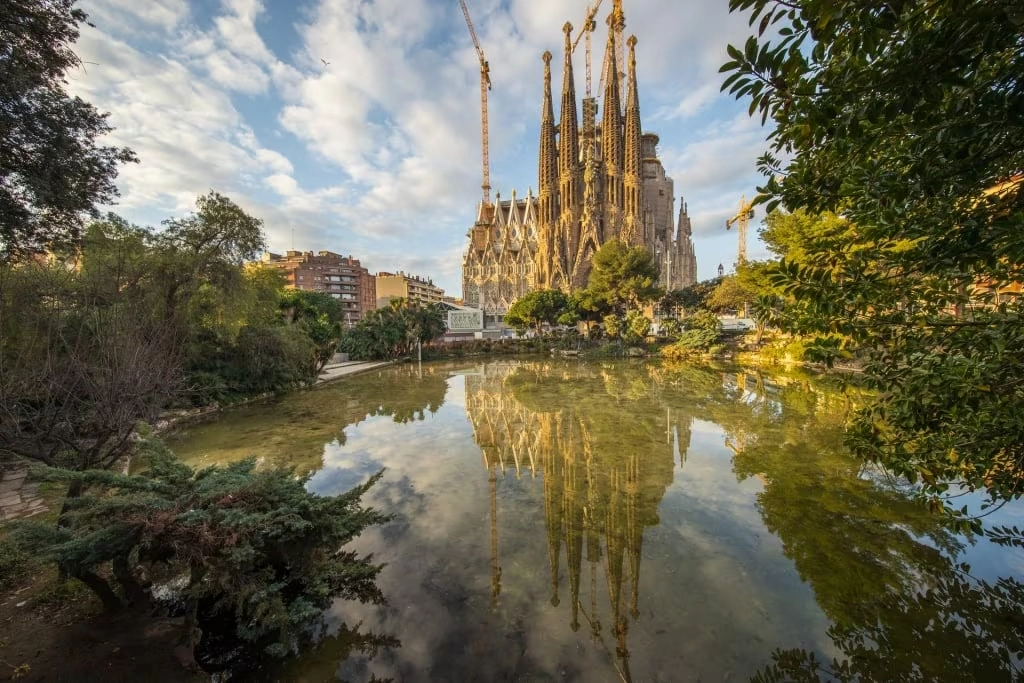
The Sagrada Família stands as a defining symbol of Barcelona’s architectural identity. Designed by Antoni Gaudí, this basilica blends structural innovation with natural inspiration.
For architects and outdoor designers, the surrounding plazas and façades offer valuable insight into how monumental architecture interacts with public space. The building’s verticality contrasts with open gathering areas, creating a dynamic relationship between scale and human movement.
Gaudí drew heavily from nature when shaping columns, facades, and ornamentation. Tree-like structures branch upward, while stone surfaces carry intricate textures that echo organic forms. This connection between natural geometry and built structure continues to influence contemporary architecture.
Lighting also plays a critical role. The interplay between sunlight and material surfaces transforms the building throughout the day, reinforcing the importance of orientation and environmental response in design.
3. Montjuïc Park
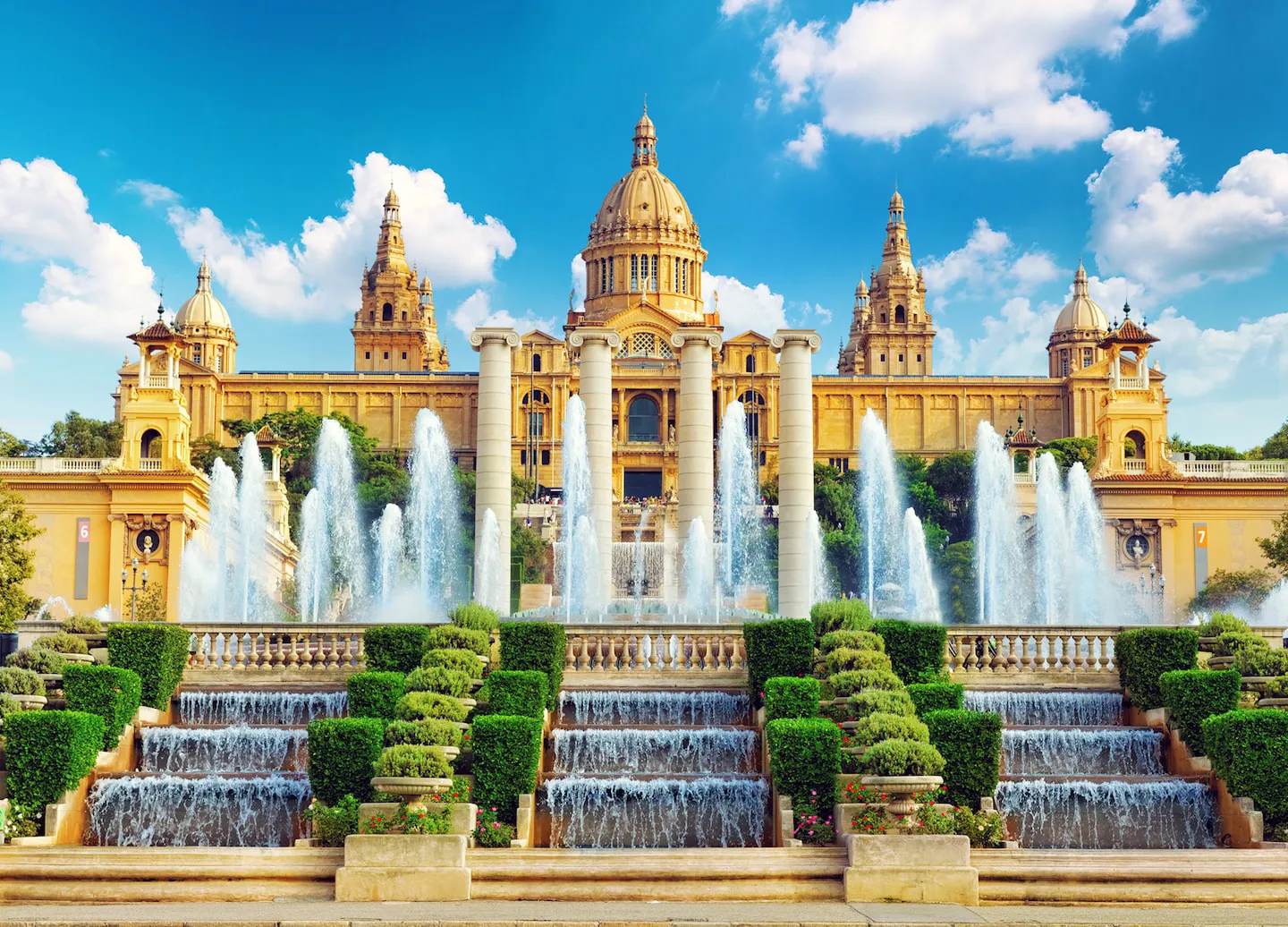
Montjuïc Park offers a large-scale example of how landscape, architecture, and cultural programming come together. Located on a hill overlooking the city, the park includes gardens, museums, and historic structures that create a diverse outdoor environment.
For outdoor designers, Montjuïc demonstrates how zoning and circulation can shape user experience. Pathways connect different areas seamlessly, encouraging exploration while maintaining clear spatial organization.
The park features several distinct garden styles, including Mediterranean plantings, formal layouts, and sculptural landscaping. This diversity highlights how plant selection and composition influence atmosphere and function.
Key architectural elements such as the National Art Museum of Catalonia and the Magic Fountain add layers of visual interest. These structures integrate with the landscape rather than dominating it, creating a balanced relationship between built and natural elements.
Furniture placement throughout the park supports both rest and social interaction. Benches, terraces, and open spaces reflect thoughtful planning that prioritizes comfort and usability.
4. Casa Batlló
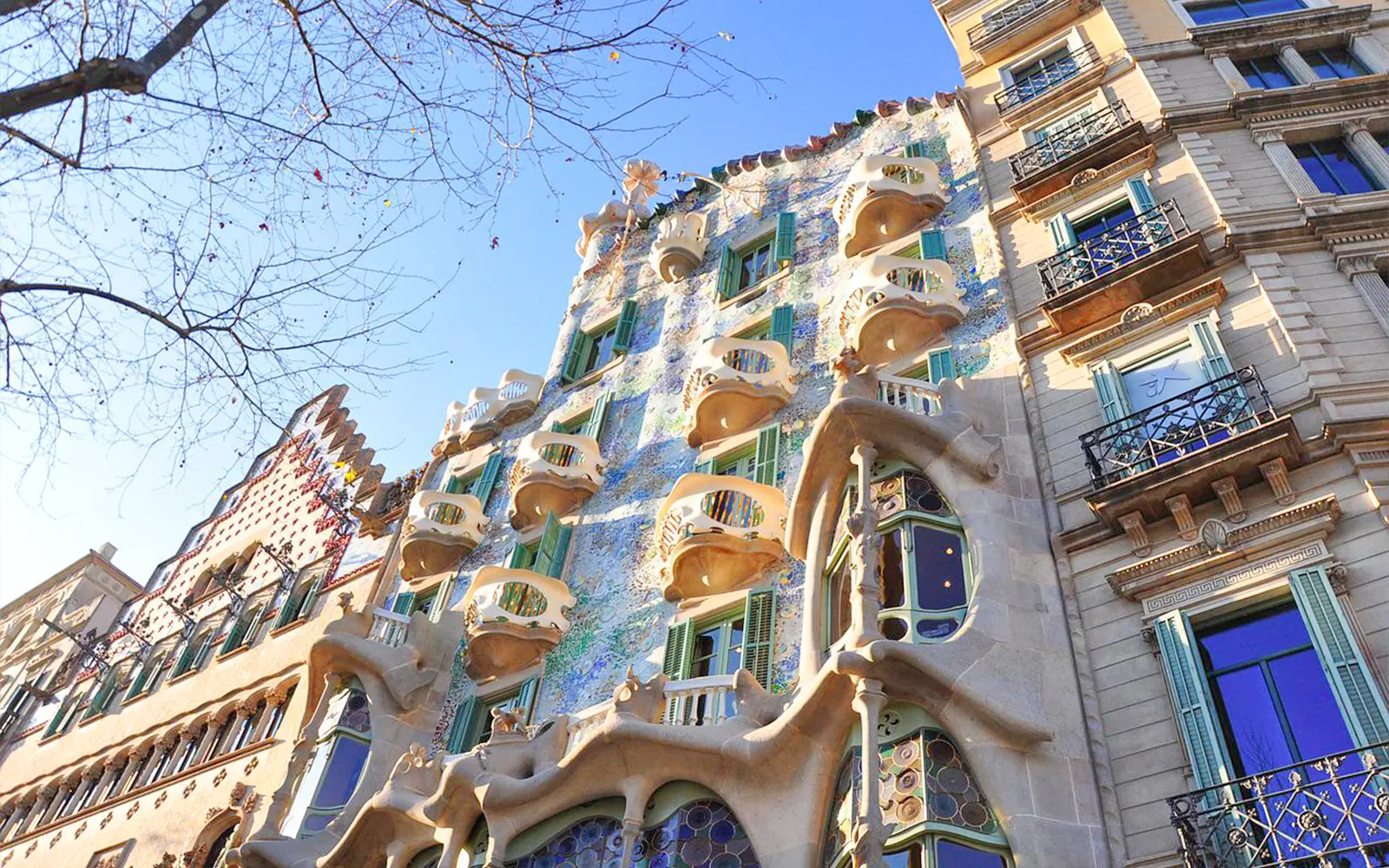
Casa Batlló, another masterpiece by Antoni Gaudí, transforms a residential building into a sculptural landmark. While primarily known for its interior, the façade and exterior spaces offer significant inspiration for outdoor and architectural design.
The building’s flowing lines and vibrant surfaces challenge conventional geometry. Balconies resemble organic forms, while the roofline mimics natural contours. This approach encourages designers to rethink how structures relate to their surroundings.
Materiality remains central. Glass, ceramic, and stone combine to create depth and movement. The façade changes appearance depending on light conditions, demonstrating how surface treatment can influence perception.
Although Casa Batlló sits within an urban setting, it maintains a strong connection to nature through form and color. This balance between density and expression offers valuable insight for high-end residential and hospitality projects.
5. Parc de la Ciutadella
Parc de la Ciutadella provides a more classical interpretation of landscape design while still reflecting Barcelona’s creative identity. As one of the city’s main green spaces, it combines open lawns, water features, and architectural elements.
The park’s central fountain, designed with contributions from a young Antoni Gaudí, acts as a focal point. Sculptural details and cascading water create a strong visual anchor within the landscape.
For outdoor designers and furniture brands, the park demonstrates how traditional layouts can remain relevant when combined with thoughtful detailing. Pathways, seating areas, and shaded zones support a wide range of activities, from relaxation to social gatherings.
The integration of water features adds sensory depth. Sound, reflection, and movement enhance the overall experience, reinforcing the importance of multi-sensory design in outdoor environments.
Tree-lined avenues and open clearings create contrast, allowing users to move between intimate and expansive spaces. This balance supports both functionality and aesthetic appeal.
Barcelona as a Living Design Laboratory
Barcelona continues to attract global attention because it treats public space as an extension of architectural identity. The city’s landmarks reflect a commitment to creativity, craftsmanship, and urban integration.
For outdoor designers and architects, Barcelona offers a clear perspective on how to balance form, function, and environment. Materials respond to climate, structures engage with their surroundings, and landscapes support human interaction.
Furniture design also plays a key role. Integrated seating, custom elements, and durable materials appear across parks and public areas. These details show how outdoor furniture contributes to the overall spatial narrative.
Experiencing Design Through Movement
Exploring these landmarks on foot allows designers to fully understand their spatial relationships. Barcelona’s walkable layout encourages close observation of textures, transitions, and proportions.
Each landmark reveals a different approach to design. Park Güell emphasizes organic integration, Sagrada Família highlights structural expression, Montjuïc Park showcases large-scale planning, Casa Batlló explores artistic form, and Parc de la Ciutadella balances tradition with functionality.
Together, they form a cohesive design ecosystem that continues to influence global architecture and outdoor design.
A Destination Defined by Creativity and Craft
Barcelona remains one of the most inspiring cities for professionals in outdoor design, furniture, and architecture. Its landmarks demonstrate how bold ideas can shape environments that feel both functional and expressive.
For luxury design studios and brands, the city offers more than inspiration. It provides a clear vision of how design can enhance everyday life through thoughtful integration of space, material, and form.
These landmarks in Barcelona capture the essence of that vision, making the city an essential destination for those who design the spaces where people live, gather, and connect.