
Around the world, some of the most inspiring landscapes sit behind gates that once belonged only to private estates. Today, many of these Private Gardens welcome visitors for limited seasons, guided tours, or curated events. For outdoor designers, furniture brands, architects, and luxury design studios, these gardens offer more than a pleasant walk. They serve as living laboratories for landscape composition, outdoor architecture, planting design, and garden furniture placement.
Unlike public parks, Private Gardens often reflect a single creative vision. Estate owners, landscape architects, and horticulturalists shape these landscapes over decades. The result is a level of intentionality and craftsmanship that design professionals can study closely.
This travel guide highlights some of the most beautiful private gardens in the world that now open their gates to visitors. Each offers powerful lessons in spatial rhythm, planting strategy, and outdoor design culture.
Why Private Gardens Matter to Outdoor Designers
Many landscape architects and outdoor designers visit Private Gardens to understand how great landscapes evolve. Private estates usually develop slowly, with careful experimentation in planting combinations, materials, pathways, water features, and architectural structures.
These gardens provide insight into:
- long-term landscape composition
- integration of outdoor architecture and planting
- use of sculpture, pavilions, and garden furniture
- seasonal design planning
- relationships between house, garden, and surrounding land
For luxury design studios and furniture brands, estate gardens also demonstrate how outdoor environments shape lifestyle narratives. Terraces, pergolas, and shaded seating areas often reveal how people actually inhabit outdoor space.
The Most Beautiful Private Gardens Open to Visitors
1. Hidcote Manor Garden
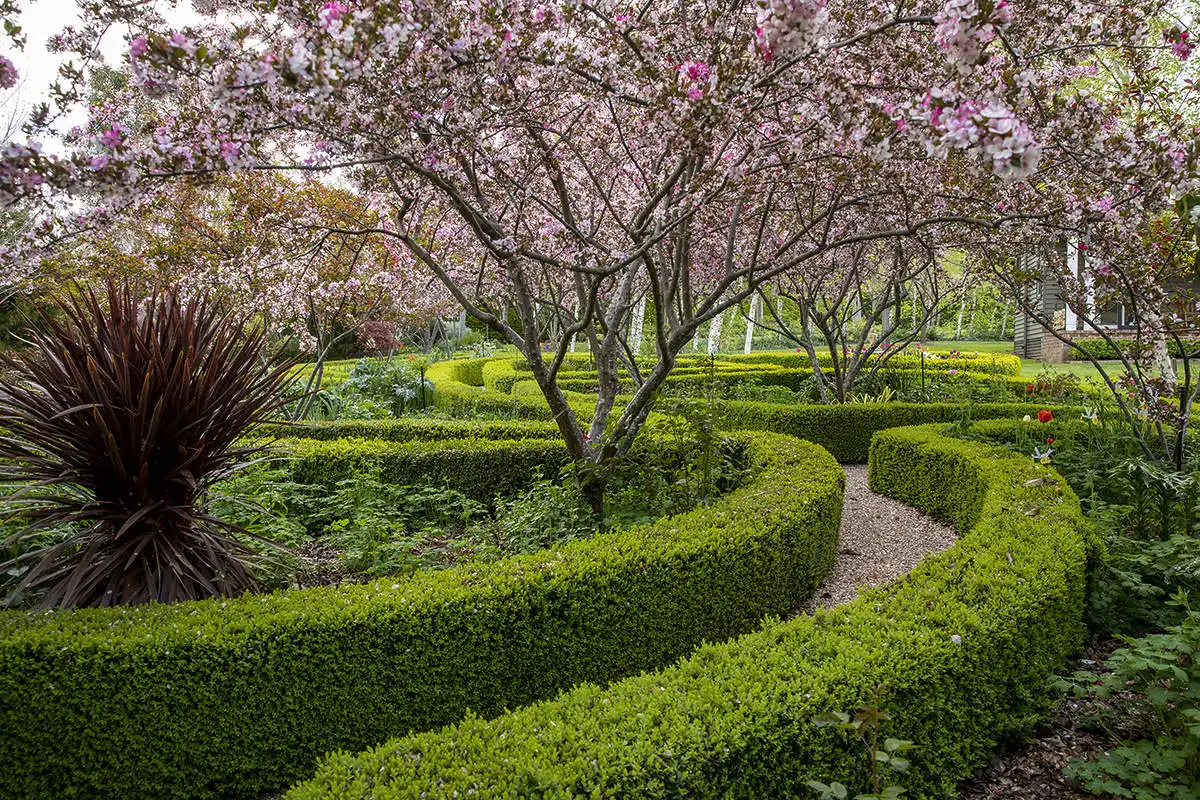
Few Private Gardens have influenced modern landscape design as strongly as Hidcote Manor Garden. American horticulturist Lawrence Johnston created this Arts and Crafts masterpiece in the early twentieth century.
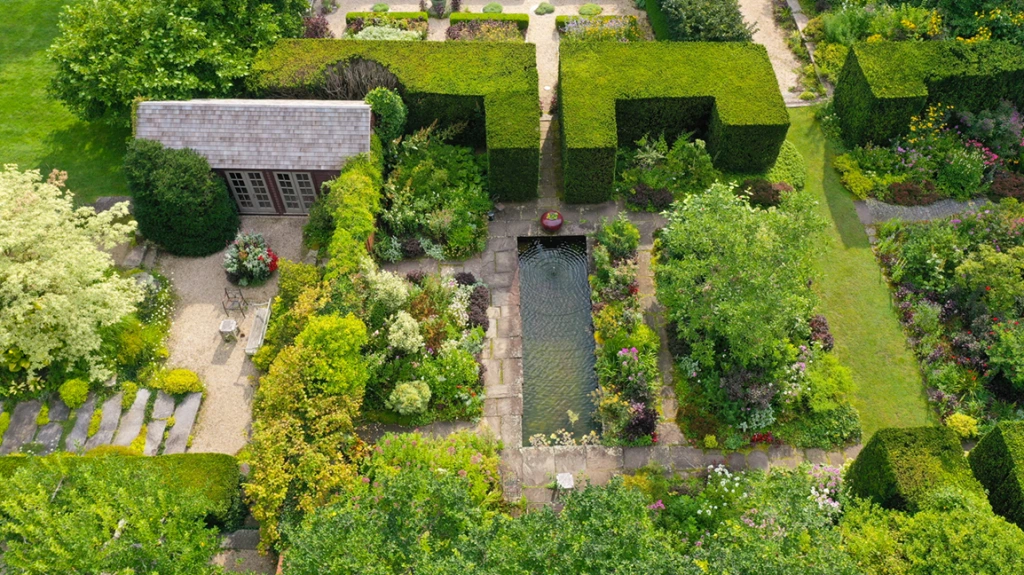
Hidcote introduced the concept of outdoor “rooms.” Instead of one large open landscape, Johnston designed a sequence of smaller spaces connected by hedges, pathways, and sightlines.
Design professionals still study Hidcote for several reasons:
- geometric hedged garden rooms
- dramatic axial views and garden transitions
- layered planting palettes
- strategic use of color and texture
Outdoor designers can also observe how structural elements—walls, gates, benches, and pergolas—create rhythm throughout the landscape.
2. Sissinghurst Castle Garden
Created by writer Vita Sackville-West and diplomat Harold Nicolson, Sissinghurst remains one of the most celebrated Private Gardens in the world.
The garden blends romantic planting with disciplined structure. Nicolson designed the spatial framework, while Sackville-West curated the plants.
The famous “White Garden” demonstrates the power of a controlled palette. Designers can study how variations in foliage, texture, and light create depth even without strong color contrasts.
Key design lessons include:
- structured garden rooms anchored by architecture
- strong vertical elements such as towers and trellises
- layered perennial planting
- carefully framed views across the estate
For luxury outdoor designers, Sissinghurst proves that emotional atmosphere often matters as much as botanical complexity.
3. Garden of Ninfa
The Garden of Ninfa stands among the most romantic Private Gardens in Europe. Built within the ruins of a medieval town, the landscape merges historical architecture with lush planting.
Italian aristocrats of the Caetani family transformed the abandoned site into a garden during the twentieth century. Today, visitors can explore the landscape on selected open days.
Designers often visit Ninfa to study:
- integration of historic ruins into planting design
- water channels and reflective ponds
- naturalistic planting strategies
- dramatic seasonal flowering displays
The garden also demonstrates how architecture can remain partially “ruined” while still supporting a refined landscape composition.
4. Les Jardins du Manoir d’Eyrignac
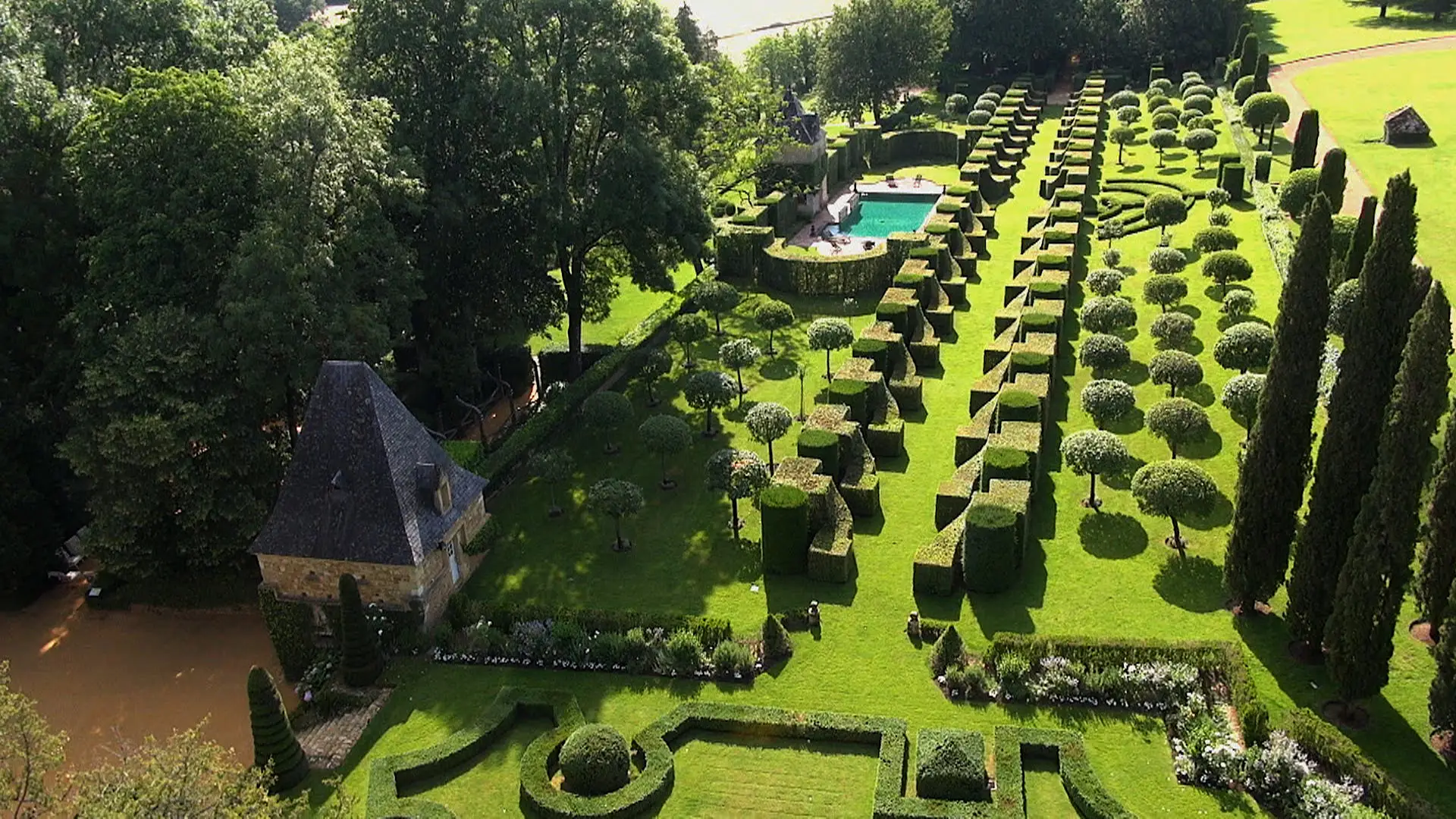
For designers who appreciate formal landscape architecture, the gardens at Eyrignac offer one of the most elegant examples among Private Gardens open to visitors.
These gardens emphasize precision. Hundreds of sculpted yews and boxwood hedges define the landscape with geometric clarity. Long axial paths lead through outdoor rooms shaped entirely by topiary.
Outdoor professionals can study:
- advanced topiary design techniques
- symmetrical garden planning
- visual axes and perspective control
- integration of terraces and garden furniture
Eyrignac also shows how disciplined greenery alone can create luxury without relying on abundant flowers.
5. Highgrove Gardens
Highgrove Gardens, created under the guidance of Charles III, represent one of the most influential modern examples of Private Gardens focused on sustainability and organic horticulture.
The gardens emphasize ecological balance, native plants, and biodiversity while maintaining strong visual elegance.
Designers visiting Highgrove often analyze:
- organic garden design principles
- naturalistic planting systems
- wildlife-supporting landscapes
- handcrafted garden structures and furniture
Highgrove demonstrates how environmentally responsible design can still achieve the highest levels of aesthetic refinement.
6. Villa del Balbianello Gardens
Although famous for its cinematic setting, the gardens of Villa del Balbianello remain one of Italy’s most dramatic Private Gardens open to visitors.
Terraces cascade down toward Lake Como, creating powerful visual connections between architecture, landscape, and water. Sculpted trees frame the views and guide the visitor’s experience.
Designers study this garden for:
- terraced landscape architecture
- dramatic framing of views
- sculptural tree training
- integration of historic architecture with outdoor rooms
Luxury outdoor designers often draw inspiration from Balbianello when designing lakefront properties and hillside gardens.
Why Furniture Brands and Luxury Studios Visit Private Gardens
For furniture designers and outdoor brands, Private Gardens provide a unique testing ground for understanding scale and environment.
Garden benches, sculptural chairs, and outdoor dining tables must function within real landscapes. Observing historic estate gardens helps brands understand:
- appropriate furniture placement in large landscapes
- relationships between furniture and architecture
- durability requirements for outdoor materials
- color and finish strategies that complement planting
Many iconic garden furniture designs originally emerged from estate landscapes similar to these.
The Beauty in the Private
The world’s most beautiful Private Gardens offer more than scenic beauty. They reveal how landscape architecture evolves through vision, craftsmanship, and patience.
For outdoor designers, architects, furniture brands, and luxury design studios, visiting these gardens can sharpen design instincts and inspire new approaches to spatial storytelling.
From the structured garden rooms of Hidcote to the romantic ruins of Ninfa and the ecological landscapes of Highgrove, each estate demonstrates a different philosophy of outdoor design. Together they show why gardens remain one of the most powerful expressions of architecture, nature, and human creativity.