
In the world of high-end design, luxury outdoor spaces are no longer defined solely by layout or material selection—they are shaped by sensory experience. Among the most powerful yet often understated tools is textural contrast. For outdoor designers, architects, and luxury design studios, the ability to layer textures effectively can transform a visually appealing space into a deeply immersive environment.
Textural contrast introduces depth, rhythm, and tactile richness. It allows materials to interact, surfaces to come alive under changing light, and users to engage with the space on a more intuitive level. As a result, outdoor environments feel curated rather than composed, refined rather than decorative.
The Role of Texture in Contemporary Outdoor Design
Texture operates as a fundamental design language in luxury outdoor spaces. While color and form establish the visual framework, texture adds complexity and nuance. It influences how surfaces reflect light, how materials age, and how users physically interact with the environment.
In contemporary design, the focus has shifted toward authenticity. Natural materials such as stone, wood, and metal are selected not only for durability but also for their inherent textural qualities. Smooth finishes are balanced with rough surfaces, creating a dialogue that enhances spatial perception.
This layered approach ensures that outdoor spaces remain engaging throughout the day, responding dynamically to light, shadow, and movement.
Balancing Rough and Refined Surfaces
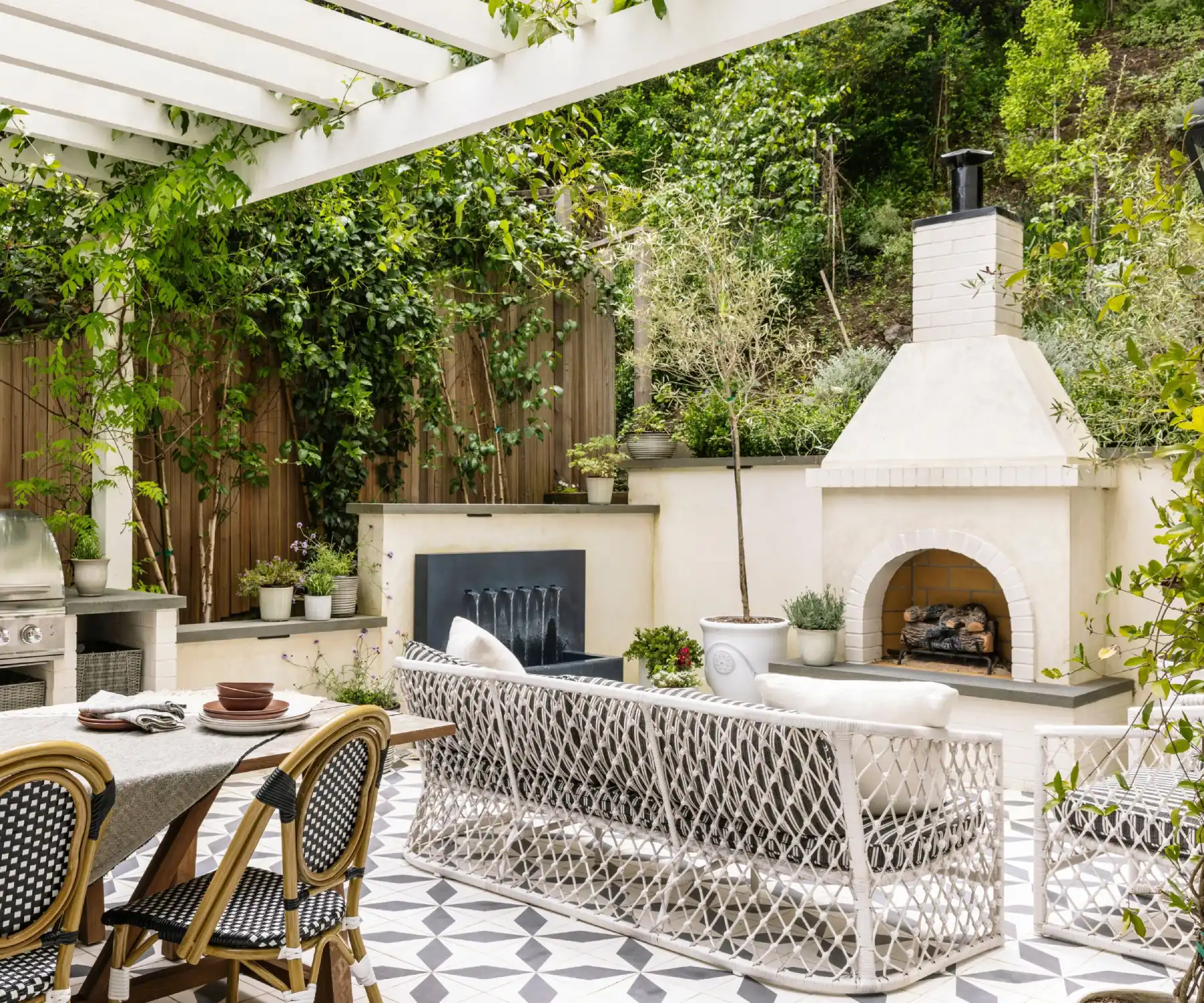
One of the most effective ways to introduce textural contrast is by pairing rough and refined materials. This juxtaposition creates visual tension while maintaining overall harmony.
Key strategies include:
- Combining honed stone flooring with raw stone walls
- Pairing smooth concrete surfaces with textured timber elements
- Integrating polished metal details against natural materials
- Using soft textiles to offset rigid architectural forms
- Contrasting matte finishes with subtle reflective surfaces
These combinations allow designers to highlight the unique qualities of each material while creating a cohesive and balanced composition.
Layering Materials for Depth and Dimension
In luxury outdoor spaces, layering materials is essential for achieving depth. Rather than relying on a single dominant material, designers create compositions that unfold gradually, revealing different textures across planes and zones.
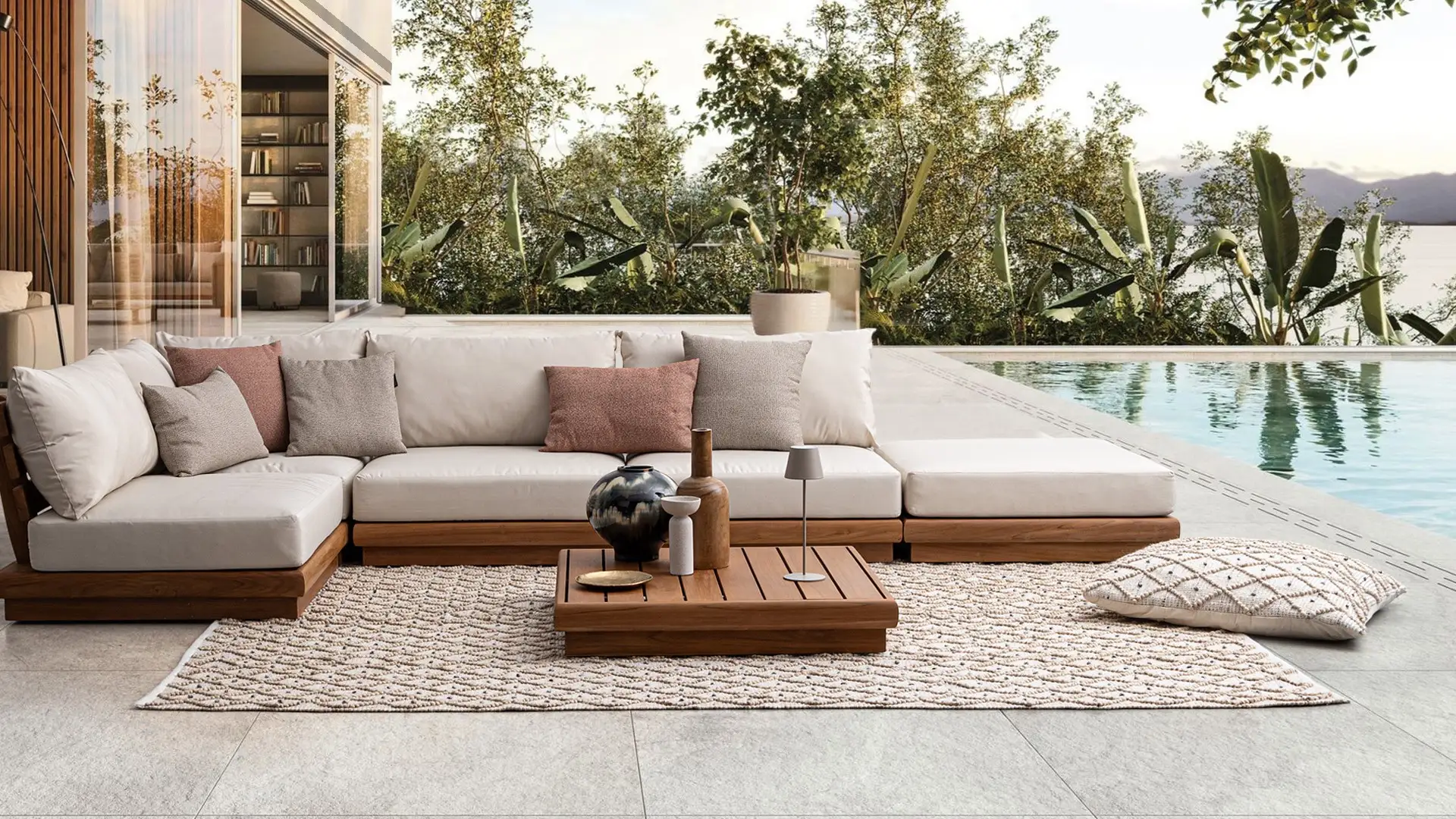
For example, a terrace may feature stone flooring, a timber pergola, and upholstered seating. Each layer contributes a distinct tactile experience while maintaining visual continuity. This approach prevents monotony and enhances the overall richness of the environment.
Moreover, layering supports spatial hierarchy. Primary surfaces establish structure, while secondary materials introduce variation. Together, they create a dynamic yet controlled design language that defines high-end outdoor environments.
Soft vs. Hard Elements in Outdoor Composition
Textural contrast is not limited to hard materials. The interplay between soft and hard elements is equally important in shaping luxury outdoor spaces.
Consider the following design techniques:
- Incorporating plush outdoor textiles against stone or concrete backdrops
- Using dense planting to soften architectural edges
- Introducing rugs to define seating areas on hard surfaces
- Layering cushions and upholstery for comfort and visual depth
- Balancing structured furniture with organic planting forms
These strategies enhance both comfort and visual appeal, ensuring that outdoor spaces feel inviting without compromising design integrity.
The Influence of Light on Texture
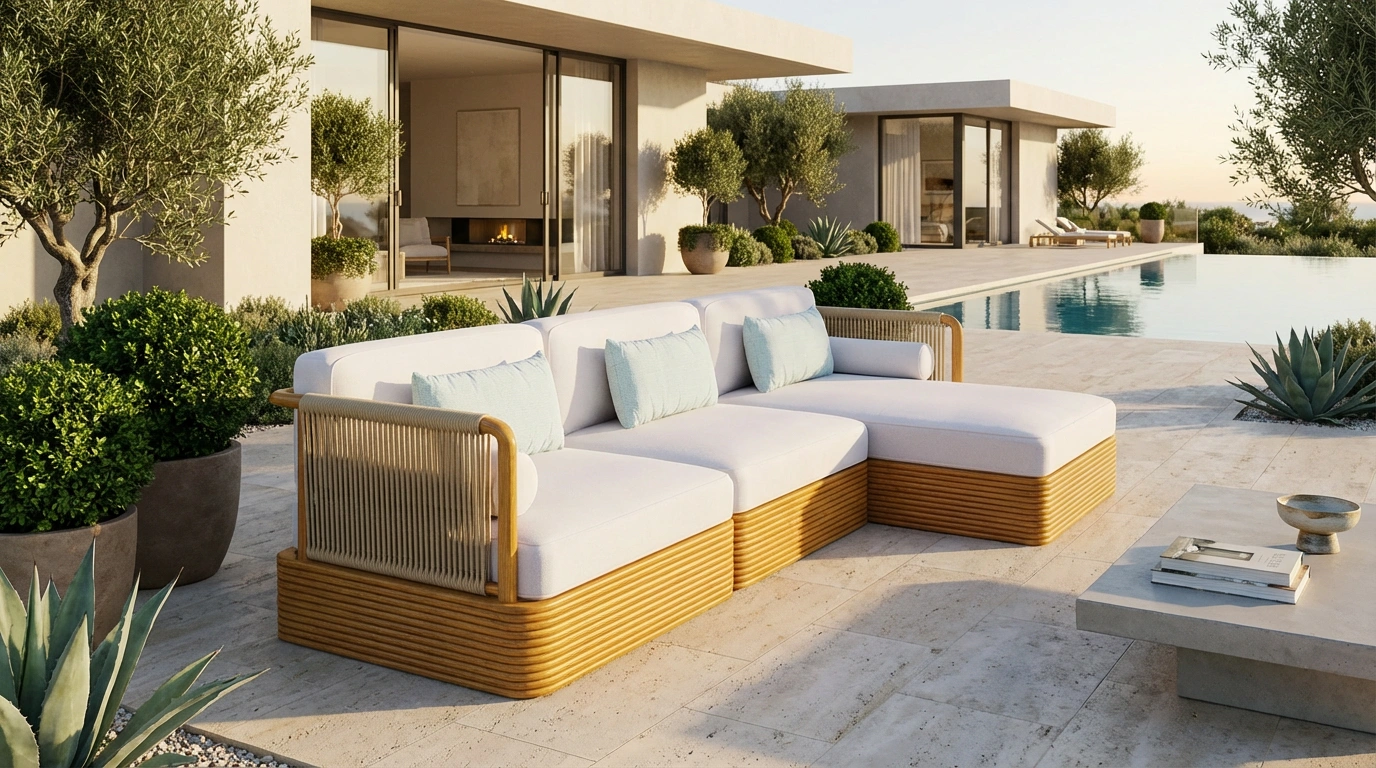
Light plays a critical role in how texture is perceived. In luxury outdoor spaces, natural light interacts with materials throughout the day, altering their appearance and emphasizing different qualities.
Rough surfaces tend to create shadows, adding depth and drama. Smooth finishes, on the other hand, reflect light, contributing to a sense of openness and clarity. By carefully positioning materials, designers can control how light enhances textural contrast.
Evening lighting further amplifies this effect. Strategic illumination highlights key surfaces, creating a layered visual experience that extends the usability of the space into nighttime.
Material Pairings That Define Luxury Outdoor Spaces
Successful textural contrast often relies on thoughtful material pairings. Certain combinations consistently deliver both visual and tactile richness:
- Natural stone and warm wood for timeless elegance
- Concrete and metal for a contemporary aesthetic
- Glass and water for reflective, dynamic surfaces
- Ceramic and fabric for color and softness
- Gravel and planting for organic texture variation
These pairings provide a foundation for creating sophisticated outdoor environments that feel both intentional and effortless.
Furniture as a Textural Element
Outdoor furniture plays a crucial role in reinforcing textural contrast. Beyond functionality, furniture introduces additional layers of materiality and tactile experience.
Designers often select pieces that complement or contrast with surrounding surfaces. For example, sleek metal frames may be paired with soft, upholstered cushions, while wooden furniture can echo natural landscape elements.
Attention to detail is essential. Stitching, weave patterns, and finishes all contribute to the overall composition. When integrated thoughtfully, furniture becomes an extension of the architectural and landscape design.
Creating Cohesion Through Contrast
While contrast is essential, it must be carefully controlled to maintain cohesion. In luxury outdoor spaces, the goal is not to overwhelm but to create a balanced interplay of textures.
Achieving this balance involves:
- Limiting the material palette to a curated selection
- Repeating key textures across different elements
- Maintaining consistency in color tones
- Using contrast strategically rather than uniformly
- Ensuring transitions between materials are seamless
This approach allows designers to introduce variation without disrupting the overall harmony of the space.
The Future of Textural Design in Outdoor Spaces
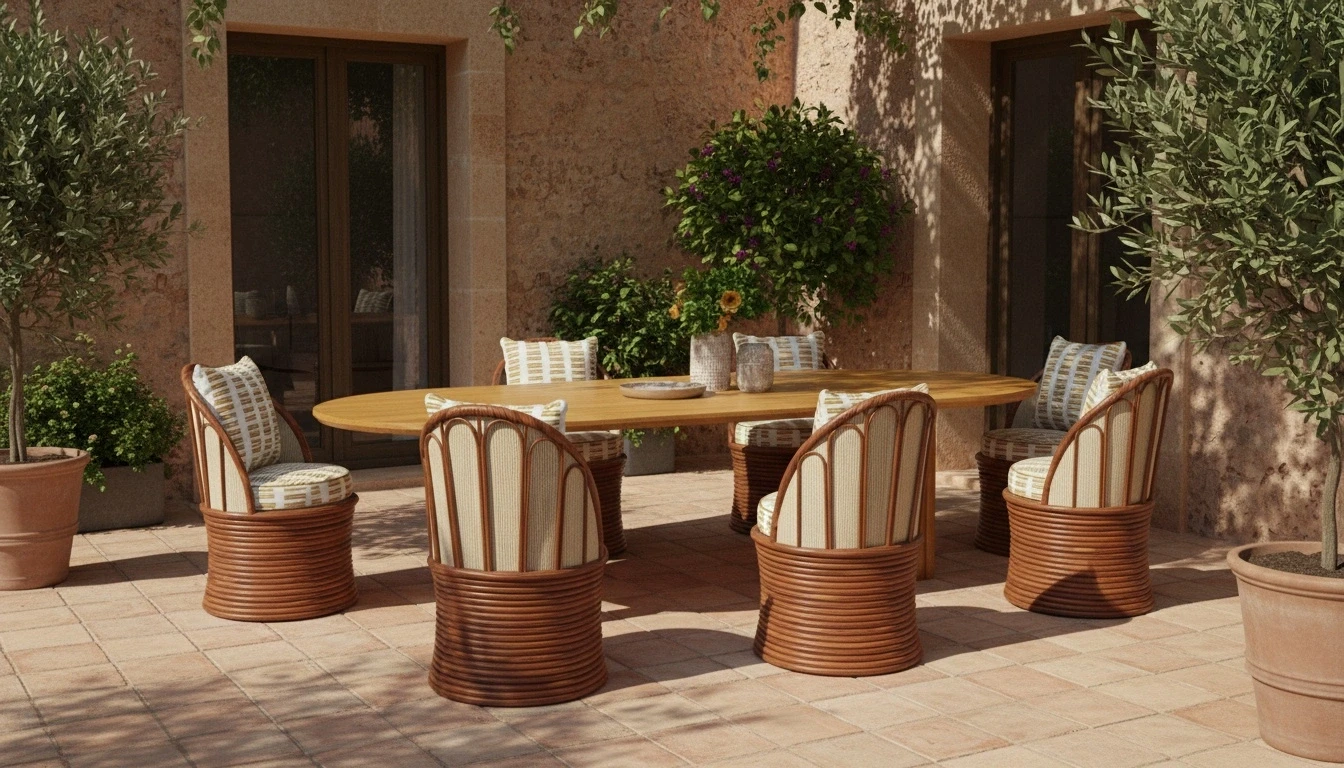
As outdoor living continues to evolve, the importance of texture will only increase. Designers are exploring new materials, finishes, and fabrication techniques that expand the possibilities of textural contrast.
Emerging trends include advanced composites, sustainable materials, and innovative surface treatments. However, the core principle remains unchanged: successful luxury outdoor spaces rely on a thoughtful balance of textures that engage both visually and physically.
For architects and designers, mastering textural contrast offers a powerful tool for creating environments that feel sophisticated, immersive, and enduring.
Conclusion
Textural contrast is a defining element in the creation of luxury outdoor spaces. By carefully balancing materials, layering surfaces, and considering the interplay of light and texture, designers can elevate outdoor environments beyond aesthetics.
For outdoor designers, architects, and luxury studios, this approach provides a framework for crafting spaces that are not only visually compelling but also rich in sensory experience. As the demand for refined outdoor living grows, the ability to use texture effectively will remain a key differentiator in high-end design.