

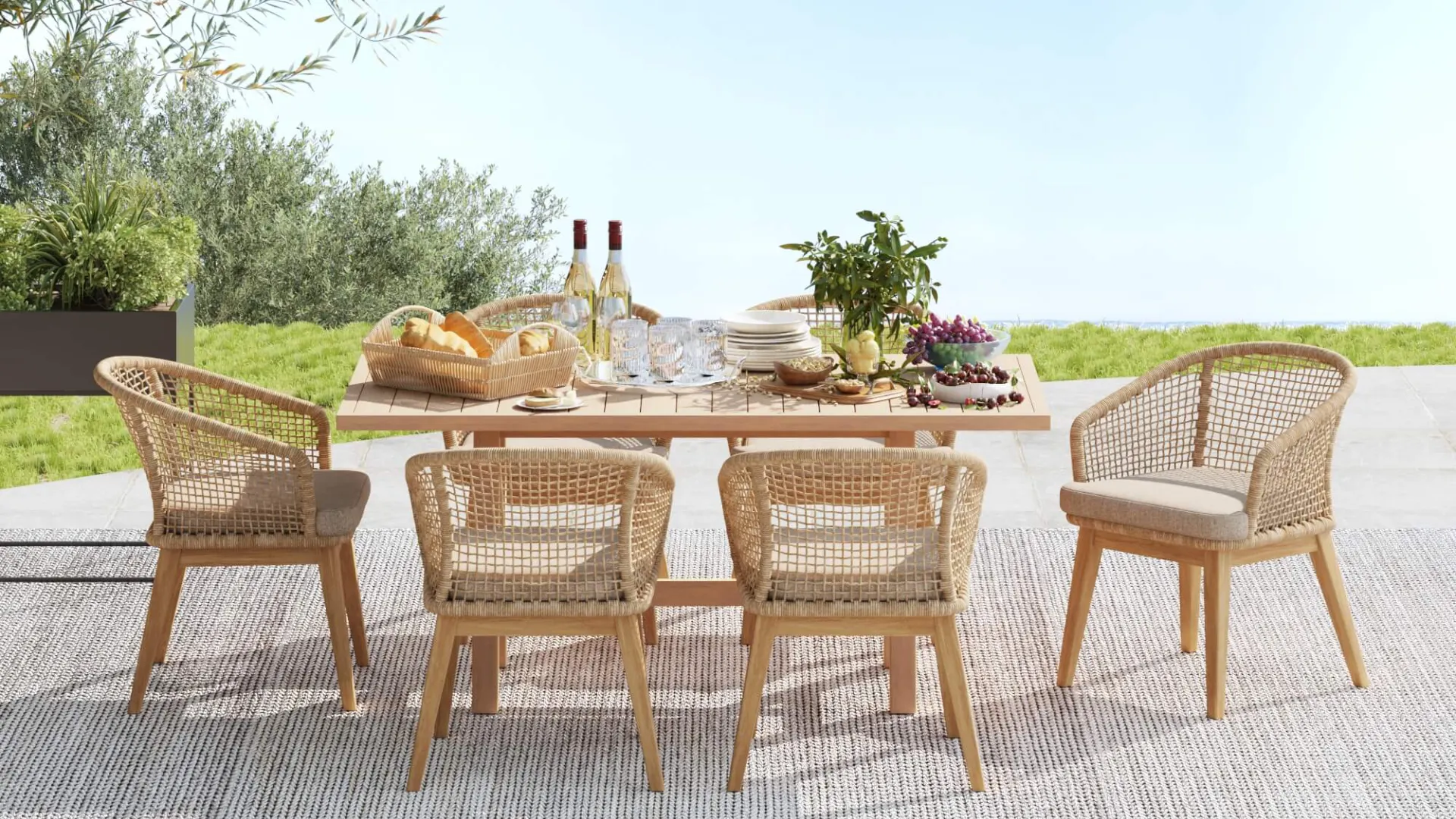
Across terraces in Saint-Tropez, rooftop gardens in Manhattan, and sculpted courtyards in Dubai, a subtle yet decisive shift is redefining outdoor comfort. The era of heavy, monolithic frames dominating exterior lounges is giving way to a lighter, more expressive language: rope outdoor furniture. What was once considered a decorative accent has evolved into the architectural backbone of woven outdoor seating, signaling one of the most compelling modern outdoor furniture trends of the decade.
For architects, developers, and discerning homeowners, the move toward rope is not merely aesthetic. It reflects broader transformations in material science, sustainability, craftsmanship, and spatial perception. In contemporary patio seating design, rope weaving has emerged as a refined solution that balances structural performance with visual lightness — and, crucially, with a new definition of luxury.
The Evolution of Outdoor Seating: From Mass to Movement
Traditional outdoor seating relied heavily on solid wood, wrought iron, or bulky aluminum frames. These materials conveyed permanence and durability, yet often at the expense of flexibility and visual transparency. As outdoor spaces increasingly mirror interior sophistication, designers seek forms that feel architectural yet breathable.
Rope outdoor furniture introduces a language of permeability. Instead of enclosing space, it interacts with it. Instead of blocking light, it filters it. In high-end hospitality and residential projects alike, this approach aligns seamlessly with contemporary patio seating design, where fluid transitions between indoor and outdoor environments are paramount.
According to research highlighted by the ArchDaily architecture platform, material innovation and lighter structural systems are among the defining forces shaping global design today. Rope weaving sits precisely at this intersection of innovation and experiential design.
Material Innovation: Performance Meets Refinement
Advanced Fibers for Exterior Excellence
The ropes used in today’s woven outdoor seating are far removed from their nautical ancestors. High-performance polypropylene, solution-dyed acrylic, and polyester blends are engineered for UV resistance, tensile strength, and rapid drying. These materials resist fading, mildew, and salt corrosion — critical factors in coastal and high-sun environments.
This technical resilience allows designers to rethink structural reliance on thick frames. In many modern outdoor furniture trends, the rope itself contributes to weight distribution and ergonomic support, reducing the need for visually heavy components.
Structural Intelligence Through Weaving
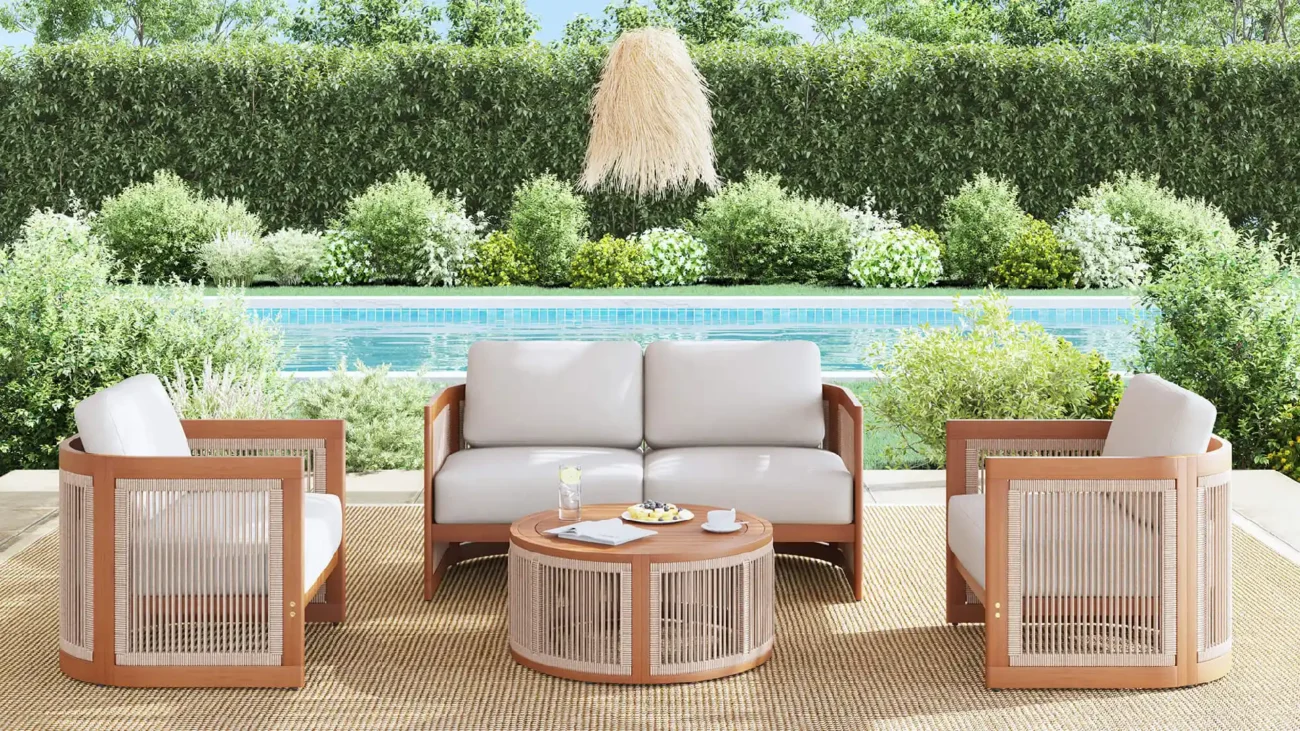
Weaving is not simply decorative; it is structural choreography. Tension, spacing, and pattern determine comfort, elasticity, and durability. A precisely executed weave distributes weight evenly while offering gentle flexibility, enhancing long-term seating comfort.
In contemporary patio seating design, this woven intelligence creates seating that feels simultaneously supportive and enveloping — a tactile luxury that solid frames rarely achieve.
Visual Lightness and Architectural Transparency
Enhancing Spatial Perception
Outdoor environments are defined by light, landscape, and horizon lines. Bulky seating can interrupt these views. By contrast, rope outdoor furniture maintains sightlines and fosters a sense of openness. This quality is particularly valuable in:
- Cliffside villas overlooking the Mediterranean
- Urban terraces with skyline panoramas
- Minimalist courtyards centered around water features
- Luxury resort pool decks
The semi-transparent quality of woven outdoor seating allows architecture and nature to remain the protagonists. Furniture becomes an elegant mediator rather than a visual barrier.
A Contemporary Aesthetic Vocabulary
The rise of rope aligns with broader modern outdoor furniture trends favoring organic geometry and artisanal detailing. Designers increasingly gravitate toward curved silhouettes, cocoon-like lounge chairs, and sculptural daybeds — forms that rope weaving supports with remarkable fluidity.
In contemporary patio seating design, rope enables intricate patterns — from open lattice to dense basket weaves — that introduce rhythm and shadow play. As sunlight moves across a terrace, the woven surfaces create dynamic visual textures, transforming seating into living design elements.
Craftsmanship Reimagined for the Global Market
The Return of Artisanal Techniques
One of the most compelling reasons rope outdoor furniture is replacing solid frames lies in its craftsmanship narrative. Hand-weaving reintroduces the human touch into industrial production. Each intersection of fiber speaks to time, skill, and intentionality.
For high-net-worth clients and design professionals, authenticity has become a defining luxury marker. Woven outdoor seating resonates because it feels curated rather than mass-produced — even when supported by advanced manufacturing.
Cultural Resonance and Global Influence
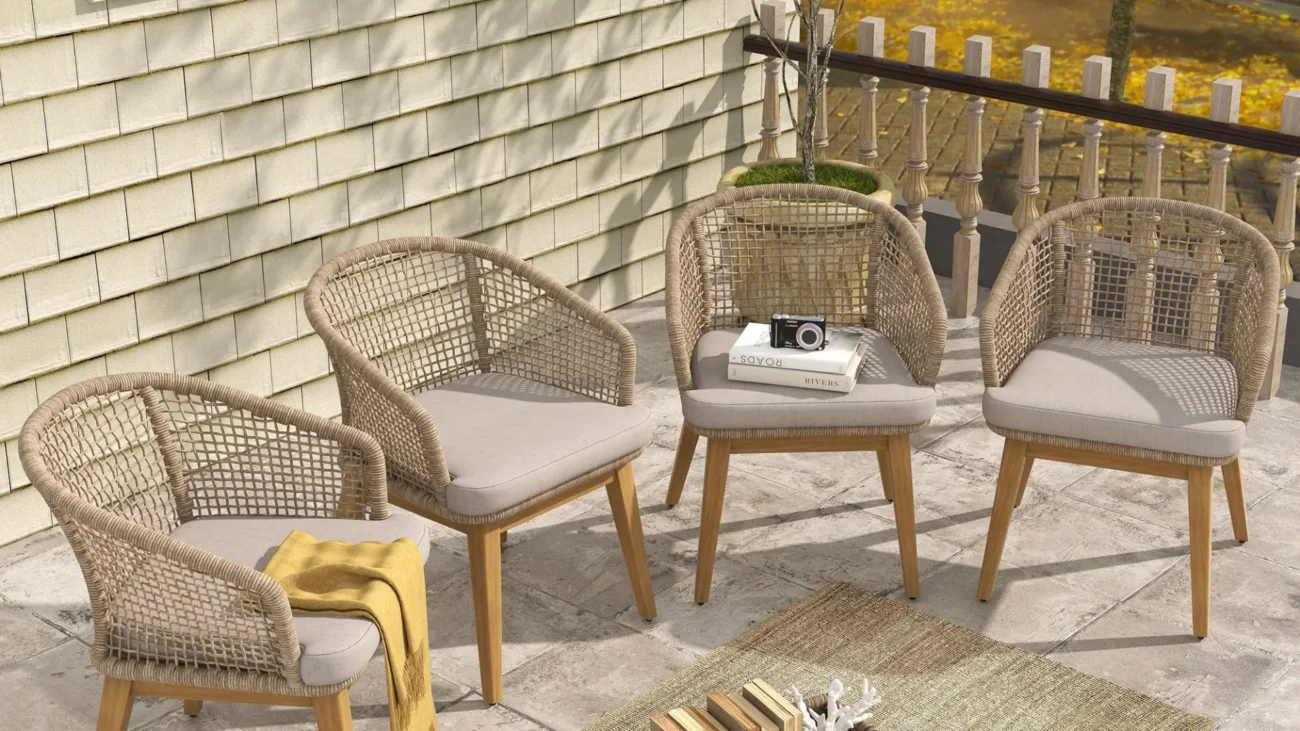
Weaving traditions span continents — from Scandinavian cord chairs to Mediterranean fishing techniques and Southeast Asian rattan artistry. Contemporary patio seating design draws on these global references, reinterpreting them through refined palettes and modern engineering.
This fusion of heritage and innovation positions rope at the forefront of modern outdoor furniture trends, where cultural storytelling enhances architectural sophistication.
Ergonomics and Sensory Comfort
Adaptive Support
Unlike rigid frames, woven structures adapt subtly to the body. The elasticity of rope creates micro-movements that improve comfort during extended lounging. This adaptability is particularly important in hospitality environments where seating must accommodate diverse body types.
In rope outdoor furniture, tension is calibrated to provide both stability and suppleness. The result is seating that feels inviting rather than imposing.
Tactile Experience
Luxury today is multisensory. The texture of woven outdoor seating adds depth to outdoor environments. Whether smooth marine-grade cord or softly braided acrylic, the tactile dimension enhances the emotional connection to the space.
Within contemporary patio seating design, these tactile contrasts — rope against stone, fiber against teak, weave against concrete — enrich spatial composition.
Sustainability and Responsible Design
Environmental consciousness increasingly informs modern outdoor furniture trends. Rope weaving supports sustainability in several ways:
- Reduced reliance on heavy raw materials
- Lower transportation weight compared to solid frames
- Use of recyclable or regenerated fibers
- Modular construction allowing part replacement instead of full disposal
Many manufacturers now incorporate recycled ocean plastics into rope outdoor furniture, transforming waste into high-performance design elements. For developers seeking green certifications or ESG alignment, woven outdoor seating offers both aesthetic and environmental credibility.
Design Versatility in Contemporary Patio Seating Design
Seamless Integration Across Styles
One of rope’s greatest strengths is versatility. It complements a wide spectrum of architectural expressions:
- Minimalist concrete terraces
- Mediterranean villas with limestone floors
- Tropical retreats framed by timber structures
- Ultra-modern penthouse rooftops
In each context, rope outdoor furniture adapts through color, weave density, and frame pairing. Neutral sand tones create calm continuity; charcoal cords emphasize modern geometry; muted greens echo surrounding landscapes.
Layering and Modularity
Today’s woven outdoor seating often appears in modular systems — sectional sofas, adaptable loungers, and reconfigurable daybeds. This flexibility aligns with evolving lifestyles where outdoor areas transition from private retreats to social venues.
Contemporary patio seating design increasingly prioritizes adaptability. Rope’s structural lightness makes rearrangement effortless, supporting dynamic spatial programming without visual heaviness.
Why Solid Frames Are Losing Dominance
Solid frames, while durable, impose visual and physical weight. They often dictate rigid geometry and limit expressive weaving possibilities. As modern outdoor furniture trends emphasize openness, fluidity, and customization, heavy frames appear increasingly anachronistic.
The shift does not imply structural compromise. Instead, rope integrates with discreet aluminum or teak skeletons that remain visually secondary. The eye perceives texture and pattern first, not mass. In high-end contemporary patio seating design, this hierarchy feels both refined and progressive.
Investment Value and Real Estate Appeal
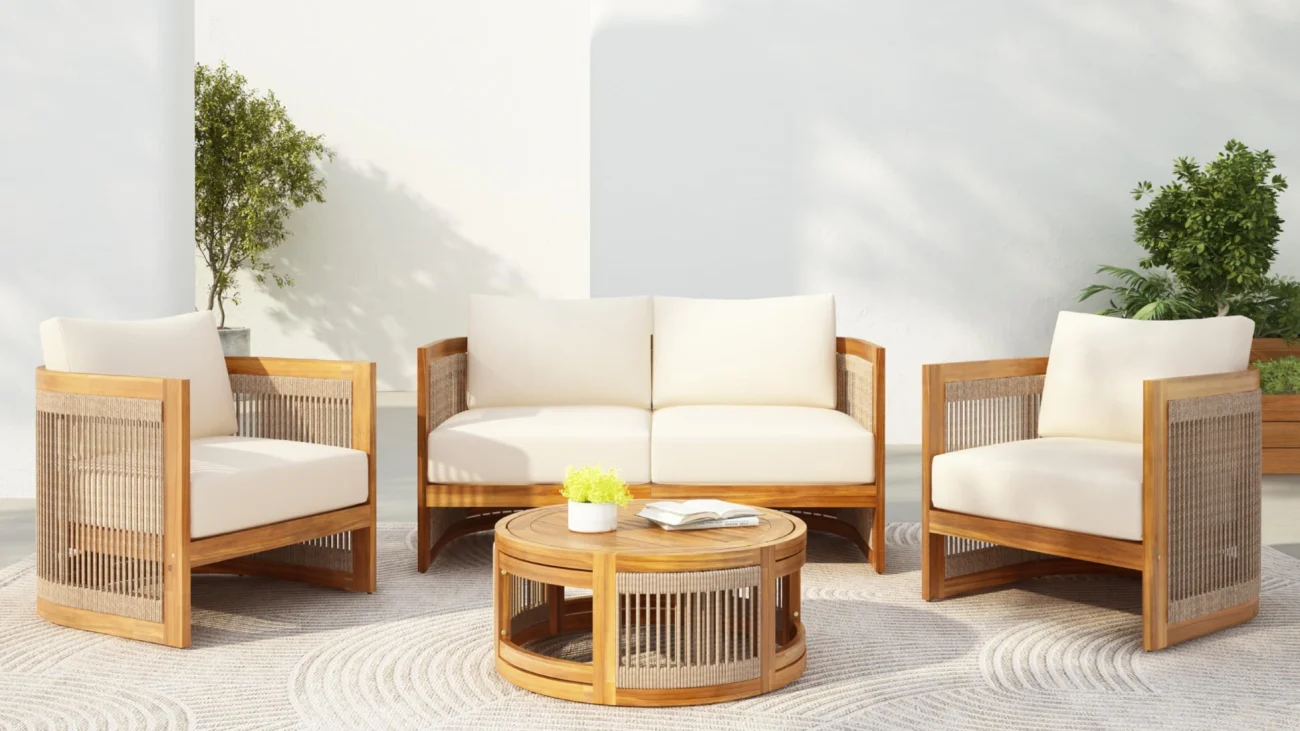
Outdoor environments significantly influence property valuation. Luxury buyers expect exterior spaces to mirror interior quality. Rope outdoor furniture signals design literacy and contemporary awareness.
Developers and real estate professionals recognize that woven outdoor seating enhances photography, staging, and experiential marketing. The interplay of shadow and structure creates visually compelling scenes that resonate across digital platforms and editorial features.
As one of the defining modern outdoor furniture trends, rope contributes to perceived exclusivity — an intangible yet powerful asset in competitive property markets.
Future Outlook: The Next Phase of Woven Innovation
Looking ahead, innovation will likely focus on:
- Bio-based and biodegradable rope materials
- Smart textiles integrating temperature regulation
- Hybrid weaving techniques combining rope with metal mesh
- Expanded color customization for bespoke contemporary patio seating design
As technology advances, rope outdoor furniture will continue to evolve beyond aesthetic appeal, reinforcing its role in structural and environmental performance.
A New Definition of Outdoor Luxury
The rise of woven outdoor seating reflects a deeper transformation in how we inhabit exterior spaces. Luxury is no longer defined by mass or monumentality, but by intelligence, craftsmanship, and experiential refinement. In this context, rope outdoor furniture embodies the essence of contemporary elegance.
By merging structural innovation with artisanal sensibility, rope weaving has redefined contemporary patio seating design. It aligns seamlessly with the most influential modern outdoor furniture trends, offering visual lightness, environmental responsibility, and tactile richness.
For architects, designers, and discerning homeowners, the message is clear: the future of outdoor seating is not heavier — it is more nuanced, more breathable, and more thoughtfully woven.