

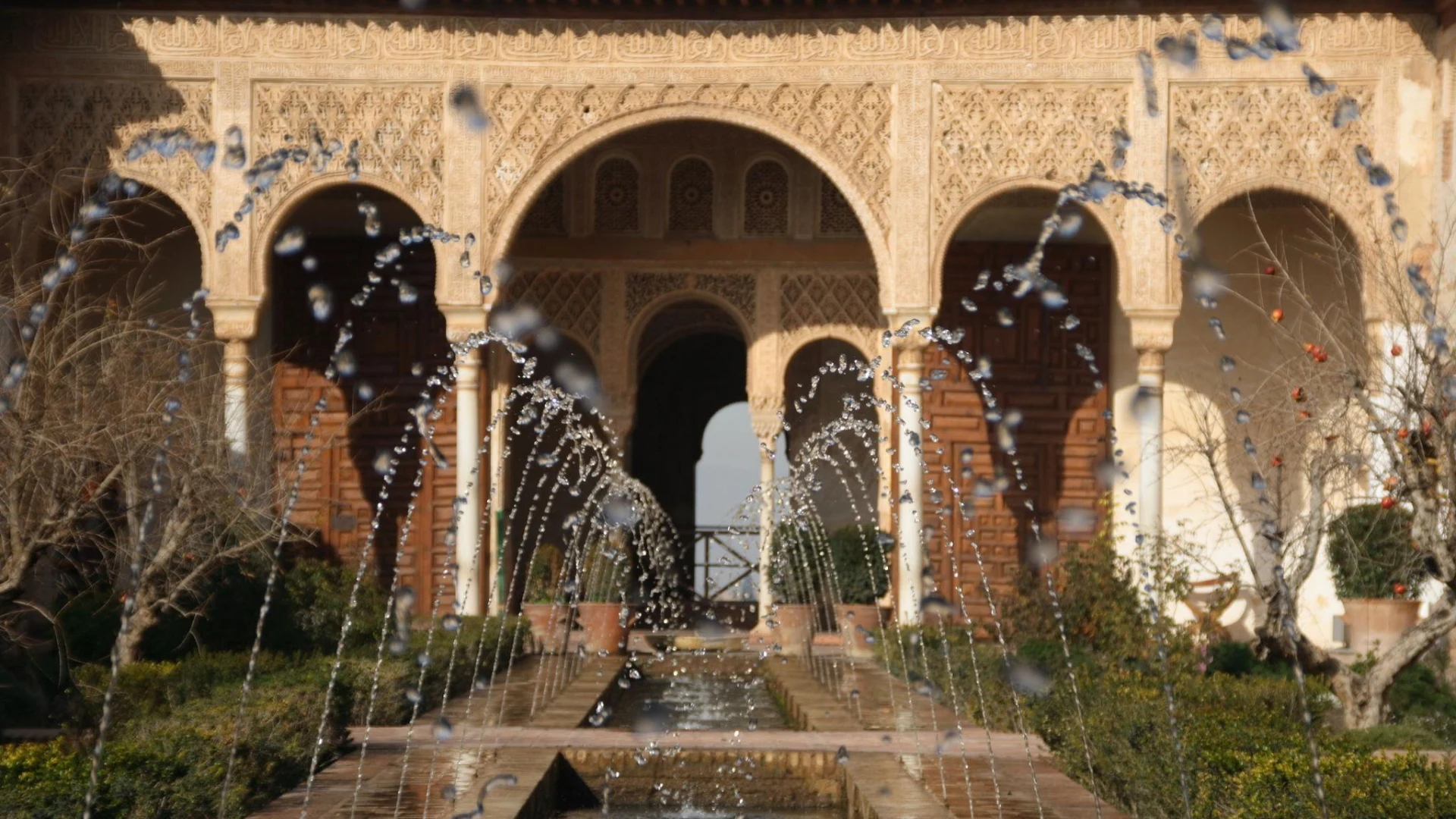
Across the Mediterranean world, architecture has always been deeply connected to nature. From Andalusian patios to Italian cloisters and Moroccan riads, the Mediterranean courtyard has long served as a private oasis where architecture, climate, and culture converge. At the heart of many of these spaces lies a defining element: the sound of water.
Fountains and subtle water features are not merely decorative additions. They shape atmosphere, regulate temperature, influence spatial perception, and create an emotional connection between architecture and landscape. In thoughtful courtyard garden design, the gentle movement and acoustic presence of water become an invisible architectural material — one that architects and designers have used for centuries to bring serenity and sensory richness to enclosed outdoor spaces.
Today, as luxury residential architecture increasingly embraces biophilic principles and experiential design, the traditional Mediterranean courtyard is experiencing a renaissance. Designers are rediscovering how fountains transform courtyards into immersive sanctuaries of sound, light, and reflection.
The Historical Role of Water in Mediterranean Courtyard Architecture
The presence of water in the Mediterranean courtyard is rooted in centuries of cultural exchange and environmental adaptation. From ancient Roman peristyles to Moorish palaces in southern Spain, water was integrated not only for beauty but also for climate control and symbolic meaning.
In hot Mediterranean climates, courtyards provided a shaded microclimate within dense urban fabrics. When combined with water features, these spaces became even more effective at cooling surrounding rooms. Evaporation and airflow lowered temperatures while the sound of flowing water masked urban noise.
The celebrated courtyards of the Alhambra in Granada remain among the most influential examples of this architectural tradition. In spaces like the Court of the Lions, shallow channels and fountains create a continuous dialogue between water, stone, and light — a concept that continues to inspire contemporary courtyard garden design.
Symbolism and Cultural Meaning
Beyond environmental performance, water also carried symbolic significance across Mediterranean cultures.
- Purity and renewal in Islamic garden traditions
- Prosperity and abundance in Roman domestic architecture
- Spiritual tranquility in monastic cloisters
- Connection to nature in vernacular Mediterranean homes
These meanings continue to resonate today, making fountains a timeless element within modern courtyard garden design.
The Acoustic Architecture of Water
Designing a successful Mediterranean courtyard is not solely a visual exercise. It is a multi-sensory composition in which sound plays a fundamental role.
The gentle murmur of moving water transforms the atmosphere of a courtyard. Unlike static decorative elements, fountains introduce a dynamic acoustic layer that interacts with stone walls, vegetation, and open sky. The result is a subtle soundscape that defines the character of the space.
Why Sound Matters in Courtyard Design
Architects and landscape designers increasingly recognize how acoustics influence human experience. In a courtyard environment, water serves several acoustic functions:
- Masking unwanted noise from surrounding streets
- Creating privacy through soft background sound
- Enhancing relaxation by introducing natural rhythms
- Defining spatial identity through auditory cues
The result is a courtyard that feels calm and secluded — even in the center of a bustling Mediterranean city.
Microclimate: How Water Cools the Mediterranean Courtyard
One of the most practical advantages of integrating water features into courtyard garden design is their effect on thermal comfort. Mediterranean climates are characterized by intense summer heat and strong sunlight. Courtyards mitigate these conditions through shade, airflow, and evaporative cooling.
Fountains contribute significantly to this microclimate strategy. As water evaporates, it absorbs heat from the surrounding air, subtly lowering ambient temperature. When paired with vegetation, stone surfaces, and shaded arcades, this effect becomes even more pronounced.
In traditional houses across Spain, Italy, Greece, and North Africa, a small fountain positioned at the center of the Mediterranean courtyard helped maintain a comfortable environment throughout the day.
Design Strategies for Cooling Courtyards
Architects often combine several elements to maximize climatic performance:
- Central fountains or reflecting pools
- Stone paving that retains coolness
- Climbing plants and pergolas for shade
- Narrow water channels that distribute cooling
- Cross-ventilation between courtyard and interior rooms
Together, these strategies transform the courtyard into a natural climate moderator.
The Visual Power of Reflection
Beyond sound and climate, water features add visual depth to courtyard garden design. Reflective surfaces amplify light and create a sense of spatial expansion within enclosed spaces.
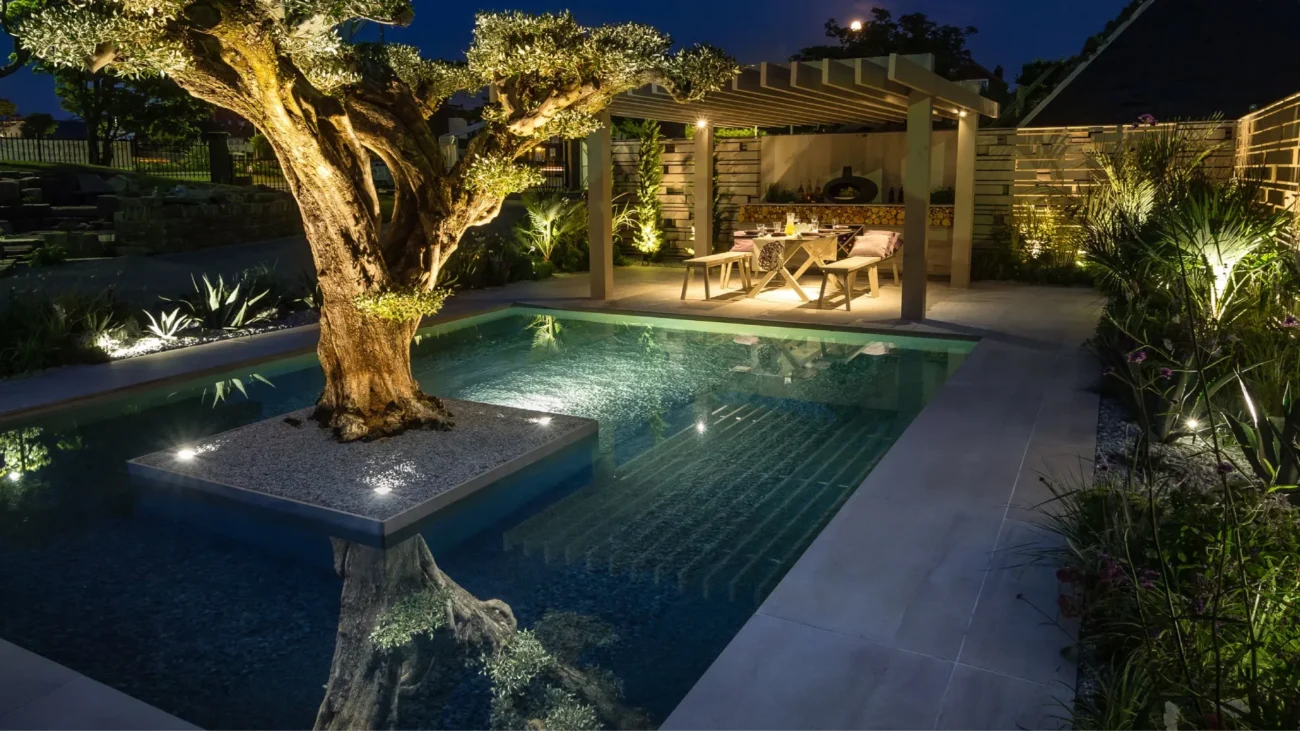
In compact courtyards, even a modest fountain basin can dramatically enhance visual richness. Sunlight dances across moving water, projecting patterns onto surrounding walls and foliage. At night, discreet lighting turns the surface into a luminous mirror.
This interplay of reflection and shadow has long been a hallmark of the Mediterranean courtyard, giving small spaces an atmosphere of quiet grandeur.
Typologies of Courtyard Water Features
While the central fountain is the most recognizable element, contemporary courtyard garden design explores a wide range of water installations inspired by historical precedents.
1. Classical Central Fountains
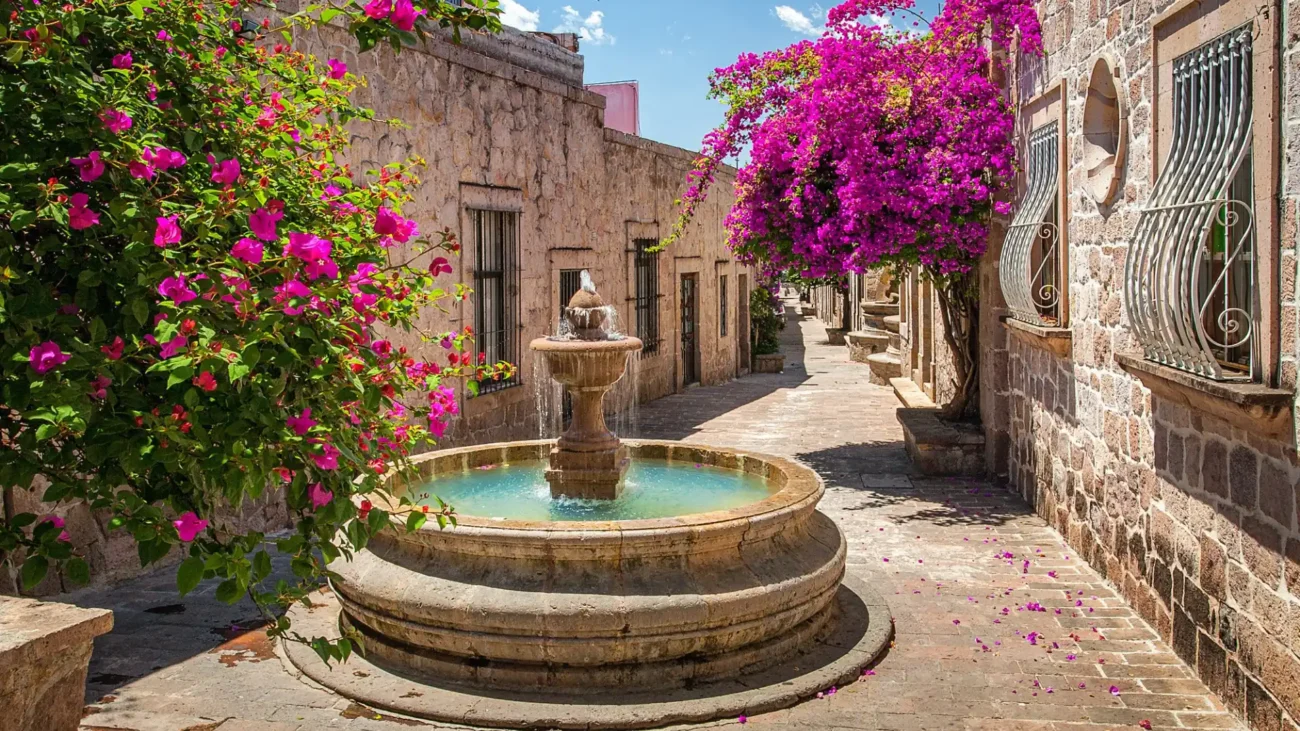
Perhaps the most iconic configuration, the central fountain anchors the spatial composition of the Mediterranean courtyard. Often circular or octagonal, it becomes the visual and acoustic focal point of the space.
2. Reflecting Pools
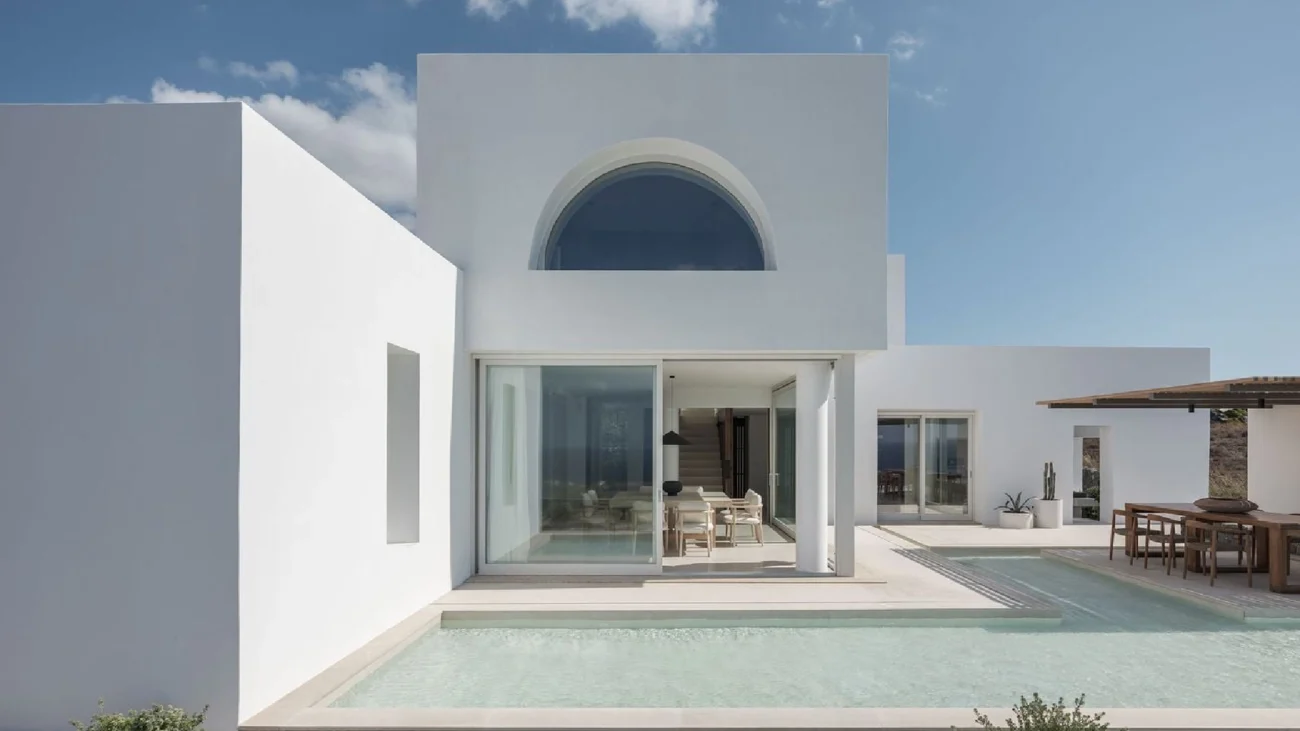
Still water surfaces emphasize reflection and serenity. These minimalist water features work particularly well in modern courtyards where architecture favors clean lines and restrained materials.
3. Linear Water Channels
Inspired by Moorish garden design, narrow channels distribute water across the courtyard, guiding movement and visually structuring the landscape.
4. Wall Fountains
In smaller courtyards, fountains integrated into vertical surfaces offer an elegant alternative. A sculpted spout releases water into a shallow basin, creating sound without occupying significant floor space.
5. Cascading Stone Waterfalls
For contemporary villas and luxury residences, stepped cascades provide a more dynamic interpretation of traditional Mediterranean water features.
Materials That Define Mediterranean Water Design
Material selection is essential in shaping the character of a Mediterranean courtyard. The textures and colors surrounding water strongly influence how the space is perceived.
Traditional courtyards rely on natural materials that age beautifully over time and harmonize with the regional landscape.
- Limestone and travertine for basins and paving
- Hand-painted ceramic tiles for decorative fountains
- Terracotta for warmth and Mediterranean identity
- Bronze or stone spouts for sculptural details
- Weathered marble for classical elegance
These materials reinforce the timeless aesthetic that defines successful courtyard garden design.
Contemporary Interpretations of the Mediterranean Courtyard
While rooted in tradition, the Mediterranean courtyard continues to evolve within contemporary architecture. Designers reinterpret historic water elements through minimalist geometry, sustainable technologies, and modern materials.
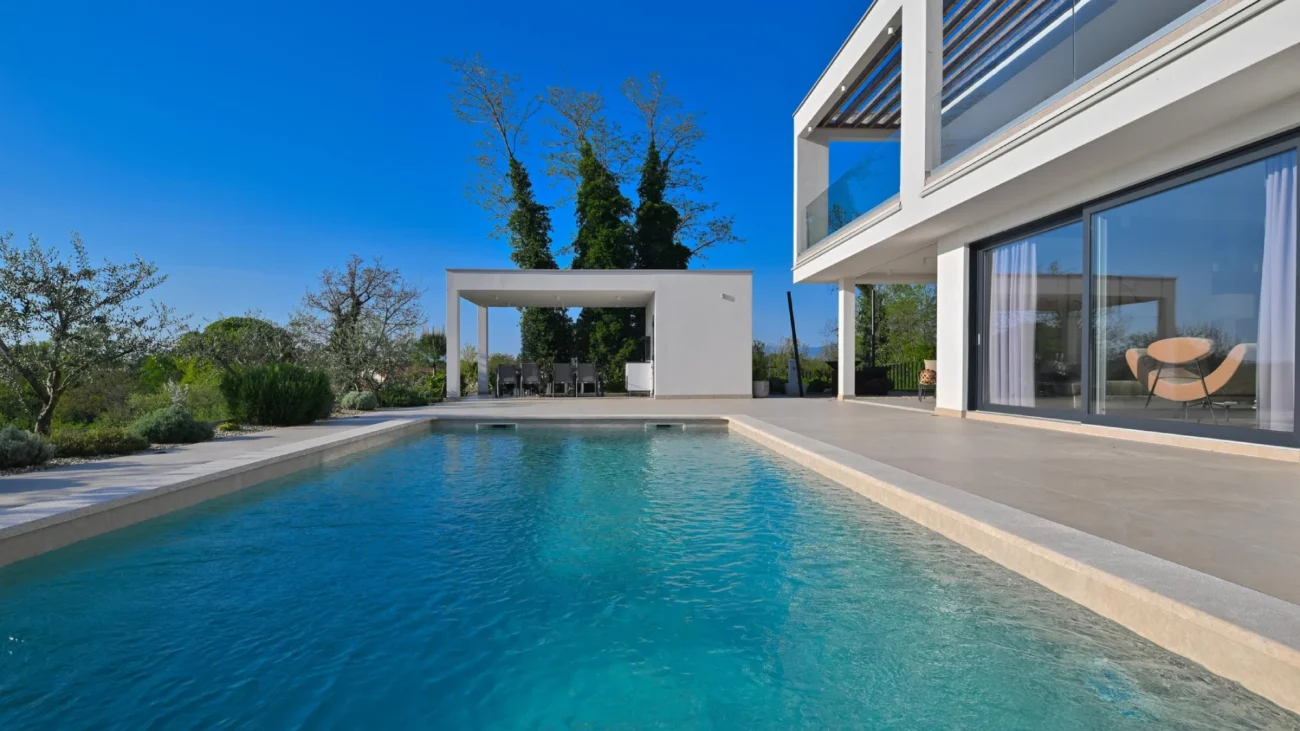
In many luxury residences, subtle water features are integrated seamlessly into architectural surfaces. Thin water blades, concealed overflow basins, and mirror-like pools create a calm, meditative atmosphere without ornate decoration.
Yet even in these modern interpretations, the essential principles remain unchanged: water provides sound, reflection, and climatic comfort — the three pillars of successful courtyard garden design.
Design Guidelines for Integrating Water in Courtyards
For architects and landscape designers planning a Mediterranean courtyard, the integration of water should be both aesthetic and strategic.
Key Considerations
- Scale and proportion: the fountain should complement the courtyard dimensions.
- Acoustic balance: water sound should remain gentle and calming.
- Maintenance and sustainability: modern recirculating systems reduce water consumption.
- Lighting design: underwater lighting enhances nighttime ambiance.
- Integration with vegetation: plants soften edges and amplify the natural atmosphere.
When thoughtfully executed, these elements elevate the courtyard from a simple outdoor space to a sensory architectural experience.
The Enduring Appeal of Water in Mediterranean Living
In an era defined by fast-paced urban lifestyles and digital saturation, the timeless qualities of the Mediterranean courtyard offer a powerful counterpoint. These enclosed gardens invite reflection, conversation, and quiet contemplation.
At the center of this experience lies the presence of water. Whether expressed through classical fountains, minimalist reflecting pools, or subtle wall cascades, water features remain essential to authentic courtyard garden design.
The sound of flowing water reconnects architecture with nature and human senses. It softens hard surfaces, animates still air, and transforms enclosed spaces into living landscapes.
For designers, architects, and discerning homeowners around the world, the lesson of the Mediterranean courtyard remains profoundly relevant: when water becomes part of architecture, a garden becomes more than a space — it becomes an experience.