
In the world of high-end residential design, Coastal Villas have become the ultimate expression of luxury outdoor living. Positioned along dramatic shorelines and shaped by climate, light, and topography, these homes go far beyond aesthetics. For outdoor designers, architects, and luxury design studios, they offer a blueprint for how architecture and landscape can merge into a seamless, immersive experience.
The most compelling Coastal Villas are defined by their ability to frame the horizon, integrate outdoor spaces as primary living zones, and respond intelligently to environmental conditions. The following five examples demonstrate how carefully considered design can transform coastal sites into refined, livable environments.
Villa K
Sculpted Minimalism on the French Riviera
Located on the prestigious peninsula of Cap Ferrat, Villa K exemplifies contemporary minimalism in coastal architecture. The villa’s design emphasizes horizontal lines and expansive glazing, creating uninterrupted views of the Mediterranean.
Outdoor living is central to the composition. Terraces extend from every level, forming a continuous relationship between interior and exterior spaces. Infinity pools are aligned precisely with the horizon, enhancing the sense of visual continuity.
Material choices remain restrained, with stone, glass, and concrete forming a cohesive palette. This clarity allows the surrounding landscape to take precedence, reinforcing the villa’s connection to its coastal setting.
Casa Malaparte
A Monumental Dialogue Between Architecture and Landscape
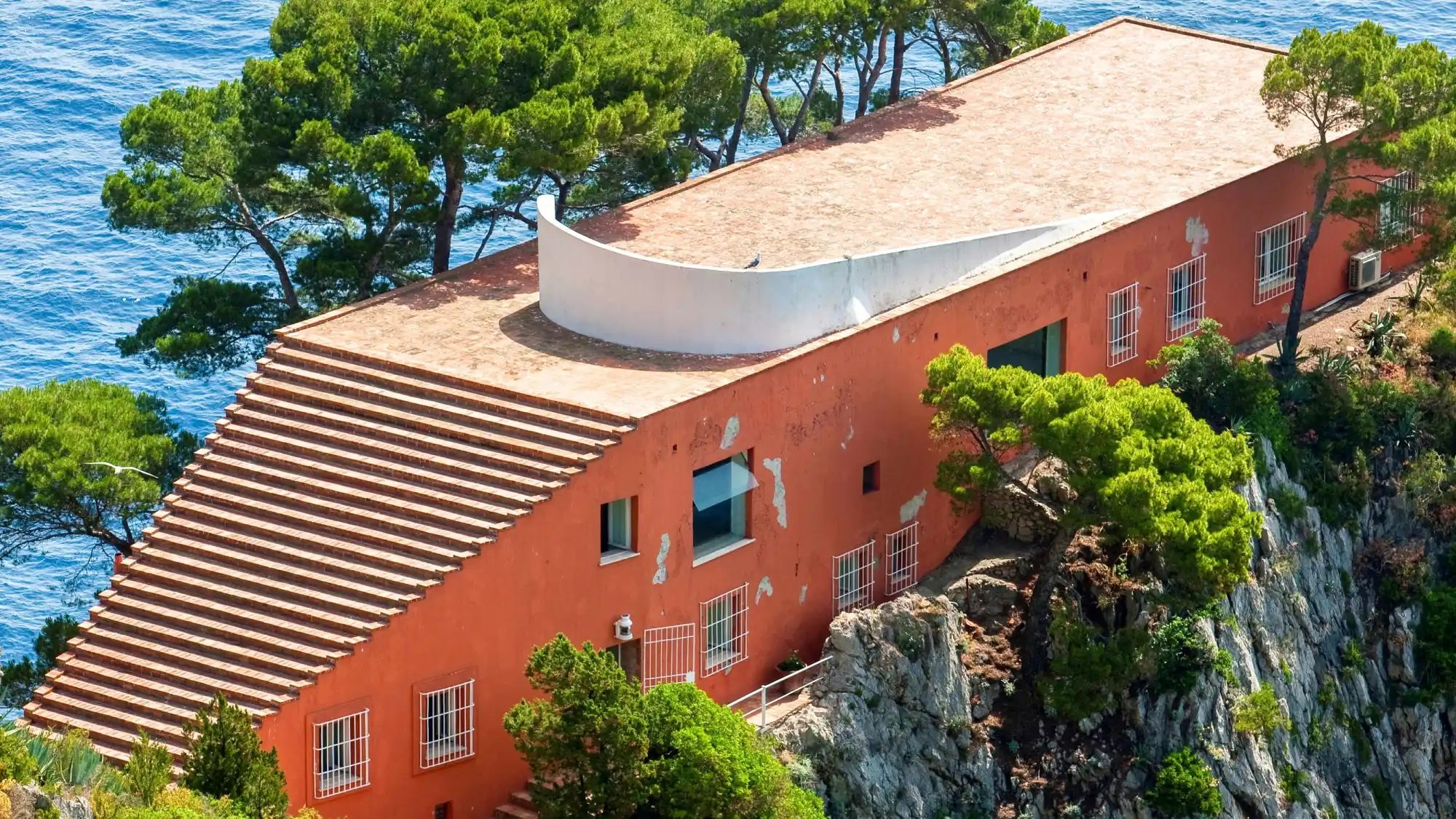
Perched dramatically on a rocky promontory in Capri, Casa Malaparte remains one of the most iconic Coastal Villas ever built. Its bold geometric form contrasts sharply with the rugged landscape, creating a powerful architectural statement.
Key outdoor features include:
- A monumental rooftop terrace acting as the primary living space
- Direct engagement with the surrounding cliffs and sea
- Minimal landscaping to preserve the natural terrain
- Strong axial geometry that guides movement and views
- Use of color to enhance visual impact against the landscape
This villa demonstrates how restraint and boldness can coexist, creating a timeless dialogue between built form and nature.
Villa Amanzi
Layered Terraces in a Tropical Coastal Setting
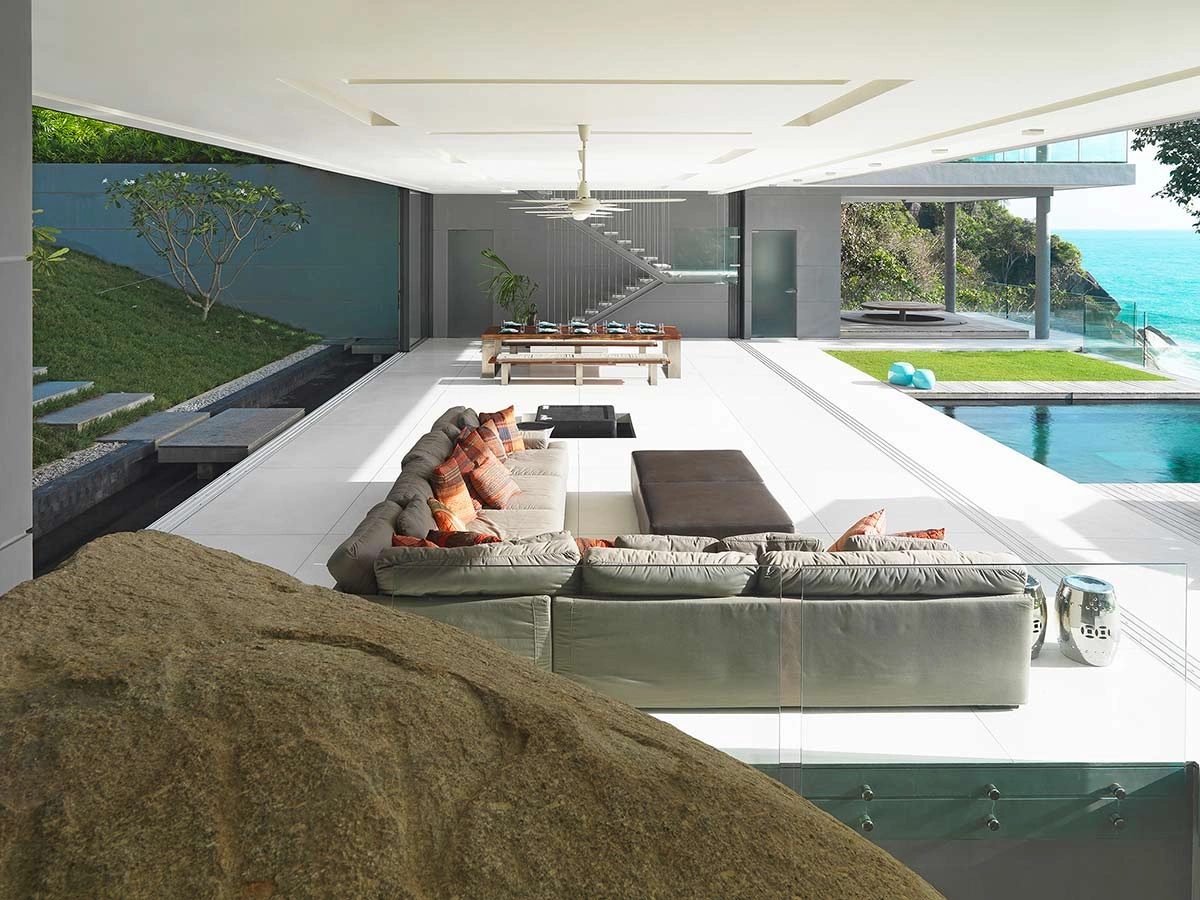
Villa Amanzi, located on the cliffs of Phuket, offers a sophisticated approach to tropical coastal design. Built into a steep hillside, the villa uses a series of cascading terraces to organize its outdoor spaces.
Each level serves a distinct function, from lounge areas to dining terraces and pool decks. These spaces are connected through open-air circulation paths that enhance the sense of flow and discovery.
The integration of natural materials, water features, and vegetation creates a balanced environment where architecture and landscape coexist. This layered approach allows the villa to adapt to both the terrain and the climate, resulting in a highly immersive outdoor experience.
Villa Escarpa
Contemporary Coastal Living in the Algarve
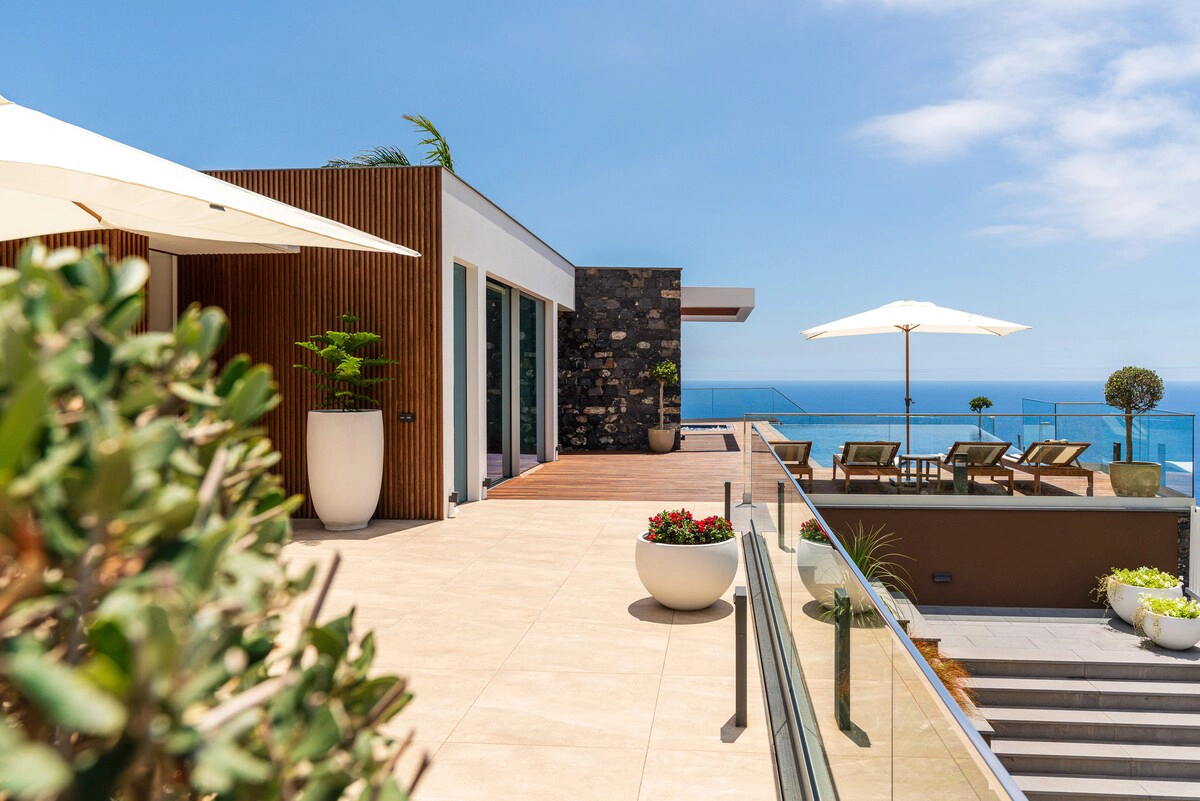
Set along the cliffs of the Algarve, Villa Escarpa represents a modern interpretation of Coastal Villas. Its design focuses on openness, transparency, and a strong connection to the Atlantic Ocean.
Outdoor spaces are organized around expansive terraces and a central infinity pool. Floor-to-ceiling glazing blurs the boundary between interior and exterior, allowing natural light to penetrate deep into the structure.
Notable design strategies include:
- Use of light-colored materials to reflect heat
- Integration of shaded outdoor zones for comfort
- Minimalist landscaping that complements the terrain
- Outdoor dining and lounge areas positioned for sunset views
- Seamless transitions between architectural volumes
This project highlights how contemporary design can enhance coastal living while maintaining environmental sensitivity.
Casa Finisterra
Desert Meets Ocean in a Sculptural Composition
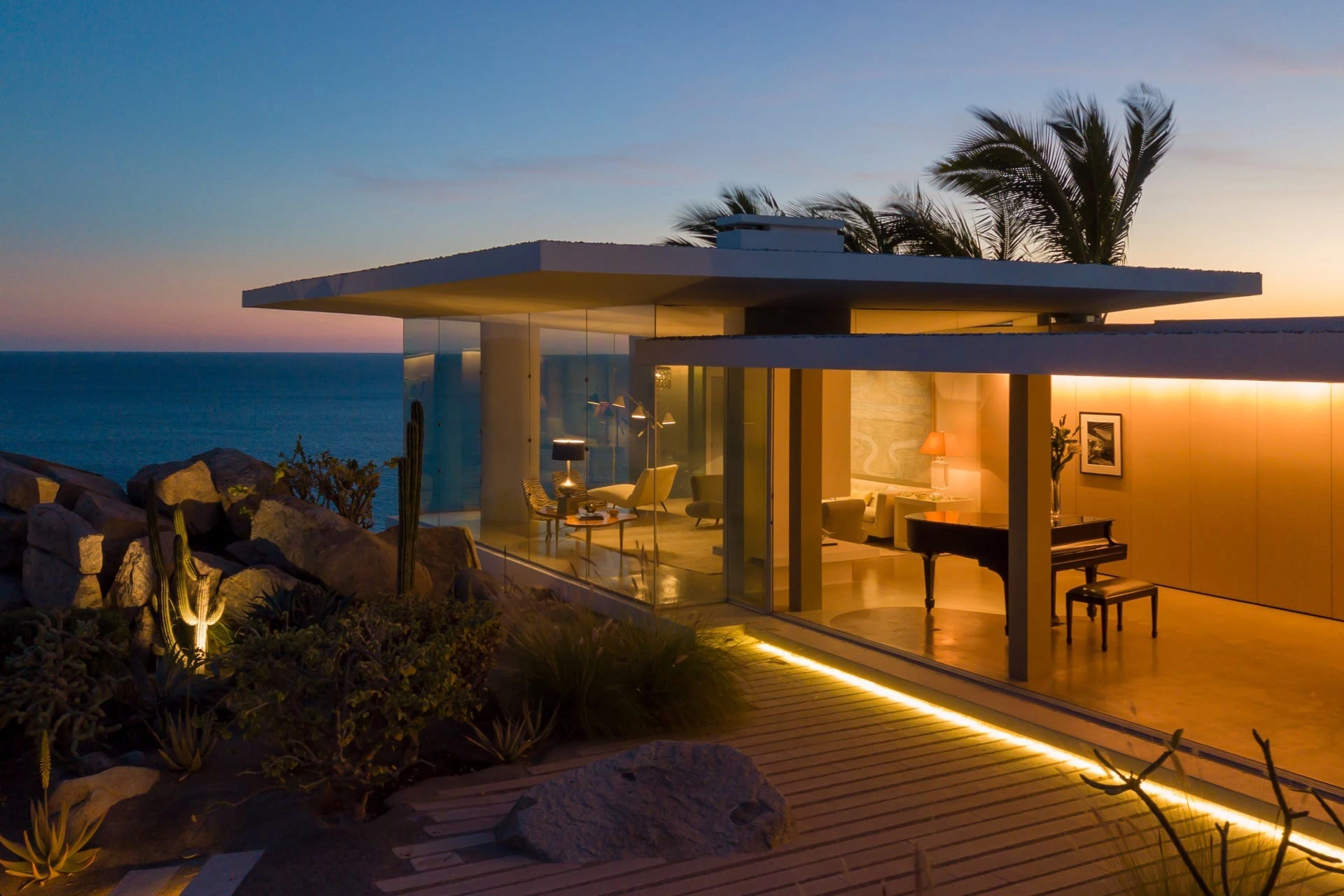
Located at the southern tip of Baja California, Casa Finisterra offers a unique interpretation of Coastal Villas where desert and ocean landscapes converge. Designed by Steven Harris, the villa integrates raw materials and sculptural forms to create a striking composition.
Outdoor spaces are defined by courtyards, terraces, and water features that respond to the harsh climate. Stone walls provide thermal mass, while open areas capture ocean breezes.
The design emphasizes contrast-between solid and void, light and shadow, land and sea-resulting in a dynamic and highly expressive environment.
Key Design Principles Behind Exceptional Coastal Villas
Across these five Coastal Villas, several consistent principles emerge that define successful luxury outdoor living:
- Prioritizing views as central design elements
- Using terraces to create layered spatial experiences
- Integrating architecture with natural topography
- Selecting materials that respond to climate conditions
- Designing outdoor spaces as primary living areas
These strategies allow villas to move beyond static architecture, creating environments that evolve with light, weather, and user interaction.
Outdoor Furniture and Spatial Definition
In Coastal Villas, furniture plays a critical role in shaping how outdoor spaces are used. Rather than acting as decorative elements, furniture pieces define zones and enhance functionality.
Low-profile seating preserves sightlines, while modular arrangements provide flexibility. Materials such as teak, metal, and high-performance textiles ensure durability in coastal conditions.
By aligning furniture with architectural and landscape elements, designers create cohesive environments where every component contributes to the overall experience.
The Role of Climate in Coastal Design
Climate is a defining factor in the design of Coastal Villas. Exposure to sun, wind, and salt air requires careful planning to ensure comfort and longevity.
Design responses often include:
- Shading systems such as pergolas and overhangs
- Orientation to capture natural ventilation
- Use of thermal materials to regulate temperature
- Integration of water features for cooling
- Selection of finishes resistant to environmental wear
These strategies allow outdoor spaces to remain functional and comfortable throughout the year.
The Future of Coastal Villa Design
As demand for luxury outdoor living continues to grow, Coastal Villas will play an increasingly important role in shaping residential architecture. Future projects are likely to emphasize sustainability, advanced materials, and deeper integration with natural systems.
At the same time, the core principles seen in these examples will remain essential. The relationship between architecture and landscape, the importance of outdoor space, and the focus on experiential design will continue to define the evolution of coastal living.
Conclusion
The five Coastal Villas highlighted in this article demonstrate how thoughtful design can redefine luxury outdoor living. Through terraces, materiality, and spatial clarity, these homes create environments that are both functional and deeply connected to their surroundings.
For outdoor designers, architects, and luxury design studios, they offer valuable insight into creating spaces that go beyond aesthetics. As coastal living continues to evolve, these principles will remain central to delivering truly exceptional outdoor environments.