
For architects, outdoor designers, and luxury design studios, exploring luxury destinations is more than travel – it is research. These environments act as living laboratories where architecture, landscape, and high-end outdoor furniture converge.
From desert resorts to alpine villages and tropical islands, these destinations reveal how materials, climate, and cultural context shape outdoor living. They demonstrate how terraces, gardens, and open-air lounges can be designed as immersive experiences. For professionals, visiting such places offers invaluable insight into how outdoor design can elevate both lifestyle and architectural identity.
Key Elements That Define Design-Driven Luxury Destinations
The most inspiring luxury destinations share common design characteristics that appeal to outdoor design professionals:
- Integration of architecture with surrounding landscape
- Use of high-end outdoor furniture and custom-built elements
- Emphasis on natural materials and regional identity
- Creation of indoor-outdoor spatial continuity
- Focus on sensory experience through light, texture, and climate
These elements transform destinations into holistic design experiences where every detail – from seating to planting – contributes to a cohesive outdoor narrative.
Amanjena: Moorish Geometry and Tranquility
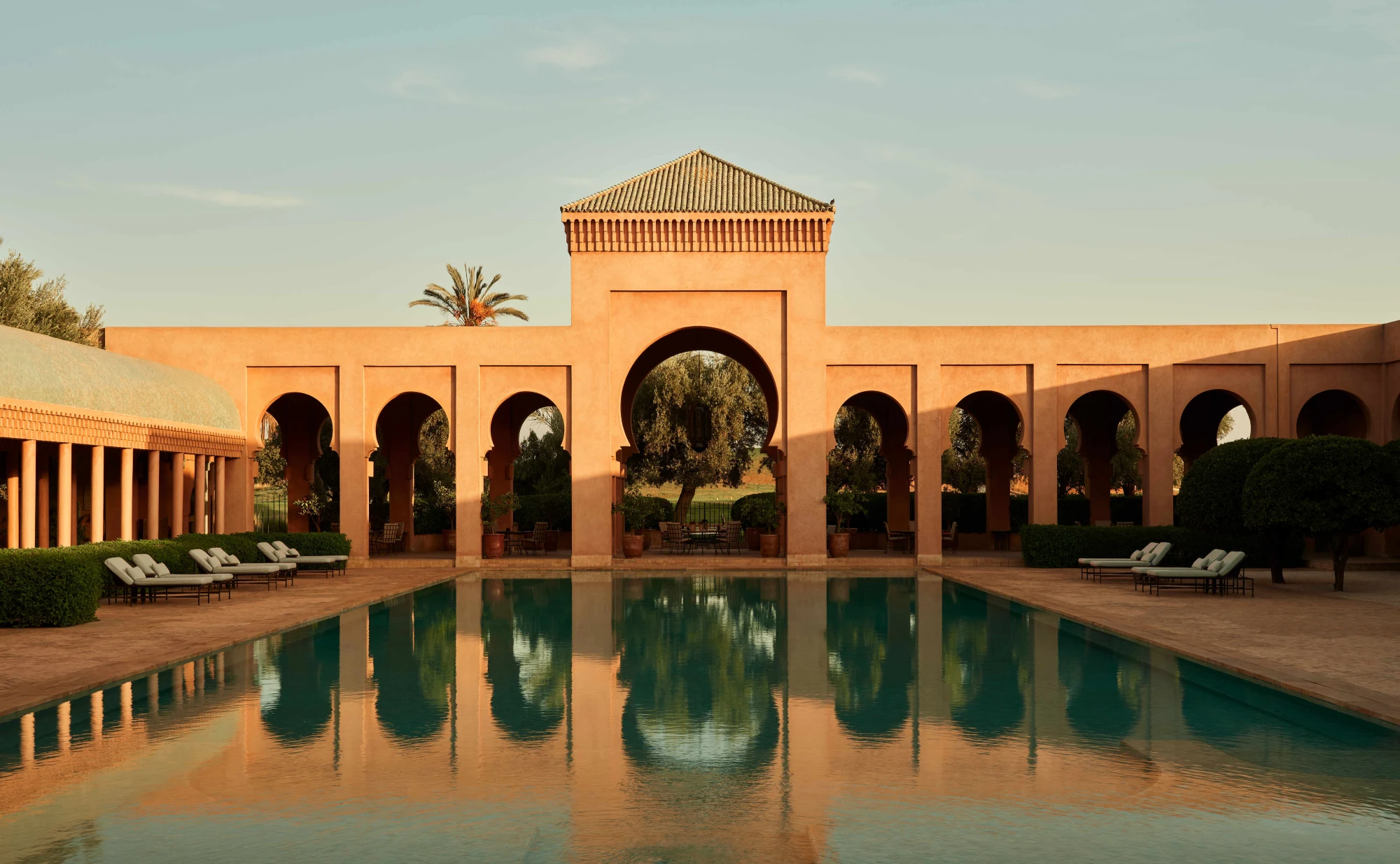
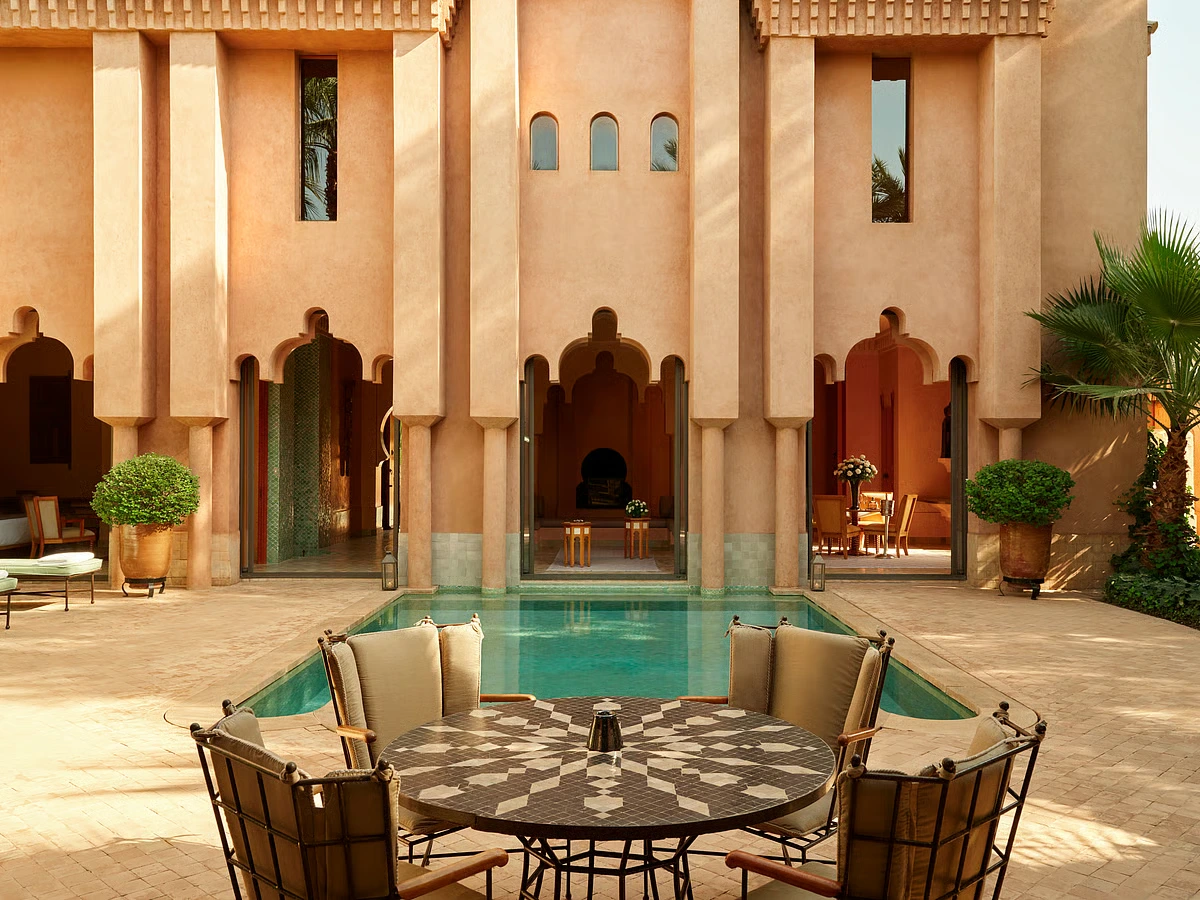
Located near Marrakesh, Amanjena is a masterclass in how architecture and landscape can create a serene, immersive environment. Designed by architect Ed Tuttle, the resort draws inspiration from traditional Moorish design and historic gardens.
Water features, courtyards, and colonnaded walkways define the spatial experience, while pavilions are arranged around reflective pools and olive groves. The integration of architecture with landscape reflects principles seen in historic Islamic gardens, where geometry and water create harmony.
For designers, Amanjena demonstrates how outdoor spaces can evoke calm through symmetry, proportion, and material restraint.
Design Lessons from Amanjena
Professionals studying this destination can identify several key design strategies:
- Use of reflective water basins to structure space
- Colonnaded architecture framing outdoor circulation
- Private garden pavilions blending interior and exterior living
- Local materials and craftsmanship reinforcing cultural identity
- Layered landscaping creating depth and privacy
These features illustrate how traditional design principles can be reinterpreted in contemporary luxury environments.
Amanpulo: Tropical Minimalism
Situated on a private island in Palawan, Amanpulo represents the pinnacle of tropical luxury outdoor living. The resort features beachfront villas and treetop casitas designed to maximize views and privacy.
Outdoor spaces are central to the experience, with open terraces, shaded lounges, and seamless access to the sea. The architecture emphasizes simplicity, allowing the natural environment to dominate the visual experience.
For outdoor designers, Amanpulo exemplifies how minimal intervention can create highly sophisticated environments that celebrate nature rather than compete with it.
Outdoor Design Features at Amanpulo
The resort incorporates several elements that define tropical luxury:
- Open-air living spaces with uninterrupted ocean views
- Natural materials such as wood and stone
- Private outdoor pools and terraces
- Lightweight architectural structures suited to climate
- Integration of furniture with landscape
These strategies highlight how outdoor design can enhance both comfort and connection to the environment.
Amangiri: Desert Architecture as Experience
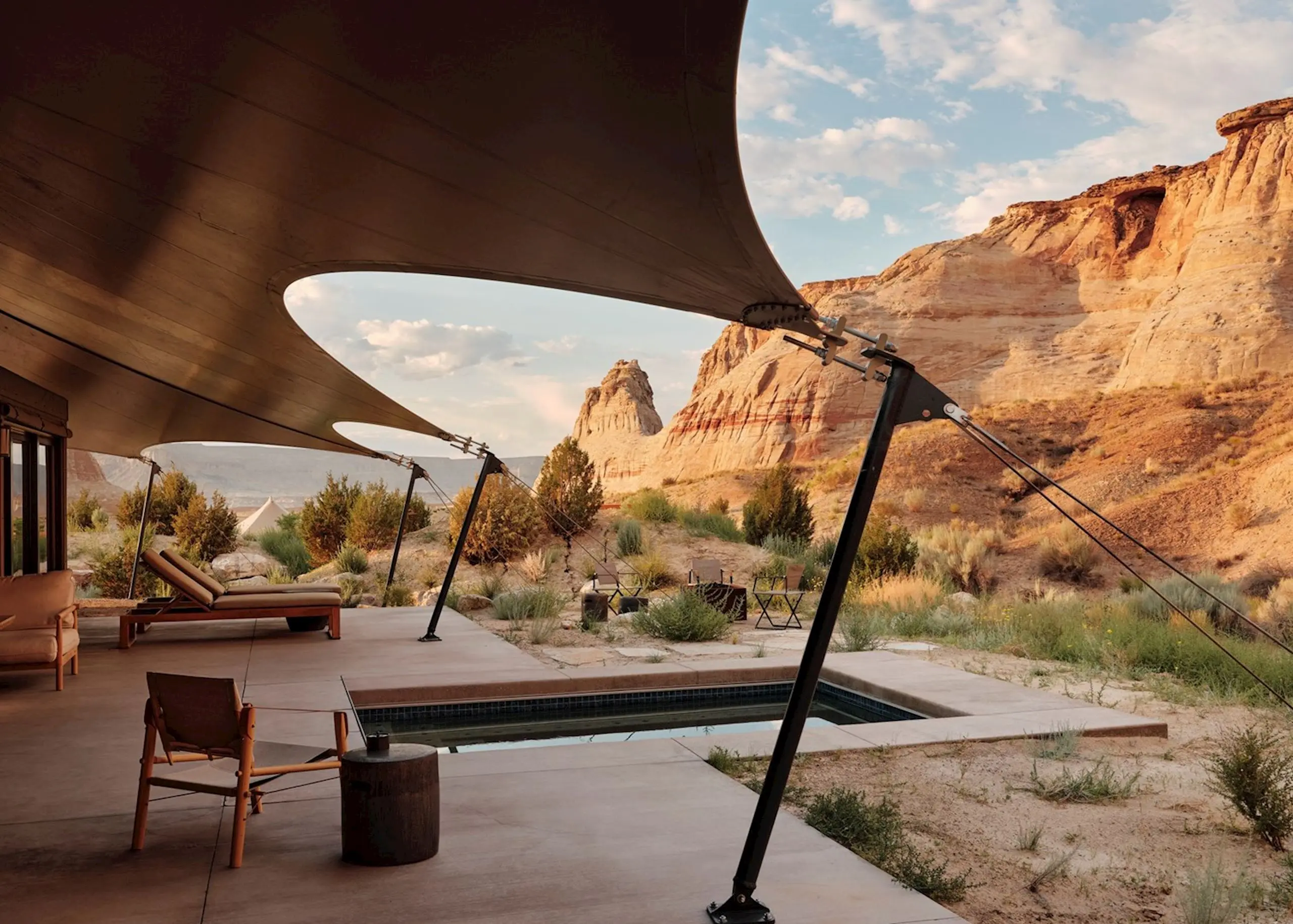
In the vast landscapes of Utah, Amangiri offers one of the most iconic examples of contemporary outdoor design. The resort is set within dramatic rock formations, with architecture that appears carved from the desert itself.
Outdoor spaces are defined by terraces, courtyards, and infinity pools that frame the surrounding geology. The design prioritizes material continuity, using stone and concrete to blend with the landscape.
For architects, Amangiri demonstrates how large-scale natural context can guide architectural and outdoor design decisions.
Design Strategies at Amangiri
Several principles make this destination particularly influential:
- Integration with natural rock formations
- Monolithic material palette reflecting the desert
- Framed views emphasizing landscape features
- Minimalist outdoor furniture complementing architecture
- Spatial sequencing guiding movement through the site
These strategies show how architecture can become inseparable from its environment.
Banasura Hill Resort: Sustainable Earth Architecture
Set in the Western Ghats of Kerala, Banasura Hill Resort offers a radically different approach to luxury outdoor design. Built using rammed earth, bamboo, and natural materials sourced on-site, the resort demonstrates how sustainability can define architectural identity.
The thick earthen walls provide natural insulation, reducing the need for artificial climate control while blending seamlessly with the surrounding landscape.
For designers, this destination highlights the potential of local materials and ecological thinking in creating high-end outdoor environments.
Sustainable Design Lessons from Banasura Hill Resort
Key takeaways from this project include:
- Use of locally sourced materials for construction
- Passive cooling through thick earthen walls
- Integration with surrounding vegetation and terrain
- Minimal environmental impact design strategies
- Emphasis on ecological balance and biodiversity
These principles are increasingly relevant as sustainability becomes central to luxury design.
Gstaad: Alpine Luxury and Outdoor Lifestyle
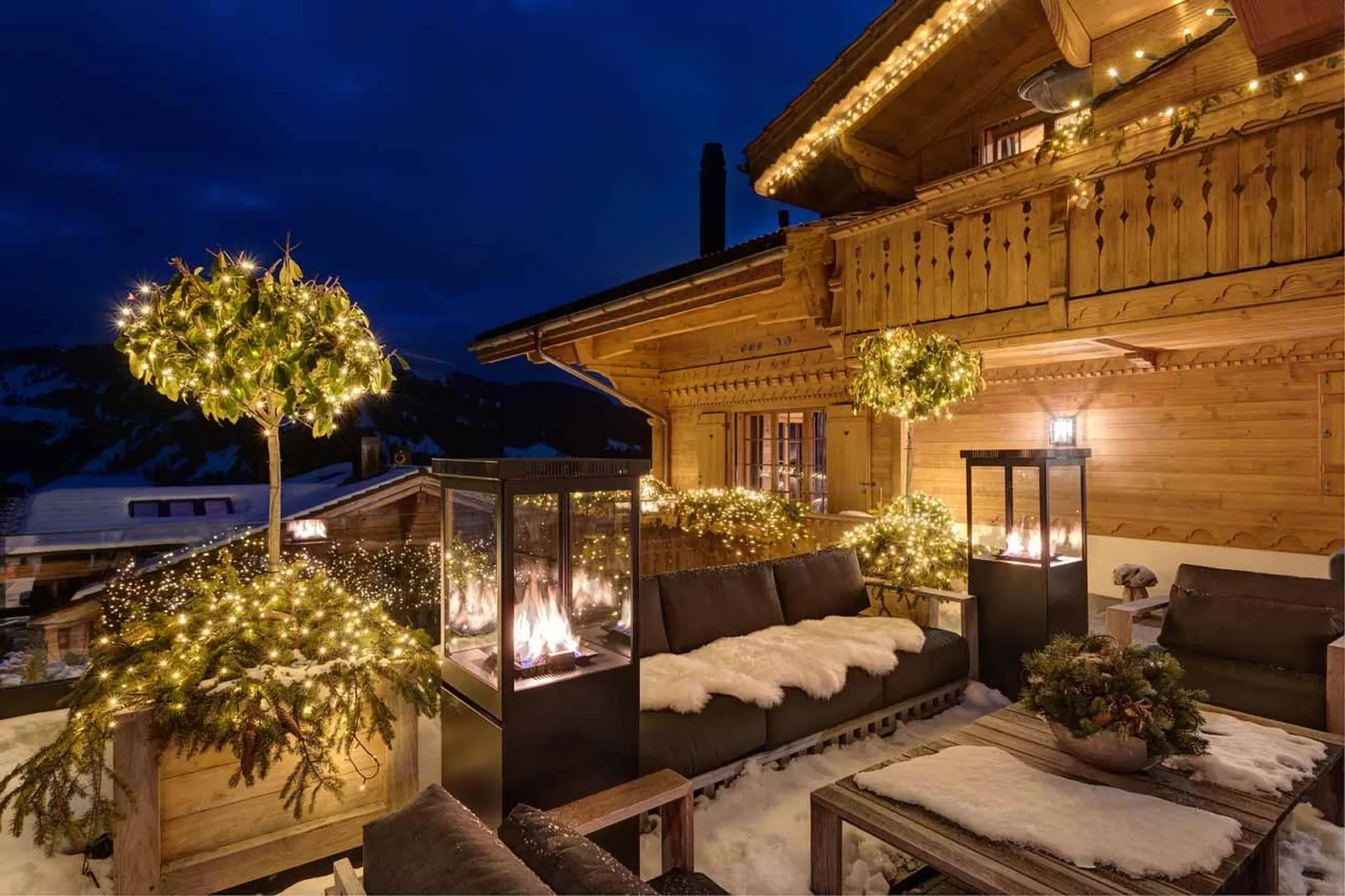
Nestled in the Swiss Alps, Gstaad represents a unique fusion of traditional architecture and luxury outdoor living. The village is known for its wooden chalets, pedestrian-friendly streets, and breathtaking mountain landscapes.
Outdoor experiences – from alpine terraces to scenic dining – are central to its appeal. The car-free promenade enhances the spatial quality of the environment, allowing visitors to engage more directly with architecture and landscape.
For design professionals, Gstaad illustrates how urban planning and architecture can support a refined outdoor lifestyle.
Outdoor Design Characteristics in Gstaad
Designers can observe several defining features:
- Traditional chalet architecture using natural wood
- Integration of outdoor dining and social spaces
- Pedestrian-focused urban design
- Scenic terraces and viewpoints
- Blending of luxury retail with landscape
These elements show how entire destinations – not just individual properties – can be designed around outdoor living.
The Role of Furniture in Luxury Outdoor Destinations
Across all these luxury destinations, outdoor furniture plays a critical role in shaping the user experience. Leading resorts often collaborate with brands known for integrating craftsmanship and durability into high-end environments.
Furniture is no longer a secondary element but a defining feature of outdoor design. It influences how people interact with space, from lounging by a pool to dining under open skies. For designers, studying how furniture is specified and positioned in these destinations offers valuable insight into spatial composition and user experience.
Key Outdoor Furniture Trends Observed in These Destinations
Several trends emerge across leading luxury destinations:
- Modular seating systems allowing flexible configurations
- Use of weather-resistant materials without compromising aesthetics
- Neutral color palettes enhancing natural surroundings
- Integration of furniture with architectural forms
- Focus on comfort and ergonomics in outdoor settings
These trends reflect the growing sophistication of outdoor furniture design within luxury environments.
Luxury Destinations as Design Inspiration
For architects and outdoor designers, visiting exceptional luxury destinations provides more than inspiration – it offers a deeper understanding of how outdoor environments can shape human experience.
From the geometric tranquility of Amanjena to the raw minimalism of Amangiri, each destination demonstrates a different approach to integrating architecture, landscape, and furniture. These places serve as benchmarks for innovation, showing how outdoor spaces can become central to luxury living.
As outdoor design continues to evolve, these destinations will remain essential references for professionals seeking to create extraordinary environments.